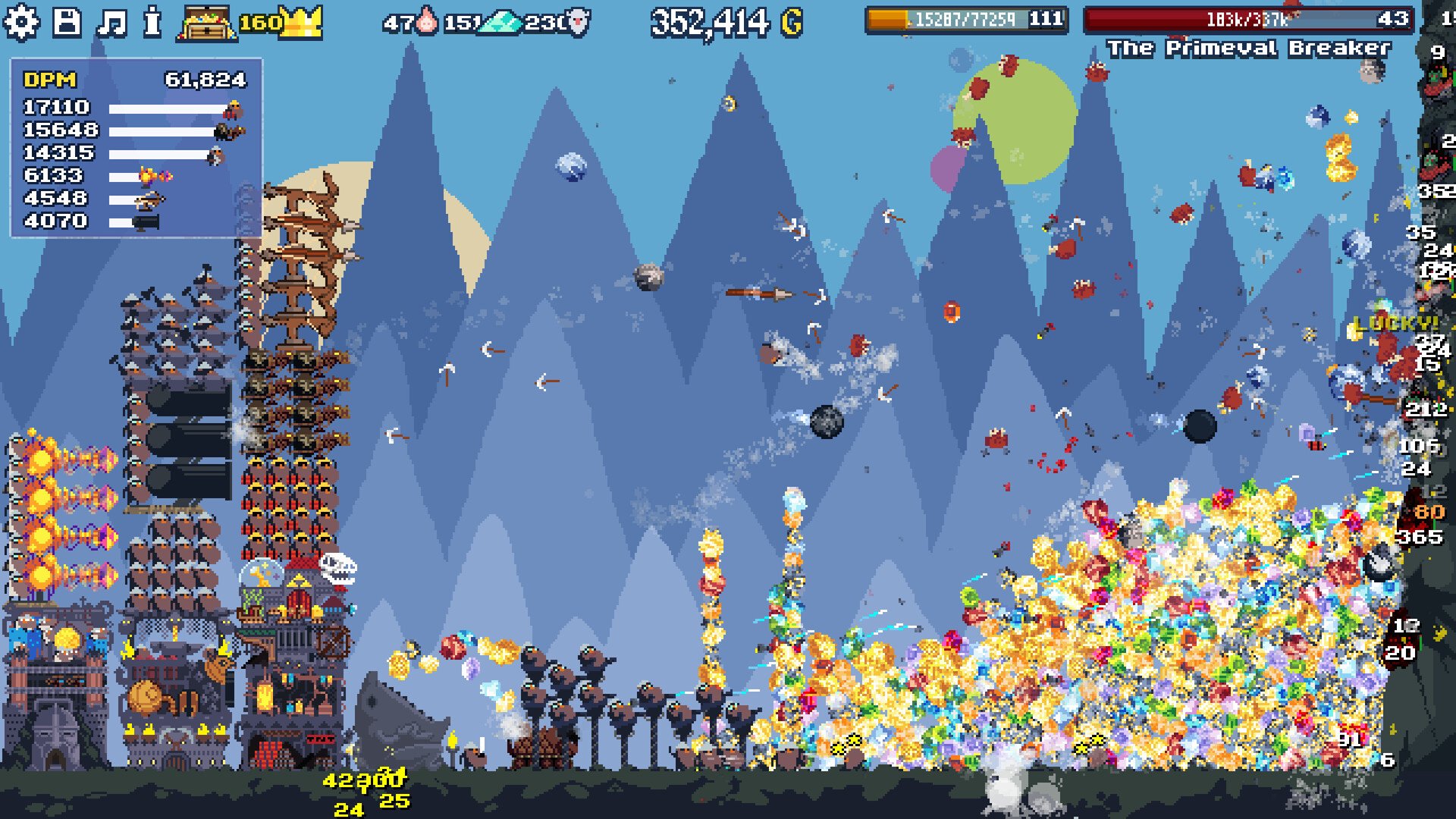
Dwarf Eats Mountain is a strategic incremental game about wrecking mountains for gold, hiring dwarves, sending out war machines, and stacking upgrades until each run gets bigger. The main loop is easy to grasp, but the real strategy comes from balancing mountain damage with safe gold hauling, because gold only matters once the Runners actually bring it home.
Jump To
Dwarf Eats Mountain Core Gameplay Loop
Dwarf Eats Mountain is built around a simple loop: damage the mountain, create gold, haul that gold home, survive the mountain’s response, then spend rewards on upgrades that make the next run stronger.
The catch is that breaking the mountain is only half of the job. Gold has to be carried home by Runners, and the mountain starts throwing more danger back as the dwarves deal more damage. That means the best runs are not only about buying the biggest damage upgrade. The hauling side has to keep up too.
That balance gives the game its strategy. A greedy damage setup can look great for a while, but if the Runners cannot safely move the gold, progress slows down. A cleaner setup builds damage, hauling, artifacts, rituals, and prestige upgrades together so every part of the run supports the next one.
| System | What It Does | Why It Matters |
|---|---|---|
| Mountain Damage | Dwarves and machines break into the mountain. | Creates progress and opens up more gold. |
| Runners | Carry gold home through danger. | Turn mined gold into usable progress. |
| Calamities | The mountain fights back as damage ramps up. | Forces better balance instead of pure greed. |
| Artifacts | Add build shaping effects. | Create stronger synergies between dwarves, machines, and upgrades. |
| Prestige Upgrades | Improve future runs. | Make replaying faster and more rewarding. |
Gold And Runners Explained
Gold is the main reward in Dwarf Eats Mountain, but Runners are what make that gold useful.
The dwarves can rip into the mountain and produce piles of treasure, but gold sitting out in danger does not do much. Runners have to bring it home while weaving through falling rocks and whatever else the mountain decides to throw at them. That makes Runners one of the most important parts of the whole setup.
It is easy to get distracted by the louder upgrades. War machines, lasers, bulldozers, and giant damage numbers are more exciting than the little guys hauling treasure back. Still, the economy only works when the gold gets delivered. If the mountain is being destroyed faster than the Runners can keep up, the run starts feeling sloppy fast.
A strong early plan is to treat Runners as part of the main engine, not a side system. Damage creates the gold. Runners secure the gold. Upgrades turn that gold into more power. Once that clicks, the whole loop makes more sense.
Dwarves And War Machines In Dwarf Eats Mountain
Dwarves and war machines are the main way the mountain gets damaged and the run starts scaling upward.
The game has a wide lineup of buildings, dwarves, and machines, including dynamite throwers, ballistas, flamers, laser cannons, spelunkers, runesmiths, brewmasters, bulldozers, gyrocopters, and more. That variety matters because Dwarf Eats Mountain is not only about buying one damage source forever.
Some options will likely shine as raw damage. Others may work better with artifacts, rituals, or specific upgrade paths. The stronger runs will come from finding combinations that support each other instead of grabbing random upgrades just because the number went up.
| Dwarf Or Machine | General Role |
|---|---|
| Dynamite Throwers | Explosive mountain damage. |
| Ballistas | Heavy ranged pressure against the mountain. |
| Flamers | Damage focused machine support. |
| Laser Cannons | High tech mountain bullying. |
| Spelunkers | Mining or exploration flavored support. |
| Runesmiths | Magic or upgrade synergy support. |
| Brewmasters | Buff focused dwarf support. |
| Bulldozers | Heavy machine pressure. |
| Gyrocopters | Advanced machine support with very questionable safety standards. |
The big thing is to watch what the current run is already good at. If artifacts and upgrades are pushing machines, lean into machines. If dwarf buffs are stacking well, follow that route. Incremental games get much better once the build starts working with itself instead of fighting itself.
Calamities Explained In Dwarf Eats Mountain
Calamities are the mountain’s answer to the dwarves getting too greedy.
The more damage the dwarves deal, the more the Great Mother pushes back. Falling rocks are part of that danger, and the whole idea is that the mountain is not just a big passive treasure pile. It reacts. It gets meaner. It turns a simple gold run into a mess if the setup is not ready.
This is where the game gets its pressure. More damage is good, but only when the rest of the operation can handle what comes next. If Runners are too weak, too slow, or too unsupported, the extra mountain damage can create more danger than value.
| Bad Habit | Better Habit |
|---|---|
| Only buying damage upgrades. | Keep damage and hauling growing together. |
| Ignoring Runners until gold piles up. | Support Runners before the danger ramps too hard. |
| Using every upgrade randomly. | Follow the synergies the run is already giving. |
| Dragging out a stalled run forever. | Prestige when the next reset gives better long term value. |
The mountain is basically a greed alarm with rocks. It lets the dwarves get away with a little nonsense, then starts punishing the operation once the damage gets too far ahead of the plan.
Artifacts And Synergies In Dwarf Eats Mountain
Dwarf Eats Mountain has 120+ ancient artifacts, and those artifacts are one of the main reasons runs can feel different from each other.
Artifacts are not just collectibles sitting in a gallery for decoration. They have build shaping effects, which means they can change what kind of strategy works best in a run. One artifact setup may make machines stronger. Another may push dwarf scaling. Another may make rituals or certain upgrades more valuable.
That is where the game gets more interesting than a basic numbers climb. The best move is not always to repeat the exact same plan every run. Sometimes the artifact setup tells the player what kind of build wants to happen, and following that direction can create stronger scaling.
This also gives the game a better replay hook. With 120+ artifacts, there is room for a lot of strange combinations. The mountain may always be the target, but the method of ruining its day can change quite a bit.
Prestige Upgrades And Long Term Progression
Dwarf Eats Mountain has 96+ prestige upgrades that help future runs move faster and unlock stronger scaling.
Prestige is the long term engine. A run eventually slows down, upgrades start taking longer, and the current setup stops feeling as sharp. That is usually when resetting for long term power starts making more sense than squeezing a little more value out of the same run.
The game also uses rare resources like mithril and mountain souls. Those sound like the more serious upgrade currencies, so they should be treated carefully. In this kind of game, rare resources usually matter most when they are spent on upgrades that keep paying off across multiple runs.
| Progression System | What It Adds |
|---|---|
| Prestige Upgrades | Long term power for future runs. |
| Artifacts | Build shaping effects and run variety. |
| Rituals | Active buffs for dwarves and machines. |
| Mithril And Mountain Souls | Rare resources for tougher upgrade choices. |
The clean way to think about prestige is that every run is feeding the next one. The current mountain matters, but the bigger goal is building a dwarven operation that makes the next mountain regret being born as terrain.
Dwarf Eats Mountain Beginner Tips
The best beginner tip for Dwarf Eats Mountain is to avoid chasing damage so hard that the rest of the run falls behind.
Big damage is fun. Big damage also makes the mountain angrier. If the Runners, artifacts, rituals, and long term upgrades are not keeping pace, the run can feel strong for a moment and then start getting messy. A smoother early game comes from watching the whole loop, not just the biggest number.
| Beginner Tip | Why It Helps |
|---|---|
| Keep Runners useful | Gold only helps when it gets home safely. |
| Balance damage with hauling | Too much damage can create danger before the economy is ready. |
| Read artifact bonuses | Artifacts can show what kind of build the run wants. |
| Use rituals during strong pushes | Active buffs are better when timed around good scaling moments. |
| Spend rare resources carefully | Mithril and mountain souls should support long term progress. |
| Prestige when progress slows | Future run power can be better than forcing a stalled run. |
Early runs should mostly be about learning the rhythm. How fast does damage create danger? How well are the Runners keeping up? Which upgrades actually make the run smoother? Once those pieces start making sense, the game becomes less about guessing and more about building cleaner synergies.
Who Should Play Dwarf Eats Mountain
Dwarf Eats Mountain is a good fit for players who like incremental games with strategy, upgrade planning, and goofy fantasy flavor.
It has the familiar satisfaction of watching numbers grow, but the extra systems give the player more to think about. Gold hauling, calamities, artifacts, rituals, prestige upgrades, rare resources, dwarves, and machines all give the game more texture than a basic idle loop.
The theme also does a lot of work. Dwarves eating mountains for gold is already a good pitch. Add war machines, ancient artifacts, falling rocks, mountain souls, and a giant hungry operation built around the Great Maw, and the game knows exactly what kind of ridiculous it wants to be.
| Player Type | Fit |
|---|---|
| Incremental game fans | Strong fit because the game focuses on scaling and repeat progress. |
| Strategy players | Good fit because build choices and synergies matter. |
| Idle game players | Good fit if they want more active decisions than a basic idle loop. |
| Dwarf enjoyers | Obvious fit. The title is not trying to hide the assignment. |
Final Blurb
Dwarf Eats Mountain is a strategic incremental game about damaging mountains, collecting gold, hiring dwarves, using war machines, and building stronger synergies every run. The main thing to understand is that gold has to be hauled home by Runners, so pure mountain damage is only part of the plan.
The best early approach is to balance damage, hauling, artifacts, rituals, and prestige upgrades instead of chasing one big number forever. The game is about greed, but it works better when that greed has a plan. Very dwarf. Very unsafe. Probably profitable.