Lockpicking in Gothic 1 Remake is a slider puzzle built around lining up each lock piece until the correct indicator color and position are shown. It is easy to waste lockpicks early because the sliders can move each other, so the best way to pick locks is to understand the slider connections, get training from Fingers, and carry extra lockpicks before opening harder chests.
Jump To
How To Pick Locks
How The Slider Puzzle Works
Yellow And Orange Indicators
Lockpick Durability
How To Learn Lockpicking
Where To Get Lockpicks
Is Lockpicking Worth Learning?
Best Lockpicking Strategy
Gothic 1 Remake Lockpicking Quick Answers
How To Pick Locks In Gothic 1 Remake
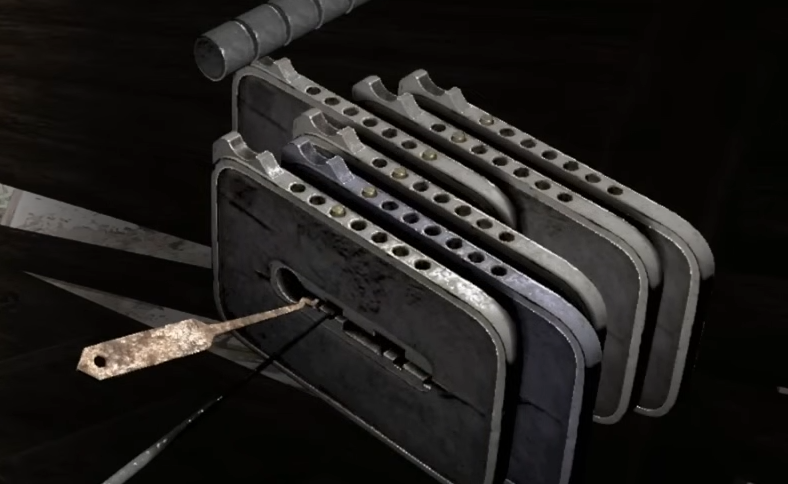
To pick locks in Gothic 1 Remake, move each slider until its pin lines up in the correct center position, then adjust the remaining sliders until every lock piece is aligned. The puzzle becomes difficult because moving one slider can also move other sliders, either in the same direction or the opposite direction.
The goal is not to force every slider one at a time without watching the rest of the lock. That is how lockpicks break. Each movement is information. If one slider moves another piece, that connection needs to be used instead of ignored.
On simple locks, this can be done with a little trial and correction. On harder locks with more sliders, random movement gets punished fast because each bad move can push another piece into the edge of the lock. Once a slider hits the side and rattles, the lockpick takes strain.
The clean way to lockpick is to move slowly, test how each slider affects the others, and only commit to bigger adjustments once the lock’s pattern is clear. Gothic 1 Remake lockpicking feels unfair when treated like a quick minigame, but it becomes more manageable when treated like a small mechanical puzzle.
How The Slider Puzzle Works
Each lock has multiple sliders, and each slider has several possible positions. The correct position is the one that lines the pin up properly in the middle. When every slider is correctly lined up, the lock opens.
The hard part is that sliders are connected. Some sliders move by themselves. Some move other sliders in the same direction. Others move connected sliders in the opposite direction. That means a slider can fix one piece while ruining another.
| Slider Behavior | What It Means | How To Use It |
|---|---|---|
| Moves alone | The slider does not affect other lock pieces. | Save it for clean final adjustments. |
| Moves other sliders the same way | The slider is connected to other pieces in the same direction. | Use it when multiple pieces need to shift together. |
| Moves other sliders opposite | The slider pushes connected pieces in reverse. | Use it carefully when one piece needs to move while another needs correction. |
This is why lockpicking can feel much harder than it looks. The screen shows a few simple pieces, but the real puzzle is the hidden relationship between them. Solving a lock is mostly about finding those relationships before the lockpick breaks.
Start by moving one slider a single step. Watch every other slider. If nothing else moves, that slider is independent. If another piece moves with it, remember the connection. After a few careful tests, the lock usually starts to make more sense.
Yellow And Orange Lockpicking Indicators
The easiest lockpicking visual cue in Gothic 1 Remake is the indicator color, because a slider that is not fully aligned can show yellow while the correct position shows orange. Use the color change along with the center position to tell when a lock piece is properly set.
This is useful because the slider puzzle can be visually busy, especially on harder locks. Instead of only staring at the holes, watch for the point where the indicator changes color and the piece sits in the correct spot. That is the game’s clearest sign that the slider is where it needs to be.
Do not rely on color alone if the lock is still moving other sliders around. A piece can look close, then get pulled away by another connected slider. Lockpicking works best when the final few moves are saved for the pieces that move alone or have the least harmful connections.
Lockpick Durability Explained
Lockpicks have durability, and they lose durability when a slider hits the edge of the lock. By default, lockpicks can only take a small number of mistakes before breaking, which is why untrained lockpicking burns through picks so quickly.
The warning sign is the rattle. When a slider cannot move farther and rattles against the side, the lockpick takes strain. Do that too many times, and the pick breaks. If the character is untrained, a broken pick can also reset the lock, which makes the whole attempt feel even worse.
Pressing R can reset the lockpicking attempt, which is useful when the sliders are in a bad position. The catch is that backing out or resetting carelessly can still cost picks if the pick already has strain on it. Lockpicking is not forgiving when the inventory is low.
| Lockpick Moment | What Happens |
|---|---|
| Slider hits the edge | The pick takes strain. |
| Pick takes too much strain | The pick breaks. |
| Untrained pick breaks | The lock can reset. |
| R is pressed | The current lockpicking attempt resets. |
The durability system is the main reason training matters. Training does not turn lockpicking into a free loot button, but it gives enough room to make mistakes without destroying every pick in the bag.
How To Learn Lockpicking
You can learn lockpicking from Fingers in the Old Camp near the Arena. He teaches the lockpicking skill for 10 Learning Points and 100 ore after the right access and conversation progress are available.
Fingers is one of the Old Camp thief trainers. If following Diego’s early Old Camp route, asking Diego about teachers can point the Nameless Hero toward Fingers. His shack is near the Arena area, up the slope after heading left from the castle entrance and passing Snaf’s cauldron.
Lockpicking training is expensive early, but it changes how chest runs feel. At Trained level, lockpicks can take more strain, and breaking a pick does not reset lock progress. At Master level, picks can take even more strain, and a break can simplify the lock by removing a connection inside the puzzle.
| Trainer | Location | Skill | Cost |
|---|---|---|---|
| Fingers | Old Camp, near the Arena | Lockpicking | 10 Learning Points and 100 ore |
That cost is heavy, but the payoff is real if locked chests are part of the plan. The training is less about making the puzzle easy and more about making failure less expensive. In Gothic 1 Remake, that is a big upgrade.
Where To Get Lockpicks
You can get lockpicks in Gothic 1 Remake by finding them while exploring or buying them from Mordrag and Dexter in the Old Camp market area. Mordrag sells lockpicks for 13 ore each, and Dexter sells them nearby in the same market area.
Mordrag is found on the east side of the southern cloth-covered market area, usually sitting on a bench outside a shack. Dexter is also in the Old Camp market and is tied to The Cult’s Recipe quest. Both are useful early sources if the character has ore to spare.
Buying lockpicks is reliable, but it is not cheap. Thirteen ore per pick adds up quickly if the Nameless Hero is untrained or trying complex locks too early. Finding lockpicks through exploration is better when possible, especially in prisoner areas, camps, and loot-heavy spots.
| Lockpick Source | Location | Best Use |
|---|---|---|
| Mordrag | Old Camp market area | Reliable early vendor source. |
| Dexter | Old Camp market area | Backup vendor source near Mordrag. |
| Exploration | Camps, prisoner areas, and loot spots | Best way to save ore. |
For early chest routes, carry more picks than the lock looks like it should need. Gothic 1 Remake locks can become expensive fast, and walking into a hard lock with one pick is just donating ore to the furniture.
Is Lockpicking Worth Learning?
Lockpicking is worth learning in Gothic 1 Remake if the goal is steady chest loot, thief progression, or early ore value, but it is not always the best first skill if the character is still struggling to survive basic fights. It is a strong utility skill, not a direct combat fix.
The argument for lockpicking is simple. Locked chests are common, and opening more of them means more chances at items, ore, supplies, and useful gear. Training also makes the minigame less punishing, which saves lockpicks over time.
The argument against learning it too early is also fair. Ten Learning Points and 100 ore is a lot near the start. Those same points could go toward Strength, Dexterity, Rune Magic, Smithing, or another build-defining upgrade. If wolves and scavengers are still a major threat, combat power may need to come first.
| Learn Lockpicking Early If | Delay Lockpicking If |
|---|---|
| The build is thief-focused. | The character still loses normal fights too often. |
| Locked chests are blocking useful loot. | Learning Points are needed for Strength, Dexterity, or Rune Magic first. |
| There are enough lockpicks to make chest runs worthwhile. | The character has no ore or spare picks yet. |
My take is that lockpicking is excellent after the first survival problem is solved. It feels bad when learned before the character can safely move around, but it feels much better once the Nameless Hero can reach chests, carry extra picks, and actually keep the loot.
Best Lockpicking Strategy
The best lockpicking strategy is to test slider connections first, align the most connected pieces carefully, then finish with sliders that move alone or cause the least disruption. This prevents the common mistake of perfectly setting one slider and immediately ruining it with the next move.
Start with small moves. Watch the full lock, not just the slider being moved. If a slider moves multiple pieces, it should usually be handled before the final cleanup. Independent sliders are easier to save for the end because they can be fixed without disturbing everything else.
Training should come before serious chest clearing. A few easy locks can be opened untrained, but harder locks are much less painful after Fingers teaches the skill. The extra durability gives enough room to learn the lock’s behavior instead of breaking a pick every time the puzzle gets weird.
| Strategy | Why It Works |
|---|---|
| Move sliders one step at a time | It reveals connections without causing too much damage. |
| Watch every slider | The important clue is often what moves besides the selected piece. |
| Avoid edge hits | Edge hits strain and break lockpicks. |
| Save independent sliders for last | They can be adjusted without ruining other pieces. |
| Train before hard locks | Training makes mistakes much less expensive. |
Lockpicking is frustrating because the game does not let sloppy movement slide. Once the relationships between sliders are clear, though, the system becomes more readable. It is still harsh, but it is not random.
Gothic 1 Remake Lockpicking Quick Answers
| Question | Answer |
|---|---|
| How do you pick locks in Gothic 1 Remake? | Align each slider so the pin reaches the correct center position, then line up every other slider without breaking the pick. |
| Why is lockpicking hard? | Sliders can move other sliders in the same or opposite direction, turning each lock into a connected puzzle. |
| What do the yellow and orange indicators mean? | Yellow means the piece is not fully aligned, while orange is the useful visual cue for the correct position. |
| Where do you learn lockpicking? | Fingers teaches lockpicking in the Old Camp near the Arena. |
| How much does lockpicking cost? | Lockpicking costs 10 Learning Points and 100 ore from Fingers. |
| Where do you get lockpicks? | Lockpicks can be found while exploring or bought from Mordrag and Dexter in the Old Camp market area. |
| How much do lockpicks cost? | Mordrag sells lockpicks for 13 ore each. |
| Does training make lockpicking easier? | Training makes mistakes less punishing by improving lockpick durability and reducing the penalty from broken picks. |
| Is lockpicking worth learning early? | Yes for thief and loot-focused routes, but combat or magic may be more important first if survival is the bigger problem. |
Final Blurb
Lockpicking in Gothic 1 Remake is hard because every lock is built around slider connections, color cues, and limited pick durability. The minigame feels brutal when handled randomly, but it becomes much more manageable once each slider move is treated as information.
Fingers is the key trainer, while Mordrag and Dexter are the early vendor sources for lockpicks in the Old Camp. Get trained before serious chest runs, carry more picks than seems reasonable, and avoid forcing sliders into the edge. The Colony already has enough enemies trying to kill the Nameless Hero. The chests do not need to win too.