Steam Just Smashed Its All-Time Player Record… Again
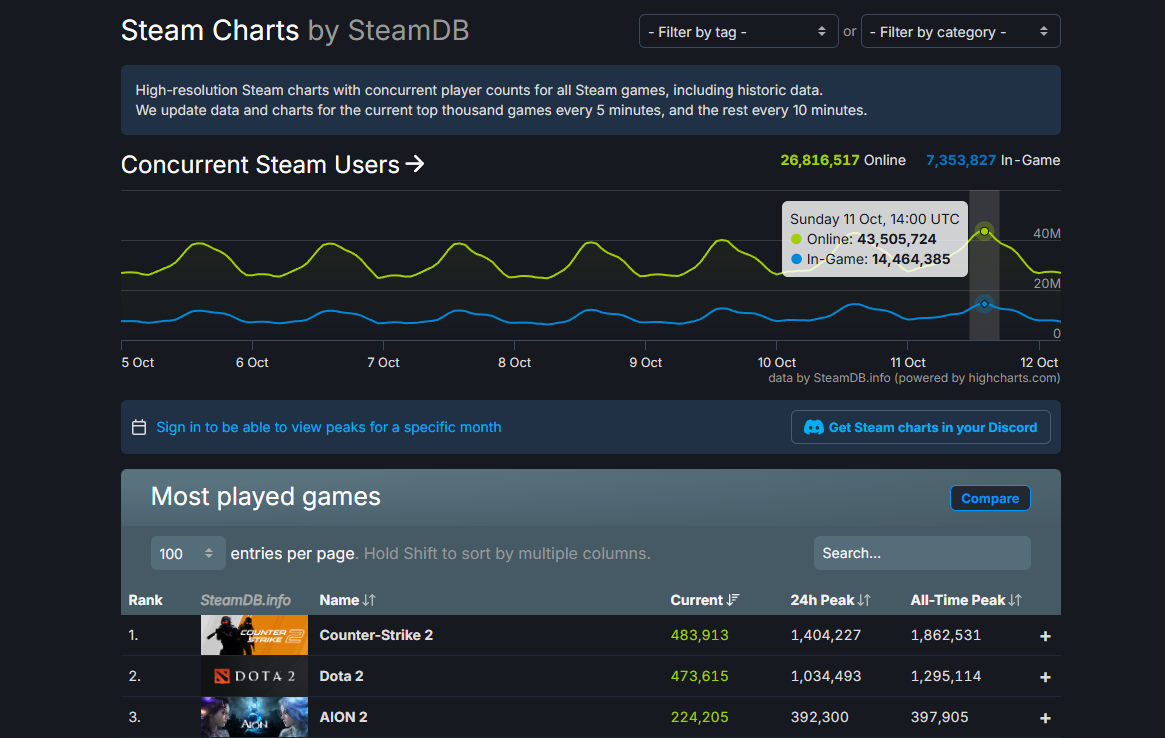
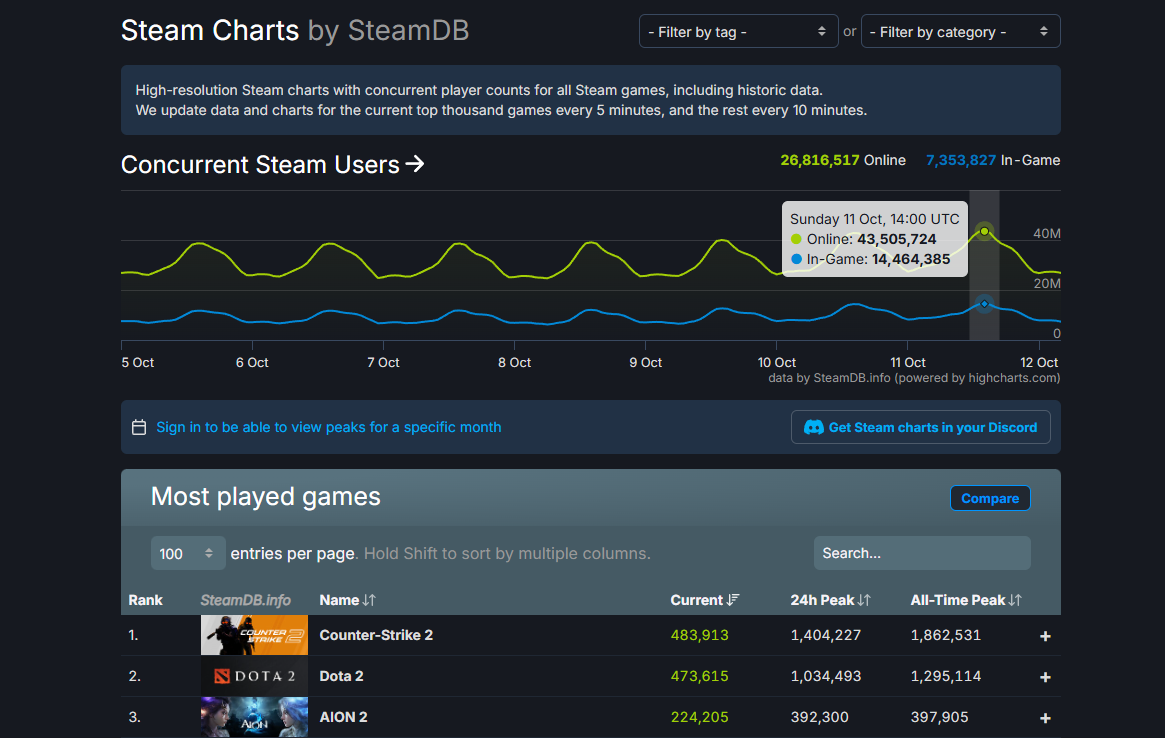
Steam just set another all-time record, with more than 43.5 million people simultaneously logged into Valve's PC gaming platform.
SteamDB recorded a peak of 43,505,724 concurrent users on October 11, surpassing the platform's previous record of roughly 42.7 million set about six months earlier. More importantly, the number of people actually playing games also reached a new high, climbing to approximately 14.46 million at the same time.
That distinction matters. Steam's headline concurrency number includes people with the client open who may be browsing the store, chatting with friends or simply leaving Steam running in the background. A simultaneous record for players actually inside games suggests the latest milestone cannot be explained solely by more idle accounts sitting online.
Steam is not just getting more people to open the client. More people are playing games through it at the same time than ever before.
Steam Added Nearly Another Million Users to Its Record
Steam's previous concurrency record stood at roughly 42.69 million users, meaning Valve has added approximately 800,000 users to its simultaneous peak in only six months. The previous in-game record was around 13.8 million, according to historical SteamDB data shared alongside the latest milestone.
SteamDB now lists 43,505,724 as the platform's all-time peak, while Valve's own public statistics page recorded just over 43.5 million users during the same period. The small difference between trackers does not change the broader result: Steam has pushed through another ceiling for concurrent activity.
What makes the latest record more notable is how routine these milestones have started to become. Steam has spent much of the post-pandemic period repeatedly setting new concurrency highs rather than falling back toward the levels seen before 2020.
No Single Game Appears to Be Responsible
There also was not one enormous game swallowing enough of Steam's audience to explain the new record on its own.
Counter-Strike 2 remained Steam's largest game during the day, reaching a peak of about 1.4 million players. Dota 2 climbed above one million, while PUBG: Battlegrounds reached more than 700,000. AION 2, one of October's biggest new releases, peaked at roughly 392,000 during the same period.
Those are enormous audiences individually, but even Steam's biggest games represent only a fraction of the more than 14 million people who were playing something at the platform's peak.
That makes the record less about one breakout release and more about the scale Steam has accumulated across thousands of games. Huge multiplayer titles are sharing the platform with new releases, indie games, old favorites, MMOs, single-player games and enormous back catalogs that players continue returning to years after release.
Steam's Biggest Number Is Not Its Player Count
The 43.5 million figure can be misleading if it is treated as 43.5 million people simultaneously playing games. It is instead the number of users connected to Steam at the same time.
Only around one-third of those users were actively in-game during the record period, with the rest logged into Steam without a game running. That gap has become part of Steam's enormous reach: Valve's client now sits permanently open on millions of PCs as a storefront, library, messaging service and launcher rather than something users necessarily close after finishing a game.
Even so, the 14.46 million in-game record is arguably the more impressive number. Steam could theoretically increase its overall concurrency simply because more people leave the application running. Setting a new record among users actively playing requires actual gaming activity to increase alongside it.
Steam Keeps Growing While Console Hardware Is Struggling
The record also arrives during a particularly unusual moment for the rest of the gaming hardware market.
U.S. console unit sales fell 15% year over year in August, reaching their lowest August level since 2013 as higher hardware prices put increasing pressure on PlayStation, Xbox and Nintendo sales. Steam's concurrency figures are global and measure platform usage rather than hardware purchases, so the two statistics cannot be directly compared or used to prove that console players are moving to PC.
They do, however, show two very different trajectories taking place at the same time. Console manufacturers are trying to maintain demand while hardware becomes more expensive, while Steam continues setting participation records more than two decades after Valve launched the service.
The latest milestone also comes before the holiday period, when Steam activity traditionally has additional opportunities to rise as major releases, sales and time away from work and school bring more players online.
44 Million Suddenly Doesn't Look Very Far Away
Steam needed roughly six months to move from its previous record near 42.7 million to more than 43.5 million simultaneous users. If the platform continues growing at anything close to that pace, its next obvious milestone is already within reach.
The more important trend may be happening underneath the headline number. Steam's in-game peak climbed alongside overall concurrency, established games such as Counter-Strike 2 and Dota 2 continue attracting enormous audiences, and newer releases are being layered onto an ecosystem that appears to be getting larger rather than simply shifting players from one hit to another.
Steam has broken concurrency records plenty of times before. At 43.5 million users online and more than 14 million simultaneously playing, the unusual part is that Valve still does not appear particularly close to finding the platform's ceiling.
More News from GamerBlurb