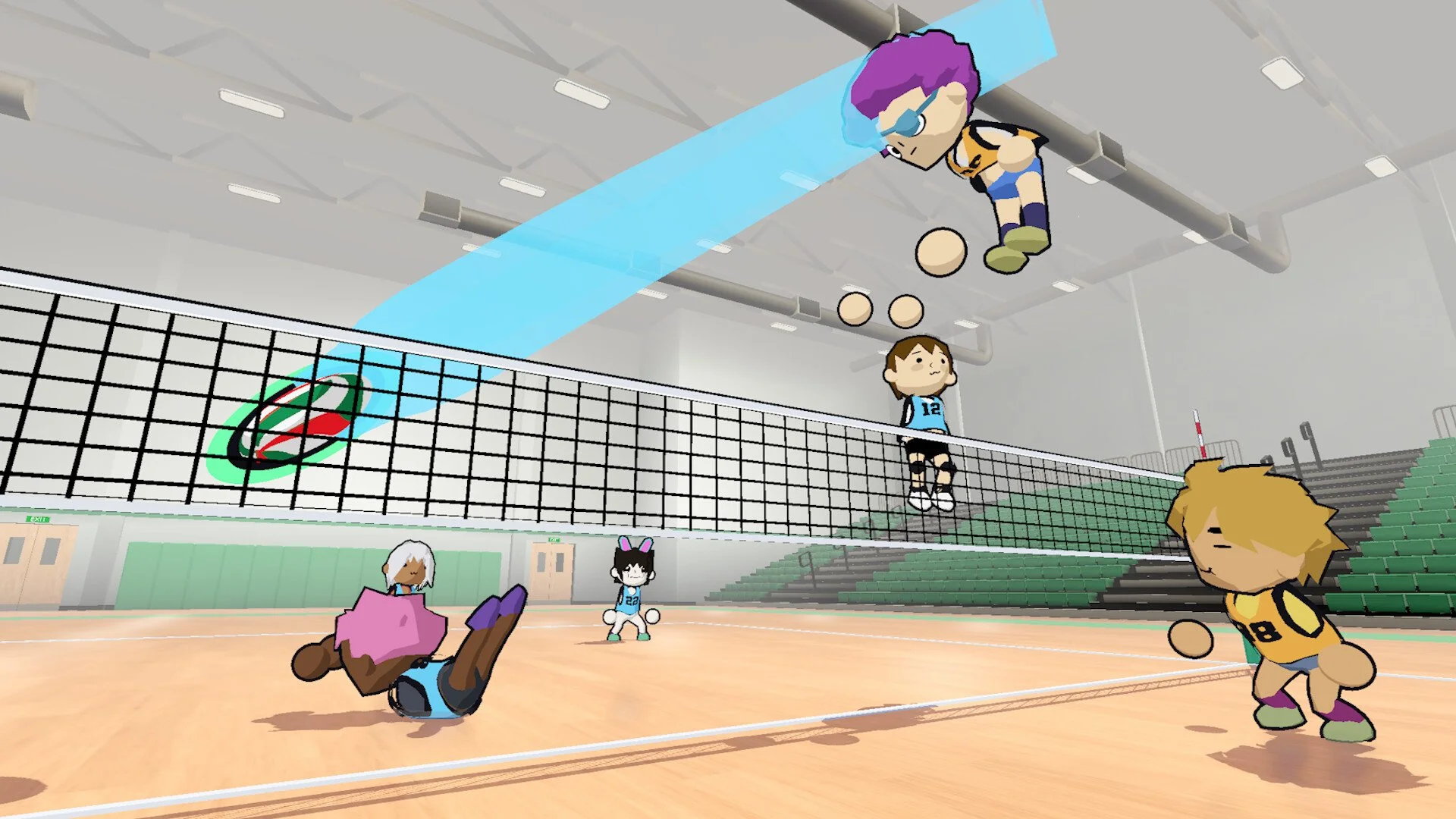
Just Volleyball is a game that looks simple until you're dealing with powerful serves, unpredictable teammates, and opponents who seem to reach everything. Winning consistently requires more than mastering the controls. These tips focus on smarter attacking decisions, better positioning, and turning difficult rallies into scoring opportunities.
Smarter Attacking Strategies
Recovering Difficult Rallies
Positioning and Defense
Improving Your Skills
How to Win More Matches in Just Volleyball
The best way to win more matches in Just Volleyball is to control where opponents must move, avoid unnecessary touches, and create attacks that your teammates can actually finish. Accurate placement and positioning are often more valuable than maximum power.
Because movement and aiming are manual, small decisions before each contact can make an enormous difference. The goal is to make the next play easier for your team and more difficult for your opponent.
Smarter Attacking Strategies
1. Make Opponents Move Before Going for the Winner
Don't treat every attack as an opportunity to finish the rally immediately.
If an opponent keeps defending your hardest spikes, start targeting areas that force them to move away from their preferred position.
A short return can draw a deep defender forward, while a shot toward the back of the court can punish someone standing too close to the net.
Even when the opponent successfully receives the ball, forcing an awkward recovery can make their next attack less threatening.
2. Know When to Attack Early
Using all three team contacts isn't always necessary.
If the opposing team is poorly positioned and you have an opportunity to send the ball into open space, an early attack can catch them before their defense is organized.
However, forcing an immediate attack from a difficult angle often produces an easy return or an unnecessary mistake.
In team matches, use a controlled receive and set when your attackers need time to prepare. Attack early when the opportunity is already available, not simply because you want to end the point quickly.
3. Use Serve Placement to Create Weak Returns
A serve doesn't need to score an ace to be successful.
Targeting a defender who must move quickly can produce an inaccurate first touch, leaving their teammates with fewer attacking options.
In smaller matches, alternate between deep and short serves to prevent opponents from settling into one position.
Against larger teams, pay attention to the spaces between receivers. A serve directed into an awkward gap can create hesitation over who should take the ball.
4. Don't Chase Maximum Power at the Expense of Accuracy
Powerful serves and spikes depend on timing, approach speed, and making contact at a useful point in your jump.
For a strong jump serve, move into the toss, build momentum, and time your charged hit near the highest point of your jump. Strong spikes require similar coordination with the setter's delivery.
But a fully charged attack aimed directly at a prepared defender isn't necessarily better than a controlled shot into empty space.
Make placement your default priority, then add power when you have a clean opportunity.
How to Recover Difficult Rallies
5. Treat a Bad Receive as a Recovery Problem
Not every first touch will reach the setter cleanly. When a receive goes too far from the intended target, trying to force your original attacking plan can make things worse.
Instead, identify which teammate can realistically reach the second ball and adjust.
A playable return is better than an ambitious set that nobody can attack. Once the ball is safely back in play, your team has another opportunity to regain control.
This is especially important in longer rallies, where positioning becomes less organized after several difficult returns.
6. Set for Your Teammate's Movement, Not Their Current Location
Setting directly toward a stationary teammate isn't always the best option, especially when they're already beginning an attacking approach.
Watch their movement and aim toward the space where they can rise to meet the ball.
Quick attacks depend on precise timing between setter and hitter. Charging the set while moving can help prepare the delivery, but the hitter still needs a reachable ball.
If your teammate is out of position, favor a more manageable setup rather than forcing a fast attack that arrives before they're ready.
7. Give Teammates Room to Make Their Plays
Just Volleyball's manual movement makes overcrowding a real problem.
When two teammates sprint toward the same ball, they can collide or leave another part of the court exposed.
Before committing to a receive, consider whether someone else already has a better angle. If they do, prepare for the next contact.
The strongest teams aren't necessarily the ones moving the most. They're the ones avoiding unnecessary movement that disrupts other players.
Positioning and Defense Tips
8. Defend the Space Your Blocker Leaves Open
A successful block doesn't require the entire team to crowd the net.
When a teammate moves forward to challenge a spike, pay attention to the areas they can no longer cover.
Positioning behind the blocker gives your team another chance if the attack clears the block or deflects back onto your side.
In larger matches, avoid having everyone commit to the same attacking lane. Leaving an entire section of the court unattended can turn an otherwise ordinary return into an easy point for the opposition.
9. Don't Spend Your Entire Stamina Bar Saving One Ball
Sprinting, diving, and demanding jump techniques use stamina, making unnecessary movement costly during extended rallies.
If the ball is already traveling toward your position, focus on controlling the receive rather than sprinting or diving out of habit.
Save your more demanding movements for balls you genuinely cannot reach otherwise.
A successful dive means little if you're unable to recover in time for the opponent's next attack.
10. Change Your Strategy Based on Team Size
Playing 1v1 requires a different mindset from playing 6v6.
In 1v1, you cannot depend on teammates to set or cover empty space. Positioning, accurate first-touch returns, and making your opponent run across the court become particularly important.
In 2v2 and 3v3, communication and dividing coverage matter more because each player still has substantial ground to defend.
In 6v6, the biggest challenge can shift toward coordination. Multiple players may be available for each ball, but overlapping movements and poorly timed approaches can create confusion.
Don't carry exactly the same habits into every format. Adjust how aggressively you move and how much court you attempt to cover.
How to Improve Faster
11. Practice Accuracy Before Advanced Techniques
Freeplay is useful for developing consistency without the pressure of an ongoing match.
Start by choosing a target area and repeatedly trying to send the ball there. Once you can control placement, add more demanding techniques such as jump serves, float serves, and charged spikes.
For float serves, practice tilting backward during contact to influence the serve's trajectory. The technique becomes more useful when you can still reliably place the ball inside the court.
Accurate fundamentals make advanced techniques easier to apply under pressure.
12. Review the First Mistake, Not Just the Final Miss
Just Volleyball includes a replay mode, which makes it possible to look more closely at how a rally developed.
When you lose a point, don't focus exclusively on the player who failed to make the final contact.
A weak receive may have forced an awkward set, which then left the attacker with almost no chance to score.
Likewise, a missed defensive return may have begun with several teammates moving toward the net and leaving the backcourt empty.
Identifying the earliest mistake gives you something specific to improve instead of simply trying harder on the next point.
13. Make Your Opponent Adapt to You
One of the easiest ways to become predictable is to repeat whatever worked during your first few points.
If you keep serving deep, opponents can begin waiting farther back. If every spike goes toward the same corner, defenders can position themselves before you make contact.
Pay attention to how the other team responds to your attacks. Once they start preparing for a particular shot, change your target or attacking rhythm.
That doesn't mean attempting complicated techniques every rally. Even a simple change in placement can force opponents to reconsider their positioning.
Consistency gets the ball across the net, but adaptability is what makes a player difficult to defend. Build reliable fundamentals, recognize open space, and choose each contact based on what the rally actually needs.