OSRS Leagues 6 Slayer Guide: Fast XP and Best Tasks

Slayer in Old School RuneScape Leagues 6 runs on a completely different pace. Tasks come faster, points stack instantly, and relics let you control what you kill instead of being stuck with bad assignments. Once everything lines up, Slayer turns into one of the easiest skills to push while feeding you constant rewards.
How Slayer Works in OSRS Leagues 6
Slayer in OSRS Leagues 6 uses a shared task pool across all Slayer Masters with boosted points, no streak requirement, and relic-driven task control.
Every Slayer Master pulls from the same list, but only for monsters in your unlocked regions. That means your region path decides your entire task pool from the start.
Points are heavily boosted. You get 15 base points per task, then multiplied by 5, and you do not need a streak to start earning. You finish a task, you get paid immediately.
On top of that, you effectively have Slayer helmet bonuses active at all times during tasks, so you never have to worry about gear swapping just to stay efficient.
Superior monsters also show up far more often, and they chain into extra spawns, which turns normal tasks into bursts of loot and clue scrolls without slowing you down.
Best Early Slayer Strategy in Leagues 6
The early game is about speed, not perfection.
Chaeldar is your first Slayer Master, and while more unlock later, they all behave the same. What actually changes your experience is your relic setup.
Culling Spree completely reshapes Slayer. Instead of being stuck with one task, you pick from three and choose how many kills you want. That alone removes most of the friction the skill normally has.
Short tasks are the play early. Knock out quick assignments, stack points fast, and move on. You are not committing to anything long unless it is worth it.
Once you get into a rhythm, Slayer stops feeling like a grind and starts feeling like constant progression.
Best Slayer Tasks to Focus
Task choice is everything in Leagues.
The strongest tasks are the ones that let you stay in combat and avoid downtime. Multi-combat monsters and high-density spawns pull ahead immediately.
Focus on:
Dust devils
Nechryael
Bloodveld
Abyssal demons
Dagannoth
These tasks benefit heavily from boosted superior rates and give strong XP without slowing you down.
Avoid anything that pulls you out of the flow. Long travel, single-target fights, or awkward mechanics all drag your pace down.
Because you can choose tasks, there is no reason to accept something inefficient.
Best Regions for Slayer Progression
Regions are not just unlocks, they are your Slayer build.
Kourend stands out because it gives access to Catacombs of Kourend, which keeps you moving between multiple Slayer monsters without needing to reset. That alone makes training smoother.
Morytania adds strong mid to late game tasks like Bloodveld and Gargoyles, while Kandarin opens up Kraken and Smoke devils later on.
If your regions do not support good Slayer monsters, your progression slows down even if everything else is optimized.
This is one of the biggest differences between a smooth Slayer run and a frustrating one.
Best Task Length Strategy in OSRS Leagues 6
With Culling Spree, task length becomes one of the biggest levers you control, not just the task itself.
Short tasks in the 5 to 25 range are the fastest way to stack points early. You complete them quickly, turn them in, and immediately move on to the next assignment. This keeps your progression moving without getting stuck on anything slow.
Mid-length tasks around 50 to 100 kills start to feel better once your damage picks up. At that point, you are clearing enemies fast enough that the extra kills translate into smoother XP without dragging the task out too long.
Long tasks near the 150 to 200 range are situational. They work best when the task is already efficient, like multi-combat monsters or something you plan to farm for drops. If the task is slow or requires movement, longer counts can actually slow your overall progress.
The difference comes from how fast you can kill and how much downtime the task has. Short tasks keep momentum, while longer ones only pay off when everything lines up.
Slayer Dungeon Routing and Efficiency
The best Slayer training happens where you do not have to think about where to go next.
Catacombs of Kourend is the clearest example. You move from one task to another without leaving the area, and multi-combat spots speed everything up.
Karuulm Slayer Dungeon becomes relevant later with Hydras, Wyrms, and Drakes, while Fremennik Slayer Dungeon fills in early to mid gaps.
Good routing keeps you killing nonstop. Bad routing turns Slayer back into walking between tasks, which is exactly what Leagues removes.
Are Boss Slayer Tasks Worth It in Leagues 6
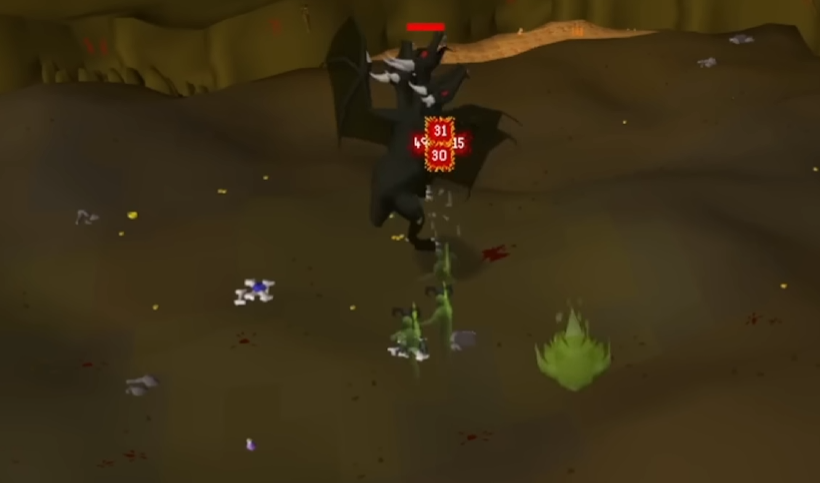
Boss tasks show up more often with relics, but they are not always the best choice depending on your goal.
For points and rewards, boss tasks can be strong. They usually give solid drops and feel more impactful than standard assignments. If you are chasing uniques or upgrades, they are worth taking.
For pure XP, they are slower than high-density Slayer tasks. You spend more time on each kill, and you lose the advantage of multi-combat areas where Slayer really speeds up.
Boss tasks make more sense once your gear and damage are strong enough to clear them efficiently. Early on, sticking to faster tasks usually keeps your progress moving better.
Relics and Why Culling Spree Changes Everything
Culling Spree is what pushes Slayer over the edge.
You are not just picking tasks, you are shaping your entire training loop. Being able to choose kill count lets you decide how long you stay on something.
If you want fast points, you keep tasks short. If you want better XP or drops, you scale it up.
That flexibility is what makes Slayer feel completely different compared to the main game.
Without it, Slayer still works, but you lose a lot of control.
Common Slayer Mistakes in Leagues 6
Slayer feels easy in Leagues, but there are still a few ways to slow yourself down without realizing it.
Taking long tasks too early before your damage is high enough
Unlocking regions that do not support strong Slayer monsters
Picking single-target tasks over multi-combat options
Treating Slayer like the main game instead of using relic advantages
The biggest slowdown usually comes from ignoring how much control Leagues gives you. If you are not picking efficient tasks or adjusting kill counts, you end up losing the speed advantage the mode is built around.
Quick Slayer Breakdown
All Slayer Masters share one task pool
Tasks depend on unlocked regions
Points are boosted and require no streak
Superior monsters spawn far more often
Culling Spree lets you choose tasks and kill count
Multi-combat tasks give the fastest XP
Why Slayer Feels So Fast in Leagues 6
Slayer normally forces you into long assignments with uneven rewards.
In Leagues, everything is front-loaded. You get points instantly, upgrades come faster, and relics remove most of the downtime.
That creates a loop where every task feels productive. You are not waiting for progress, you are constantly stacking it.
Once you lean into task selection and region synergy, Slayer becomes one of the smoothest skills to train.
Final Blurb
Slayer in OSRS Leagues 6 is built around control and speed instead of long-term grind. The ability to pick tasks, stack boosted rewards, and stay in high-density areas changes how the skill plays from start to finish. Once you lock into a good region setup and start choosing efficient tasks, Slayer turns into a steady stream of XP, points, and drops without ever slowing down.
More Old School RuneScape