

Path of Exile 2 Druid Bear Build Guide
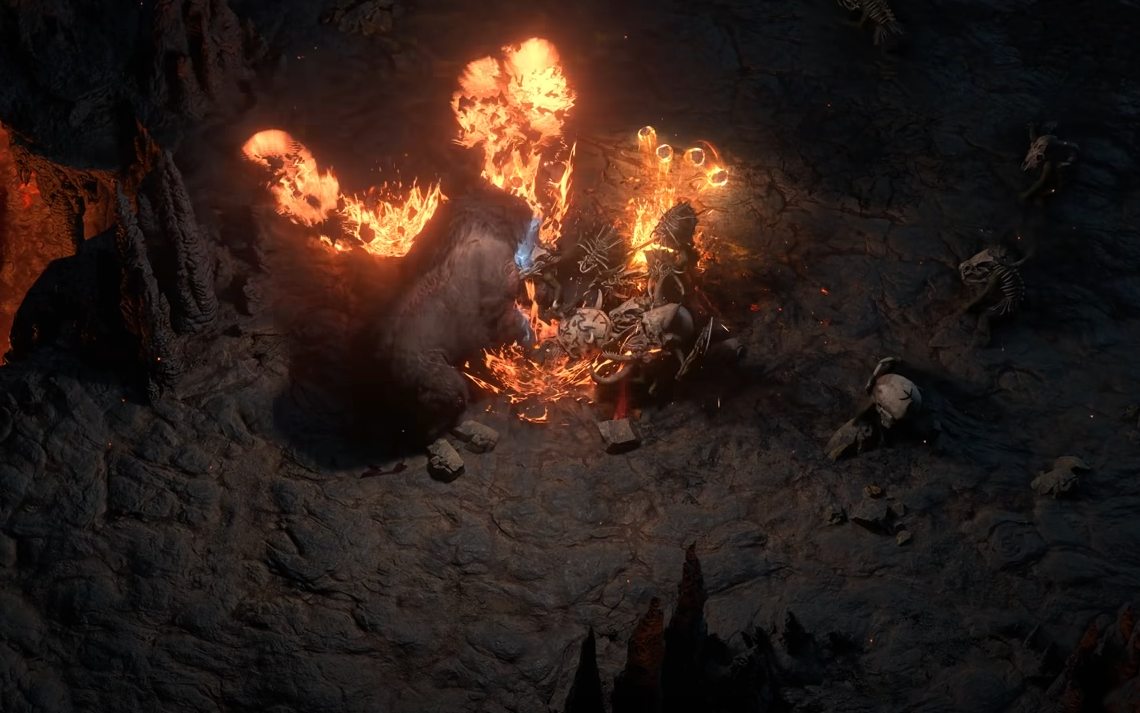
Patch 0.4 gave Bear Form a clear role, and this guide explains how a POE2 Druid Bear build actually works in practice.
Path of Exile 2 Druid Bear Build Answer
A Druid Bear build in Path of Exile 2 focuses on sustained combat, Rage management, and close range pressure. You stay in fights longer, build power through repeated actions, and convert that power into heavy damage windows.
Bear builds favor stability over speed and reward staying engaged instead of hit and run gameplay.
How Bear Form Works in POE2
Bear Form is designed for frontline combat. Attacks generate Rage naturally as you fight, and that Rage fuels stronger abilities.
You are encouraged to remain near enemies. Armor, defenses, and steady damage all work together to keep you alive while you wear targets down.
Bear gameplay is about momentum, not bursts every few seconds.
Core Bear Playstyle Loop
Bear combat follows a steady rhythm.
You engage packs, build Rage through repeated attacks, then spend that Rage during high impact moments. Afterward, you return to building Rage and repeat.
Bear builds typically emphasize
Rage generation through sustained combat
Heavy melee attacks for damage windows
Area pressure against packs
Staying power during long fights
The loop stays effective even when key skills are on cooldown.
Skill Role Philosophy for Bear Builds
Instead of fixed setups, Bear builds usually cover a few functional roles.
A primary melee attack that builds Rage
A heavier slam or strike for burst damage
An area focused skill for pack pressure
A movement skill, often borrowed from another form
This keeps the build flexible as new skills unlock later.
Rage and Damage Scaling
Rage is the core resource for Bear builds. Higher Rage increases access to stronger effects and longer damage uptime.
Damage scales best when you stay active. Backing off too often slows the build down.
Walking Calamity is one option for converting Rage into area damage later, but Bear builds are not dependent on a single skill to function.
Ascendancy Interaction for Bear Builds
Bear Form naturally pairs well with ascendancies that support steady resource flow and survivability.
Shaman enhances consistency and reduces downtime between actions. It feels smooth and forgiving.
Oracle can still work, especially for players planning deeper scaling later, but Bear benefits most from reliability early.
Ascendancy choice supports the playstyle rather than defining it.
Gear Priorities for Bear Form
Bear builds scale strongly with basic upgrades.
Early priorities include
Frequent weapon upgrades for attack damage
High armor bases
Life and basic defenses
Resistances when available
You do not need perfect items. Solid bases make a noticeable difference.
Strengths of Bear Druid Builds
High survivability
Consistent damage output
Forgiving positioning
Strong performance in long fights
Bear feels reliable when content gets messy.
Limitations of Bear Druid Builds
Slower movement than Wolf builds
Power spikes arrive later
Less burst damage early
Requires staying close to enemies
It trades speed for control.
Final Blurb
The POE2 Druid Bear build is built around staying power. You generate Rage by fighting, spend it to pressure enemies, and keep moving forward without resetting every encounter. It is not the fastest Druid style, but it is one of the most stable and forgiving ways to play Path of Exile 2.
FAQ
Is Bear Form good for beginners
Yes. It offers strong survivability and simple gameplay.
Does Bear require Walking Calamity
No. It helps later but is not required.
Is Bear slower than Wolf
Yes, but it is much tankier.
Can Bear use skills from other forms
Yes. Movement skills are commonly borrowed.
Is Bear viable into endgame
Yes. It scales well with gear and defenses.
