Rat ranching in Probably Stolen can turn a few ordinary rats into a valuable source of income. However, breeding more animals doesn't automatically mean making more Credits. The real profit comes from raising healthy rats, harvesting them at the right weight, and keeping your colony productive without wasting food or space.
How to Start Rat Ranching
What to Do With Rats
How to Breed Rats
Feeding and Growing Rats
Cage Upgrades and Overcrowding
Best Weight to Butcher Rats
How to Make Money From Rats
Common Rat Ranching Problems
How to Start Rat Ranching in Probably Stolen
To unlock rat ranching in Probably Stolen, call Joe Wild and purchase the ranching unlock for 500 Credits. Alternatively, select the Rat Wrangler starting scenario when beginning a new game to start with rats and ranching equipment.
Here's how to establish your first rat farm:
- Unlock ranching through Joe Wild or the Rat Wrangler scenario.
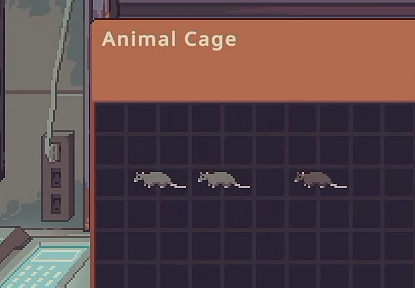
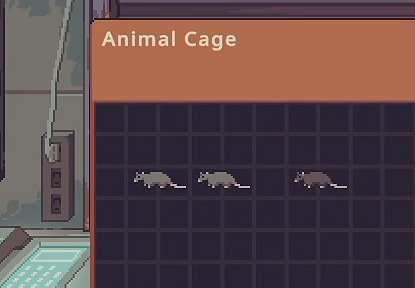
- Obtain an Animal Cage and place your rats inside.
- Add food to the cage so the animals can eat overnight.
- Keep at least one male and one female together once they're old enough to reproduce.
- Allow the rats to breed and raise their offspring.
- Butcher suitable rats for meat and sell the finished products through your shop.
Unlocking ranching also gives you access to the Retired Rat Rancher, who visits weekly and sells equipment for expanding your operation.
Start with a small breeding population rather than trying to fill an entire cage immediately. Your first priority should be establishing a reliable source of offspring and enough food to keep them growing.
How to Get More Rats
You can purchase rats through the ranching system or catch additional animals with Mouse Traps.
Dr. Jackson sells Mouse Traps with a base value of 50 Credits. Adding Processed Cheese increases their rat-catching chance from 1% to 50%, making baited traps significantly more effective.
Once your breeding population is established, however, you won't need to depend entirely on buying or catching new rats. Your existing animals can produce the next generation.
What to Do With Rats in Probably Stolen
Rats in Probably Stolen are used for breeding and producing meat, rather than being sold directly to ordinary customers as live animals.
You can butcher them with a Glass Shard or Meat Cleaver, then sell the meat as food. However, immediately butchering every rat you obtain is a poor long-term strategy.
The better approach is to give different rats different purposes.
| Type of Rat | What to Do |
|---|---|
| Young rat with good traits | Raise it as a possible future breeder. |
| Healthy adult with high Fertility | Keep it for producing additional offspring. |
| Rat with strong Growth Rate | Consider keeping it for breeding better meat rats. |
| Healthy rat reaching valuable meat weight | Butcher it if it isn't needed for breeding. |
| Older breeding rat | Prepare a younger replacement before its productivity declines further. |
I recommend treating your best breeding rats as long-term investments and their offspring as your primary meat supply.
This creates a repeatable cycle: maintain a breeding group, raise its offspring, sell the meat, and keep promising younger rats to replace aging breeders.
Build a Breeding Cage and a Growing Cage
Once you can afford a second Animal Cage, separating your breeding animals from the rats you're raising for meat makes the entire operation easier to manage.
Keep your strongest male and female breeding animals together, then move excess offspring into another cage as your population increases.
This helps you avoid accidentally butchering valuable breeders, makes overcrowding easier to control, and gives you a clearer idea of which animals are ready for harvesting.
It also prevents every new litter from immediately competing for space with your most important breeding animals.
How to Breed Rats in Probably Stolen
Rat breeding becomes possible when male and female rats are at least three days old and share an Animal Cage. Eligible rats can mate overnight, with pregnancy lasting approximately three nights.
A typical litter contains around three offspring, although genetics and random variation affect the final number.
Breeding is therefore a process you need to plan several days ahead, especially if you're trying to maintain a consistent meat supply.
Improve the Weaker Breeder First
Fertility determines the chance of successful breeding, but there's an important detail: the game uses the lower Fertility value of the two parents.
Consider these examples:
| Male Fertility | Female Fertility | Breeding Chance |
|---|---|---|
| 80% | 40% | 40% |
| 60% | 60% | 60% |
| 75% | 70% | 70% |
This makes a balanced pair more effective than relying on one exceptional breeder paired with a weak one.
If your male already has 80% Fertility but your female only has 40%, replacing the female with a 60% Fertility rat improves the pair's chance. Replacing the male with another 80% Fertility rat wouldn't.
When improving your breeding setup, look for whichever parent is limiting the pair rather than automatically choosing the animal with the highest individual stat.
Best Rat Breeding Stats
For a profitable ranch, prioritize the following traits:
- Fertility: Improves the likelihood of producing new litters.
- Growth Rate: Helps offspring reach profitable meat weights more quickly.
- Immunity: Protects against sickness that can reduce reproduction and meat yield.
- Litter Size: Determines how many offspring a female can produce.
- Longevity: Helps valuable breeders remain useful for longer.
Growth Rate is especially useful when you're raising rats for meat. Faster-growing animals can reach the same valuable weight thresholds in fewer nights, reducing the amount of food needed to get there.
Immunity is another important consideration. Rats with at least 50 Immunity are protected against ordinary sickness, helping preserve their productivity.
Hunger Rate and Max Health also matter, but I would focus on improving reproduction, growth, and disease resistance first.
Use the Gene Scanner to Plan Better Breeding Pairs
The Gene Scanner costs 300 Credits from the Retired Rat Rancher and reveals the inherited values behind a rat's individual traits.
Each trait has two underlying values. Offspring receive one from each parent, giving four possible inheritance combinations with a 25% chance each.
This means two rats with similar displayed Growth Rates can produce different outcomes depending on their inherited values.
Once your ranch is established, use the Gene Scanner to compare potential breeding pairs and preserve offspring with promising genetics.
There's little reason to spend heavily on advanced genetic selection before you have reliable food and enough cage space to support the resulting population.
Replace Breeders Before They Become Too Old
Rats begin experiencing old-age effects around day 11, including declining weight and Fertility. Normal rats also face significant mortality risk around day 14.
That creates a limited window for maintaining productive breeding animals.
A better strategy is to select promising replacement rats while your current breeders are still healthy.
Because rats become eligible to breed at three days old, you can prepare younger replacements before older animals reach the end of their useful lifespan.
Don't wait until your final breeding pair dies before thinking about the next generation.
How to Feed Rats and Improve Growth
Rats eat overnight, and insufficient food directly affects their growth.
You can initially feed animals by placing edible items inside their cages. However, this becomes inefficient as the population grows because rats consume whole food items, even when they cannot use every calorie.
Why the Livestock Feed Dispenser Is Worth Using
The Livestock Feed Dispenser converts food into a stored calorie supply that rats can draw from automatically.
Instead of consuming an entire item, rats replenish their hunger from the dispenser, generally aiming for around 425 hunger.
This helps avoid wasting calories from oversized food items and makes feeding multiple cages easier.
For example, feeding an 800-calorie item directly to a rat with limited hunger capacity can waste much of that food. A dispenser distributes the stored calories according to what the rats need.
For a growing ranch, reducing food waste is one of the simplest ways to improve your operation without breeding additional animals.
Don't Let Hunger Reduce Your Meat Profits
Rats grow toward different weight targets as they age, but hunger can slow that process considerably.
Growth begins suffering when hunger drops below roughly 400, with more severe reductions at lower hunger levels. Starvation can ultimately kill the animal.
This creates a problem beyond losing individual rats. Slow growth means feeding an animal across more nights before reaching a profitable butchering weight.
Keep enough food available to support healthy growth rather than allowing hunger to fluctuate dramatically.
Never Feed Rats Rat Meat
Feeding rats meat from other rats can cause prion disease.
This creates lasting penalties to important traits, including Immunity, Growth Rate, and Longevity.
It's particularly damaging to a breeding operation because it undermines the traits you're trying to improve.
Sell rat meat to customers instead and use other edible items for feeding.
How to Get Food for a Large Rat Farm
As your population expands, keeping the dispenser stocked becomes an ongoing expense.
Stolen food can be blended into the dispenser, giving you a useful outlet for food items that may otherwise be risky to sell.
The Commissary provides another option. Processed Milk offers particularly good calorie value for the tokens spent, making it worth considering when your ranch needs additional supplies.
However, food shortages during a Nutrifruit famine can leave the Commissary without stock.
Keep a food reserve rather than depending on a single source for every night's feeding.
How to Upgrade Animal Cages and Avoid Overcrowding
Overcrowding is one of the biggest threats to successful rat breeding.
It begins when rats occupy more than approximately 55% of a cage's available space. The first overcrowding stage increases cage wear and reduces breeding efficiency, while more severe stages can cause fights, sickness, and deaths.
The mistake is assuming you should fill every available cage space before expanding.
For breeding colonies, unused space is important because a new litter can push an otherwise manageable cage into overcrowding overnight.
Expand Before the Next Litter, Not After
Animal Cages begin with three rows of space and can be expanded five times using metal ingots.
You can use lower-quality ingots for these expansions, so expensive refined materials aren't necessary just to increase cage capacity.
Before expanding, consider how many offspring your breeding females could produce over the next few nights.
If your cage is already close to the overcrowding threshold, separating the rats into another cage may be more useful than waiting until the warning becomes severe.
Breeding faster without increasing space can actually reduce your results by causing illness, fighting, and lower Fertility.
Repair Damaged Cages With Scrap Metal
Animal Cages lose durability over time. If durability becomes too low, rats can escape and wander around your shop.
Use Scrap Metal on a cage to restore its durability.
It's worth checking durability alongside overcrowding, since heavily occupied cages experience additional wear.
Keep Cages Clean to Protect Meat Quality
Rats produce droppings overnight, and leaving cages dirty increases disease risk.
That matters because sickness can reduce both breeding performance and the amount of meat produced when an animal is butchered.
A Cleaner Robot can collect droppings automatically, making it useful once your farm grows beyond what you want to maintain manually.
Prioritize clean cages for your breeding stock, since losing a valuable breeder can disrupt several future litters.
Best Weight to Butcher Rats in Probably Stolen
For profitable rat farming, pay close attention to each animal's weight before butchering it.
Rats produce increasingly valuable meat as they become heavier, with meat returns increasing at roughly 50-gram intervals.
You can butcher rats using a Glass Shard or Meat Cleaver. A Skinning Knife also becomes available after butchering 100 animals.
Aim Just Above the Next Weight Threshold
Meat output increases when a rat passes certain weight thresholds, making the difference between two nearby weights surprisingly important.
For example, a rat weighing 301 grams can produce an additional cut compared with one weighing exactly 300 grams.
The general increase is approximately 15 Credits in base meat value per additional 50-gram tier.
Rats weighing at least 351 grams can produce larger Raw Meat cuts, while animals exceeding 400 grams are particularly valuable for higher-quality meat production.
However, the heaviest possible rat isn't automatically the most profitable one to raise.
Should You Wait Another Night Before Butchering?
Before keeping a rat alive for additional weight, consider three things:
- How close is it to the next valuable weight threshold?
- How much additional food will it consume overnight?
- Is the rat healthy and young enough to avoid unnecessary risk?
For example, keeping a healthy rat at 300 grams for another night may be worthwhile if it can grow past 300 and reach the next meat tier.
But if a rat is already well beyond a threshold and won't reach another one soon, feeding it for additional nights may provide little immediate benefit.
This is where Growth Rate becomes especially valuable. Faster-growing rats can reach profitable weight milestones using fewer nights of food.
I recommend harvesting healthy meat rats shortly after they reach your target weight rather than keeping every animal indefinitely.
Disease Can Destroy a Good Harvest
Sickness reduces the effective weight used to calculate meat output by approximately 25%.
For example, a sick rat weighing 400 grams may produce meat based on only 300 grams of effective weight.
That can eliminate a valuable meat tier even though the animal appears heavy enough.
Keeping rats healthy is therefore part of maximizing sale value, not simply preventing deaths.
How to Make Money From Rat Meat
After butchering your rats, you can sell the resulting meat through your shop.
However, the amount of food value displayed also matters because different customer types become available at different thresholds.
| Displayed Food Value | Potential Buyer |
|---|---|
| Below 145 Credits | Regular food customers |
| 145 to 349 Credits | Expedition suppliers |
| 350 Credits or more, after day 14 | Private chefs |
Target Private Chefs With the Right Meat Display
High-value Raw Meat can have a base value of 120 Credits.
That creates a useful selling strategy:
- One 120-Credit cut remains below the expedition supplier threshold.
- Two cuts total 240 Credits, reaching the expedition supplier range.
- Three cuts total 360 Credits, enough to reach the private chef threshold after day 14.
You don't need three identical pieces of meat to reach these values. Other food combinations can also contribute to your display total.
The important decision is whether selling your current food immediately is worth more to you than assembling a higher-value display that attracts a better customer category.
Once your ranch consistently produces valuable meat, targeting private chefs can be more useful than treating every cut as an individual sale.
Don't Expand Your Farm Faster Than You Can Sell
A larger breeding population means additional food consumption, cage maintenance, and cleaning.
If you're already producing more meat than your shop can comfortably sell, increasing your number of rats may only increase your running costs.
Focus on producing healthy, valuable cuts and reaching worthwhile display thresholds before expanding again.
For a profitable ranch, meat value and reliable sales matter more than simply owning the largest possible colony.
Common Rat Ranching Problems and How to Fix Them
If your rat farm isn't producing the results you expected, the problem is usually connected to breeding eligibility, food, overcrowding, or disease.
| Problem | What to Check |
|---|---|
| Rats aren't breeding | Make sure a male and female are at least three days old. Check Fertility, sickness, and overcrowding. |
| Rats grow too slowly | Check hunger levels and Growth Rate. Poor feeding slows weight gain. |
| Rats keep dying overnight | Check food, severe overcrowding, disease, and old age. |
| Rats escape their cages | Repair damaged Animal Cages using Scrap Metal. |
| Meat sells for less than expected | Check the rat's weight and health. Disease can reduce effective meat yield. |
| Too many rats and not enough room | Expand cages with ingots, separate animals, or harvest rats ready for meat. |
A Simple Rat Ranching Routine
Once you've established your farm, use this routine to keep production consistent:
- Check your best breeding animals and make sure they're healthy.
- Refill food supplies before ending the day.
- Inspect cages for overcrowding, damage, and droppings.
- Move excess offspring away from crowded breeding cages.
- Check rat weights and butcher animals that have reached worthwhile meat thresholds.
- Keep promising young rats as replacements for aging breeders.
- Organize meat displays around the customer types you're trying to attract.
The biggest improvement you can make is separating your breeding decisions from your harvesting decisions. Keep the animals that produce strong future generations, raise the remaining offspring efficiently, and sell their meat when the value justifies the food and time invested.
With healthy breeders, manageable cages, and carefully timed harvesting, rat ranching can become a dependable source of Credits without requiring you to maintain an enormous colony.