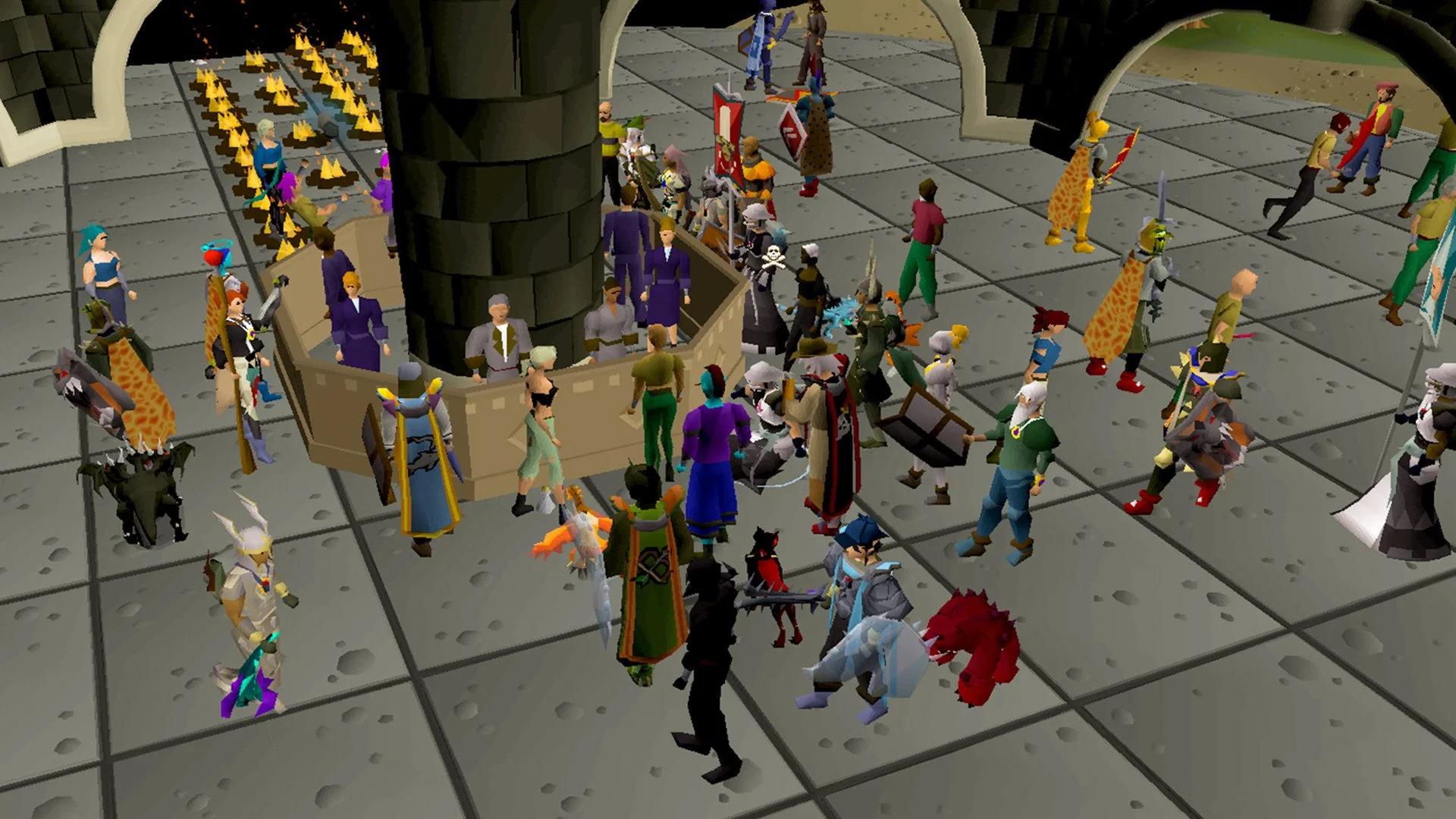
Image Credits: Jagex, Old School RuneScape
Old School RuneScape has transformed from a small nostalgia project into one of the most successful MMOs of the modern era. Back in January of 2015, the game averaged 20,529 players. It surpassed RS3 (the “modern” or “current” version of the game that has been updated since the beginning) back in April 2015 hitting around 37,000 average players, and today, in August of 2025, that number sits at 179,498 average players, marking a 774% increase in the game’s average population over this course of time. Even if we just take a look at this year, from February of 2025 to today, the player population has nearly doubled, increasing from 94,342 to the roughly 180,000 players on average. This incredible growth stands out in an industry where most MMOs struggle to retain players over a few years, let alone grow at such a strong rate.
Even though nostalgia may be a factor to some, OSRS clearly stands on its own two independent feet, and many players have come to enjoy it despite never having played RuneScape prior to the release of Old School. Let’s take a look at why.
Why Old School RuneScape Grew So Much
Community-First Development
There is a ton to unpack here and honestly an entire book could be written on this topic so forgive some condensing, but one of the most defining aspects of OSRS is its polling system. Just about every major update is voted on by the community before being added and requires a 70%+ majority to pass. This gives players direct control over the direction of the game, creating trust that most MMOs never achieve. Content like Theatre of Blood and the son-to-be-new skill Sailing, only made it into the game because most players wanted it. This model has helped the game never stray too far from its 2007 roots while still evolving at a solid pace.
The Role of the OSRS Team
To continue on this point, while community polls are the backbone of OSRS development, the dedication of the Jagex team itself can’t be overlooked. The developers working on OSRS have built a reputation for understanding the game’s core principles and respecting its design philosophy. They are visible in the community, relatively quick to address feedback, and trusted in a way that most MMO studios never achieve. That direct connection between devs and players has been key to the game’s long-term success.
Simplicity and Lasting Progress
One of the biggest reasons OSRS keeps players is its simplicity upfront. The game is easy to get into and understand, but also depth for those who want to push further. Skills and combat are clear in design, and progress always feels meaningful.
Importantly, nothing in OSRS is ever devalued by sweeping resets or new tiers that make old effort completely worthless with new expansions. If you step away for months or even years, your account experience and items remain useful when you return. This stability makes the grind rewarding and feel like long-term commitment pays off. Players know that every level, every boss kill, and every piece of loot matters to one extent or another in the long run.
Hardcore PvM and PvP Appeal With Room for Casual Play
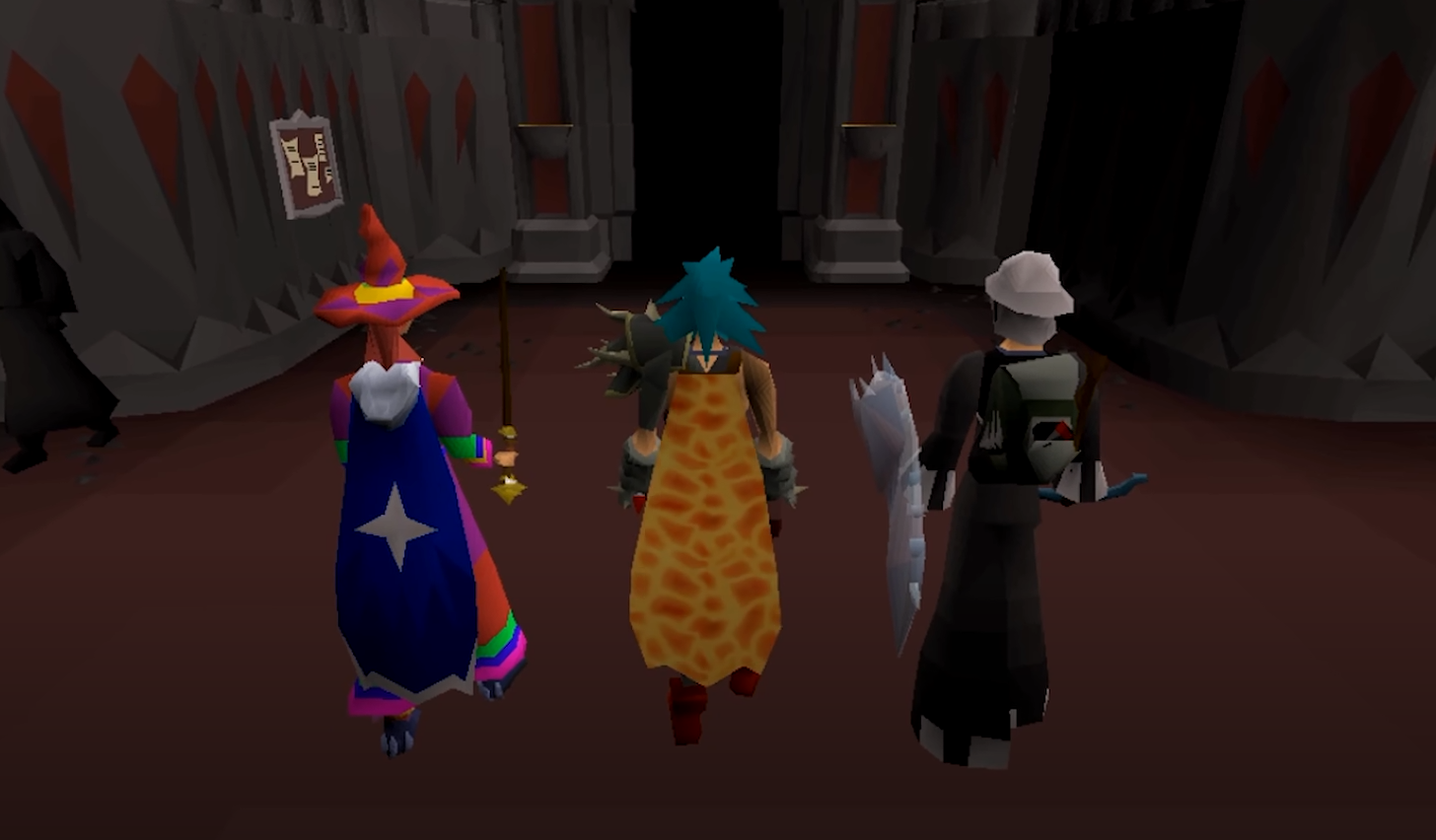
OSRS is known for its brutal PvM and unforgiving PvP. Challenges like the Inferno, raids such as Tombs of Amascut, and competitive modes like Deadman keep hardcore players hooked, rewarding skill and your time spent. The community thrives on pushing limits and mastering tough mechanics.
However, not everyone needs or wants that pressure. You can just as easily spend hours afk fishing, cutting trees, or slaying cows and goblins without ever touching high-end content. The mix of hardcore challenge and low-stress play is part of why OSRS works for so many different kinds of players. Truly, this game is one of the absolute best for those who want to skill-and-chill while working on something else on the side, watching a movie, or really doing whatever.
The Power of Nostalgia
It was mentioned above but is worth bringing up again. Many players first joined OSRS out of nostalgia for the mid-2000s RuneScape experience. What kept them around was that the game didn’t just freeze itself in time, but rather built upon that foundation with balanced updates that respected the old style while offering new challenges. For many, it’s the perfect mixture of familiarity alongside fresh content.
Content Creators and Streaming
Twitch and YouTube has also fueled the growth. Popular streamers showcased Ironman accounts, PvP tournaments, and raid challenges, drawing new audiences to the game. High-profile events like Deadman tournaments or speedrun competitions helped push OSRS into the spotlight beyond its own community.
Accessibility and Mobile
A major turning point for OSRS came with the launch of mobile on 30 October 2018. It opened the doors to a much wider audience, bringing back lapsed players who wanted the convenience of playing on the go while also introducing the game to a younger generation through app stores. Training skills, raiding, or PvP from a phone gave OSRS a level of accessibility most MMOs never reach.
That accessibility became even more important in 2020 when the COVID-19 lockdowns drove many people back to familiar games. OSRS fit perfectly as a comfort MMO, and its presence on mobile and Steam (February 2021) meant players could pick it up anywhere. This combination of global events and platform expansion gave the game a lasting boost and helped secure its massive long-term growth.
Why Modern MMOs Struggle Compared to OSRS
One reason OSRS stands out is how weak modern MMOs feel by comparison. Many new titles overload players with flashy systems, endless currencies, and constant resets that make progress feel hollow. Instead of simple goals with lasting value, most modern games bury players under seasonal grinds and limited-time rewards that lose meaning the moment the next patch arrives.
OSRS avoids most of these pitfalls. The design is straightforward, and progress always matters. There is no cycle of systematic gear inflation or constant wipeouts of player effort. Even years later your account still carries some weight.
Another major point is the lack of heavy pay-to-win systems. While OSRS does have Bonds, which can be traded for membership or gold, the game avoids the predatory mechanics found in many modern MMOs. There are no loot boxes, no mandatory battle passes, no cosmetic shops, and no layers of monetization that cheapen the experience. The grind might be long, but it’s fair, and that fairness is exactly why players respect the game and keep coming back.
The Future of OSRS
With ten years of consistent growth, OSRS has proven it is not just a temporary revival. Its unique mix of nostalgia, community-driven design, and evolving content makes it one of the few MMOs that feels stronger with age. If the game continues its balance of respecting tradition while adding new content, it could and almost certainly will remain a top MMO well into the next decade.
Final Blurb
Old School RuneScape went from ~20,000 players in 2015 to nearly nearly 180,000 in 2025, a 774 percent increase to be exact. The growth can be traced to its community polling system, nostalgic yet evolving design, hardcore content, streaming popularity, and wider accessibility through mobile and Steam. In an industry filled with failed MMOs, OSRS has proven to be one of the most remarkable comeback stories.
If you want to take a look at the population charts we used for some of this analysis, you can go here.
Written by Andrew Hamel | © 2025 GamerBlurb. You may share this content, but credit with a direct link back to GamerBlurb.com please.
View Latest Gaming Guides and News