Vampire Crawlers Combo System Guide: How Combos Work
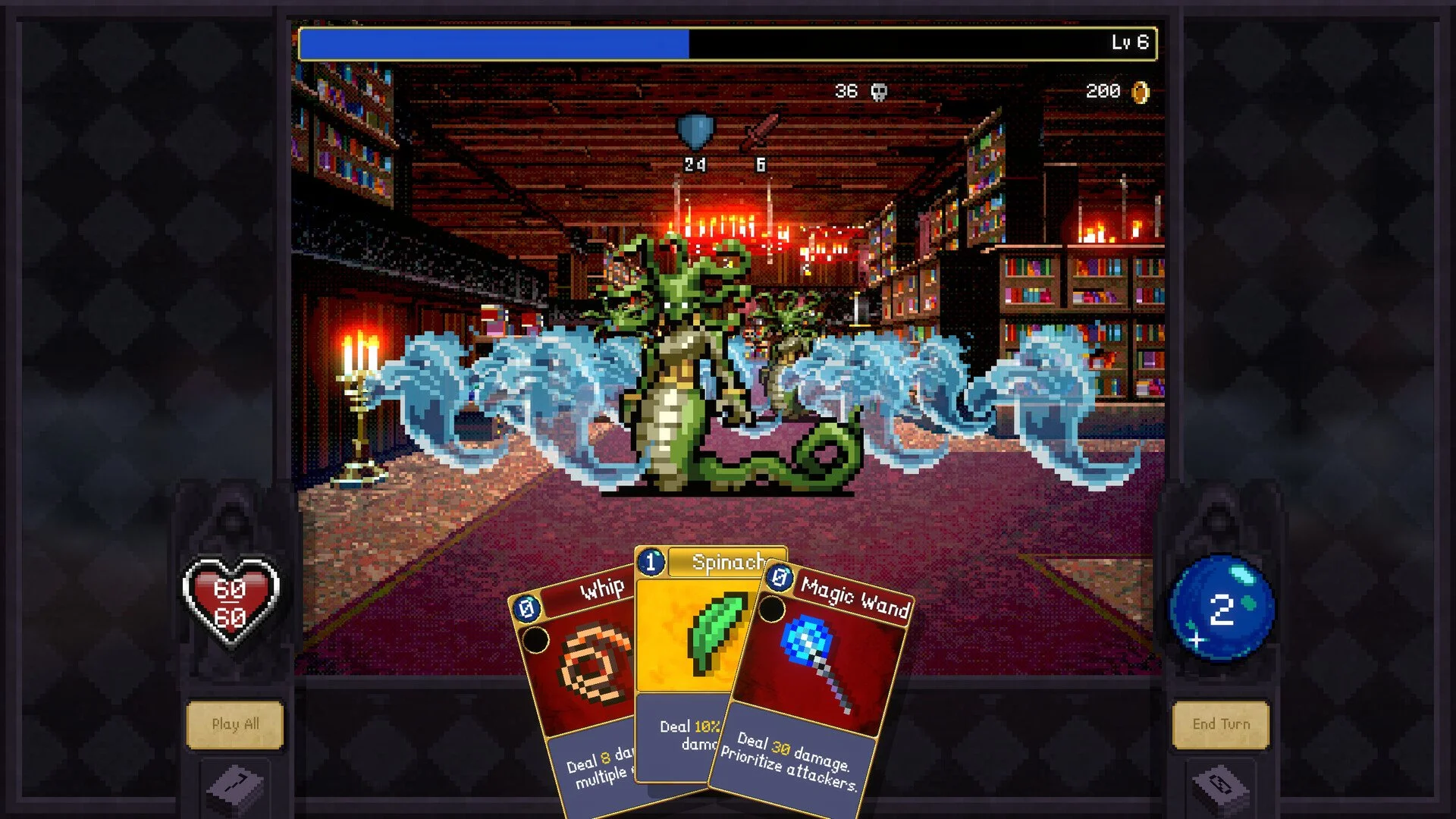
The combo system is the reason combat in Vampire Crawlers feels so explosive once a run starts coming together. Card damage and effects are only part of the story. The real power comes from sequencing your hand properly, building the multiplier, and making sure the cards with the biggest impact land later in the chain instead of getting dumped too early.
How Do Combos Work In Vampire Crawlers?
Combos in Vampire Crawlers work by playing cards in ascending Mana cost order, which increases the combo multiplier and boosts the damage or effect of the cards that come later in the chain.
A clean combo starts with a 0 cost card, then moves into 1 cost, then 2 cost, then 3 cost, as long as you have the Mana to keep going. Each step makes the chain stronger, and the later card gets the bigger payoff. That is why low cost cards often feel stronger than they look. They are not only there for their own effect. They are opening the ladder so the next card can land with more force.
That changes how a hand should be read. In a lot of card games, each card is judged mostly on its own value. Here, the sequence is just as important as the card text. A hand can look weak at first glance and still produce a huge turn if the costs line up well. A hand full of strong cards can also feel clumsy if too many of them sit at the same Mana cost and do not connect cleanly.
Why Combo Order Changes Everything
The biggest mistake early on is spending Mana on whatever looks strongest right now. That usually leaves damage on the table.
The better way to think about a turn is to identify the card you want hitting at the highest multiplier, then build backward from there. If a card has the best damage, armor gain, mana return, or utility effect in your hand, it usually should not be one of the first things played. The whole point of the combo system is that later cards become much more valuable when the chain is already active.
That gives the game a very different rhythm. Fights are not only about surviving the enemy turn. They are about arranging your own hand so the important card lands in the strongest slot possible. Once that clicks, turns stop feeling random. You start seeing routes through the hand instead of individual plays.
What The Combo Multiplier Actually Does
The multiplier is what turns a normal card into a real payoff. If a card normally deals a fixed amount of damage, a higher combo multiplies that result. The same idea applies to other effects as well. A good combo turn is basically converting sequence into extra value.
That is why the meter matters so much. It is showing how much more powerful your next play can become if the chain stays alive. A 2 or 3 cost card played raw can still be useful, but that same card played later in the combo can completely change the fight. Boss turns especially start feeling very different once a strong card is landing under a real multiplier instead of being thrown out by itself.
This is also why higher Mana cards often feel like finishers. Their cost already makes them harder to fit in casually, but the combo system rewards that by letting them arrive when the chain has real weight behind it.
The Best Decks Have A Real Mana Curve
Deckbuilding in Vampire Crawlers is heavily connected to combo flow. A deck full of cards at the same cost can look efficient and still play badly because the hand keeps stalling in the middle of a chain.
If the deck leans too hard on 0 cost cards, you can open turns but struggle to scale them. If too many cards sit at 2 or 3 cost, the hand can clog before the combo even starts. The strongest decks usually have enough low cost cards to open turns, enough middle cost cards to keep climbing, and enough higher cost cards to make the combo worth building in the first place.
That balance is what gives the deck consistency. You do not need every card to be amazing on its own if the costs line up well enough to keep producing strong turns. A smooth hand often beats a flashy but awkward one.
Why Low Cost Cards Are Better Than They Look
Low cost cards can seem less exciting because their raw output is usually smaller, but they do a lot of the heavy lifting that makes the rest of the deck work.
A 0 cost card is often the difference between a dead hand and a real combo starter. A 1 cost card can bridge the gap between setup and payoff. Without those cards, the stronger effects higher up the curve become much harder to place correctly. That is why trimming too many cheap cards out of a deck can backfire. The finishers may still be there, but the path into them gets worse.
This is one of the easiest ways to misread power in Vampire Crawlers. The deck does not only need strong cards. It needs cards that let strong cards arrive in the right order.
How Wild Cards Work
Wild Cards let you keep a combo going without following the normal Mana step for the next card. That makes them one of the most useful tools for salvaging awkward hands and forcing a chain through when the natural sequence is broken.
A simple example is having a 1 cost card and a 3 cost card with no 2 cost bridge in hand. Normally that chain would stall. A Wild Card fixes the gap and keeps the combo moving. It can also let you jump into a powerful payoff card earlier than the hand should normally allow.
That flexibility is why Wild Cards are much better when used with intention. Burning one on a small turn can help a little, but saving it for a boss, an elite fight, or a hand with a real payoff usually gets far more value. Since Wild Cards are one use only, timing matters a lot. They feel best when they are protecting a strong route through the hand instead of just patching a minor inconvenience.
Reverse Combo And Easy Combo Gems
These gems both make combos easier to build, but they do it in different ways.
Reverse Combo lets a card connect into one that costs 1 less Mana than the card before it. That changes the normal flow of a chain and opens extra lines that would not exist otherwise. It is especially useful when a hand wants to keep going but the cost ladder would normally force it to stop. A card with Reverse Combo can turn a dead end into another step.
Easy Combo is broader. It allows a card to connect regardless of normal Mana ascension. That makes it a powerful way to smooth out awkward hands or guarantee that an important card can slot into the chain when it otherwise would not fit. If you have a card you always want landing under a multiplier, Easy Combo can make that much easier to set up.
The difference between the two is practical. Reverse Combo bends the rules in a narrower way. Easy Combo opens the door much wider. Both are strong because they reduce the number of hands that fall apart over one bad cost gap.
How To Build Stronger Combo Turns
The strongest turns usually come from planning around the payoff card first. If there is a card in hand that will swing the fight hardest when multiplied, that card should shape the rest of the turn. The setup cards are there to feed it.
That means it is often correct to hold a playable card for a better place in the sequence instead of firing it off the second you can afford it. A card can be good now and still be much better 2 plays later. The combo system rewards patience inside a turn. It rewards seeing the full route instead of taking the first acceptable line.
Mana management is connected to this too. A combo only helps if there is still enough Mana left to cash in the big play at the end. Emptying the bar too early can leave the turn half built, which is often worse than playing fewer cards with a better order.
Why Some Decks Feel Strong But Play Badly
A deck can have plenty of powerful effects and still feel weak in battle if the costs do not cooperate. That usually shows up as hands with too many cards competing at the same Mana slot, too few openers, or too many finishers with no reliable bridge into them.
The result is a deck that looks strong in the card pool but keeps producing awkward turns. One fight might go well if the draw lines up perfectly, then the next fight falls flat because the sequence breaks immediately. That is usually a deckbuilding problem, not a combat problem.
When a run feels clunky, the first thing to check is the curve. If the hand keeps failing to climb, the answer is usually not another powerful payoff. It is a better set of connection pieces.
What A Good Combo Deck Usually Has
A good combo deck usually has cards that cover 3 jobs. It needs openers that start the chain cleanly, bridge cards that keep the Mana sequence moving, and payoff cards that are worth multiplying.
Too many openers and the deck spins its wheels without closing fights well. Too many payoff cards and hands get stranded before they can reach them. Too many middle cards can make the deck feel smooth but underpowered. The best runs are the ones where these roles are in balance, because every hand has a real chance to build into something threatening.
That balance is what gives the combat its sharp feeling. You are not only assembling a pile of useful cards. You are building a machine that wants to play them in the right order.
Final Blurb
The combo system is the heart of Vampire Crawlers combat. Playing cards in ascending Mana cost order builds the multiplier, but the deeper skill is knowing which cards are setup, which cards keep the chain alive, and which card should be landing at the highest boosted point in the turn. Once the deck has a clean curve and a few reliable ways to fix awkward hands, combat changes fast. Weak turns disappear, strong hands get much stronger, and the whole run starts feeling far more controlled.