Batteries in Moon Sweepers store electricity generated by solar equipment, helping your factory continue operating when sunlight disappears. However, stored power is limited, and machines can stop working once the battery runs out. Here's how to check your battery, restore its charge, and understand why your production line keeps losing power at night.
Jump To Section:
Where to Find the Battery
How to Charge the Battery
Can You Build More Batteries?
Why Batteries Run Out at Night
Battery Not Charging Fix
Where to Find the Battery in Moon Sweepers
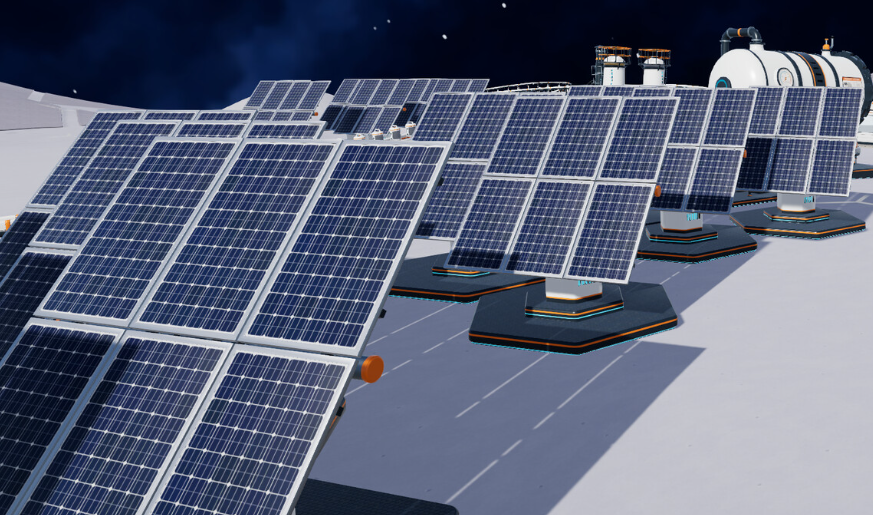
Battery information is available through the solar power system. The power status display shows how much electricity the system is generating, how much stored energy is available, and the demand from connected equipment.
Larger solar equipment also has battery storage associated with it, allowing stored electricity to support connected machinery when sunlight isn't available.
You can use these readings to determine whether a machine has stopped because of insufficient electricity or another production problem.
For example, a power display can show zero solar generation at night while the battery is still discharging. This means the system is using its remaining stored electricity to keep equipment running.
How to Charge the Battery in Moon Sweepers
Batteries recover stored energy using electricity generated by solar equipment during daylight. The available electricity must also support any machinery connected to the same power system.
- Check the power status of your solar equipment.
- Wait for daylight so the solar system can begin generating electricity.
- Compare the available generation with the power requirements of your machinery.
- Check whether the battery's stored energy is recovering.
- If generation is insufficient, increase your solar supply to better support the connected equipment.
- Monitor the battery again before nighttime to see how much stored power is available.
A basic Solar Post generates 3 kW, while a Solar Twin (M) generates 7.5 kW under suitable conditions.
The amount of power your machines require also matters. A Pressure Chamber needs 10 kW to operate, so three Solar Posts provide only 9 kW of nominal generation, which is below the chamber's listed requirement.
Four Solar Posts provide 12 kW of nominal generation during suitable sunlight, exceeding that requirement if no other connected machinery is using the same electricity.
These figures help determine whether your solar setup can support production. They don't establish how long the battery will last after sunset.
Can You Build More Batteries in Moon Sweepers?
A separate, placeable Battery building isn't documented among the available construction options. The power setups established so far use solar equipment and its associated stored electricity rather than dedicated battery banks.
This means there isn't a confirmed standalone Battery item with a purchase price or unlock requirement.
You can build additional solar equipment to increase electricity generation, but that isn't the same as installing a separate battery storage unit.
If your factory repeatedly loses power overnight, additional daytime generation may help restore its charge before sunset. However, more solar panels don't automatically guarantee enough stored electricity to last the entire night.
Why Do Batteries Run Out at Night in Moon Sweepers?
Solar power depends on daylight. When the Moon becomes dark, solar generation can fall to zero, leaving your connected production machines running on stored electricity.
Once that energy is exhausted, machines requiring electricity can stop processing materials until sufficient power returns.
The amount of machinery in your factory makes a difference. A single Pressure Chamber requires 10 kW, while a Stone Press needs 18 kW. Operating both creates a combined power requirement of 28 kW.
| Equipment | Power |
|---|---|
| Solar Post | 3 kW generation |
| Solar Twin (M) | 7.5 kW generation |
| Pressure Chamber | 10 kW required |
| Stone Press | 18 kW required |
A factory can therefore have enough electricity to operate during daylight but still run out of stored energy at night.
There isn't an established battery runtime that applies to every setup. The available information doesn't provide a fixed number of minutes a fully charged battery will support each machine.
For that reason, check the battery's remaining charge and your connected power demand rather than assuming every solar setup can operate continuously through darkness.
Moon Sweepers Battery Not Charging Fix
If your battery isn't recovering or your factory stops producing, inspect the power status before moving or replacing equipment.
Start by determining whether the problem is electricity generation, stored charge, or the production machinery itself.
| Problem | What to Check |
|---|---|
| Battery isn't charging | Check whether solar generation is available during daylight. |
| Factory stops at night | Check the remaining battery charge and total power demand. |
| Power runs out quickly | Compare connected machinery requirements with available stored electricity. |
| More solar equipment hasn't helped | Check whether the system has enough charge before sunset and whether production demand exceeds the available supply. |
| Machine has power but isn't producing | Check its material inputs and conveyor output. |
Check Your Power Supply
If a Pressure Chamber or Stone Press stops operating, inspect the solar power status and compare the available generation against the machine's requirements.
Check whether the equipment is connected to the power system and whether stored charge is being used to meet demand.
If the system consistently runs low on electricity during daylight, expanding solar generation is worth considering before purchasing more processing equipment.
Make Sure the Machine Isn't Waiting for Materials
A factory that appears to have stopped doesn't necessarily have a battery problem.
The Pressure Chamber requires incoming Moon Dust and a working output route for Moon Sand. The Stone Press requires both Moon Dust and Moon Sand before it can produce Moonstone.
If sufficient power is available, inspect the connected conveyors and material inputs before assuming the battery has failed.
What If the Battery Keeps Running Out?
If your battery recharges during daylight but runs out before morning, the stored electricity isn't lasting long enough to support your current production demand.
Check how much charge remains at sunset and how quickly that reserve decreases while the machines operate.
Without a confirmed standalone battery building or storage upgrade, there's no established method for guaranteeing uninterrupted nighttime production in every factory setup.
For now, the most useful approach is to monitor stored charge, ensure sufficient daytime solar generation, and account for nighttime power interruptions when building your production line.