Even Successful Games Can't Protect Developers From Layoffs
There was a time when a successful game at least seemed like it should buy the people who made it some degree of job security. Maybe that was always a little optimistic, but in 2026 the connection between commercial success and employment stability feels weaker than ever.
Games are breaking franchise records, long-running MMOs are still generating enormous amounts of revenue, and companies are publicly celebrating launches as successes. Yet some of the developers responsible for those games are still being laid off only weeks or months later. Battlefield 6, The Elder Scrolls Online, and Refactor Games are three very different examples, but together they paint a pretty bleak picture of what success now means for the people actually making games.
Success Is Becoming Disconnected From Job Security
The current wave of layoffs across the games industry is not unusual simply because companies are cutting jobs. Studios restructure, projects get canceled, budgets change, and some games genuinely fail to make enough money to justify the size of the teams behind them. None of that is new.
What feels different now is how often layoffs are following projects that were demonstrably successful. A recent GDC survey found that roughly one-third of U.S. game industry workers surveyed had been laid off at some point during the previous two years, while around half said their current or most recent employer had experienced layoffs within the previous year.
Those numbers are already grim, but the individual cases make the problem easier to understand. Developers can help ship a record-breaking game, spend years maintaining a profitable live service, or deliver a launch that executives publicly praise, and still find themselves out of work shortly afterward.
That raises a much more uncomfortable question than whether any one round of layoffs was justified: if success no longer provides much protection, what exactly are developers supposed to achieve to feel secure?
Battlefield 6 Should Have Been the Safe Bet
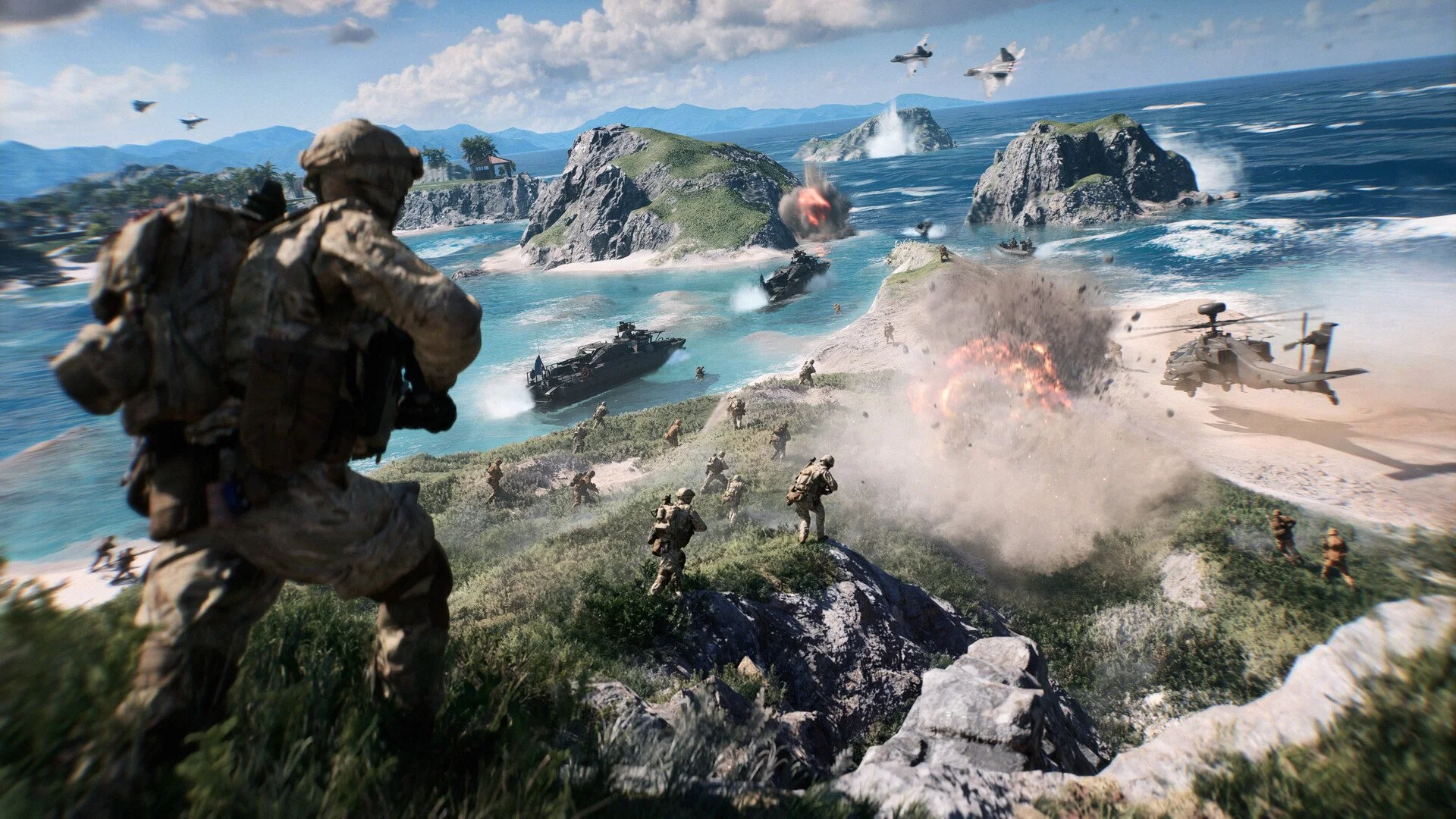
Battlefield 6 is probably the cleanest example. The game sold around 7 million copies in its first three days, making it the biggest launch in franchise history, and eventually pushed beyond 20 million copies. This was not a publisher trying to recover from an obvious commercial disaster. Battlefield 6 was a huge success.
Roughly six months later, layoffs began affecting employees across the group of studios responsible for Battlefield, including DICE, Criterion, Ripple Effect, and Motive.
There is an obvious business argument here. A team needed to finish and launch a massive AAA game is not necessarily the same size as the team required to support it afterward, and staffing needs naturally change once a project moves from full production into live support. But that explanation does not make the broader reality much less troubling for developers.
If helping deliver the biggest launch in the history of your franchise cannot make you reasonably confident that you will still have a job six months later, commercial success starts to feel less like security and more like a temporary checkpoint before the next restructuring.
The Elder Scrolls Online Shows Longevity Is Not Enough Either
The Elder Scrolls Online makes the same point from the opposite direction. Battlefield 6 was a massive new release. ESO is a game that has already spent more than a decade proving that it can remain commercially viable.
The MMO has reportedly generated roughly $15 million per month for extended periods, while former leadership has previously discussed lifetime revenue measured in the billions. Despite that track record, ZeniMax Online Studios still lost more than 200 employees during Microsoft's broader Xbox restructuring.
There has been no public indication that those layoffs happened because The Elder Scrolls Online suddenly became unprofitable or because the game itself was collapsing financially. The cuts were part of a much larger corporate restructuring, and that distinction may actually make the example more revealing.
A team can spend years building and maintaining a successful game, generate an enormous amount of revenue, and still be vulnerable to decisions made several levels above the product itself. At that point, the financial performance of the thing you actually worked on may no longer be what determines whether your job survives.
Refactor Games May Be the Most Brutal Example
The situation at Refactor Games stands out because of how quickly everything happened. Refactor developed FIFA World Cup: Launch Edition for Netflix Games, and Netflix leadership later described FIFA and another title as two of its most successful cloud gaming launches on television.
Seven weeks after FIFA launched, Refactor reportedly lost around 85% of its staff after co-owner Delphi Interactive withdrew funding. Approximately 80 employees were affected, with reports also indicating that those workers received no severance.
There is an important distinction here. Netflix did not own Refactor and did not directly conduct the layoffs. Netflix was the publishing partner publicly discussing the performance of the game, while the cuts followed the reported funding decision from Delphi Interactive.
But from the perspective of somebody who spent years making the game, that distinction probably does not make the sequence feel much better. The project shipped, its performance was publicly celebrated, and most of the studio was gone seven weeks later.
Developers Are Starting to Look Like Temporary Labor
Put enough of these stories next to each other and a larger pattern starts to emerge. Modern game development increasingly looks like a system where companies assemble enormous teams to build increasingly expensive projects, push them through launch, and then quickly reconsider how many of those people they actually want to keep once the product exists.
There is a certain financial logic to that model. Production requirements change, live-service teams may be smaller, and companies are constantly trying to reduce costs. The problem is that game development is not just a collection of interchangeable labor hours.
Studios rely heavily on institutional knowledge. The person who understands a proprietary engine better than anyone else, the developer who knows why a decade-old system behaves strangely, or the designer who remembers the compromise that prevents another mechanic from breaking is not easily replaced by simply hiring another name into the same role.
When teams are repeatedly broken apart, companies do not just reduce payroll. They lose experience, internal knowledge, and people who have spent years learning how to work together. And the employees who remain learn something too: shipping the game successfully may not buy them very much time.
The Industry Has Made Success Feel Temporary
Not every layoff is avoidable, and no studio can realistically promise permanent employment to every person who works on a game. Commercial success also does not erase every financial or organizational reason a company might restructure.
But the current pattern is becoming increasingly difficult to dismiss as normal business. A failed game can cost developers their jobs. A canceled project can cost developers their jobs. A corporate restructuring can cost developers their jobs. And now, increasingly, a record-breaking successful game can be followed by the exact same outcome.
That creates a problem much larger than any individual round of layoffs. The industry depends on convincing talented people to spend years working on projects that are difficult, expensive, and risky to produce. Historically, one of the assumptions behind that risk was that doing great work and shipping something successful would at least improve the odds of having a future at the studio afterward.
That connection looks weaker than it has in a long time.
Battlefield 6 can become the biggest launch in franchise history. The Elder Scrolls Online can generate money for more than a decade. A smaller studio can ship something its publishing partner publicly celebrates as a success. None of that necessarily means the people responsible will still be there when the next quarter arrives.
The games industry clearly does not have a shortage of people capable of making successful games. The bigger question is how long it can keep asking those people to build them while making success itself feel increasingly temporary.
More News from GamerBlurb