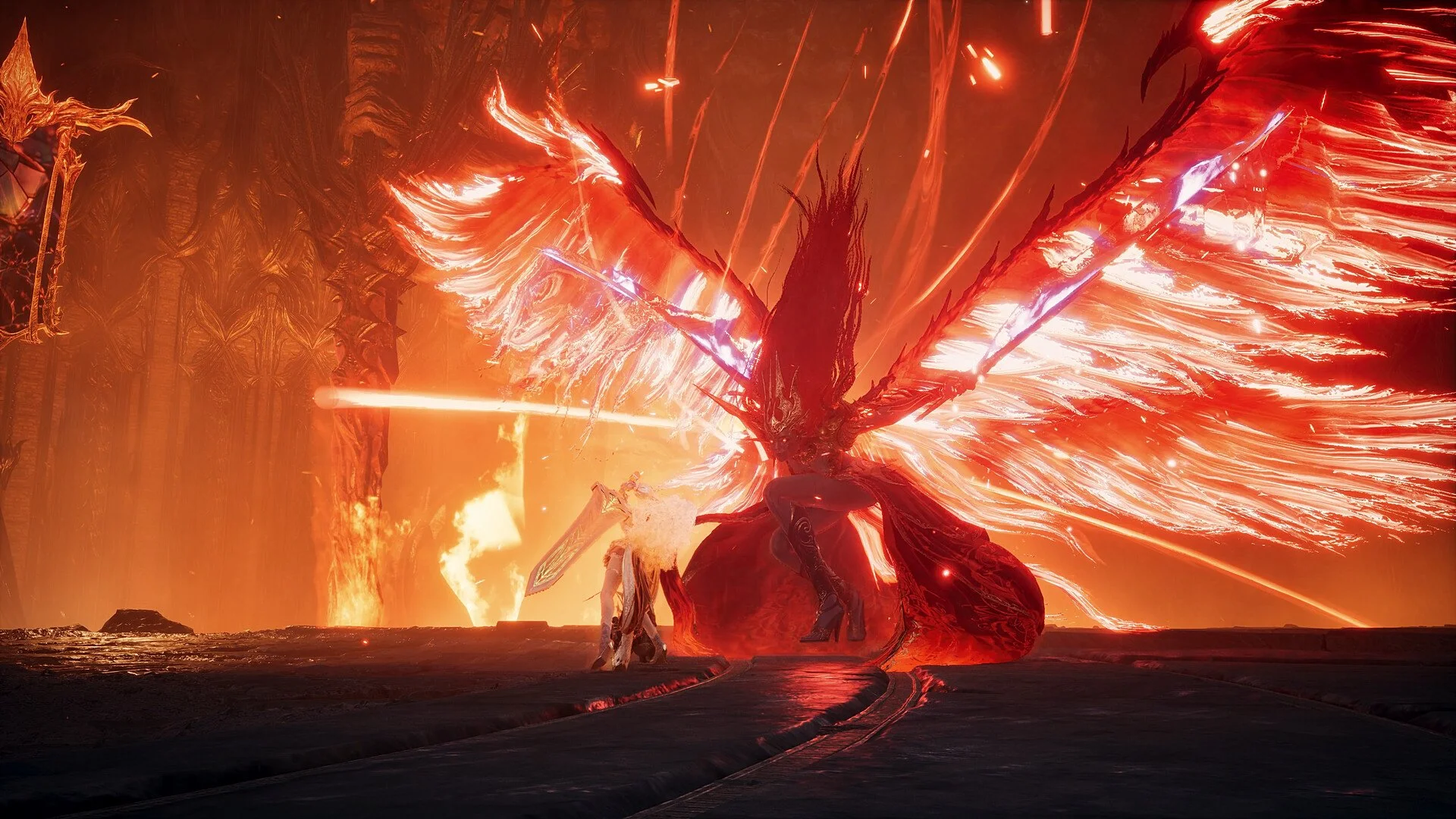
Aion 2 Best PvP Class Tier List

PvP changes what makes an Aion 2 class strong. A rotation that looks incredible against a predictable boss loses some of its value when the target can disengage, interrupt your setup, force you to fight at the wrong range, or simply pressure you before your own damage window is ready.
For that reason, my Aion 2 PvP tier list puts a lot of weight on how reliably a class can create the fight it wants. Assassin and Ranger currently stand out because they approach that problem from opposite directions: Assassin has the tools to reach and overwhelm a target, while Ranger makes opponents solve the problem of reaching it in the first place.
If you're focused on dungeons, group content, and overall endgame performance, our Aion 2 best PvE class tier list ranks every class based on damage uptime, utility, survivability, and party value.
Jump To Section:
Aion 2 PvP Class Tier List
Assassin – S Tier
Ranger – S Tier
Sorcerer – A Tier
Spiritmaster – A Tier
Chanter and Cleric – A Tier
Templar and Gladiator – B Tier
Which PvP Class Should You Play?
Aion 2 Best PvP Class Tier List
For the current Global-launch outlook, my Aion 2 PvP tier list has Assassin and Ranger in S Tier; Sorcerer, Spiritmaster, Chanter, and Cleric in A Tier; and Templar and Gladiator in B Tier.
S Tier: Assassin, Ranger
A Tier: Sorcerer, Spiritmaster, Chanter, Cleric
B Tier: Templar, Gladiator
I wouldn't read B Tier as “bad at PvP,” though, and I definitely wouldn't choose a main solely from those letters. This ranking is really measuring how easily each class can realize its strengths against another player. Templar and Gladiator have plenty of combat value, but melee access becomes an additional problem they have to solve against mobile ranged opponents. Chanter and Cleric can become much more valuable when the question shifts from individual kills to keeping an organized group functioning.
There is also a much larger player-dependent swing here than a simple tier chart suggests. Gear Score, Stigma setup, latency, positioning, and execution can all change how threatening a class feels. Assassin is perhaps the clearest example: the same characteristics that give it S-tier potential also make poor execution much more expensive.
Assassin – S Tier
Assassin is my pick for the highest-ceiling Aion 2 PvP class because its toolkit attacks one of the most important advantages another player can have: control over when the fight begins.
Stealth gives Assassin an opportunity to approach encounters differently from classes that have to show themselves before establishing pressure. Add burst damage, crowd control, and utility, and a properly developed Assassin can create extremely dangerous openings and eliminate targets quickly.
There's a catch, and it's a significant one. Assassin's strength has a fairly large execution tax attached to it. Strong gear and an appropriate Stigma setup matter, rotations need to be precise, and latency is particularly relevant when you're relying on quick sequences and positioning rather than slowly winning a fight through attrition.
That's why I wouldn't automatically call Assassin the easiest PvP main despite putting it in S Tier. You're choosing a class with tools capable of forcing a favorable encounter, but you still have to actually execute once you've created it.
For an experienced player who enjoys identifying the right target, getting into position, and converting a short opening into a kill, Assassin has arguably the most attractive PvP package of the eight Global classes.
Ranger – S Tier
Ranger reaches the same tier for almost the opposite reason. Instead of needing to get onto a target before unloading damage, Ranger starts with the inherent advantage of threatening opponents from range.
That matters because distance is effectively another resource in PvP. Every second a melee opponent spends trying to reach you is a second where the matchup isn't being played on equal terms, and Ranger combines that ranged pressure with burst potential, mobility, and defensive tools.
It's also why I'd favor Ranger over Assassin for someone who wants a strong PvP class without specifically wanting Assassin's higher-risk approach. Both can punish another player quickly, but Ranger's starting question is often “how do I preserve my advantage?” while a melee Assassin first has to create access without wasting its opportunity.
That doesn't mean staying at range automatically wins encounters. Positioning still decides whether your distance is actually useful, and poor movement can surrender the exact advantage that makes Ranger threatening. But as a general PvP profile, range plus mobility plus burst gives the class answers in a wide variety of encounters.
Sorcerer – A Tier
Sorcerer drops just below the two S-tier classes, but I'd still consider it one of the most dangerous choices for players who want ranged magical pressure.
Its appeal is the combination of burst and crowd control. Damage gets much easier to convert into an actual kill when the opponent's movement is being constrained at the same time, which gives Sorcerer a clear PvP identity rather than simply being “the ranged magic DPS.”
The difference compared with Ranger is consistency. Ranger's range, mobility, and pressure form a fairly direct package, while Sorcerer's value leans more heavily into creating and capitalizing on the right control and damage windows.
If that's the part of MMO PvP you enjoy, A Tier shouldn't scare you away from it. A player who understands when to pressure, when to control, and when not to waste burst into a bad window can make Sorcerer substantially more threatening than its position underneath Assassin and Ranger might imply.
Spiritmaster – A Tier
Spiritmaster belongs beside Sorcerer but solves PvP differently. The class combines ranged pressure with crowd control, summons, shields, Stigma options, and additional utility, giving it a broader toolbox rather than reducing its identity to raw burst.
I like Spiritmaster more for someone who wants to win encounters by continually giving the opponent bad choices. Damage matters, but control and utility can force movement, disrupt plans, or give you enough survivability to reach another opportunity instead of requiring every engagement to end during the first burst window.
The tradeoff is complexity. Having more tools only becomes an advantage if you're comfortable choosing the right one quickly, and PvP gives you much less time to make that decision than PvE.
So I'd separate Sorcerer and Spiritmaster by preference rather than treating one as an obvious replacement for the other. Sorcerer is the more natural pick if burst and control are what attract you. Spiritmaster makes more sense if you want pressure backed by a larger utility kit.
Chanter and Cleric – A Tier
Chanter and Cleric are where a one-dimensional PvP tier list starts becoming misleading, because their value changes dramatically depending on whether you're asking “who kills another player?” or “who helps a group win the fight?”
Both bring support value that becomes particularly meaningful in larger engagements. Healing, buffs, shields, and broader utility can influence several players rather than producing one flashy kill, and that's a form of PvP power a damage-only ranking tends to underestimate.
Chanter is particularly flexible because it can combine support with melee contribution, while Cleric leans more heavily into sustained recovery and keeping players alive. Both can still fight rather than existing purely as passive support characters.
I wouldn't put either into S Tier on the current overall PvP outlook because Assassin and Ranger have more direct agency when creating individual pressure. But if you're joining organized groups, don't interpret that as meaning an Assassin is automatically more useful than your Cleric or Chanter. You're filling fundamentally different jobs.
The larger and more coordinated the fight becomes, the less useful it is to compare support value to a pure damage class as though everyone is competing for the same slot.
Templar and Gladiator – B Tier
The problem for Templar and Gladiator isn't simply that they're melee classes. The problem is that every melee class has to pay an access cost against an opponent capable of maintaining distance.
If a ranged opponent is already damaging or controlling you before your own pressure begins, part of your toolkit and execution is being spent merely making the fight happen on useful terms. That can make both classes feel much more matchup-dependent than Ranger or Assassin.
Gear also matters heavily here. Better equipment can make a durable melee character extremely difficult to deal with, while falling behind in Gear Score can make closing distance feel substantially worse because you're absorbing pressure without enough payoff once you finally arrive.
Templar still brings the inherent value associated with Aion 2's tank role, while Gladiator offers the more aggressive melee approach. Neither is something I'd describe as incapable of strong PvP.
B Tier instead reflects how many conditions have to go right before their strengths become relevant. If you enjoy durable frontline combat or simply prefer melee, that tradeoff may be completely worthwhile. If you're choosing purely around having the easiest access to your PvP win condition, the classes above them currently have fewer obstacles.
Which Aion 2 PvP Class Should You Play?
If I wanted the strongest PvP ceiling and was comfortable accepting a demanding class, I'd start with Assassin. Stealth, burst, crowd control, and the ability to dictate engagements give it almost everything I want from a PvP-focused character, but that strength assumes you can handle its positioning and execution requirements.
Ranger would be my more broadly accessible PvP choice. Its range changes the geometry of every matchup before another ability is even pressed, while mobility and burst give it the tools to protect and capitalize on that advantage.
For magic, the choice becomes more stylistic. Sorcerer fits the player who wants ranged burst and control, whereas Spiritmaster trades some of that straightforward identity for a wider utility toolkit.
Chanter and Cleric make far more sense if your idea of PvP is organized group play rather than measuring success by solo kills. And if you specifically enjoy standing your ground or forcing your way through ranged pressure, Templar and Gladiator can still be satisfying despite the additional access problem that puts them lower on this particular ranking.
The biggest mistake would be treating the letters as a prediction of every fight. Aion 2 PvP is unusually sensitive to Gear Score, Stigma choices, ping, positioning, and player execution, so the better class for you is ultimately the one whose win condition you're comfortable reproducing consistently. An S-tier Assassin that repeatedly mistimes its engagement isn't receiving some invisible tier-list bonus over a well-built Gladiator that knows exactly when it can commit.
If you expect to spend more time progressing on your own, our Aion 2 best solo class tier list compares every class specifically for self-sufficiency, sustain, damage, and solo progression.