DragonSword Awakening Tier List: Best Characters & Team Comps
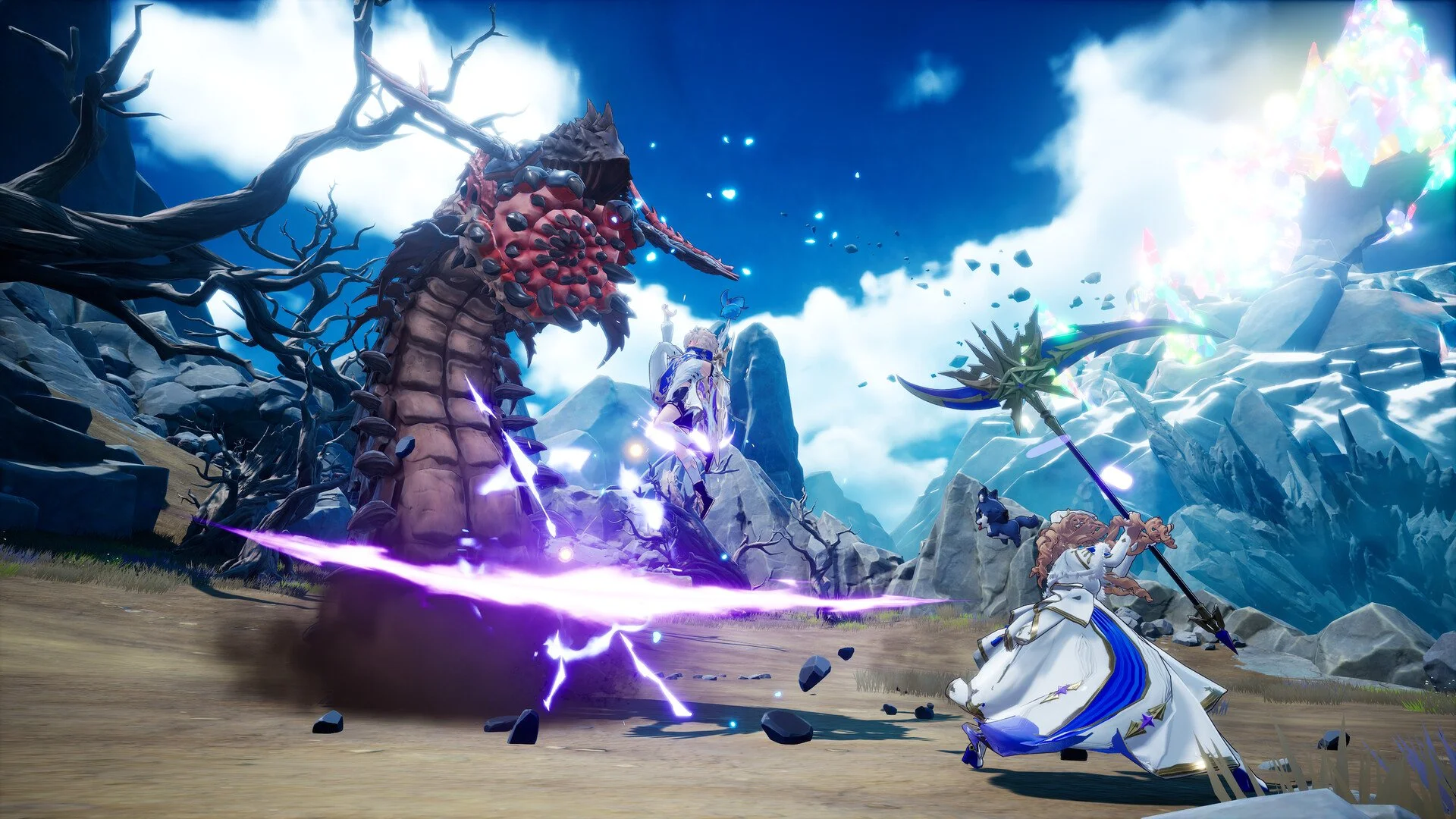
DragonSword: Awakening teams are built around more than individual damage. A powerful character can still feel ineffective when the party cannot create the Bleed, Stun, Airborne, Knockdown, or Break condition needed to activate the next Signal Skill. The strongest teams establish a repeatable sequence, survive when bosses resist crowd control, and return safely to the character responsible for driving the next rotation.
Players looking for a smoother opening route can use our DragonSword Awakening beginner guide for early team choices, resource priorities, Signal Skill tips, and upgrade advice.
Jump To
DragonSword Awakening Tier List
Our DragonSword Awakening tier list prioritizes complete team value rather than measuring characters only by personal damage. Signal compatibility, safe field time, mobility, Break pressure, survivability, and the ability to continue functioning against Super Armor all affect a character’s placement.
S Tier: Cerese, Othello, Reina, Charlotte, and Theressia.
A Tier: Dana, Johnny, Lute, Castella, Roxy, and Ornette.
B Tier: Alex and Aria.
Characters within the same tier are not listed in a strict damage order. Cerese may be more valuable in a patient ranged setup, while Charlotte can produce substantially more aggressive pressure when the player is comfortable with aerial movement and rapid switching. Reina ranks highly because she contributes to several different team structures instead of being locked to one exact lineup.
The gap between tiers is also smaller than it may initially appear. An A-Tier hero placed inside the correct Signal sequence will outperform an S-Tier character whose entry condition never activates.
How We Ranked the Best DragonSword Awakening Characters
The first consideration is whether a character can reliably create or answer a combat condition. Status effects such as Bleed, Stun, Airborne, Knockdown, and Knockback are not merely debuffs. They activate Signal opportunities that allow an off-field teammate to enter and continue the sequence.
The second factor is field safety. A hero who produces excellent theoretical damage but repeatedly becomes trapped inside a boss attack is less useful than a character capable of delivering slightly lower damage while preserving position and setting up the next switch.
We also considered how well each character handles enemies that resist the team’s normal plan. Airborne teams are extremely strong against launchable targets, but their value drops when Super Armor keeps the enemy planted. The highest-ranked characters still contribute through Break buildup, shorter attack windows, movement, or defensive utility when their preferred control effect fails.
Finally, we considered investment burden. Some heroes deliver their assigned job with functional gear, while a primary field driver may require a complete set, upgraded skills, and suitable Karma before the entire team begins working properly.
S-Tier Characters in DragonSword Awakening
Cerese is one of the safest characters around which to organize a difficult boss team. Her ranged field presence preserves visibility and gives the player more time to read incoming attacks, while her ability to share field time with Dana makes the lineup less dependent on one rigid opening sequence. Cerese becomes especially valuable when paired with Othello, who handles the dangerous moment when an enemy closes the distance.
Cerese earns S Tier because she improves consistency. She may not create the most frantic rotation in the roster, but she reduces the number of situations where the active character becomes trapped directly beneath a boss with no safe continuation available.
Othello is the strongest transitional character in the tested ranged core. Cerese and Dana can rotate according to positioning and cooldowns, but Othello has a more fixed responsibility: enter when the enemy reaches close range, complete the immediate melee exchange, and reopen enough space for the ranged phase to resume.
That role makes Othello more than a secondary damage dealer. He prevents a ranged composition from becoming an improvised melee team every time the arena shrinks. His value remains high even when his personal field time is shorter than that of Cerese or Dana.
Reina is one of the most flexible characters in the launch roster. She can serve as an Airborne specialist, a mobile bridge in the Charlotte and Johnny action team, or the third member of a Cerese and Othello hybrid.
Her separate sprint-style movement and dodge give her two different ways to reposition. This allows Reina to use longer movement for restoring space while preserving the shorter defensive option for an incoming committed attack. Her launch tools also make her central to teams built around keeping vulnerable enemies suspended.
Charlotte is the strongest high-execution field driver. She can move between ground and aerial pressure, redirect with an air dash, and remain active long enough to create frequent teammate opportunities. When the enemy can be launched and the camera remains readable, Charlotte controls the pace of the encounter.
Her S-Tier placement comes with a warning. Charlotte becomes much less forgiving against persistent hazards, launch-resistant bosses, and attacks that remain active beneath an aerial sequence. She rewards players who can end a combo early rather than treating every successful launch as permission to continue attacking indefinitely.
Theressia remains one of the strongest general status applicators. Consecration applies Bleed, while Celestial Verdict adds Stun, allowing her to create several different Signal opportunities without relying on one narrow condition.
Her Divine Arc and Holy Rise Signal entries can reapply Bleed or contribute to an Airborne sequence, giving Theressia a place in damage-over-time, control, and beginner teams. She may not define the tested Cerese and Othello core, but she is easier to transfer between unrelated lineups than many more specialized characters.
A-Tier Characters in DragonSword Awakening
Dana is an excellent ranged partner for Cerese and completes the safest tested boss lineup. The two can exchange field time according to position, skill availability, and current equipment rather than following one permanent lead-and-support order.
Dana falls just below S Tier because her best value is more dependent on the complete ranged structure. Cerese and Othello form the essential core, while Dana completes its rhythm. She remains a strong character, but Reina can replace her when additional movement is more important than maintaining the full ranged pattern.
Johnny is the grounded continuation in the Charlotte and Reina action team. He should not be played as a second Charlotte. His value comes from returning the sequence to the floor after Charlotte’s safe aerial pressure ends.
Johnny prevents the team from remaining airborne through an unsafe boss pattern and creates a shorter grounded phase before Reina restores position. He is highly effective within that sequence, but his ranking reflects how closely his role is tied to Charlotte’s field pressure.
Lute is the best survival substitution when a two-character core already functions but cannot live through the complete encounter. His healing can stabilize an outgoing hero during the brief overlap after a switch, allowing damaged characters to leave the field in better condition.
Lute should not be added to repair a broken Signal chain. Healing does not help when the remaining heroes never produce one another’s entry conditions. He ranks in A Tier because his value is substantial but conditional: the offensive structure must already work before his recovery becomes useful.
Castella is a powerful burst finisher. She does not need extended field time to contribute, making her effective when another character creates Stun, Knockdown, or Airborne and Castella enters only to deliver the heavy concluding hit.
Her limitation is that she depends on someone else establishing the correct state. Castella is excellent at completing a sequence but less suited to being the character responsible for starting and maintaining it.
Roxy provides rapid attacks and acts as a smooth bridge between status application and the next major finisher. She works particularly well after Theressia creates Bleed or Stun, using fast entries to maintain pressure without forcing the team into a long commitment.
Roxy’s personal burst is lower than Castella’s, but her animations and status contribution make rotations feel more responsive. She is a strong option when a team needs continuity more than one enormous concluding attack.
Ornette combines shields, stability, crowd control, and heavy Knockdown. She becomes more valuable against aggressive bosses that repeatedly interrupt fragile damage dealers or force the party into unfavorable trades.
Ornette is not always necessary once a player can avoid most damage, but she significantly lowers the execution requirement of a beginner or armor-breaking team. Her protection can keep the Signal sequence alive long enough for stronger finishers to enter.
B-Tier Characters in DragonSword Awakening
Alex provides heavy armor damage and can contribute to Knockdown-focused teams, particularly against enemies with durable power armor. His problem is not that the role lacks value, but that Othello and Ornette offer broader utility around similar close-range situations.
Alex remains useful when the current roster needs dedicated armor pressure, but he is less likely to become the centerpiece of a complete endgame team.
Aria can support Airborne and situational control setups, but her available team value is narrower than that of Reina or Lute. She can replace a missing member while the roster is developing, although stronger characters generally provide either better mobility, safer recovery, or more consistent Signal access.
B Tier does not mean these characters are unusable. Both can complete content when their conditions match the rest of the team, but they require more deliberate construction to reach the consistency offered by higher-ranked alternatives.
Best Overall Team: Cerese, Othello, and Dana
Cerese, Othello, and Dana are the best overall team for learning difficult encounters and producing repeatable clears. The lineup preserves arena visibility through two ranged characters while Othello prevents the composition from collapsing once the enemy reaches melee range.
Open with whichever ranged character has the stronger position, available skills, and more developed build. Cerese and Dana do not need to follow one permanent order. The active ranged hero should attack from a position that preserves a lateral escape route rather than retreating directly toward the arena wall.
Use the available Signal entry before the boss forces the ranged character into a corner. Othello then handles the close-range phase, completes the immediate task, and leaves before the exchange becomes unnecessarily long.
Move sideways after Othello’s entry instead of continuing backward. Straight retreat eventually removes the space that makes the team safe, while lateral movement creates another lane from which Cerese or Dana can resume the ranged phase.
The rotation is less visually explosive than the action team, but it is easier to reproduce while learning boss attacks. Its greatest strength is that every character has a clear response to the distance at which the fight currently takes place.
Best Action Team: Charlotte, Johnny, and Reina
Charlotte, Johnny, and Reina form the strongest aggressive team for players comfortable with rapid switching, aerial movement, and close-range pressure. Each character owns a different stage of the rotation rather than competing for the same field role.
Charlotte begins as the field driver. Use her to test whether the enemy can be launched, establish aerial pressure, and create the first teammate opportunity. Continue only while the boss remains visible and the next attack pattern is readable.
Johnny takes over when Charlotte’s safe aerial window closes. His grounded continuation brings the rotation back to the floor quickly, reducing the chance that the team remains suspended above a lingering hazard or loses the target behind the camera.
Reina becomes the mobile bridge. Use her sprint-style movement to cross space or reset the team’s position, then preserve her dodge for the next committed attack. Once Charlotte’s important actions recover, return to her and restart the sequence.
The main mistake is extending Charlotte’s aerial route after the target begins resisting launch. When Super Armor keeps the boss planted, stop the juggle, move out of the counterattack area, and rebuild Break through shorter Active Skill windows.
Best Hybrid Team: Cerese, Othello, and Reina
Cerese, Othello, and Reina preserve the most important parts of the ranged team while replacing Dana with additional mobility. This is the best tested hybrid when Dana is unavailable or when repeated ground repositioning matters more than maintaining two ranged field options.
Cerese controls the safer ranged portion of the encounter. Othello keeps his normal role as the close-range pivot, entering when the boss reaches the ranged character and creating the opportunity to disengage.
Reina then restores spacing through her longer movement options. She can also contribute to Airborne sequences when the target remains vulnerable to launch, giving the hybrid an additional offensive direction that the original ranged lineup does not emphasize.
The trade-off is reduced ranged continuity. Cerese no longer has Dana available to assume the same field phase, so more responsibility falls on Othello and Reina to return the battle safely to Cerese.
This lineup is strongest when movement is the main reason the original ranged team is failing. It is not a direct upgrade over Cerese, Othello, and Dana, but it solves a different positional problem while preserving the proven core.
Best Beginner Team: Theressia, Lute, and Ornette
Theressia, Lute, and Ornette provide the best combination of understandable status triggers, recovery, and defensive protection for new players. The team sacrifices some maximum burst in exchange for a much larger margin for error.
Theressia begins the offensive sequence by applying Bleed or Stun. These conditions are easy to recognize and create direct opportunities for the remaining characters to enter.
Ornette provides shields, crowd control, and Knockdown pressure when the active character needs protection. She is particularly valuable against enemies that repeatedly interrupt Theressia before the status sequence is established.
Lute handles recovery once the core rotation is functional. His healing can reach a character during the brief period when the outgoing and incoming heroes overlap, allowing the team to repair mistakes without stopping all offensive pressure.
This is not the fastest boss-clearing team, but it teaches the most important systems without requiring constant aerial tracking or strict frame-perfect handoffs. Once survivability becomes comfortable, Lute or Ornette can be replaced with a more aggressive finisher such as Castella or Roxy.
Best Airborne Team: Reina, Castella, and Lute
Reina, Castella, and Lute form a practical Airborne team that combines launch control, burst finishing, and enough recovery to survive when the juggle fails.
Reina creates the initial Airborne state through attacks such as Rising Cutter or Wind Slayer. Her follow-up tools can catch the target before it falls and extend the amount of time during which it cannot respond normally.
Castella enters near the end of the sequence rather than competing with Reina for prolonged aerial control. Use her to deliver the heavy burst once the target has been suspended long enough for the finisher to become worthwhile.
Lute occupies the third slot because Airborne teams can lose significant health when a boss suddenly activates Super Armor or ignores the expected launch. His healing gives the lineup a recovery route after an unsuccessful sequence.
Against enemies that cannot be launched consistently, shorten the rotation. Build Break with safe hits, confirm that the Signal input is active, and use Castella for a smaller guaranteed entry rather than forcing a complete juggle against a target that refuses to leave the ground.
How to Build Your Own DragonSword Awakening Team
Every complete team should contain a field driver, a Signal answer, and a bridge. The field driver remains active long enough to create a repeatable condition. The Signal answer enters when that condition activates the teammate prompt. The bridge either extends the pressure, restores position, or carries the sequence back to the original driver.
Begin with the condition your most developed character can produce consistently. Bleed, Stun, Airborne, Knockdown, Knockback, and Break are more useful starting points than choosing three characters because they occupy the highest individual tier.
Next, identify which available hero can answer that condition through a Signal Skill. A portrait appearing on the interface is not enough. Wait until the real condition is active and the corresponding teammate input becomes available.
The third character should solve what happens after that entry. A strong finisher may complete the damage sequence, a mobile hero can reopen space, and a healer can preserve an otherwise functional core through a longer encounter.
When replacing a missing character, check condition compatibility first, role fit second, and individual damage third. A high-damage replacement is ineffective when the remaining pair never creates the status required to bring that character onto the field.
Which DragonSword Awakening Characters Should You Build First?
Invest first in the character who spends the most time actively driving the fight. That hero needs the complete equipment direction, suitable Karma, and upgraded core skills because every weakness in the field phase affects the rest of the rotation.
For the Charlotte, Johnny, and Reina team, the investment order is Charlotte, Johnny, then Reina. Charlotte benefits from a three-piece Poison-oriented set combined with a useful two-piece bonus rather than forcing an inferior five-piece match.
Critical Damage, Critical Chance, and Attack-oriented attributes support Charlotte when the available gear rolls allow them. Her clone-detonation Exclusive Karma further reinforces the tested direction of the build.
Johnny needs enough survivability and damage to complete his grounded entry without consuming the premium resources required by Charlotte. Reina can begin with functional gear and an Airborne-focused basic Karma while waiting for a stronger character-specific option.
For Cerese, Othello, and Dana, complete whichever ranged hero starts most encounters and remains active for the greatest amount of time. Othello receives the second major investment because he must survive the most dangerous distance change.
The second ranged hero only needs enough power to maintain the rotation safely before expensive reforging begins. Cerese and Dana can exchange field time, so use actual encounter behavior rather than a universal fixed order to decide who receives the first complete set.
Build Lute after the primary damage pair is functional. Investing heavily in healing before the team can activate its Signal sequence creates a durable lineup that still cannot finish the encounter efficiently.
Signal Skill, Break, and Character Switching Tips
After using an Active Skill, continue with a short attack string while it remains safe. Landing hits helps return the skill more quickly, so standing outside the fight and waiting for every icon to refill slows the entire rotation.
Break is one of the clearest early conditions to read. Wait until the target genuinely enters the Break state and the teammate input activates before committing to the switch. A visible portrait alone does not confirm that the Signal Skill is ready.
Character switching provides a brief protected entry window, but that protection should be used to cross one clearly timed impact. It does not make the incoming character immune to lingering fields, multi-hit spins, overlapping projectiles, or attacks that remain active after the entry animation.
Use the switch as a bridge between roles rather than a replacement for dodging. Enter, complete the character’s assigned job, and leave before the next unsafe extension begins.
Watch enemies with a white bar beneath their health and test how they respond before beginning a long Airborne sequence. The visible bar can indicate resistance or stagger state, but the target’s actual reaction remains the final confirmation.
When Super Armor prevents launch, stop extending the aerial route. Move outside the counterattack area, use shorter Active Skill windows, build Break with safe hits, and activate the Signal entry only after the correct prompt appears.
The best DragonSword Awakening team is ultimately the one whose complete rotation can be reproduced under pressure. Cerese, Othello, and Dana provide the safest general recommendation, while Charlotte, Johnny, and Reina offer the strongest high-input alternative. Reina also gives incomplete rosters a flexible bridge, and Lute can stabilize any two-character core that already works but cannot survive the full encounter.