EU5 Markets Guide How To Control Prices And Stop Losing Ducats
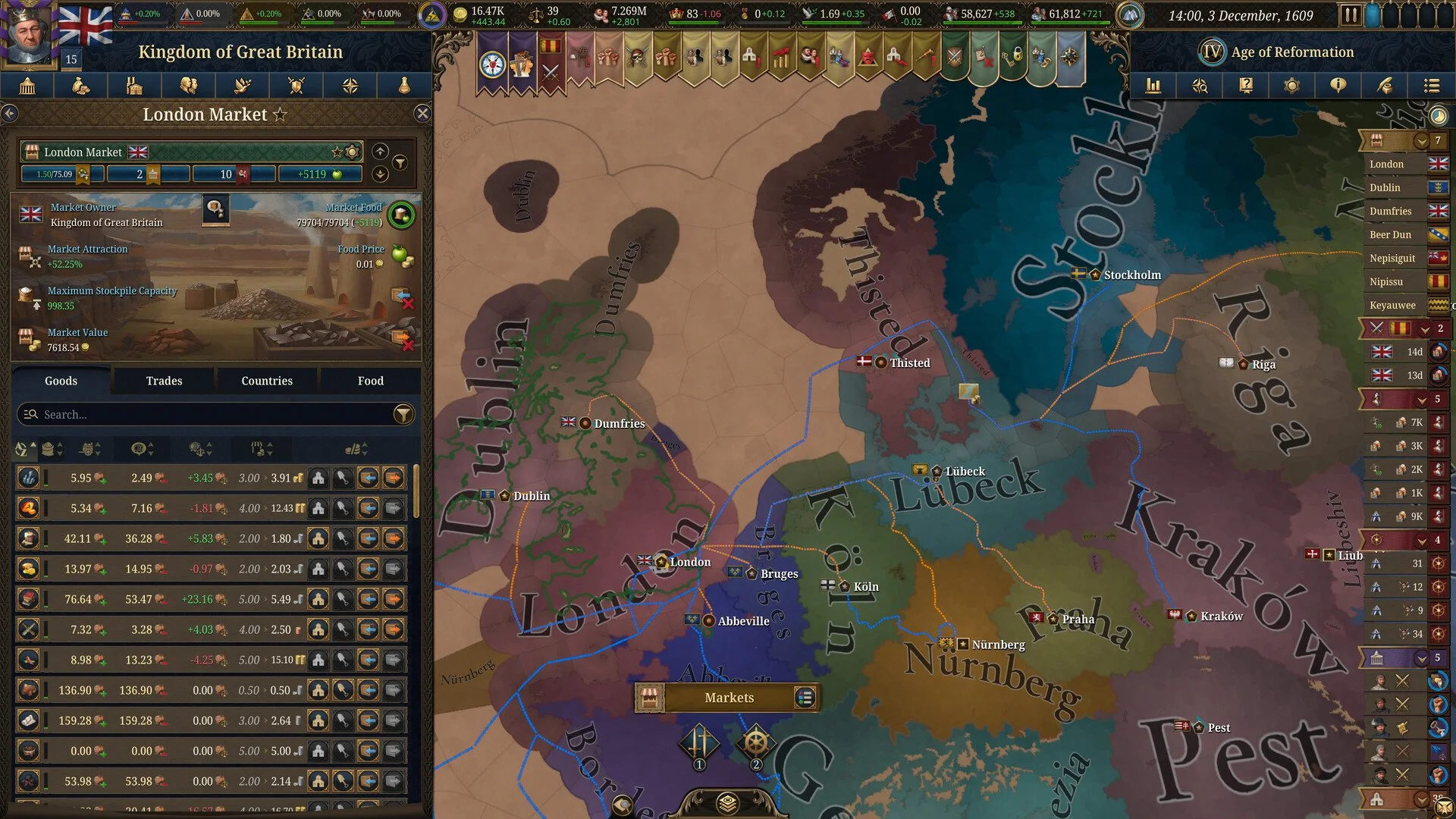
I believe that markets decide if your country thrives or slowly bleeds money in Europa Universalis 5. One month your income looks fine, the next it drops hard because a single good crashed in price. This EU5 Markets Guide I made explains how markets actually work so you can stabilize income and take control instead of guessing.
How EU5 Markets Really Work
Every province belongs to a market centered on a Market Center. A market is shared by multiple countries, not owned by just one nation by default. All buying and selling inside that market affects the same prices.
Prices move based on supply and demand inside that market. You do not trade against the world. You trade against everyone yelling inside your market bubble.
If your income drops suddenly, it is almost always because something changed inside your market, not because the game rolled random numbers.
Market Centers And Why Owning One Is Important
I think that the Market Center is the heart of the entire system. Early game you usually get pulled into the market closest to your capital.
Owning the Market Center gives direct advantages. Institution Growth increases faster. Migration Attraction pulls pops toward your city. Maximum Stockpile Capacity goes up so you can store more goods.
Those bonuses alone make Market Centers worth fighting over.
Embargoes And Market Control
If you own the Market Center, you can embargo other countries inside your market. This prevents them from opening new trade routes there.
It hurts relations but protects your economy. You decide who gets access to your price pool.
You can also destroy a market completely. This costs Stability and Prestige, but it can be worth it if the market is broken or pulling value away from your core provinces.
Why Prices Go Up And Down
Prices move toward a target price based on Effective Supply and Effective Demand. How fast they move depends on Price Stability, which changes by Age.
The key detail most players miss is import weighting.
Manual imports count less than Estate imports.
Manual imports are weighted at 0.5.
Burgher imports are weighted at 0.75.
This difference lets you influence prices on purpose.
Using Imports To Push Prices
You can manipulate markets without combat.
If Burghers are importing a good and making money, you can manually import the same good. Your imports still add supply, pushing the price down.
Lower prices reduce profit and can force the AI to cancel routes. It is one of the cleanest ways to control the market using the system itself.
Manual Trade Versus Automation
Manual trading gives control. It also brings micromanagement.
Trade routes can cancel due to shortages even when stockpiles look full. Trade Advantage decides who gets goods first when supply is tight. Lose priority and your routes fail.
Automation is safer but slower. It reacts late and never exploits price swings. Manual trade is stronger if you watch it closely.
Building Stable Income Inside Your Country
The most reliable money comes from internal demand.
A strong setup looks like this.
Wood production
Paper Makers buying Wood
Book Binders buying Paper
Libraries and Universities buying Books
You tax every step. Demand stays stable because you control it. This setup survives market swings far better than chasing foreign prices.
By the time Wood becomes Books, you have earned multiple layers of income.
Trade Capacity And Distance Costs
Trade Capacity limits how many routes you can run. Most capacity comes from buildings.
Distance increases upkeep. Long routes cost more capacity and return less value. Local and regional trade is almost always better unless you are fixing a severe shortage.
Short routes mean cheaper upkeep and fewer cancellations.
Creating Your Own Market
Honestly, even if your current market is bad, you can leave it.
Using Create Market in the Economy tab lets you form a new one. The province must be urban or have market attraction under 25 percent. Setup takes 3 months and costs Gold based on attraction.
After creation, nearby provinces recalculate attraction. Some will join your market. Others will stay where they are. Timing matters.
Crown Power And Where The Money Goes
Trade profit is split between the Crown and Estates. Only the Crown share goes into your treasury.
Low Crown Power means rich Estates and an empty state budget. High Crown Power turns trade into armies, buildings, and institutions.
If trade feels useless, check Crown Power first.
Final Blurb
EU5 markets reward control and not guesswork. Own Market Centers when possible. Build internal demand chains. Keep trade routes short. Use imports to influence prices. Maintain strong Crown Power.
Do that and you bet that ducats stop leaking. Ignore it and the market will quietly eat your economy alive.
FAQ
Why did my income suddenly drop
Prices shifted inside your market due to supply or demand changes, often from imports or estate activity.
Is manual trading worth it
Yes for price control and shortages. No if you want zero micromanagement.
Should I always create my own market
Only if your current market is unstable or draining value from your core provinces.
Why do my Estates feel richer than my country
Crown Power is too low, so Estates keep most of the trade profit.
Are long distance trade routes ever good
Only for critical shortages. Most of the time they waste Trade Capacity.
More Europa Universalis V