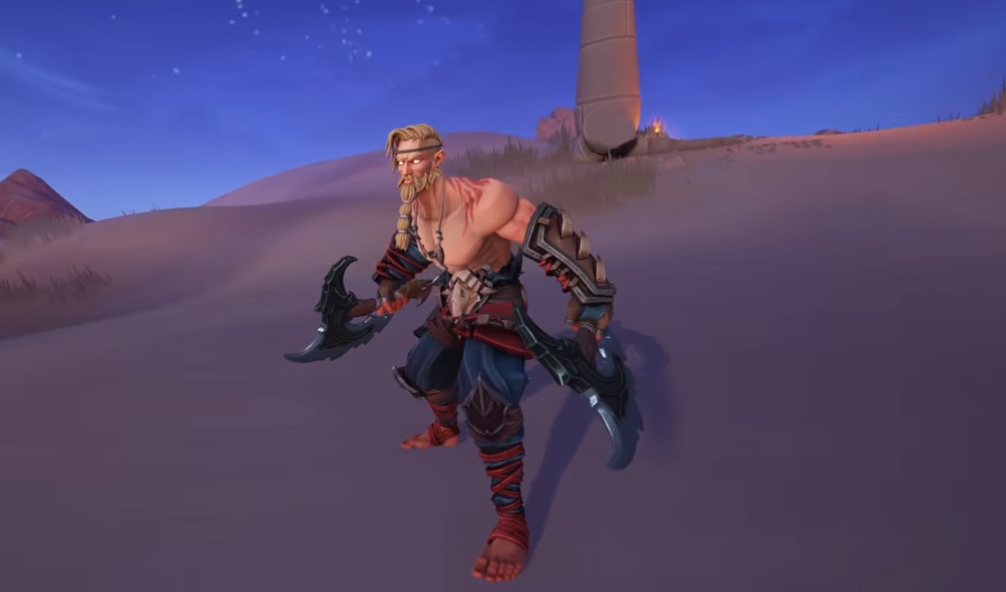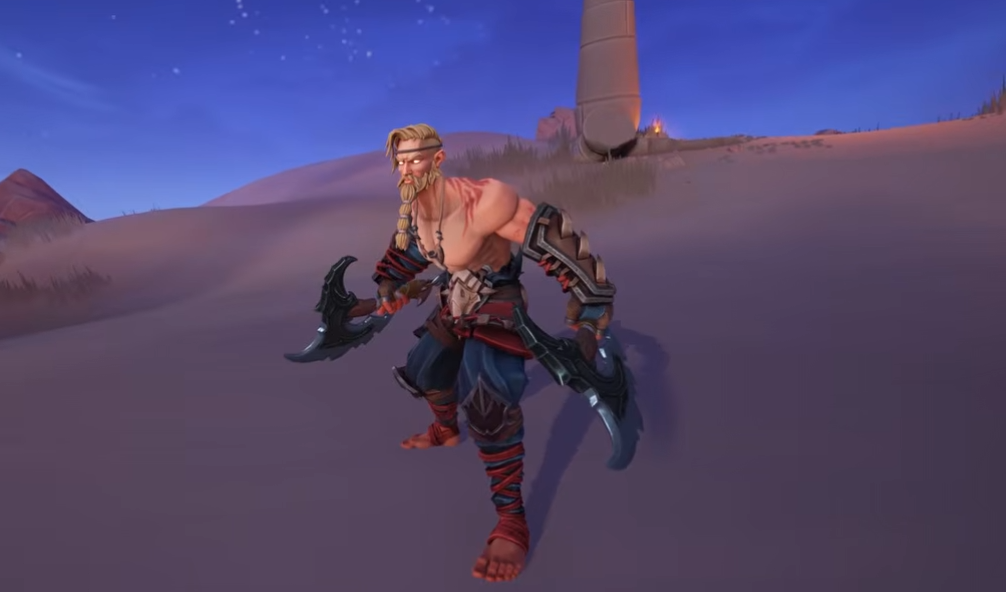
Gunde is a melee DPS hero in Fellowship built around applying Rend, stacking bleed damage, and spending that stored damage through Slaughter or Heart Splitter windows. The best Gunde build to start with is the Grim Carve setup because it gives the cleanest balance of AoE, cooldown flow, and single-target damage without forcing the player into a more fragile priority-damage build right away.
I would not play Gunde like a normal “press everything on cooldown” melee. That is the fastest way to make the hero feel weaker than he is. Gunde is about sequencing. Build Rend, buff the next Rend application, line up Rupture or Reign in Blood when it matters, then cash out with Slaughter before the target dies or the pull moves on.
Jump To
How Gunde Plays
Gunde plays like a bleed-based melee DPS with short burst windows, steady cooldown cycling, and a lot of damage hidden inside Rend.
The key is that Gunde’s abilities do two jobs at once. They deal direct damage, and many of them also apply Rend based on the damage dealt. Rend then ticks on the target and can be consumed or amplified through other parts of the kit.
That makes Gunde feel different from a pure front-loaded melee hero. A weak Gunde player only sees the hit damage. A good Gunde player is thinking about the damage that hit just stored for later.
The hero feels best when pulls live long enough for Rend to matter. On tiny trash mobs that evaporate instantly, some of the kit can feel wasted. On bigger pulls, dungeon bosses, and dangerous enemies that survive a few globals, Gunde gets to play the real game: stack wounds, sharpen them, then rip everything open at the right time.
Best Gunde Build To Start With
The best Gunde build to start with is the Grim Carve build.
Grim Carve is the most forgiving starting point because it gives strong AoE, smoother cooldown cycling, and a better all-around damage profile. It is not always the highest priority-target setup, but it teaches the hero properly without forcing a strict Heart Splitter crit plan or a high-Spirit Blood Feather setup right away.
I like Grim Carve first because it keeps the hero active. You are throwing the axe, using Blood Arc, getting cooldown value, keeping Rend rolling, and still relying on Heart Splitter for meaningful single-target hits. It feels like the full version of Gunde instead of a narrow gimmick.
The three main build directions are:
| Build | Best For | Main Tradeoff |
|---|---|---|
| Grim Carve | General dungeons, AoE, learning Gunde | Weaker priority damage than Heart Splitter setups |
| Oathshatter Heart Splitter | Priority damage, crit synergy, focused targets | Less comfortable raw AoE flow |
| Bloodcraze Spirit | Blood Feather gameplay and Spirit scaling | More setup-heavy and less natural as a first build |
Start Grim Carve, learn the Rend timing, then branch into Heart Splitter or Bloodcraze once the hero makes sense. Starting with the weirdest build first is possible, but it is also how players end up blaming Gunde for their own talent tree crime scene.
Gunde Stat Priority
Gunde usually wants Haste first because the hero is cooldown-based and wants more ability usage, smoother Rend application, and faster access to damage windows.
For the Grim Carve build, use:
- Haste
- Expertise
- Critical Strike
- Spirit
For the Heart Splitter build, use:
- Haste
- Critical Strike
- Expertise
- Spirit
For the Bloodcraze Spirit build, use:
- Spirit
- Haste
- Expertise and Critical Strike
The short version is simple: do not stack Spirit on every Gunde build just because Bloodbound Spirit exists. Most normal Grim Carve and Heart Splitter setups want only a small amount of Spirit compared to Haste and their main damage stat. Bloodcraze is the exception because that build specifically wants more feather generation and Spirit interaction.
For most players, Haste makes Gunde feel better immediately. The hero is built around pressing meaningful cooldowns often, and a slow Gunde feels like standing around with two axes waiting for permission to be useful.
Gunde Rotation Explained
Gunde’s rotation is about building Rend first, then spending or amplifying it at the right moment.
A simple Grim Carve-style flow looks like this:
- Open with Reaver’s Edge or Blood Arc to start Rend.
- Use Grim Carve on grouped enemies or an important target.
- Use Blood Arc before a strong Rend-applying hit when Serrated Edge value matters.
- Use Heart Splitter for strong single-target damage and Rend value.
- Use Rupture before Slaughter on targets that will live long enough.
- Use Slaughter when enough Rend is active to make the consume worth it.
- Use Bloodbound Spirit and Reign in Blood for larger windows, not random filler.
The part I focus on is not “what button is glowing?” It is “what am I trying to make the next button do?” Blood Arc can set up stronger Rend transfer. Reign in Blood makes direct ability damage build more Rend. Rupture prepares a better Slaughter. Heart Splitter can exsanguinate stored damage. Slaughter cashes the target out.
That is the whole Gunde mindset. Every button should either build the wound, sharpen the wound, or spend the wound.
How Rend and Slaughter Work
Rend is Gunde’s main bleed effect, and Slaughter is the big spender that consumes Rend for burst damage.
Most of Gunde’s important abilities apply Rend based on the damage they deal. This makes ability order important because buffed abilities usually create stronger Rend. A better Rend stack means a better Slaughter later.
Slaughter is where new Gunde players often lose damage. Pressing it too early wastes the setup. Pressing it too late risks the enemy dying, moving, or the pull ending before the consume matters. The best Slaughter is not the fastest Slaughter. It is the Slaughter used after enough real Rend has been loaded onto the target.
On bosses, this is easier to control because the target lives long enough. On trash pulls, the decision is messier. If enemies are dying instantly, use Slaughter earlier or save the bigger setup for the next meaningful pack. If the pull is large and healthy, let the Rend stack first.
My rule is simple: if Slaughter only consumes a tiny bleed, it was probably panic damage. If it consumes a fat Rend window after Reign in Blood, Rupture, Grim Carve, and Heart Splitter work, that is Gunde doing Gunde things.
How To Use Gunde’s Cooldowns
Gunde’s cooldowns should be grouped around Rend windows, not thrown out separately with no plan.
The big pieces are:
- Reign in Blood, which increases how much direct ability damage becomes Rend.
- Bloodbound Spirit, which deals damage, applies Rend, buffs Heart Splitter and Grim Carve, and gives the Spirit of Heroism Haste buff.
- Rupture, which hits hard and sets up a stronger Slaughter through Open Wounds.
- Slaughter, which consumes Rend and turns the setup into payoff.
On a real boss or dangerous pull, I want these buttons to talk to each other. Bloodbound Spirit and Reign in Blood make the next stretch of damage more valuable. Rupture prepares the target for a stronger Slaughter. Heart Splitter and Grim Carve keep feeding Rend. Slaughter closes the window.
Do not waste Rupture if Slaughter is not coming during the Open Wounds duration. Do not waste Reign in Blood during dead time. Do not use Bloodbound Spirit right before the group has to stop attacking or move away from the target.
Gunde is forgiving enough to recover from mistakes, but the hero’s best damage comes from making the cooldowns overlap in a way that actually creates a bigger bleed cashout.
Best Gunde Talents
The best Gunde talents depend on the build, but Grim Carve players should focus on talents that improve Grim Carve, Blood Arc, Rend speed, cooldown cycling, and Slaughter payoff.
For a general Grim Carve setup, the important talent ideas are:
- Carnage, because Grim Carve becomes stronger and helps reduce cooldowns.
- Grim Harvest, because it gives Grim Carve reset and bonus damage potential.
- Deep Rend, because faster Rend ticks make the bleed profile feel better.
- Superior Serration and Crimson Strikes, because Blood Arc can improve the next Rend-applying ability.
- Sundered Flesh, because overkill Rend or Slaughter value can finish enemies more cleanly.
For Heart Splitter, Oathshatter is the talent that changes the build direction. It gives Heart Splitter crit synergy and turns Exsanguinate into nearby damage when the direct hit crits. That is why Critical Strike moves up in the Heart Splitter stat priority.
For Bloodcraze, the build starts revolving around Owed in Blood, Blood Feathers, and Spirit. This is the “I want the weird bleed engine” setup. It can be fun, but it is less plug-and-play than Grim Carve because the value depends more on feather generation and stack handling.
I would not copy a talent build without understanding which button it is trying to make better. If the build takes Oathshatter, Heart Splitter matters more. If it takes Carnage, Grim Carve is the engine. If it takes Bloodcraze, Blood Feathers are not optional flavor. They are the build.
Best Gunde Gear and Legendaries
Gunde’s best weapon is Fateful Arms because cooldown acceleration works naturally with his cooldown-based kit.
That one makes immediate sense. Gunde wants more access to Grim Carve, Blood Arc, Heart Splitter, Rupture, and the rest of the rotation. Cooldown acceleration is not just a stat line. It helps the hero play the way he is designed.
For legendaries, the big split is:
- Carver’s Sinister Apron for Grim Carve-focused builds.
- Band of the Bleeding Heart for Heart Splitter-focused builds.
Carver’s Sinister Apron fits the recommended starting path because Grim Carve is the center of the generalist build. Band of the Bleeding Heart makes more sense once Heart Splitter becomes the priority and the build is leaning harder into that button’s damage profile.
For relics, bring what the party and dungeon need. Sinbinding Stone is a common pick, but the second relic should not be chosen in a vacuum. Fellowship is still a group game. A slightly lower personal sim relic can be better if it solves the dungeon’s actual problem.
Common Gunde Mistakes
The most common Gunde mistake is consuming Rend before building enough of it.
Slaughter is exciting, but it is not supposed to be mashed the second it is available. It should pay off the setup. Pressing it into weak Rend stacks is like cashing out a jackpot machine after one coin and acting shocked when nothing happens.
Other mistakes to avoid:
- Using Rupture without planning a Slaughter during Open Wounds.
- Ignoring Blood Arc’s setup value before strong Rend applications.
- Stacking Spirit on a build that is not actually Bloodcraze-focused.
- Holding Bloodbound Spirit so long that it loses an entire use over the dungeon.
- Trying to play Gunde fully at range because Double Strike can reach targets.
- Forgetting Jawbreaker because damage tunnel vision took over.
The interrupt mistake is especially painful. Jawbreaker has no value if it is not stopping a cast. Gunde players chasing the perfect Rend window still need to interrupt, dodge, and play the dungeon. Dead melee DPS with perfect theorycraft is still dead.
The other big trap is overbuilding for raw AoE and then feeling useless on priority adds. Gunde can handle different profiles, but the build has to admit what it is giving up. If the group struggles with spawned priority targets, the Heart Splitter direction may be better than the smooth generalist Grim Carve setup.
Is Gunde Good?
Gunde is good if the player enjoys melee DPS with resource timing, bleed setup, and repeatable burst windows.
He is not the simplest melee hero if the goal is pure button smashing. The basics are easy enough, but the difference between average and strong Gunde damage comes from when Rend is applied, when it is consumed, and whether cooldowns are layered with a real plan.
I like Gunde most as a steady dungeon DPS who can build pressure over a pull and then end it with a strong Slaughter window. The hero has enough AoE to feel useful, enough single-target to matter, and enough build variety to keep from becoming boring after one setup.
The reason I would start with Grim Carve is that it teaches the hero without forcing a narrow gimmick. After that, Heart Splitter is there for priority damage, and Bloodcraze is there for players who want the Blood Feather engine.
Gunde is at his best when the player stops thinking “what is my next button?” and starts thinking “what is my next bleed window?” Once that clicks, the kit makes much more sense. The axes are loud, but Rend is the real weapon.