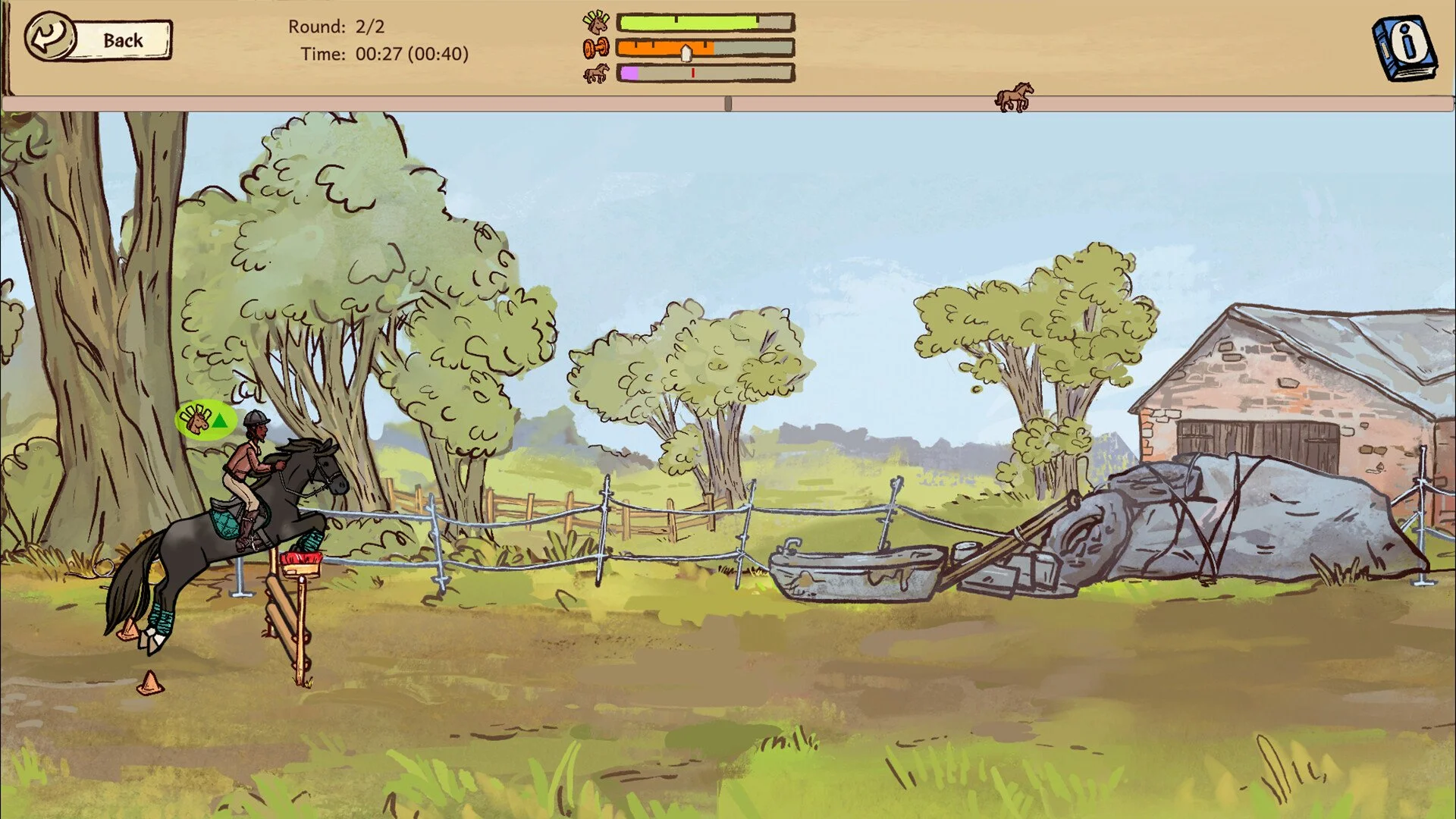
Starting out in Horses of Hoofprint Bay can feel overwhelming when you've got a rundown stable, limited money, and a horse that isn't quite ready to dominate competitions. There's a lot to balance between daily care, training, breeding, and expanding your yard. These beginner tips and tricks will help you make smarter decisions early and build a successful horse farm without rushing into expensive mistakes.
Best Beginner Tips
Horse Training and Competition Tips
Horse Breeding Tips
Best Stable Upgrades and Management Tips
Exploration and Progression Tips
Beginner Progression Plan
Best Horses of Hoofprint Bay Tips and Tricks for Beginners
The best way to start Horses of Hoofprint Bay is to establish a steady income through lessons and boarders, take care of your starter mare, and improve her training before investing heavily in competitions or breeding. Expand your yard when you have a specific reason to do so, rather than spending money on every available upgrade.
1. Don't Rely Entirely on Competitions for Money
Winning competitions is an important part of growing your horse farm, but it shouldn't be your only source of income early on.
Lessons and boarders can provide valuable money while your starter horse is still developing. Competition prizes offer another source of income, but your horse needs the appropriate training and abilities to perform well.
Instead of repeatedly chasing harder competitions before you're ready, use your early income to support horse care, training, and improvements to your yard.
This creates a more dependable progression cycle. Your business helps finance better training, and your improving horses gradually become more capable of earning competition prizes.
I'd prioritize consistency over trying to earn a large amount of money from a single competition.
2. Get Your Horse Care Routine Right Before Expanding
Taking care of one horse is manageable, but those responsibilities become more demanding as you add animals to your stable.
Horses need feeding, water, grooming, and attention to injuries or other health concerns. Brushing and cleaning their hooves are particularly important because neglected care can contribute to issues such as saddle sores and abscesses.
Make daily care part of your regular routine before focusing on training or competitions.
It's also worth checking your horse's condition after activities instead of assuming every ride went perfectly.
A larger stable might look like progress, but adding horses before you can comfortably manage your existing animals can make the day-to-day workload much more difficult.
Horse Training and Competition Tips
3. Use Caprilli Competitions While Developing Your Starter Horse
Your starter mare isn't necessarily equipped to excel in every competition immediately. Strength and Endurance affect her performance, and those starting values can make more demanding activities difficult.
However, the Caprilli Test provides another competitive opportunity.
Caprilli combines smaller jumps with gait transitions, including walking, trotting, and cantering. This makes it an option worth exploring while you're developing a horse that isn't yet suited to tougher jumping competitions.
Rather than judging your starter mare entirely by her initial stats, look for activities that fit her current abilities.
As her training progresses, you can reassess which competitions are worth entering.
The main lesson is that you don't need to replace your first horse simply because she isn't an immediate championship contender.
4. Pay Attention When Your Horse Changes Pace Unexpectedly
During rides, your horse may occasionally try to slow down or accelerate without being instructed to do so.
These moments aren't just interruptions. They give you an opportunity to improve your horse's Confidence.
When your horse attempts to change pace, respond within the available window to maintain the intended gait.
Successfully handling these moments can contribute to Confidence, which is relevant because horses with different Confidence levels may behave differently during rides.
Don't focus exclusively on completing the course while ignoring what your horse is doing.
Learning to recognize these changes can make your training sessions more productive and help you become more comfortable controlling your horse.
5. Don't Overwork a Horse Just Because You Need Money
It's tempting to squeeze as many lessons, training sessions, and competitions as possible into your schedule when you're trying to fund upgrades.
However, horses have limits. They can't work indefinitely, and their condition matters when deciding what to do next.
Training improves their abilities, but demanding activities also need to be balanced with appropriate care.
Before committing to another competition or training session, consider whether your horse is ready for more work.
One useful approach is to think about what each activity contributes. A lesson may support your finances, training develops your horse, and competition offers the possibility of prize money.
Choose activities based on what your yard needs most instead of automatically prioritizing whichever one appears to offer the largest immediate reward.
6. Train Across Different Courses Instead of Repeating Only One
Repeating familiar training exercises can be convenient, but Horses of Hoofprint Bay includes multiple training courses and trails worth completing.
Different activities provide opportunities to work on your horse's abilities while exposing you to more of the game's riding content.
There's also a long-term benefit if you're pursuing achievements. Now I've Seen Everything requires completing every different training course and trail, while Pro Trainer requires finishing 1,000 training sessions.
Rather than leaving unfamiliar courses until much later, incorporate them into your training plans as they become available.
That gives your regular training sessions a second purpose and reduces the number of activities you'll need to revisit during a completion-focused playthrough.
Horse Breeding Tips for Beginners
7. Decide What You Want From a Foal Before Choosing Parents
Breeding in Horses of Hoofprint Bay isn't limited to producing horses with higher performance potential.
Foals can inherit characteristics such as coat colors, white markings, and personality traits from their parents.
That means your ideal breeding pair depends on what you're trying to achieve.
If your goal is competition performance, prioritize the qualities that support your future riding plans. If you're breeding for a particular appearance, the parents' inherited visual characteristics become more relevant.
Trying to improve every characteristic at once can make it harder to evaluate whether a pairing achieved what you wanted.
I'd recommend setting one main breeding goal at a time, especially while you're still learning how the inheritance system works.
8. Understand Potential Before Judging a Young Horse
Overall Potential isn't always presented as one fixed value immediately. It can begin as a minimum-to-maximum range before settling into a definitive score.
This is an important distinction when evaluating younger horses.
A horse with an uncertain Potential range shouldn't automatically be treated as though its final score has already been determined.
When making decisions about which horses to keep, train, or eventually breed, consider how much you actually know about their abilities.
Don't rush to make every long-term decision based on an early estimate.
As your breeding facilities improve, you'll also gain access to more advanced tools. The breeding station laboratory can preview possible foals, giving you additional information when planning pairings.
9. Pay Attention to Quirks and Flaws, Not Just Appearance
Horses have individual characteristics that can influence how they behave and how you manage them.
Some traits are inheritable, while others can be assigned randomly and aren't passed down through breeding.
That means breeding two horses with desirable characteristics doesn't guarantee that every resulting foal will behave exactly like its parents.
Quirks and Flaws can also affect your care decisions, with certain characteristics potentially contributing to health problems if they're poorly managed.
When evaluating a horse, look beyond its appearance and performance potential.
A horse's individual traits can be just as relevant to deciding whether it belongs in your breeding program or how much care it will require.
10. Keep Your Starter Horse's Bloodline in Mind
If you want to complete the game's achievements, there's a strong reason not to abandon your starter horse's bloodline too quickly.
The Direct Descendant achievement requires breeding a 100/100 foal descended from your starter horse.
That doesn't mean you need to keep every descendant forever, but it's worth preserving suitable horses from that lineage while you're pursuing the goal.
The achievement also creates an opportunity to work toward That's too easy..., which requires winning a Low competition with a 100/100 horse.
A suitable horse could potentially contribute to both objectives.
Even if you're not actively hunting achievements, preserving a promising breeding line can give your breeding plans more continuity than constantly replacing your horses without considering their ancestry.
Best Stable Upgrades and Management Tips
11. Upgrade Whatever Is Holding Your Yard Back
There isn't a single upgrade that will be equally valuable for every horse farm.
Your yard can expand through improvements to buildings, training facilities, and other areas. Advanced upgrades can also unlock new training courses, staffing opportunities, and breeding equipment.
The smartest investment depends on which part of your operation is currently limiting progress.
| Your Main Problem | What to Prioritize |
|---|---|
| Not enough room for additional horses | Stable capacity and relevant building improvements |
| Too much time spent on daily care | Staffing and management support |
| Limited training opportunities | Building stages that unlock additional courses |
| Breeding choices feel too uncertain | Advanced breeding station facilities |
| Not enough money for expansion | Focus on lessons, boarders, and suitable competitions before spending more |
For example, expanding your stable capacity doesn't solve the problem of struggling to care for your existing horses.
Likewise, investing heavily in breeding equipment might not be your immediate priority if you're still relying on a single developing mare.
Think about what you'll actually gain from an upgrade before spending your money.
12. Hire Staff When Your Workload Justifies It
Staff become increasingly useful as your horse farm grows, helping you stay on top of care and training responsibilities.
However, hiring staff is most valuable when you have enough work to make that assistance meaningful.
With only a small number of horses, you may be comfortable handling much of the daily routine yourself.
As you expand your herd, that changes. More horses mean more care requirements, additional training decisions, and a busier schedule.
Consider hiring staff when managing the existing workload starts interfering with other activities you want to pursue.
This creates a practical upgrade sequence: establish your income, grow your herd at a manageable pace, and add staffing support when the extra help becomes useful.
Exploration and Progression Tips
Explore the Forest, Beach, and Mountains
Trail riding provides a change of pace from training and competing, while also giving you opportunities to explore Hoofprint Bay.
There are three notable environments to visit: the forest, beach, and mountains.
Each has a corresponding first-visit achievement, so exploring all three contributes to completion progress.
The game also includes lost objects to discover, making it worthwhile to pay attention to your surroundings during exploration rather than focusing exclusively on reaching your destination.
It's easy to get caught up in the daily work of running your yard, but exploration is part of the experience too.
Use the In-Game Library as You Unlock New Systems
Horses of Hoofprint Bay includes an in-game library containing information about horse care and equestrian topics.
Additional entries become available as you complete certain objectives, making it a useful reference throughout your progression.
If you've recently unlocked something new or encountered an unfamiliar system, check whether the library has additional information relevant to it.
It's particularly useful when you're learning about horse behavior, health, and the game's more detailed management systems.
A Simple Beginner Progression Plan
If you're unsure what to prioritize, use this approach to build your yard without trying to accomplish everything immediately.
- Start by establishing a daily care routine for your mare. Keep her fed, watered, groomed, and ready for appropriate activities.
- Use lessons and boarders to support your early finances while developing your horse's abilities.
- Train regularly, pay attention to Confidence-related riding events, and explore suitable early competitions such as Caprilli.
- Save your money for improvements that address your immediate needs instead of purchasing upgrades indiscriminately.
- Explore the available regions and complete different courses and trails as new activities open up.
- Begin breeding with a clear goal, whether that's improved performance, specific appearances, or preserving a useful bloodline.
- Expand your stable and hire staff as the number of horses and daily responsibilities increase.
- Continue balancing training, competitions, business income, and breeding as your yard develops.
One of the biggest mistakes you can make in Horses of Hoofprint Bay is assuming that faster expansion always means faster progress. A crowded yard with too many responsibilities can be harder to manage than a smaller operation with well-trained horses and steady income.
Focus on making each improvement useful before moving to the next. With consistent care, sensible investments, and carefully planned breeding, your modest starting stable can gradually become a successful horse farm.