Loftia gives you plenty of freedom to build, explore, farm, and spend time with other players, but that freedom can make it difficult to decide what deserves your attention first. Between collecting materials, earning dews, upgrading equipment, and discovering new activities, a few small decisions can make your daily routine considerably easier. These Loftia tips and tricks focus on getting more value from the things you're already doing rather than turning the game into a race to complete everything.
Jump To Section:
Best Starting Tips
Dews and Energy Tips
Gathering and Skill Tips
Exploration and Progression Tips
Community and Collection Tips
What to Do When You're Stuck
Best Loftia Tips and Tricks for Beginners
The best way to start Loftia is to unlock the core activities through introductory quests, establish a dependable energy supply, and learn which materials your next project requires. You don't need an elaborate house or a large farm immediately. A small, functional setup gives you the freedom to experiment without constantly running short of resources.
1. Prioritize Quests That Unlock Something New
Not every quest has the same long-term value.
Loftia's introductory quests teach important systems and introduce the NPCs who provide access to various activities. Story progression also unlocks equipment such as the Glider and access to additional districts, including the Hanging Gardens.
When choosing between several objectives, I would prioritize the one that expands what you can actually do.
For example, unlocking a new district can introduce additional materials, locations, and activities. That gives you more opportunities than spending the same amount of time collecting resources for a decoration you don't urgently need.
This doesn't mean you should ignore optional quests. Instead, consider whether an objective provides access to something useful or primarily rewards you for an activity you already understand.
When you want more things to do, progression quests are a sensible place to look.
2. Establish a Small Working Island Before Decorating Everything
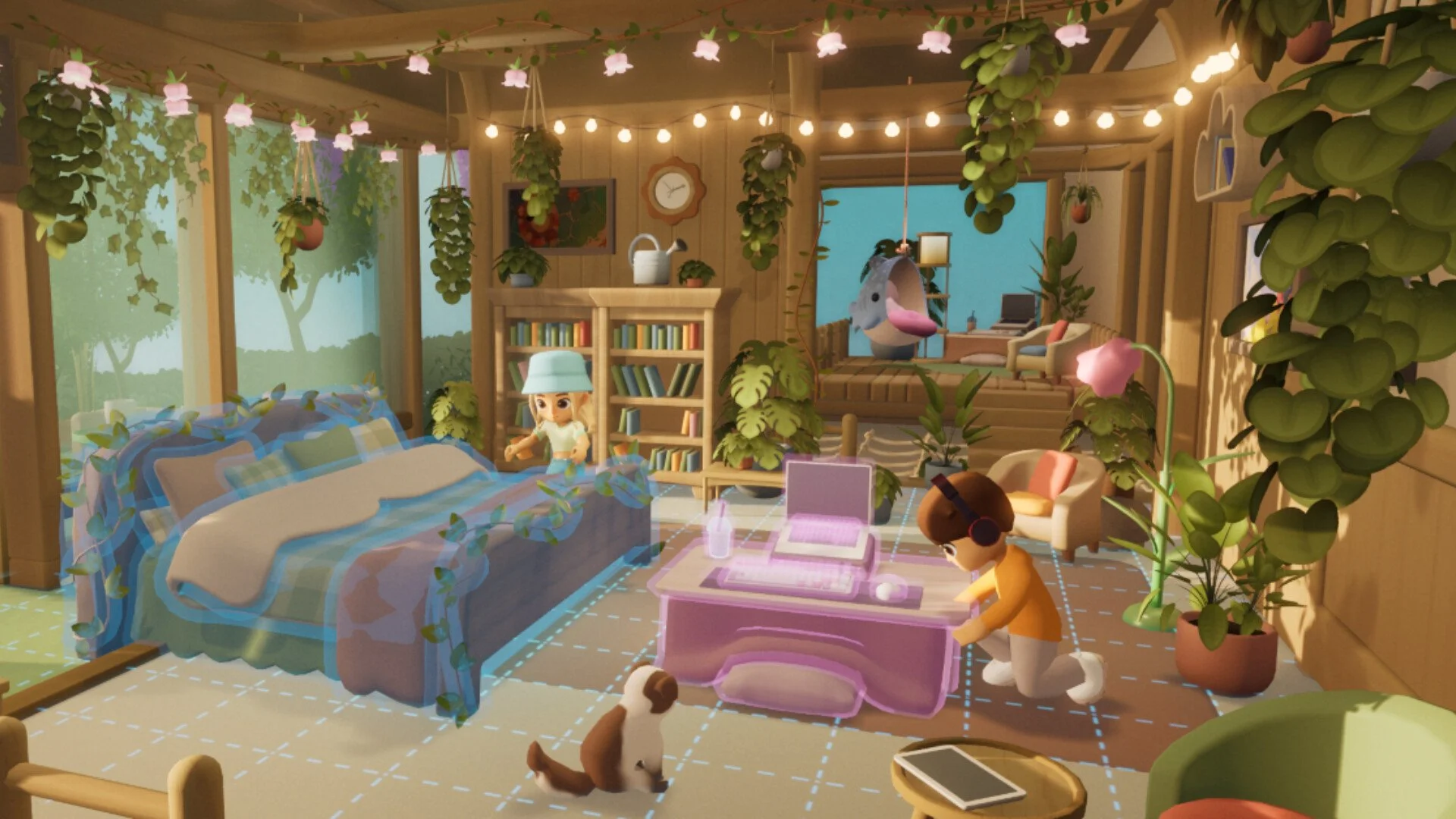
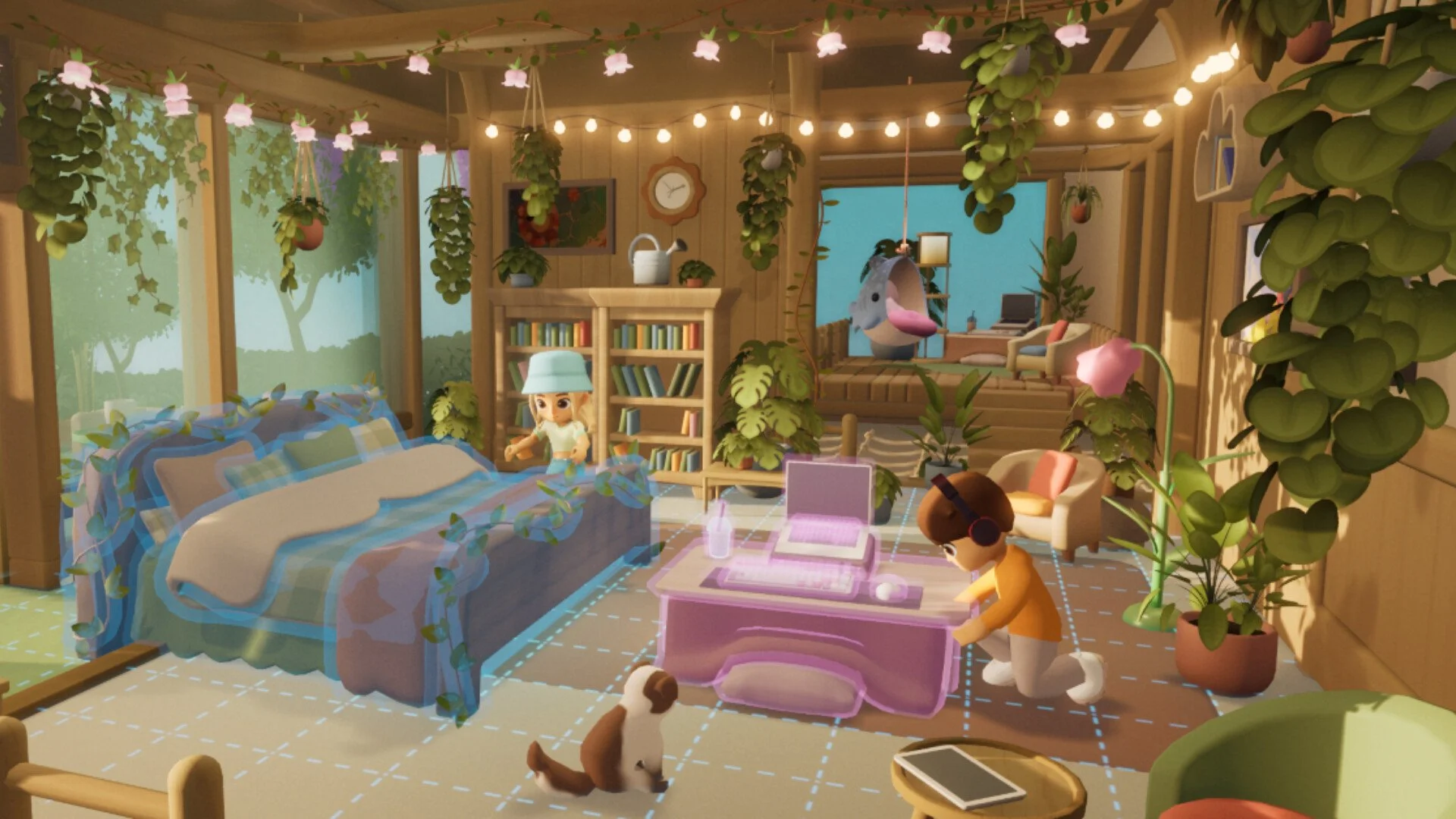
Your house becomes available very early in Loftia, and your island supports much of your crafting, farming, and cooking.
It's tempting to immediately focus on furniture and decoration, but a few practical additions can make your everyday activities easier.
Start by considering three basic needs:
- Energy generation for crafting and cooking.
- Water access for maintaining crops.
- Useful equipment and projects that support your next objective.
Solar Panels can provide energy, while a Rain Collector gives you a convenient place to refill your Watering Can. The Project Station is also important for developing useful equipment and progressing toward additional capabilities.
Once those basics are covered, you can expand your island around the activities you enjoy most.
There's no need to choose between efficiency and decoration permanently. A functional starting setup simply makes it easier to afford and create the decorative items you want later.
3. Assign Keyboard Shortcuts to Your Most-Used Tools
Loftia has several gathering and farming tools, and repeatedly selecting them from the Tool Wheel can become inconvenient.
On PC, the demonstrated default control uses R to open the Tool Wheel. However, individual Tool Wheel slots can also be assigned their own keybindings.
For example, you could assign:
- 1 for the Hammer.
- 2 for the Pruner.
- 3 for the Watering Can.
These are suggested bindings rather than required controls. Choose whichever keys feel comfortable.
This is a particularly useful adjustment when you're moving between salvaging, foraging, and farming during the same outing.
The benefit isn't that each individual action becomes dramatically faster. It's that you're removing a repeated interruption from activities you'll perform throughout the game.
Loftia Dews and Energy Tips
4. Find Out Whether You're Short on Dews or Energy
Dews are Loftia's main currency, used for purchases such as seeds, ingredients, outfits, furniture, and upgrades.
However, having enough dews to buy crafting ingredients doesn't necessarily mean you can immediately turn those ingredients into finished products.
Cooking and crafting consume battery energy, which makes your renewable energy setup another important part of production.
Before starting a larger crafting session, check which resource is actually limiting you.
| Your Problem | What to Prioritize |
|---|---|
| You can't afford ingredients or seeds | Earn more dews through activities and sales. |
| You have ingredients but can't complete production | Check your available battery energy. |
| You frequently run out of stored energy | Consider battery capacity and renewable generation upgrades. |
| You have money and energy but lack materials | Plan a gathering trip around the missing resources. |
There's little benefit in buying more ingredients when your available energy is already preventing you from processing the ones you have.
Addressing the actual shortage first can save unnecessary trips and purchases.
5. Use Fruit Smoothies as an Early Dew-Making Option
Fruit Smoothies were a useful early dew-making method during the Loftia demo, using Wild Berries gathered in Loftia City and Sugar purchased from the Global Village.
The documented demo example used 40 Wild Berries and 20 Sugar to produce 20 Fruit Smoothies.
Each Sugar cost 5 dews, while each finished smoothie sold for 20 dews.
| Demo Example | Amount |
|---|---|
| Wild Berries gathered | 40 |
| Sugar purchased | 20 |
| Sugar cost | 100 dews |
| Smoothies produced | 20 |
| Total selling value | 400 dews |
| Return after Sugar purchases | 300 dews |
That leaves 300 dews after the documented Sugar purchases, before considering energy requirements, gathering time, or other possible costs.
The important advantage is that Wild Berries can be gathered while exploring, allowing the activity to fit alongside other objectives.
However, the example comes from the demo. Loftia's economy has changed between testing versions, so verify the current recipe costs and selling prices before committing to a large batch.
If the figures remain favorable, Fruit Smoothies offer a straightforward way to turn gathered materials and purchased ingredients into additional dews.
6. Keep a Small Crop Growing While You're Doing Something Else
Farming doesn't need to consume your entire play session to contribute to your income.
During the demo, Cotton Seeds cost 5 dews and produced cotton worth 10 dews after approximately 10 minutes.
That provided a small 5-dew return per crop, based on those demo prices, alongside farming experience.
The interesting part isn't the size of the return. It's the ability to grow a crop while working on other activities.
Planting a manageable amount before heading out to explore or gather resources allows farming progress to overlap with the rest of your routine.
Check current crop prices and growth times in Early Access before relying on the same numbers.
7. Upgrade Your Energy Setup Before Expanding Production
More crafting ingredients aren't particularly useful when your battery is repeatedly empty.
Solar Panels and other energy-producing equipment can help replenish your available charges. Amani also provides upgrades connected to the amount of equipment you can place, while battery upgrades increase stored capacity.
These improvements address different problems.
Additional energy generation is useful when you're frequently waiting for your battery to recharge. Additional capacity can help when you need more stored charges for a larger crafting session.
Consider how you actually use energy before choosing the next upgrade.
If you only cook a few items at a time, a large battery upgrade may be less immediately useful than improving your ability to replenish its charges.
Loftia Gathering and Skill Tips
8. Plan Gathering Around Your Destination
One of the easiest ways to waste time is making separate trips for materials you could have collected along the same route.
Loftia's districts contain different resources, and the map provides information about materials available in particular areas.
Before traveling to an NPC or shop, check whether nearby locations contain anything you'll need for an active crafting project.
For example, the Construction Site is close to the Global Village. If you're heading to the village for cooking ingredients and also need Scrap Wood for furniture, you can combine those objectives.
This turns a simple shopping trip into an opportunity to advance another project.
The key is to gather with a purpose. You don't need to collect every material in sight, only those that are useful for something you're already working toward.
9. Invest in Perks That Improve Repeated Activities
Loftia has progression skills covering activities such as Salvaging, Foraging, Crafting, Farming, Cooking, Fishing, Research, Repairing, and Community Activities.
Performing an activity earns experience for its corresponding skill, while progression provides points for additional improvements.
When choosing early perks, consider how often you'll benefit from them.
For example, the supplied gameplay material identifies gathering improvements involving additional materials and increased carrying capacity.
Those effects can be useful because Salvaging and Foraging support multiple activities, including crafting and home development.
A perk that improves something you do repeatedly may provide more value during your early progression than an improvement for an activity you rarely use.
I'd begin by checking the available Salvaging and Foraging perks, then prioritize whichever other skills match your preferred activities.
You don't need to invest equally in every skill immediately.
10. Use the Project Station to Decide What Materials Are Worth Keeping
It's easy to accumulate materials without knowing what you actually need them for.
The Project Station provides a more useful starting point because it connects resources to equipment and improvements you can work toward.
Before selling or using large amounts of gathered material, look at the next project you want to complete.
Then separate your resources into three practical groups:
- Materials needed for your current project.
- Materials needed for an upcoming unlock or improvement.
- Surplus resources without an immediate planned use.
This isn't a required inventory system, but it makes decisions easier.
It can prevent you from selling something you soon need while also discouraging unnecessary stockpiling.
Loftia Exploration and Progression Tips
11. Return to Earlier Districts With Better Tools
Loftia progresses through new districts, materials, tools, and equipment, but earlier locations don't necessarily become irrelevant.
Materials from previous districts can remain useful as you unlock additional projects and crafting options.
Better tools and equipment can also improve how efficiently you collect resources.
That creates a reason to revisit earlier areas rather than treating them as locations you've permanently finished.
When a new project requires an older material, check whether your improved equipment makes collecting it easier than during your first visit.
This is especially useful when several new recipes require resources from different districts.
12. Use the Daily Summary When You Don't Know What to Do
Loftia contains activities beyond quests and personal crafting, including World Projects, World Maintenance, community events, and other opportunities.
When you're unsure what to pursue next, the Daily Summary provides a way to review available activities.
Rather than wandering without a specific goal, use it to find something that interests you or contributes to an area of progression you haven't explored recently.
This is also useful when you've spent several sessions focused heavily on one activity.
If you've been building furniture or gathering resources, a community activity or Adventure can provide something different without requiring you to abandon your longer-term projects.
13. Use the Codex Before Spending Time Searching for a Missing Resource
Some crafting projects require materials you may not immediately recognize.
The Loftia Codex provides information about items and where particular resources can be found, making it useful when you need something specific.
For example, the supplied guide demonstrates looking up Portobello Mushrooms to identify where they can be obtained.
Combine that information with the in-game map, which can display materials associated with different areas.
There's no reason to search several districts randomly when you can narrow down the likely location first.
This is especially useful for players who prefer completing specific crafting projects instead of gathering everything they encounter.
Loftia Community and Collection Tips
14. Set Aside Surplus Materials for World Projects
World Projects let players contribute resources and help create permanent changes throughout Loftia.
Examples include rebuilding the Loftia City Dome, constructing a floating wind turbine, and organizing Pebble's birthday celebration.
These projects provide another purpose for collected materials beyond personal crafting and decoration.
However, donating everything you have isn't necessarily the best approach when you're still developing your own equipment.
Consider contributing materials that aren't urgently required for your active projects.
That allows you to participate in community progression without repeatedly delaying your personal crafting goals.
World Maintenance offers another way to contribute to the shared environment through smaller, recurring activities.
15. Choose One Collection Goal Instead of Chasing Everything
Loftia has extensive collections, covering resources, crops, decorations, outfits, pets, architecture options, and discoveries found throughout its world.
It also has Memories, an achievement system connected to activities such as crafting, fishing, exploration, and story progression.
Trying to complete every collection simultaneously can leave you constantly switching between unrelated objectives.
A more manageable approach is to choose one collection goal that overlaps with your current interests.
If you're decorating your home, focus on discovering furniture recipes and related materials. If you enjoy exploration, look for lore datapads and other discoveries as you travel.
If fishing becomes your favorite activity, its collection and Memories objectives can provide longer-term goals.
This gives each session a clearer purpose without turning every activity into a checklist.
16. Try Adventures When You Want a Break From Your Normal Routine
Loftia's Adventures offer instanced cooperative experiences where players explore special islands, solve puzzles, and complete tasks together.
They're a different kind of activity from gathering resources or improving your personal home.
If you've spent a long session crafting or farming, joining an Adventure can provide a change of pace while still giving you something to work toward.
You don't need to organize your entire progression around group content. Loftia also provides plenty of activities to pursue independently.
Instead, consider Adventures as one of several ways to make your play sessions feel different.
What Should You Do Next in Loftia?
If you've completed your immediate quest objective and aren't sure what to focus on, look at what's currently limiting your progress.
| Current Situation | Suggested Next Step |
|---|---|
| You need more dews | Check current selling prices and consider a manageable farming or cooking routine. |
| Your battery regularly runs out | Review renewable energy generation and battery upgrades. |
| You don't know where to find a resource | Check the Codex and the material information on your map. |
| You want access to new locations | Continue quests connected to district and equipment unlocks. |
| Gathering feels repetitive | Review Salvaging and Foraging improvements and combine gathering with other trips. |
| You want something different to do | Check the Daily Summary, try an Adventure, or pursue a collection goal. |
| You have excess materials | Review upcoming projects and consider contributing suitable surplus to World Projects. |
The most useful Loftia strategy is to make your different activities support one another. A gathering trip can supply crafting materials, farming can provide ingredients for cooking, energy upgrades can support larger production sessions, and community projects can give excess resources another purpose.
You don't need to optimize every moment. Once the essentials are working smoothly, you'll have more freedom to spend your time decorating, exploring, collecting, or simply enjoying the activities you find most interesting.
Some prices, production methods, and progression details described here were documented during the Loftia demo and may change throughout Early Access. Check current in-game values when planning larger purchases or crafting runs.