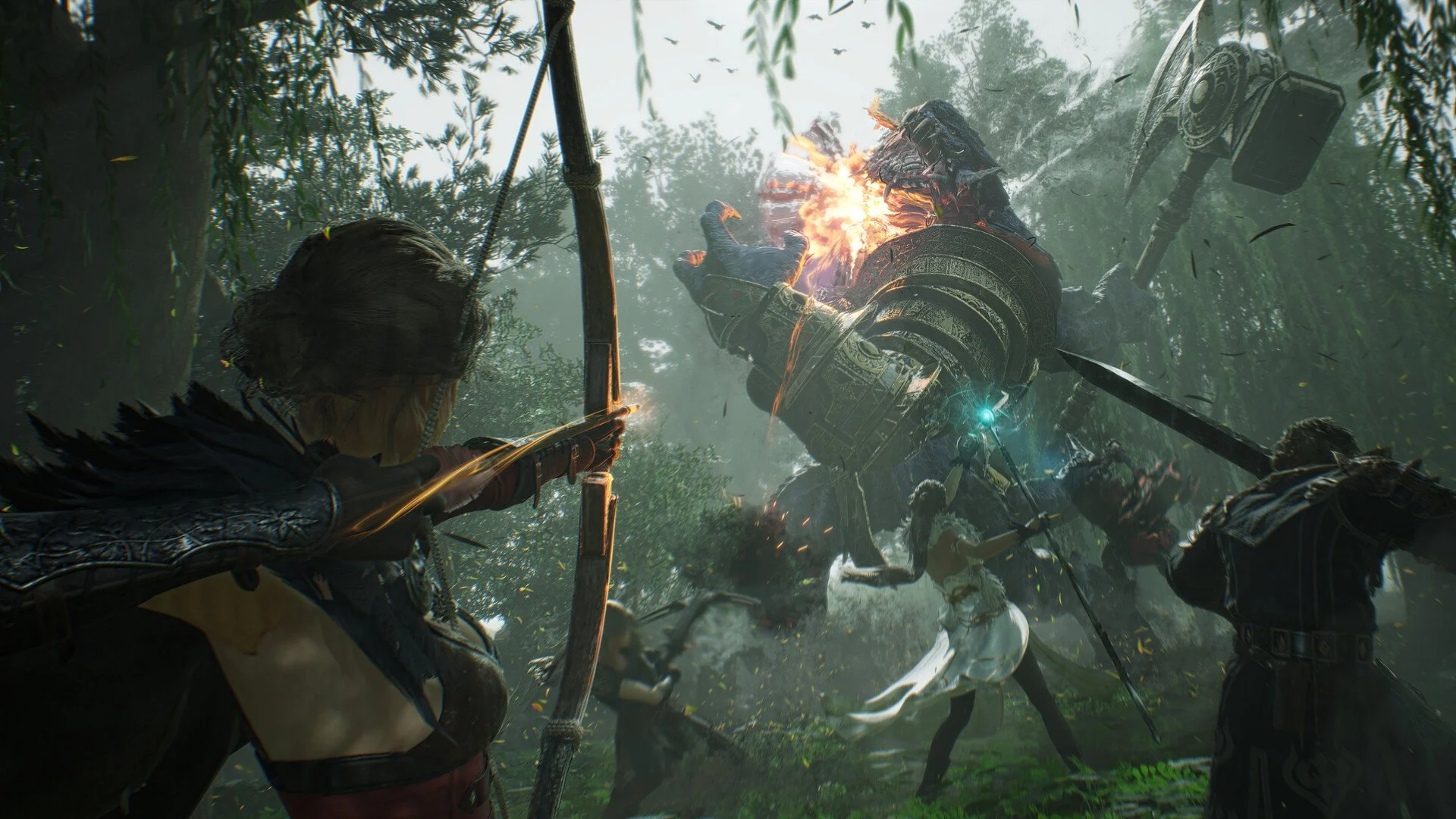
PvP in ArcheAge Chronicles puts a different kind of pressure on your class choice. Enemies won't always behave predictably, and a weapon that performs well against monsters might struggle when another player controls the distance or forces you to defend. With four starting classes and two weapons available to each, choosing a strong PvP character involves more than finding the biggest attack. The important differences emerge when you examine how each class creates openings, handles pressure, and responds when its preferred strategy stops working.
Best PvP Class and Tier List
Warrior: Best for Duels
Ranger: Best for Open-World PvP
Mage: Best for Area Control
Berserker: Best for Frontline Pressure
How Each Class Handles PvP Situations
Best PvP Weapon Combinations
Which PvP Class Should You Choose?
ArcheAge Chronicles Best PvP Class and Tier List
Warrior is our pick for the best PvP class in ArcheAge Chronicles, particularly for players who enjoy duels and counterattacks. Its Longsword offers reactive defensive options, while the Greatsword provides heavier attacks for capitalizing on an opponent's mistakes.
Ranger takes second place because its Longbow and Hatchets offer greater freedom to alternate between ranged pressure and close-range fighting. Mage follows with elemental control and a melee alternative, while Berserker rounds out the rankings as a more specialized frontline choice.
| Tier | Class | PvP Advantage |
|---|---|---|
| S | Warrior | Reactive defense, counters, and punishing melee openings |
| A | Ranger | Range control, mobility, and flexible engagement options |
| A | Mage | Elemental pressure, area attacks, and freezing abilities |
| B | Berserker | Disruption, shield-based fighting, and heavy melee pressure |
These are preliminary Early Access rankings based on the documented weapon abilities and combat systems. They aren't established PvP win-rate rankings, and there isn't enough verified competitive data in the available information to declare a definitive strongest class.
Our ranking prioritizes individual encounters, with group utility considered separately. A class that's difficult to deal with in a duel may not be equally effective when several players are fighting together.
S Tier: Warrior Is Our Best PvP Class for Duels
Warrior earns the top position because its known weapon mechanics provide a particularly appealing answer to direct melee pressure.
Rather than relying entirely on attacking first, Warrior can benefit from recognizing what an opponent is doing and responding at the correct moment.
Why Warrior Has Strong PvP Potential
The Longsword's reported combat mechanics emphasize parries, counters, and controlled engagements. Abilities such as Closing Clash and Bladeburst support its sword-based fighting style.
Meanwhile, the Greatsword offers a more aggressive option, with abilities including Armor Break, Sunder, and Sweeping Slash.
These weapons provide different responses to an opponent who's already fighting within melee range.
The Longsword offers a more reactive approach when you're trying to recognize and punish attacks. The Greatsword provides heavier offensive options when you have a suitable opening.
That combination is why we favor Warrior for players interested in direct confrontations.
The Main Problem With Warrior in PvP
Warrior's biggest limitation is that both starting weapons emphasize melee combat.
An opponent who maintains distance can force the Warrior to spend more time approaching than attacking.
This creates an important distinction between having strong counters and being able to make an opponent attack into those counters.
A skilled opponent won't necessarily provide the opening you're waiting for.
Warrior therefore becomes most appealing when you're comfortable with movement, defensive timing, and identifying opportunities to close the distance.
Its S Tier placement reflects how threatening its toolkit appears once a fight becomes a direct exchange of attacks, not a guarantee that it will win every matchup.
A Tier: Ranger Is Our Best Pick for Open-World PvP
Ranger offers a different advantage from Warrior: the ability to put pressure on opponents before entering close combat.
That makes its starting weapon selection particularly interesting for open-world encounters, where fights may begin at different distances.
Why Ranger Could Be Difficult to Approach
The Longbow provides ranged attacks such as Rapid Fire and Ice Arrow. The latter is described in the supplied weapon information as having an immobilizing effect.
This gives Ranger potential tools for pressuring opponents while attempting to manage the space between them.
Hatchets introduce a different style, with abilities such as Stormsplitter, Overcharge, and Shocking Kick supporting more mobile close-range combat.
That combination means Ranger isn't limited to continuing its ranged attack pattern when an opponent approaches.
It has a second weapon that changes how it engages.
Why Ranger Isn't S Tier
The main uncertainty is ranged targeting.
XLGAMES has identified improvements to soft-lock targeting for ranged attacks as part of its Early Access combat work.
That matters in PvP, where opponents can change direction, approach unexpectedly, or attempt to interrupt attacks.
A ranged advantage is less useful when reliably connecting those attacks becomes difficult.
Ranger also needs to respond correctly when an enemy reaches melee range. Having Hatchets available doesn't automatically make the class stronger in close combat than a dedicated melee opponent.
We rank Ranger highly for having multiple engagement options, but its actual competitive position will depend heavily on how consistently those options perform.
A Tier: Mage Offers Strong Area-Control Potential
Mage has a compelling PvP identity because its Elemental Staff and Wavesword provide access to different types of magical pressure.
The Elemental Staff emphasizes spellcasting, while the Wavesword provides close-range abilities associated with frost and freezing effects.
Where Mage Could Excel
The Elemental Staff includes abilities such as Wall of Fire, Retain, and Shooting Star.
These provide opportunities to influence the space around a fight rather than relying exclusively on direct weapon attacks.
For PvP, that creates an interesting possibility: Mage may be able to make particular positions less comfortable for opponents through its area-based abilities.
The Wavesword adds another dimension through abilities such as Tidal Rend and Thundersnow, with reported freezing interactions providing additional control potential.
Having both weapons available makes Mage more flexible than a character limited entirely to stationary spellcasting.
What Could Hold Mage Back?
Spell preparation and timing create potential vulnerabilities.
If an opponent forces Mage to defend before completing an important attack, its preferred offensive sequence may become difficult to execute.
This is one reason we place Ranger slightly higher. Ranger's starting weapons appear particularly well suited to changing engagement distance, while Mage's effectiveness may depend more on establishing favorable opportunities to cast.
Mage could become more valuable in coordinated group fights where teammates help create those opportunities.
Its placement also excludes the planned Life Staff, which isn't one of the two launch weapons. We wouldn't recommend choosing Mage under the assumption that a dedicated healing weapon is already available.
B Tier: Berserker Has Greater Group PvP Potential
Berserker ranks fourth in our general PvP list, but it's also the class whose usefulness could change most depending on whether you're fighting alone or alongside teammates.
Its starting equipment consists of Axe and Shield and Warhammer, supporting defensive melee combat and heavier offensive attacks.
How Berserker Can Disrupt Opponents
Axe and Shield includes abilities such as Shield Slam, Brutal Crash, and Reel In.
These provide ways to interfere with opponents through close-range attacks, stagger effects, and a reported pulling ability.
The Warhammer offers another aggressive option, using heavier attacks such as Surging Heat, Thundering Hurl, and Meteor Hammer.
When Berserker can reach its opponent and establish pressure, those tools could make it particularly disruptive.
In a coordinated fight, creating an opening for another player may be just as valuable as dealing damage yourself.
Why Berserker Ranks Lower for Individual PvP
Berserker's main drawback is its reliance on close-range fighting.
Both starting weapons emphasize direct combat, and the heavier Warhammer attacks may require more commitment than faster abilities.
That presents potential difficulties against opponents who repeatedly move out of range or avoid committing to extended melee exchanges.
Its disruption tools help address some of those problems, but the available information doesn't establish how reliably they work against experienced players.
For group PvP, we'd consider Berserker a potential A Tier candidate because its crowd-control and frontline capabilities may be more valuable when teammates can capitalize on them.
That remains a projection rather than a demonstrated competitive result.
How Each Class Handles Different PvP Situations
One way to compare PvP classes is to examine what happens when the opponent refuses to fight on your terms.
A class might appear powerful when executing its preferred attacks but become less comfortable when another player changes the pace.
We use four situations to evaluate the available launch weapon toolkits.
| PvP Situation | Class Worth Considering | Reason |
|---|---|---|
| Opponent repeatedly backs away | Ranger | Longbow allows attacks without first reaching melee range. |
| Opponent commits to melee attacks | Warrior | Longsword counters may reward accurate defensive timing. |
| Several opponents occupy one area | Mage | Area spells could create pressure across contested space. |
| Your group needs an opponent disrupted | Berserker | Shield-based abilities and Reel In offer possible control options. |
These are tactical recommendations based on known abilities, not confirmed matchup outcomes.
The Difference Between Reaching and Defeating an Opponent
One of the most important PvP distinctions is the difference between having strong attacks and being able to connect them.
Warrior and Berserker have appealing melee abilities, but opponents who maintain distance can complicate their approach.
Ranger may find it easier to begin applying pressure from farther away, but that advantage changes when someone reaches melee range.
Mage can potentially influence areas through spells, although preparing those spells creates its own demands.
For this reason, we wouldn't judge PvP strength entirely by theoretical damage.
How reliably a class can establish its preferred engagement is equally important.
Why Group PvP Could Change the Rankings
In an individual fight, you need to create your own opportunities, survive pressure, and deliver your own damage.
In a group, those responsibilities can be shared.
A Berserker disrupting an opponent may create an opportunity for a teammate. A Mage using area attacks may benefit from teammates preventing enemies from freely approaching.
Warrior's counters and Ranger's ranged options remain useful, but their relative importance could differ when several players are involved.
Our individual-focused rankings therefore shouldn't be interpreted as an established group PvP hierarchy.
Best PvP Weapon Combinations in ArcheAge Chronicles
Every starting class has two launch weapons with their own skills and trait trees.
Rather than treating the second weapon as a weaker replacement, consider assigning each weapon a different job.
Warrior: Longsword and Greatsword
Use the Longsword as your more reactive option when reading attacks and looking for counter opportunities.
The Greatsword becomes the heavier offensive alternative when the opponent gives you a suitable opening.
The important decision is knowing when to prioritize defense and when the risk of a committed attack is justified.
Ranger: Longbow and Hatchets
The Longbow provides a way to begin engagements from a distance.
Hatchets provide an alternative when you need to fight closer to an opponent or use their movement-oriented abilities.
Ranger's challenge is determining when remaining at range is beneficial and when switching approaches makes more sense.
Mage: Elemental Staff and Wavesword
The Elemental Staff suits players who want to create pressure through spells and area attacks.
The Wavesword offers another approach through close-range magical combat and reported freezing interactions.
For PvP, the important consideration is whether you have enough space and time to use your preferred spells effectively.
Berserker: Axe and Shield and Warhammer
Axe and Shield provides defensive and disruptive tools, while the Warhammer emphasizes heavier attacks.
Instead of committing to the Warhammer's strongest attacks whenever they're available, consider whether the opponent is actually vulnerable long enough for those attacks to connect.
Berserker may be more effective when its control abilities create the opening rather than relying on opponents to remain stationary.
These suggestions use the launch weapons only. Planned additions such as the Warrior's Gladius, Ranger's Crossbow, Berserker's Great Shield, and Mage's Life Staff aren't included in the current comparisons.
Which ArcheAge Chronicles PvP Class Should You Choose?
For players who enjoy deliberate melee combat and responding to enemy attacks, Warrior is our preferred choice.
For those who want more control over engagement distance and the option to fight from range, Ranger is the better starting point.
Mage suits players interested in magical control and creating opportunities through elemental abilities, while Berserker is worth considering for a direct frontline style that may become more valuable in coordinated groups.
Best PvP Class for Beginners
I'd lean toward Ranger for players who want to experiment with both ranged and melee combat, although its targeting limitations deserve attention.
Warrior is another sensible option for players already comfortable with timing defensive actions in action games.
Neither class is guaranteed to be easier in every fight. PvP opponents can punish predictable behavior regardless of which weapons you're using.
Should You Choose a Class Specifically for PvP?
ArcheAge Chronicles separates open-world areas into channels, including Peace channels where players cannot attack one another.
That means you don't need to optimize your entire character around PvP if your main interests are exploration, quests, and cooperative activities.
Weapon traits also progress separately from character levels, with trait points associated with Raeven's Coilstones near powerful bosses.
As you develop your chosen weapons, consider which available traits help you respond to the situations you actually struggle with.
A useful defensive ability or movement-related improvement may matter more to your preferred PvP style than a minor numerical increase, depending on the available trait choices.
For a broader comparison covering general progression rather than competitive encounters, see our ArcheAge Chronicles Classes Tier List.
Our preliminary recommendation remains Warrior for direct PvP encounters, Ranger for open-world flexibility, Mage for magical control, and Berserker for players who prefer disrupting opponents at close range.
Those placements should be revisited as Early Access provides more reliable evidence about weapon balance, targeting, actual PvP matchups, and coordinated group performance. Until then, the most useful class choice is one whose abilities you understand well enough to respond when another player forces you away from your preferred strategy.