Melvor Idle 2 keeps the familiar RuneScape-inspired progression of the original, but changes how skills interact, how challenges unfold, and what players work toward. With the sequel now in Early Access, there are several major differences to consider before deciding which game to play.
New Skills and Progression
Combat, Mastery and Quests
Early Access Limitations
Which Game Should You Play?
What Is Different Between Melvor Idle 2 and Melvor Idle?
Melvor Idle 2 is a standalone sequel built with a new engine, redesigned progression systems, expanded skills, and a greater emphasis on quests and combat mechanics. It retains the original's idle gameplay, but the changes go beyond graphics and interface improvements.
The biggest distinction at launch is content availability. Melvor Idle has years of completed updates and expansions, while Melvor Idle 2 entered Steam Early Access on November 17, 2026.
Here's how the two games currently compare:
| Feature | Melvor Idle | Melvor Idle 2 |
|---|---|---|
| Level cap | 99 in the base game, higher with expansions | 99 in Early Access, 120 planned for full release |
| Skills | Established roster with expansion content | 25 available, 29 planned for full release |
| Mastery | Individual action and item mastery | Task-based Mastery Guilds |
| Story | Primarily open-ended progression | Story quests, dialogue and quest bosses |
| Technology | Browser-based foundation | Rebuilt using Godot and C# |
| Platforms | PC, browser and mobile | Steam on PC, mobile planned for 2027 |
| Development | Established game with released expansions | Active Early Access development |
The New Skills Change How You Build Your Resources
The original Melvor Idle revolves around gathering resources, converting them into useful items, and gradually improving your combat capabilities. That foundation remains, but Melvor Idle 2 adds several activities that introduce new connections between skills.
Three skills are entirely new to the series in the current Early Access version.
Ranching, Hunting and Beastcrafting
Ranching lets you raise animals that generate resources passively. Sheep provide wool, cows produce milk, and other animals contribute materials used throughout your progression.
Hunting introduces traps and animal encounters, providing another way to obtain resources. Many of those materials feed into Beastcrafting, which creates equipment and consumables offering bonuses to other skills.
Together, the three skills establish additional production routes. Hunting materials can improve Beastcrafting, while Beastcrafting rewards can strengthen the activities you were already training.
The sequel also reworks existing skills. Farming now includes crop management through watering, pests, and disease, alongside new options such as Flowers, Orchard Trees, and the Grain Mill.
Rather than replacing familiar activities, these changes give players additional ways to improve resource production and prepare for future goals.
Quests and Mastery Give Progression a Different Structure
One of the biggest differences is how Melvor Idle 2 directs players through its content.
Melvor Idle generally leaves you to decide which skill to train or achievement to pursue. The sequel introduces a more developed quest system with dialogue, characters, objectives, and dedicated bosses.
The Early Access release includes the first two story acts. Act 2 uses almost every available skill and leads players toward approximately Level 70 progression.
Quests give players another reason to branch into different activities instead of concentrating exclusively on whichever skill offers the fastest experience.
Mastery Guilds Replace the Original Mastery Grind
Melvor Idle 2 replaces the original per-item Mastery system with Mastery Guilds.
Instead of increasing mastery levels for individual actions, you complete predefined tasks within each skill to earn Mastery progression and unlock bonuses.
This creates a different incentive to train. A player focusing entirely on one resource may earn plenty of skill experience, but completing a wider range of tasks can advance their Mastery Guild.
Combat has also been reworked with additional mechanics, including enemy Armor and new considerations during encounters. The sequel retains Melee, Ranged, and Magic, but equipment choices and combat preparation involve more than simply increasing damage output.
The Interface Is Designed Around More Visible Information
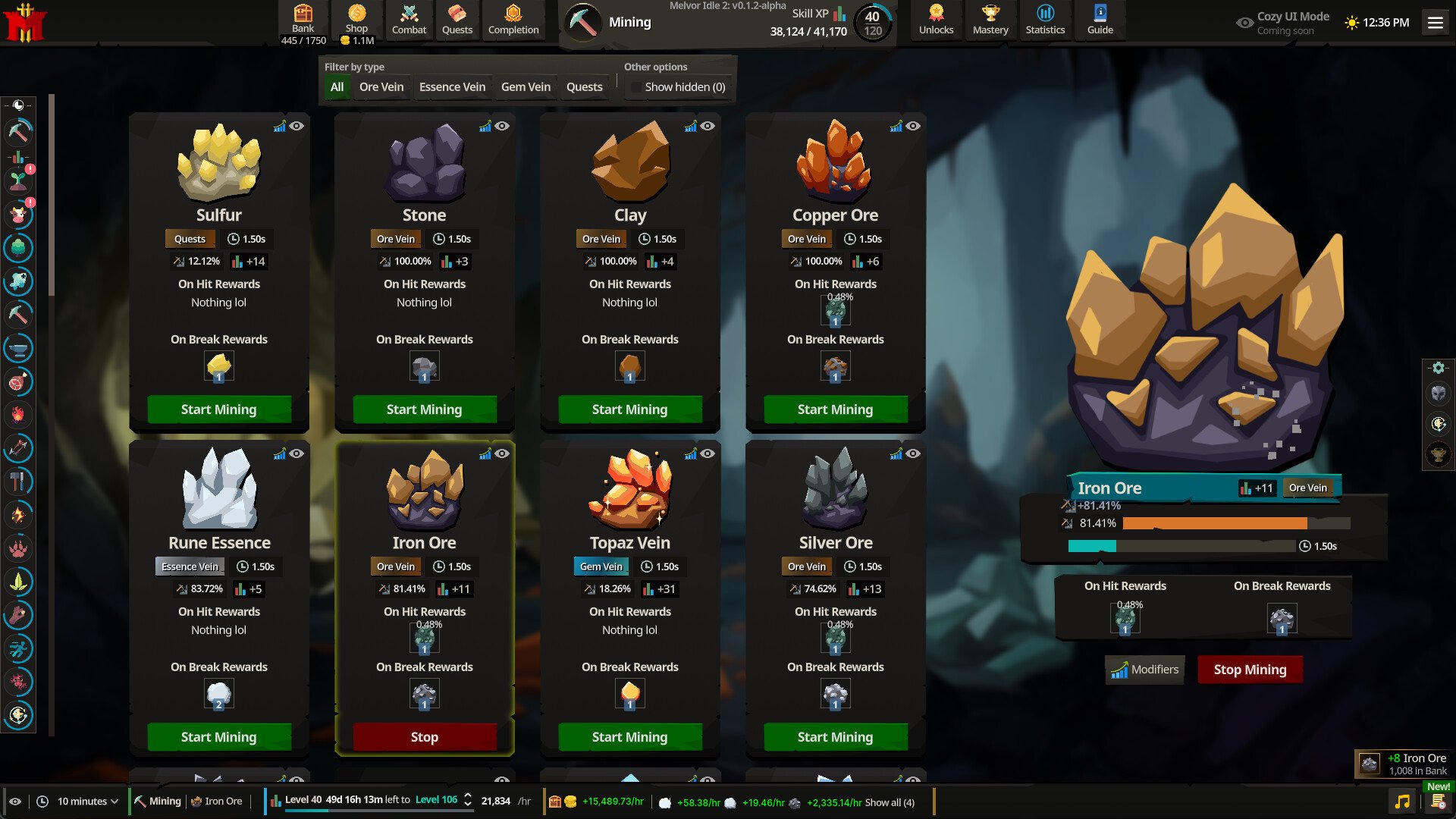
Melvor Idle 2 introduces a substantially redesigned interface with updated visuals, equipment management, and information displays.
Current-action tracking provides details such as experience rates, resource gains, and consumption rates. The Event Log records important developments that occur while you're away from the game.
Equipment selection is also more convenient. Players can inspect compatible items from equipment slots, compare stats against their existing loadouts, and filter weapons by combat style.
For players accustomed to the original layout, the Early Access launch includes a Legacy Sidebar showing skill levels in a familiar arrangement.
The underlying improvement is easier access to information that previously required more menu navigation, calculations, or external references.
What Is Still Missing From Melvor Idle 2?
Several features advertised for Melvor Idle 2 belong to its planned full release rather than the current Early Access build.
The Level 120 cap isn't available yet. Early Access currently supports progression to Level 99, with additional content planned for higher levels.
The full game is also intended to feature 29 skills. Construction, Enchantment, and additional returning skills are part of the remaining development plans rather than the current 25-skill roster.
Other planned features include further combat content, expanded game modes, and additional interface and quality-of-life systems. Official in-game mod management is part of the full-release plan, but shouldn't be assumed to be fully implemented at launch.
Melvor Idle 2 is currently available through Steam, with iOS and Android versions planned for 2027. Melvor Idle remains the immediate option for playing natively on mobile.
The original also retains a substantial content advantage through its released expansions, including Throne of the Herald, Atlas of Discovery, and Into the Abyss.
Should You Play Melvor Idle or Melvor Idle 2?
Choose Melvor Idle if you want an established progression experience with a larger library of released content. It's especially appealing if you already own its expansions or prefer to play on mobile.
Choose Melvor Idle 2 if you're interested in the new skill systems, redesigned Mastery progression, expanded quests, and updated interface. Its Early Access release already offers a substantial adventure, with additional content planned throughout development.
Returning players should also expect a fresh progression experience rather than a simple upgrade to their existing character. Melvor Idle 2 demo saves carry into the sequel's Early Access release, but that transfer feature shouldn't be confused with moving a character from the original game.
For newcomers playing on PC, either game is a reasonable starting point. Melvor Idle offers a more complete catalog of content, while Melvor Idle 2 provides a newer foundation built around its evolving systems and quest-driven progression.
The sequel doesn't make the original obsolete. Both retain the familiar idle RPG formula, but they offer different ways to experience it as Melvor Idle 2 continues toward its full release.