Overlooting Tips Guide: Best Strategies for Beginners
Overlooting is a roguelike centered on loot, gear synergies, and bosses that test every build choice you make. If you want to clear corruption levels, unlock characters, and survive late-game encounters, you need to know how progression, items, and sets work.
Best Tips for Overlooting
The key to success is playing around synergies, not chasing random stats. Set bonuses like Beast, Rogue, Royal, or Mana Burst can transform weak runs into strong ones. Save potions for bosses, learn each stat interaction, and always forge upgrades when possible.
Overlooting is a game about adapting your loot into a working engine rather than hoping for one perfect weapon.
Character Unlocks and Progression
You start with Maximleon, but more characters unlock as you win runs and climb corruption levels. Liz the Shadow and others become available after milestones, and each character has unique passives that expand as you progress.
Corruption zero introduces potions, corruption two unlocks additional passives, and higher levels keep stacking permanent rewards. Every win makes the roster and runs stronger.
Stats Explained
Overlooting runs on a clear stat system that rewards mixing defense with scaling damage.
Armor blocks flat damage.
Barrier regenerates each area and soaks fixed hits.
Guard grants barrier when entering new areas.
Thorns return damage to attackers.
Swiftness gives chances to double attack.
Rage builds when hit and adds bonus physical damage.
Poison, wound, and weakness all chip down enemies in different ways.
These interact with sets and gear choices. Rage builds pair well with Beast, swiftness thrives with Rogue, and poison stacks shine with Royal bonuses.
Gear and Set Bonuses
Each item provides raw stats plus potential set tags. Stacking sets is the strongest way to scale damage. Beast increases enrage and spreads damage. Rogue raises crit chance and can trigger bonus strikes.
Royal amplifies status effects by adding extra stacks. Villager makes items drop as if you were deeper in the run, helping farm stronger loot early. Taboo adds stun and thorn mechanics, while Mana Burst unlocks magic builds with chained attacks.
The forge is needed for growth. Combining three items of the same rarity upgrades them into the next tier. This is the path to legendary and mythic items, which add stand-alone powers like Sacred Chain’s armor bonus or Sun and Moon’s unique effects. Mythics don’t need set stacking, they dominate runs on their own.
Potions and Consumables
Potions are not filler. Healing potions restore a percent of your max health and save runs. Debilitating potions add wound or weakness, making enemies take far more damage. Rare potions can make you invulnerable for a round or instantly kill weaker foes.
Core fragments and special drops add late-game effects that can tip the scales against final bosses. The smart play is to save them for key encounters.
Boss Strategies
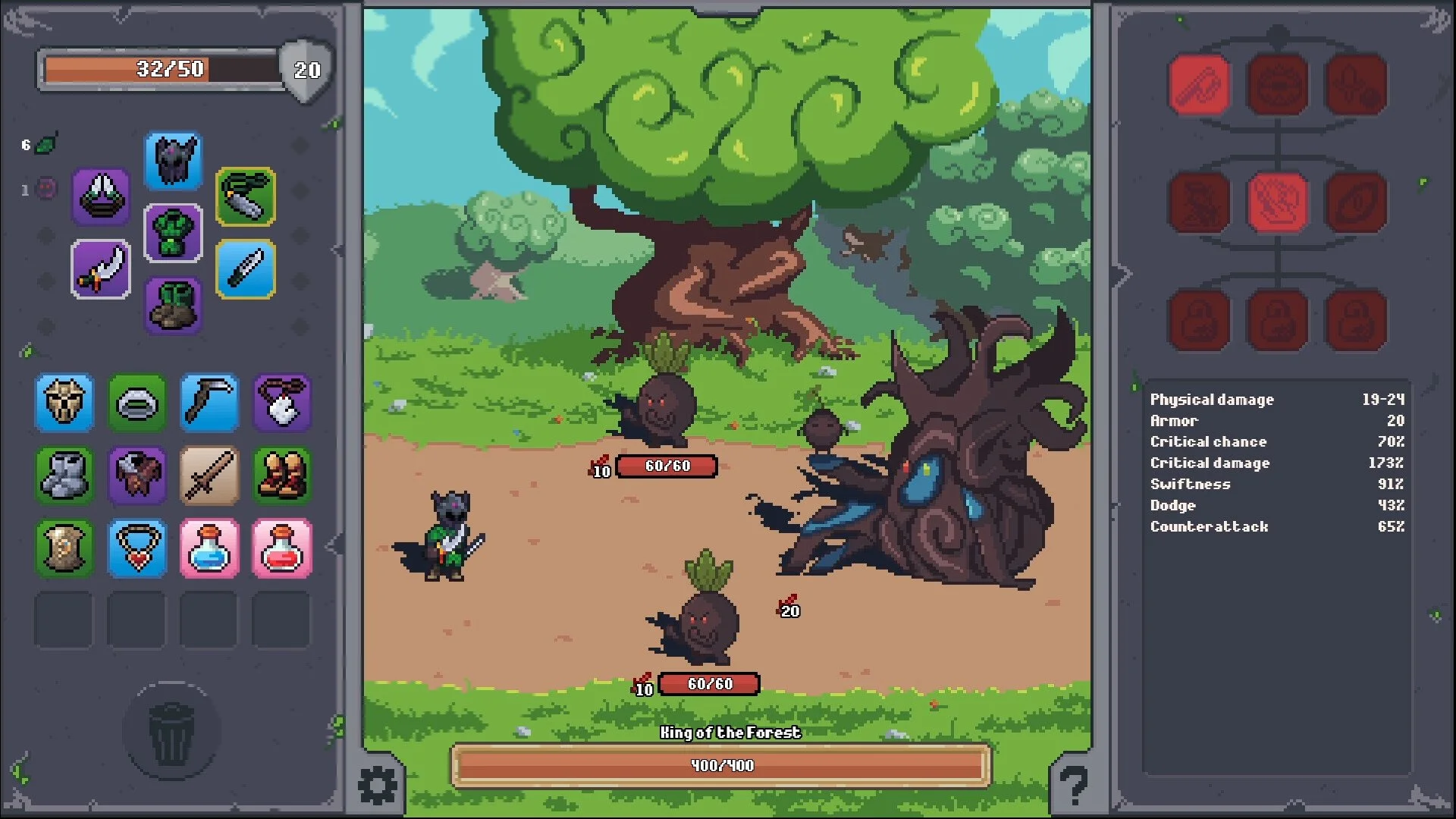
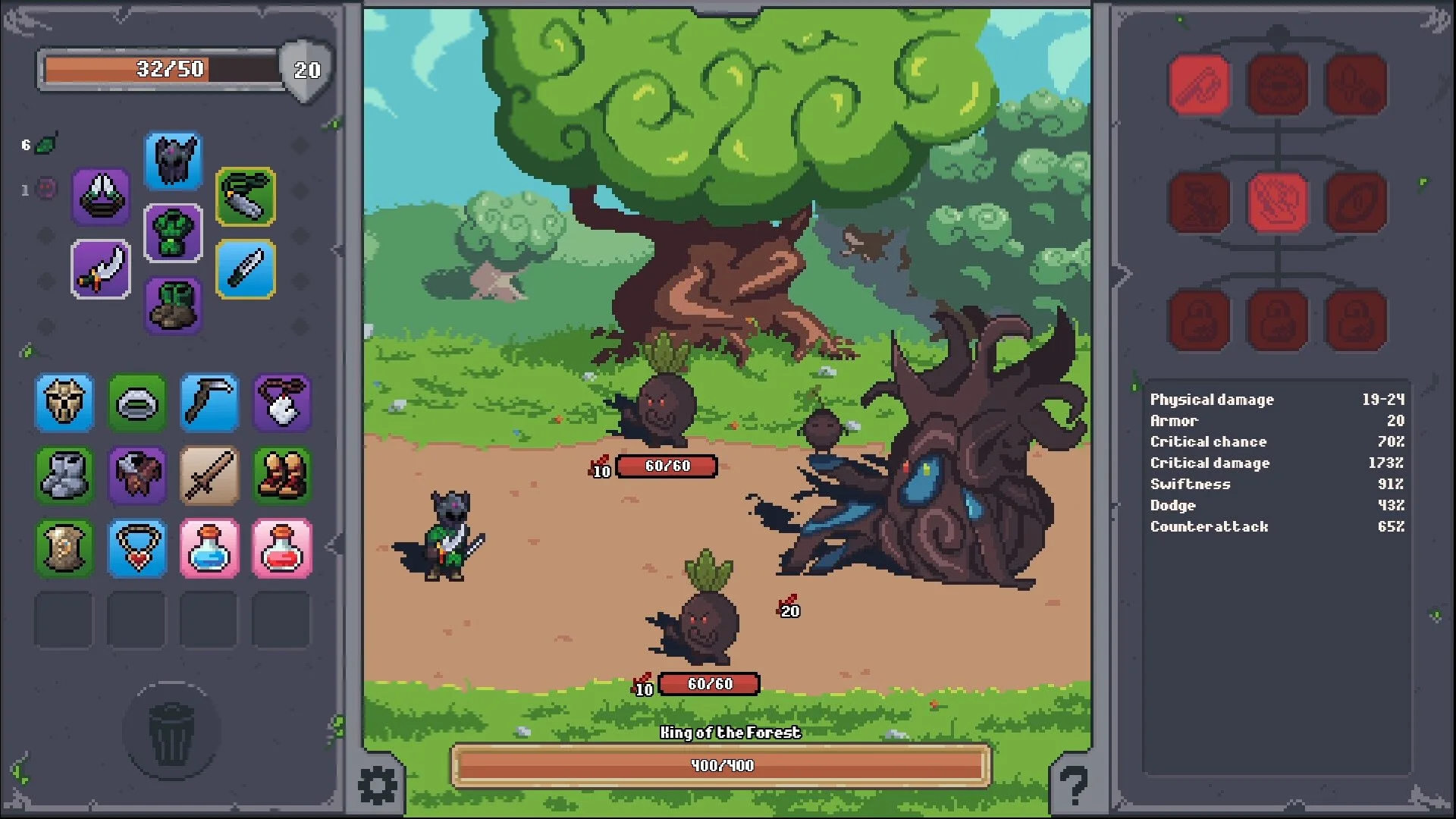
Every boss has unique mechanics, so treating them like normal enemies ends badly. The Slime Mother spawns drones that boost her damage if left unchecked. The King of the Forest plants saplings that must be destroyed before his heavy strikes.
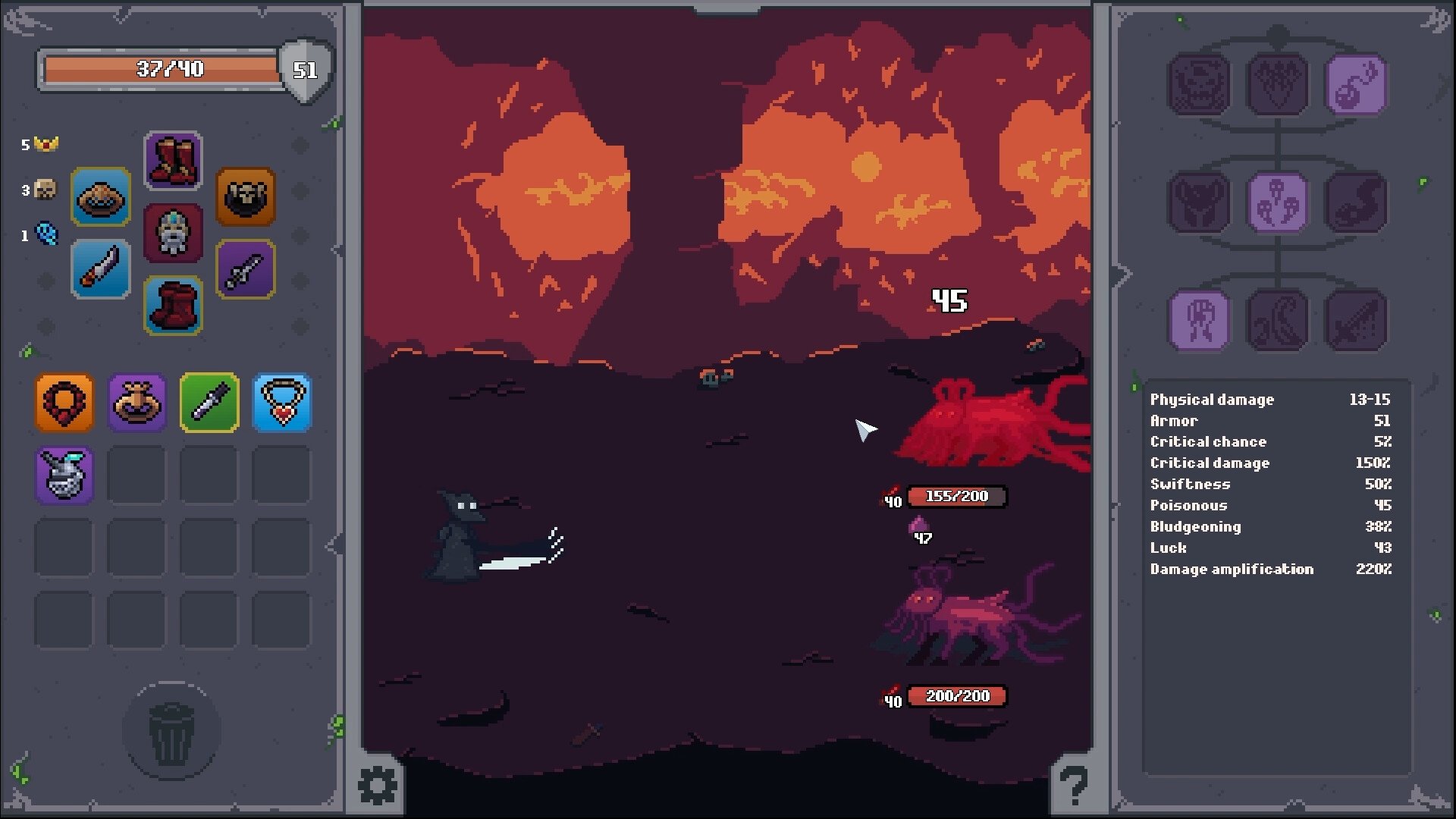
The Avatar of the Corruption devours minions to scale its damage, punishing you if you kill too many adds at the wrong time. The best approach is knowing when to clear summons and when to go all-in on the boss.
Advanced Builds
Synergies are where Overlooting shines. Swiftness stacked with Rogue gives near-constant multi-attacks. Beast sets scale enrage into unstoppable damage but require armor to stay alive.
Royal thrives with poison or wound builds, multiplying stacks into devastating results. Mana Burst enables magic damage builds, chaining attacks across enemies.
Late-game survival often depends on mixing sustain with scaling. Life steal and regen combined with armor keep you alive while status or crit builds finish enemies off. The most consistent runs come from building into what drops rather than forcing one path.
Final Blurb
Overlooting rewards careful planning, synergy stacking, and smart resource use. Corruption levels test your ability to adapt, while bosses force you to use every tool you’ve saved. The strongest runs come from forging higher-tier gear, stacking set bonuses, and holding potions for the right moment.
No matter what build you chase, the path to victory is always paved with loot.
FAQ
How do you unlock characters in Overlooting?
Win runs with Maximleon to unlock Liz the Shadow and others. Higher corruption unlocks more passives and potions.
What stat is best to build early?
Swiftness is best early since extra attacks clear weak enemies quickly. Armor and rage become more valuable in later areas.
What does Mana Burst do?
Mana Burst makes magic attacks deal a portion of their damage again to another enemy. Some gear increases its frequency and scaling.
How does the forge work in Overlooting?
Using three items of the same rarity creates one item of higher rarity. This is the only way to reach legendary or mythic gear.
Which boss is hardest in Overlooting?
The Avatar of the Corruption is the toughest, scaling damage by devouring minions. Managing summons is the key to winning this fight.
© 2025 GamerBlurb. All rights reserved. Please credit GamerBlurb.com by linking to any information used from this site.
More Overlooting