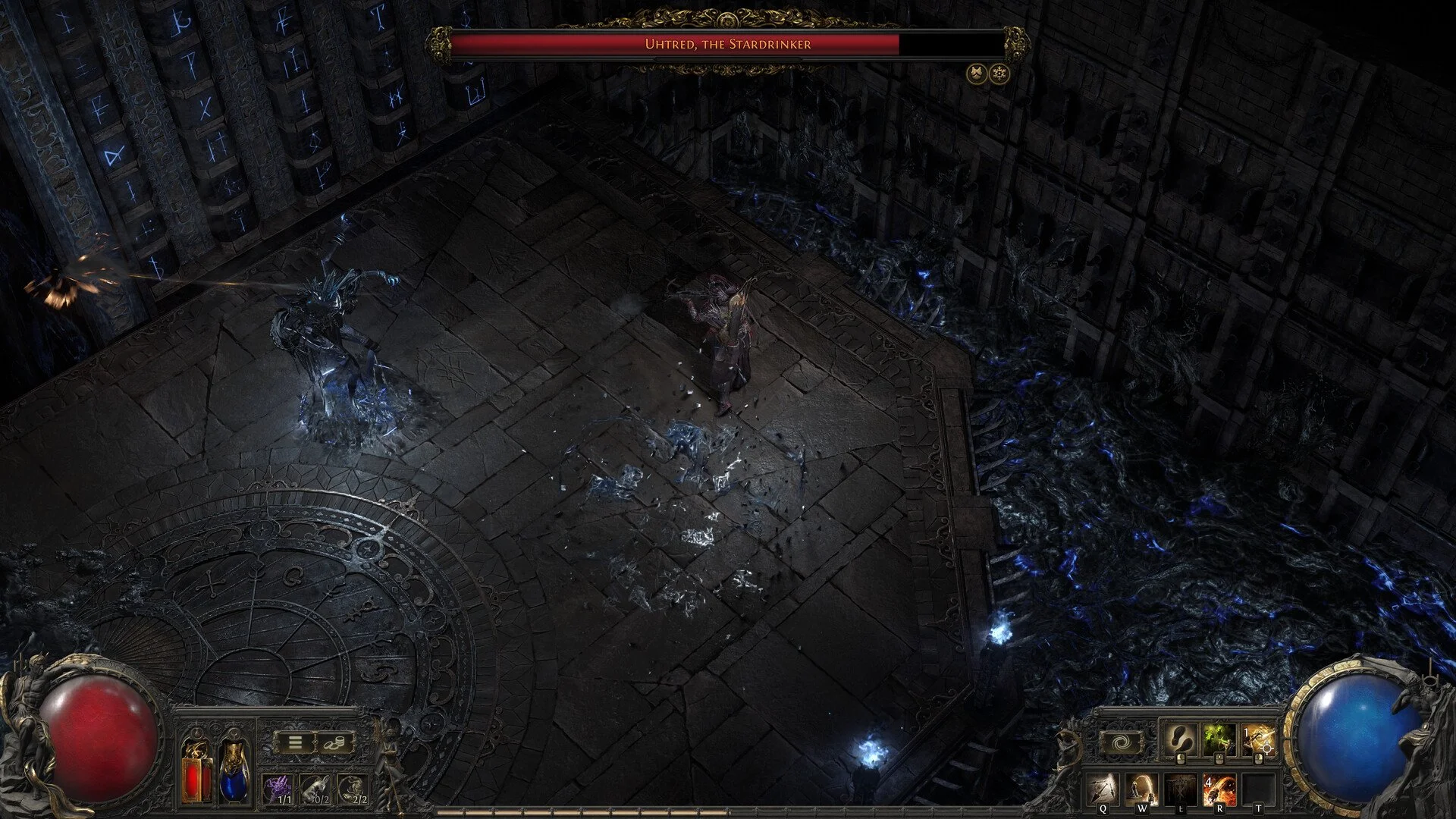
PoE 2 Delirium 0.5 Guide
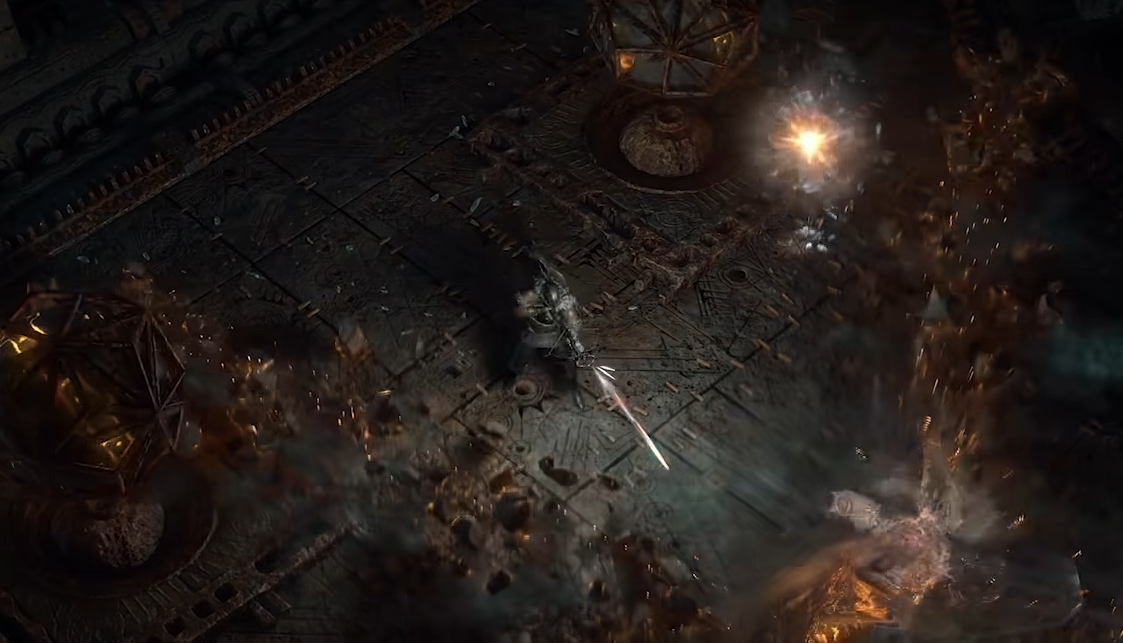
PoE 2 Delirium in 0.5 is a moving fog mechanic where the map becomes more Delirious as you push toward the boss, with rewards coming from Delirium monsters, mirrors, bosses, Liquid Emotions, Loathsome Mire, Grand Mirrors, and the Trial of Madness loop. It no longer feels like the old PoE 1 version where the main expectation was a clean end-of-encounter reward explosion.
The biggest adjustment is direction. Delirium is now less about standing in one place and killing everything, and more about reading the fog, following the map flow, hitting Fracturing Mirrors, and pushing toward the boss before the encounter collapses behind you. If you run around randomly, especially in Loathsome Mire, the mechanic feels broken. If you follow the visual flow, it starts making more sense.
Jump To
- Why Delirium Feels Weird In 0.5
- How Delirium Works In Maps
- How To Read The Delirium Bar
- Where Delirium Rewards Come From
- How Loathsome Mire Works
- What Liquid Emotions Are For
- Grand Mirrors And Trial Of Madness
- How Simulacrum Works In 0.5
- When Delirium Starts Feeling Worth It
- Best Way To Run Delirium In 0.5
Why Delirium Feels Weird In 0.5
Delirium feels weird in PoE 2 0.5 because the mechanic is now built around forward pressure, map direction, fog movement, side encounters, and long-term Atlas progression instead of a simple reward bar that pays out cleanly at the end.
That is the part that trips up PoE 1 players. The old muscle memory says to enter the fog, juice the map with density, rip through monsters, then expect the mechanic to spit out rewards in a very obvious way. In 0.5, the rewards are less theatrical and the tracking is less readable at first glance.
The map gets more Delirious as you push deeper toward the boss. The fog is also directional. It spreads and pulls forward from the mirror, and the encounter punishes aimless wandering because the safe and productive route is almost always ahead, not sideways into every dead end.
My first instinct with the new version was wrong too. I treated the bottom bar like a normal “fill this and collect loot” bar, then wondered why ending the encounter felt like nothing happened. The better way to read it is as a pressure and direction tool. It tells you how far the encounter has progressed, how much time or fog room is left, and where the important encounter markers are coming up.
How Delirium Works In Maps
Delirium maps start when you enter the Mirror of Delirium near the beginning of the map, then the fog expands as you move deeper through the area.
The practical goal is to keep moving through the fog while killing enough enemies and triggering enough Delirium objects to make the run worth it. The further the map progresses, the more Delirious the area becomes. That means enemies become more dangerous and the reward potential improves, but the mechanic also becomes less forgiving if the build is slow, fragile, or bad at clearing in motion.
The end point is usually the map boss. The boss is the natural finish line of the Delirium path, which is why the fog often feels like it is guiding you through the map rather than asking you to full-clear every corner. If the map layout is ugly, the mechanic can feel much worse because the fog does not care that the tileset decided to become a municipal planning crime.
Fracturing Mirrors are worth watching for as the run develops. These structures can spawn extra Delirium monsters or add encounter pressure when approached. They are easy to miss if the only focus is the timer, but they are one of the main ways the map turns into something more than a gray sprint toward the boss.
How To Read The Delirium Bar
The Delirium bar is best read as a progress and fog-pressure indicator, not as a classic end reward meter.
The bar shows the encounter moving forward as the fog spreads and the map becomes more Delirious. The closing or gray portion is the danger zone behind the run. If you fall too far behind the fog’s active area, the encounter starts feeling like it is slipping away.
The icons on the bar mark important Delirium moments, including encounter points and the boss endpoint. As you get closer to one of those markers, watch the map and fog instead of staring only at the UI. The game often shows the next objective through the fog flow, Fracturing Mirrors, or a colored mirror encounter rather than a clean “go here” arrow.
The biggest habit change is following the fog’s direction. The fog itself flows toward progression. If the map feels empty or the bar is moving but nothing seems to happen, stop treating Delirium like a full-clear mechanic. Move with the fog, cut toward the boss, and take encounters that appear on the route.
Where Delirium Rewards Come From
Delirium rewards in 0.5 come from monsters, Fracturing Mirrors, Liquid Emotions, Delirium bosses, Loathsome Mire rewards, Grand Mirror progression, Simulacrum, and Atlas investment.
The important thing is that the mechanic does not always feel like it pays out at the exact moment the player expects. Manually ending Delirium can produce a sound or visual effect without the old-style loot explosion people are waiting for. That is why some runs feel like they gave nothing even when the map was technically completed.
Liquid Emotions are the main visible reward to care about early. These are Delirium-exclusive currency items, and they matter because they connect directly into amulet instilling and other 0.5 crafting paths. Delirious monsters can drop them, and boss-related Delirium progression becomes more valuable once the Atlas side of the mechanic is online.
The uncomfortable truth is that early, uninvested Delirium can feel bad. That does not always mean the mechanic is broken. It means the base version can be underwhelming before the Atlas tree, better map selection, stronger clear speed, and higher-value reward paths start stacking together.
How Loathsome Mire Works
Loathsome Mire is a Delirium side area where the goal is to survive the damaging liquid and follow the flow toward the objective, not to wander around hunting normal packs.
This area is probably the most confusing part of the new Delirium loop because it looks like a huge empty mess if you do not know what it is asking. The liquid applies pressure while you move, and the arena can feel endless when you sprint in random directions.
The trick is to watch the liquid flow. Stop for a moment, look at the direction the blood-like liquid is moving, then follow it. If the direction changes, adjust with it. The flow points toward the path forward, and treating it like a compass makes the area much less miserable.
Stand on land when you need to drop or manage the damage stacks. Running through the liquid forever is how the Mire turns from a weird side area into a slow-motion self-report. The objective is not to prove you can tank the floor. The objective is to read the flow, reach the platform, and get out with the reward.
Loathsome Mire can drop special amulet bases that grant two instilled notables at the cost of either one prefix or one suffix. That makes it worth learning, even if the first few runs feel like the game dropped you into a red parking lot with no signage.
What Liquid Emotions Are For
Liquid Emotions are Delirium currency items used for amulet instilling and related Delirium crafting in PoE 2.
The most common use is adding a notable passive to an amulet through instilling. This is one of the most important reasons to run Delirium, because a good amulet instill can save passive points, reach distant notables, or enable a build that would otherwise need an awkward tree path.
Liquid Emotions also became more important in 0.5 because the system expanded into jewel crafting and hidden notable setups. Potent and Ancient variants are especially easy to confuse, and that confusion matters. Normal Liquid Emotions are used for amulet instilling, while Ancient Liquid Emotions are connected to Time-Lost Jewel crafting.
If the amulet side is the part causing problems, our PoE 2 how to anoint amulet in 0.5 guide explains the instilling process. For a specific hidden notable example, our PoE 2 Dominion anoint recipe guide shows why exact Liquid Emotion names matter.
Grand Mirrors And Trial Of Madness
Grand Mirrors are part of the 0.5 Delirium progression chain, and completing them can unlock the Trial of Madness system.
After completing Delirium Mirrors, a Grand Mirror can appear on a nearby Atlas map. A Grand Mirror duplicates the map boss, which means the affected map becomes a double-boss problem rather than a normal Delirium clear. Killing both bosses is what unlocks the Trial of Madness.
This is where Delirium stops being a simple map overlay and becomes a bigger Atlas loop. The mechanic starts feeding into Delirious maps, Simulacrum access, Raven-related progression, and eventually the Delirium pinnacle path.
That is also why judging Delirium from a few uninvested map encounters can be misleading. The early mirror feels like the mechanic. It is really the front door.
How Simulacrum Works In 0.5
Simulacrum in PoE 2 0.5 is tied to Trial of Madness progression and is now a 7-wave encounter.
After Trial of Madness is triggered, fog spreads across the Atlas from a chosen map and includes a locked Simulacrum. Maps inside the fog start at 10% Delirious. Killing Rare monsters and the map boss increases Deliriousness across the fogged maps. At 100%, Simulacrum becomes available, and Deliriousness can keep climbing up to 200%.
The higher that number goes, the more the mechanic becomes a build check. Delirium already favors characters with strong clear, good recovery, and enough damage to keep moving. Simulacrum pushes that even harder because the waves force the build to handle density and pressure without the comfort of a normal map route.
Completing a Simulacrum gives access toward the newer Delirium boss progression. That makes Simulacrum less like a random side activity and more like the structured payoff for actually investing into Delirium instead of casually touching mirrors and complaining that they feel stingy. Which, to be fair, they can.
When Delirium Starts Feeling Worth It
Delirium starts feeling worth it once the build has enough clear speed to stay ahead of the fog and the Atlas tree begins improving the reward side of the mechanic.
Uninvested Delirium can feel thin because the base encounter does not always shower the screen with obvious loot. The mechanic gets much better when Liquid Emotion drops, Delirium boss rewards, Fracturing Mirror value, Simulacrum access, and higher Deliriousness start connecting.
Build quality matters more here than in some other mechanics. A slow build can technically complete Delirium, but it will feel awkward because the fog rewards momentum. A fragile build can also get punished hard because the mechanic stacks danger while encouraging forward movement.
The sweet spot is a build that clears while moving, does not need to stop for every rare, and can handle the boss endpoint while under Delirium pressure. If the character needs 12 seconds and a motivational speech to kill every rare, Delirium will feel miserable.
Best Way To Run Delirium In 0.5
The best way to run Delirium in 0.5 is to enter the mirror, follow the fog flow toward the boss, trigger Fracturing Mirrors on the route, take Loathsome Mire only when the build can survive the floor pressure, and invest into the Atlas tree before expecting serious returns.
Do not full-clear backward. Do not chase every dead-end pack. Do not manually end the encounter and expect the old reward behavior to suddenly appear. Push forward, read the bar as pressure, and treat the boss route as the spine of the encounter.
For Loathsome Mire, follow the liquid flow and use land to manage the damage. For rewards, focus on Liquid Emotions, amulet bases, Delirium boss progression, Grand Mirrors, Simulacrum, and Atlas investment. For crafting, keep normal, Potent, and Ancient emotions mentally separate, because mixing those up is how expensive mistakes happen.
Delirium 0.5 is not as instantly readable as Breach or Abyss, and that is the main problem. The mechanic has value, but it hides too much of that value behind movement rules, fog direction, side-area logic, and Atlas progression. Once those pieces click, it becomes a much cleaner loop: follow the fog, hit the mirrors, kill the boss, build toward Simulacrum, and stop wandering through Loathsome Mire like the blood swamp owes you a GPS.