Slay the Spire 2 Colorful Philosophers: What To Pick
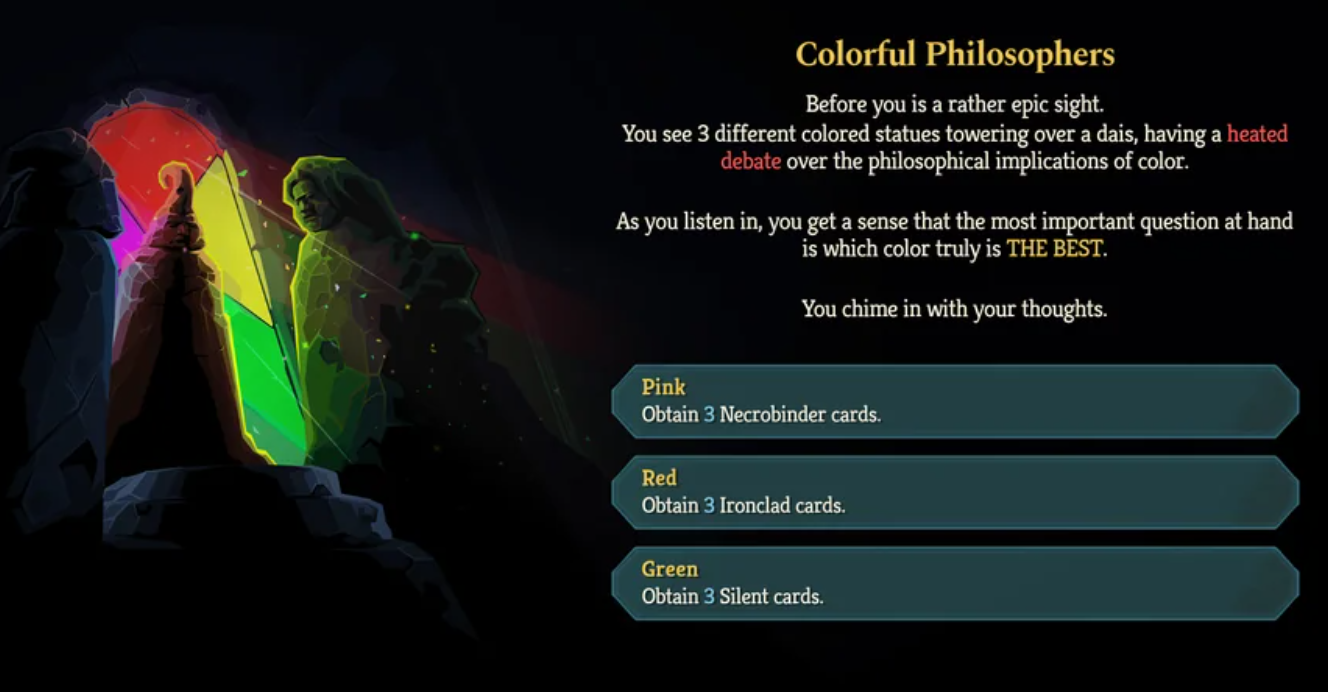
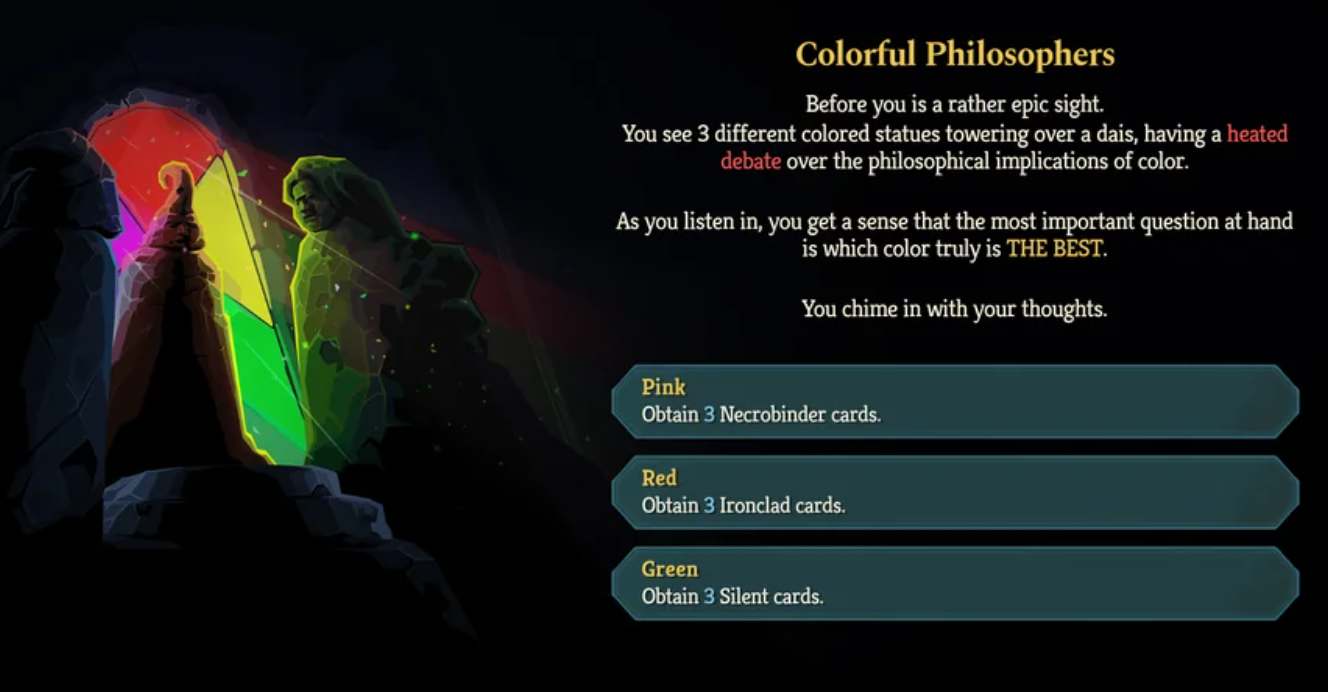
Colorful Philosophers looks simple at first, but the choice here can swing your run harder than most events. You’re pulling cards from other classes, and that means you either fix a weakness instantly or end up with cards that don’t really function in your deck.
Best Choice For Colorful Philosophers In Slay The Spire 2
The best pick in Colorful Philosophers is the color that directly fixes a weakness in your current deck, since you gain 3 rewards from that class including a Common, Uncommon, and Rare.
You’re not picking a class for flavor. You’re patching a hole.
If your deck feels clunky, you want consistency. If you lack scaling, you want power. If you’re already stable, you can afford to gamble a bit. The event becomes easy once you look at it that way.
Quick Guide
Pick based on your deck weakness
You get 3 rewards from one class
Includes Common, Uncommon, Rare
Off-class cards may not fully work
Avoid picks your deck can’t support
Fast Decision Rules That Actually Work
When you don’t want to overthink it mid-run, these shortcuts hold up well:
Deck feels inconsistent → pick Green for draw and hand control
Need raw power or scaling → pick Red
Deck already strong → take higher upside option
Unsure or low synergy deck → avoid Pink and Orange
Don’t chase Rare alone → take the best overall set
This is the easiest way to avoid bad picks. You’re solving a problem, not rolling for a jackpot.
How The Event Works And Why It’s Stronger Than It Looks
Each color gives you three separate reward picks, one for each rarity. That means you’re almost guaranteed to leave with something usable.
That’s what makes this event better than a normal reward. Even if the Rare misses, you still get a Common and Uncommon to work with.
But that strength only shows up if the cards actually function in your deck. Otherwise, you just added 2 or 3 awkward cards that slow you down.
Early Run Vs Late Run Decision Making
This event plays very differently depending on when you see it.
Early on, your deck is fragile. Adding cards that don’t immediately help can make fights harder right away. In those runs, safer picks that improve consistency feel much better.
Later in the run, your deck is more stable. You can afford to take riskier picks because you’re not relying on every single draw to survive. That’s where higher upside choices start making more sense.
You’ll feel this difference immediately in your next fight. Good early picks smooth things out. Bad ones make your opening hands worse.
Why Some Off Class Cards Just Don’t Work
Not every card translates cleanly outside its class.
Some rely on mechanics your character doesn’t have access to. When that happens, the card ends up feeling incomplete. You draw it, but it doesn’t really do what it’s supposed to.
You’ll notice this quickly in gameplay. These cards tend to sit in your hand longer or get played for less value than expected. That’s the biggest trap in this event.
What Good Picks Feel Like In Actual Runs
When you hit the right choice, you feel it immediately.
Your next few fights become smoother. Your hands line up better. You stop having turns where nothing works together.
Bad picks feel the opposite. You draw cards that don’t connect with the rest of your deck. Turns feel more awkward instead of less.
That difference shows up fast, usually within the next 1 or 2 fights.
When This Event Is A Huge Win
This event is at its best when your deck has a clear gap.
If you’re missing draw, scaling, or reliable damage, pulling from another class can fix that instantly. You’re basically importing a solution your class might not naturally have.
It’s also strong when your run is already stable. In that case, you’re free to look for upside instead of just survival.
When You Should Play It Safe
If your deck is already struggling, this event can make things worse if you pick poorly.
Adding cards that don’t fit your energy, your mechanics, or your game plan will dilute your deck. You’ll notice it when your turns start breaking down more often.
In those runs, sticking to safer, more universally useful picks is the better call.
Final Blurb
Colorful Philosophers isn’t about picking the best class, it’s about fixing your deck in the moment. You’ll feel the impact almost immediately, either in smoother fights or in hands that suddenly don’t work. Once you start treating it like a problem solving event instead of a random reward, the right choice becomes much clearer every time it shows up.