Enshrouded 1.0 Assassin Build Guide

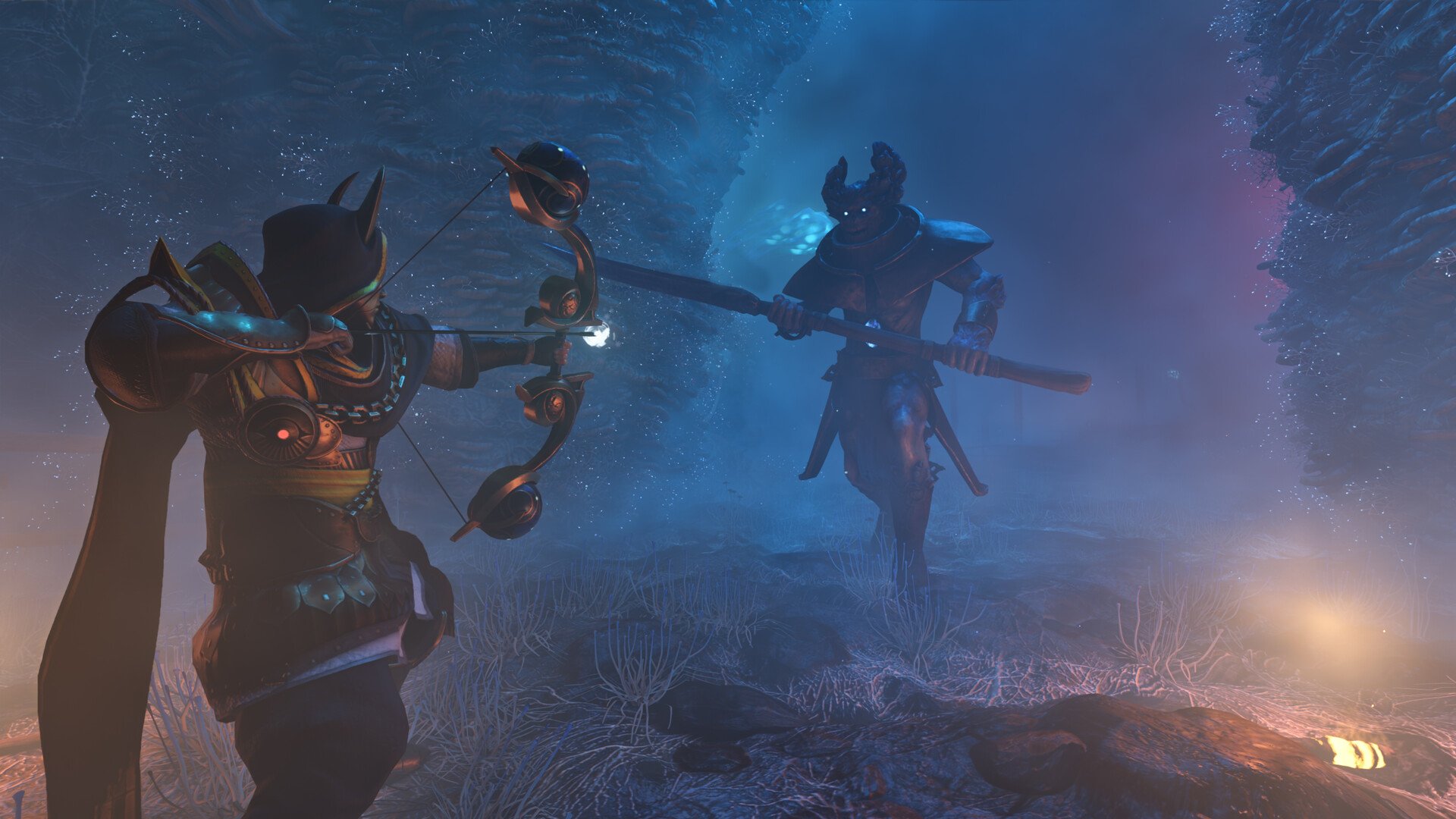
The Assassin in Enshrouded 1.0 works best as a mobile Dexterity build that controls when melee combat begins and ends. Daggers provide the burst, poison, and critical-hit pressure, while the bow creates openings, interrupts dangerous enemies, and keeps damage going whenever staying behind a target becomes unsafe.
Jump To Section:
Best Assassin Build
How the Assassin Build Works
Best Assassin Skills
Best Stats
Daggers and Bow Setup
Best Gear Priorities
Best Arrows
How to Fight Bosses
How to Stay Alive
Best Assassin Build in Enshrouded 1.0
The best Assassin setup uses dual daggers as the main damage weapon and a bow as the tool that creates safe melee openings. Dexterity is the core attribute because it supports both sides of the build, letting you invest heavily into one damage stat instead of splitting your points between separate melee and ranged scaling.
The build should revolve around critical hits, backstab damage, dagger bonuses, poison, and enough stamina to repeatedly reposition. Expose Weakness turns critical hits into short damage windows, while Backstab Mastery rewards you for using those windows from the correct angle instead of simply standing in front of an enemy and trading attacks.
Main Weapon: Dual Daggers
Secondary Weapon: Bow
Main Attribute: Dexterity
Secondary Attribute: Constitution
Main Damage: Critical Hits, Backstabs, Dagger Damage
Secondary Damage: Poison and Bow Pressure
Playstyle: Open, isolate, execute, disengage
How the Assassin Build Works
The Assassin should be played around short periods of advantage rather than continuous melee pressure. Get the first hit on your terms, create a vulnerability, move behind the target, deal your dagger burst, then leave before the enemy can turn the exchange into a damage trade.
An ideal encounter begins with either a true Sneak Attack from behind or a strong ranged opener against an unaware enemy. From there, use control, movement, or a stun to reach the target's back and begin the dagger sequence.
Critical hits are especially important because Expose Weakness creates a brief period of increased damage after one occurs. That makes a critical strike less like a random bonus and more like the start of your strongest offensive window.
The practical combat loop becomes:
Open: Start from stealth or use the bow before the enemy reaches you.
Create: Trigger a critical hit, stun, or other opening.
Execute: Move behind the target and unload with daggers while the advantage is active.
Disengage: Dodge out, swap to the bow, and let poison or ranged damage continue while you reset.
This makes the Assassin much more reliable than trying to remain behind every enemy indefinitely. Backstab is extremely valuable, but you only need to own the strongest moments of the fight rather than forcing perfect positioning every second.
Best Assassin Skills
Start by building a strong dagger foundation. Dagger Specialization and Dagger Mastery are high priorities because the build needs its primary weapon to remain threatening even when stealth is unavailable.
Expose Weakness is one of the defining skills because a critical hit causes the target to take increased damage for a short period. This is where critical chance begins doing two jobs: it increases damage directly and creates more frequent burst windows for the rest of the build.
Backstab Mastery should follow once you are consistently getting behind enemies. The bonus is powerful, but it becomes wasted investment if your positioning still keeps you in front of targets for most of the fight.
Venomous Blades and Venom Mastery add a second damage layer. Poison continues working after you leave melee range, which fits the Assassin much better than a build that needs to remain planted beside the target to maintain all of its damage.
Slice and Dice is valuable once both weapons are contributing. It rewards the transition between dagger combat and bow attacks, making the weapon swap part of your offense rather than merely something you do when melee stops working.
Graceful Stride, movement skills, stamina support, and Updraft should be treated as combat tools as much as exploration upgrades. An Assassin with enormous theoretical damage but no stamina available to reach a backstab angle is much weaker in practice.
Best Stats for the Assassin
Dexterity is the clear priority because both daggers and bows benefit from it. That shared scaling is what makes the hybrid efficient: you can improve the melee and ranged halves of the character without building two separate damage profiles.
Constitution should be the second priority. The Assassin spends enough time near enemies that mistakes will happen, and a larger health pool also improves the value of healing effects that scale from maximum health.
Stamina regeneration is the next practical concern. Dodging, repositioning, sprinting around a target, and maintaining bow spacing all compete for the same resource, so a build that constantly empties its stamina bar will struggle to capitalize on its own damage windows.
Critical chance deserves special attention on gear because of how much of the build it influences. It improves normal damage, activates Expose Weakness more frequently, and can also contribute to healing through Battle Heal during melee combat.
Use Daggers for the Window and the Bow for Control
Your daggers should be judged primarily by how much damage they can deliver during a short favorable exchange. Critical chance, dagger damage, backstab damage, useful damage traits, and health leech are all strong because they improve the part of the fight where the Assassin is supposed to dominate.
The Solstice Daggers are an excellent endgame target because their bonuses support critical hits and backstab-heavy play, but the name of the weapon matters less than whether its traits actually support your version of the build.
Health leech is particularly valuable on fast weapons because frequent dagger attacks create repeated opportunities to recover health while you are already attacking. If another set of daggers rolls stronger survivability or damage bonuses for your current setup, it can be worth using even before you obtain an ideal endgame pair.
The bow has a different job. It is not there simply to turn the Assassin into a Ranger whenever enemies move away. Use it to start fights, build stun, pressure targets you cannot safely flank, and extend damage while your poison is already ticking.
That division keeps both weapons relevant. Daggers win the opening you created; the bow creates the next one.
Build Gear Around Jobs Instead of Complete Sets
Enshrouded does not require the Assassin to wear one matching armor set, so each slot should solve a specific problem rather than forcing a full-set appearance.
The head and gloves are excellent places to prioritize damage. Critical chance, dagger damage, and backstab bonuses all directly improve the Assassin's strongest melee window. Sky Specter and Vorgoth's Soulbound pieces offer strong examples of those bonuses at endgame.
The chest slot is a good place to recover durability. The Assassin already gets substantial offensive value elsewhere, so using a high-health chest such as Emberguard can make the entire setup more forgiving without sacrificing one of the slots carrying your best dagger bonuses.
Legs and boots can then handle movement, sneak speed, stamina regeneration, or other resource support. This creates a more useful distribution than demanding offense from every armor slot and discovering that the character cannot survive or reposition long enough to use it.
For rings, health leech and stamina support are particularly useful. Gemini Ring gives the build additional sustain, while Ring of the Ether provides health, stamina regeneration, and Shroud utility. Once survival is comfortable, one defensive ring can be exchanged for a more offensive option.
Carry Different Arrows for Different Openings
The Assassin gets more from arrow utility than from carrying one ammunition type for every fight.
Stun Arrows are particularly valuable because a stunned enemy cannot turn to deny your positioning. Against bosses, filling the stun bar can create one of the safest opportunities to move behind the target and spend your full dagger burst.
Explosive Arrows are better used as limited burst tools rather than ordinary ammunition. They give the bow meaningful area damage and can capitalize on a favorable ranged opening, but their crafting cost makes them better suited to difficult encounters than routine exploration.
Shroud Arrows add another source of damage over time. Combined with dagger poison, they let you disengage without reducing the fight to zero damage while you wait for another melee opportunity.
A reusable Eternal arrow is useful for general ranged pressure when you do not want every ordinary enemy consuming crafted ammunition.
How to Play the Assassin Against Bosses
Boss fights should be approached as a sequence of controlled backstab opportunities rather than one long melee combo.
Begin at range and learn which attacks leave the boss stationary long enough to punish. Use Stun Arrows when the target can be controlled that way, then close the distance only after the opening already exists.
Once the target is vulnerable, move behind it and use daggers aggressively. Critical hits can trigger Expose Weakness during the same window, making this the moment to stay committed for a few extra attacks instead of immediately retreating.
As soon as the boss begins recovering, leave. Continuing to attack from the front throws away the positional advantage the build is designed around.
Swap back to the bow while repositioning, continue ranged pressure, refresh any damage-over-time effect that makes sense, and wait for another stun or safe recovery animation.
This turns the Assassin into a burst-cycle build against bosses: create the opening, spend it completely, then refuse the bad exchange that follows.
How to Stay Alive Without Turning Into a Tank
The Assassin's defense should come from several small systems working together rather than trying to stack enough armor to ignore mechanics.
Battle Heal is one of the most useful additions because melee critical hits can restore a percentage of maximum health. Since the build already wants frequent critical hits, survivability improves through an action you were going to perform anyway.
Health leech from rings or weapons adds another layer, while Constitution increases the margin for error. Bandages and potions should still remain available because the build does not have the same effortless passive sustain as a dedicated healing setup.
The final layer is movement. If you are low on stamina, standing behind the enemy becomes difficult, dodging becomes inconsistent, and even a high-damage Assassin begins taking unnecessary hits. Stamina regeneration therefore becomes a survival stat as much as a mobility stat.
The goal is not to make the Assassin capable of trading blows indefinitely. It is to survive long enough to reset the fight whenever your positional advantage disappears.
That is also what separates this build from a straightforward dagger or bow setup. The Assassin uses ranged control to manufacture a favorable melee exchange, converts critical hits and positioning into a short damage spike, then backs away while poison and ranged pressure bridge the gap to the next opening.