Building a factory in Moon Sweepers opens up plenty of possibilities, but getting your machinery running consistently takes more than connecting a few conveyors. Power becomes a much bigger consideration once you start processing lunar dust, especially when multiple machines are operating together. Between solar generation, battery storage, and the Moon's day-night cycle, there's quite a bit to account for before expanding your setup.
Jump To Section:
How to Get Power
Solar Panels and Power Requirements
How Batteries and Nighttime Power Work
Why Your Machines Aren't Working
Best Way to Power Your Factory
How to Get Power in Moon Sweepers
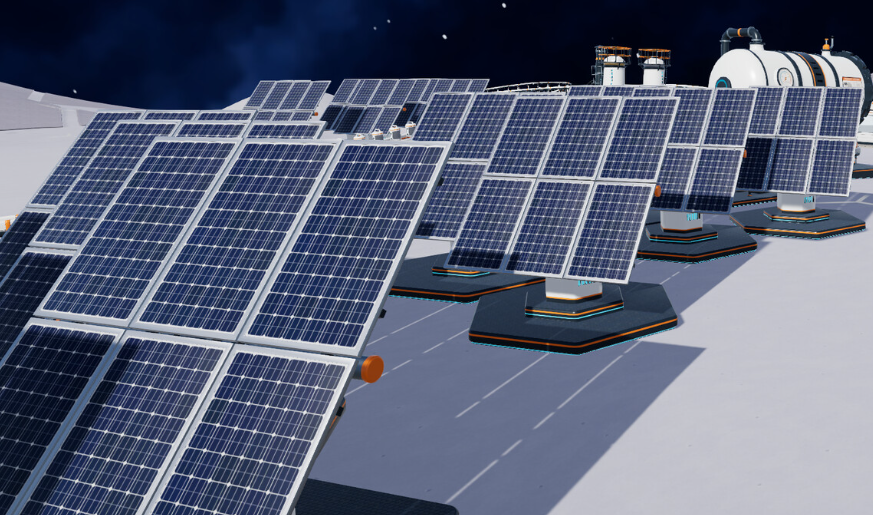
To generate electricity in Moon Sweepers, you'll need solar equipment from the Power section of the building menu. Solar panels provide the electricity needed to operate powered machinery, including the Pressure Chamber and Stone Press.
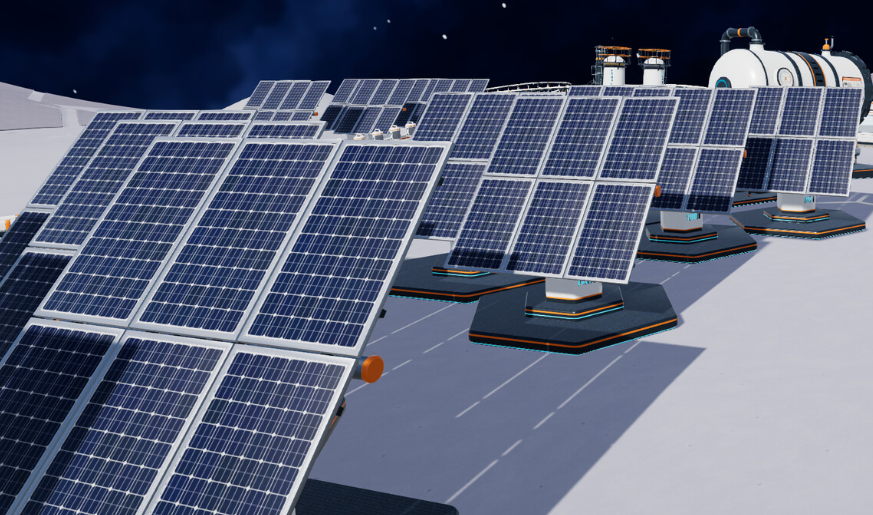
The two solar options worth knowing are the Solar Post and Solar Twin (M). Both generate electricity from sunlight, although the Solar Twin produces substantially more power than the smaller Post.
Once your solar equipment is part of the power network supplying your machines, its available electricity can support their operation.
You'll need to consider how much power your equipment consumes rather than simply placing a single solar panel beside every machine.
For example, one Solar Post isn't enough to supply the full operating demand of a Pressure Chamber. You'll need additional generation to support it, and even more if you plan to introduce other processing equipment.
Moon Sweepers Solar Panels and Power Requirements
Every powered processing machine has its own electricity demand, while solar equipment contributes a specific amount of generation. Comparing the two is the easiest way to work out whether your factory has enough power.
| Equipment | Power | Function |
|---|---|---|
| Solar Post | 3 kW | Generation |
| Solar Twin (M) | 7.5 kW | Generation |
| Pressure Chamber | 10 kW | Consumption |
| Stone Press | 18 kW | Consumption |
These figures represent the listed generation and operating requirements. Your available solar output still depends on sunlight, so matching the numbers doesn't guarantee continuous production throughout the night.
How Many Solar Panels Do You Need for a Pressure Chamber?
A Pressure Chamber requires 10 kW of electricity to operate. Since one Solar Post generates 3 kW, you'll need at least four Solar Posts to provide enough nominal generation.
Four Posts produce 12 kW altogether, leaving 2 kW beyond the Chamber's listed requirement.
Alternatively, two Solar Twin (M) units generate a combined 15 kW, comfortably exceeding the machine's demand during sufficient sunlight.
My preference would be to use the larger solar equipment when planning a factory that will eventually expand. You can meet the same requirement with fewer structures, and the additional generation gives you more flexibility when adding machinery.
How Much Power Do You Need for a Stone Press?
The Stone Press requires 18 kW, making it considerably more demanding than a Pressure Chamber.
Six Solar Posts provide exactly 18 kW of nominal generation, while three Solar Twin (M) units provide 22.5 kW.
However, most Moonstone production setups also need a Pressure Chamber to create Moon Sand. Running both machines means accounting for their combined electricity consumption.
A Pressure Chamber and Stone Press require 28 kW in total. Four Solar Twin (M) units generate 30 kW, enough to cover that combined demand under adequate sunlight, provided there are no additional loads pushing consumption higher.
That extra requirement is easy to overlook when you've saved enough money for the Stone Press itself but haven't budgeted for the electricity needed to operate it.
How Do Batteries and Nighttime Power Work in Moon Sweepers?
Solar power introduces an obvious limitation: your panels depend on sunlight to generate electricity.
When nighttime arrives, solar production can fall to zero. This doesn't necessarily mean your entire factory immediately shuts down, though, because stored battery energy can continue supplying your machines.
Battery storage is part of the solar power system, including storage integrated into larger solar equipment. You don't need to assume that every battery mentioned in the power display represents a separate building you can construct.
During the day, available solar generation supports your equipment and can replenish stored energy. Once sunlight is no longer available, the factory can draw from that stored charge instead.
When the batteries run out, machines that depend on the depleted supply stop operating until sufficient electricity becomes available again.
Why Does Your Factory Stop at Night?
If your processing machines work normally during the day but stop after sunset, the first thing I'd check is the power status.
Look at the solar generation, current consumption, and remaining battery charge. If generation has dropped to zero and the batteries are empty, your machines no longer have the electricity needed to continue processing materials.
There's also a difference between having enough solar generation during the day and having enough stored electricity to last through the night.
A factory can produce comfortably while sunlight is available yet still shut down before morning if its batteries cannot sustain the connected equipment.
Adding more solar generation can improve how much electricity is available during daylight, but nighttime operation also depends on the amount of stored energy available and how quickly your machines consume it.
Why Are Your Machines Not Working in Moon Sweepers?
Not every machine that stops producing materials has an electricity problem. A Pressure Chamber might have sufficient power but still be unable to process incoming dust, while a Stone Press can stop because one of its required materials isn't arriving.
Before spending money on more solar panels, check the following:
- Inspect your solar generation and compare it with the power required by your connected machines.
- Check the battery charge, particularly if production stopped during the night.
- Make sure the affected machine is receiving electricity from the intended power network.
- Confirm that dust or other required ingredients are reaching the machine's input.
- Check that the output isn't blocked by backed-up materials or an incorrectly positioned conveyor.
- If the problem began after adding new equipment, recalculate the factory's total electricity demand.
For example, a Pressure Chamber might have plenty of lunar dust waiting at its input but produce nothing because the power supply is insufficient. Adding another conveyor wouldn't fix that problem.
Similarly, a Stone Press can have more than enough electricity but remain idle if either its Moon Dust or Moon Sand supply is missing.
It's worth checking what the machine is actually waiting for before demolishing anything or purchasing more equipment.
Best Way to Power a Larger Factory in Moon Sweepers
As your operation grows, I'd avoid building a power system that only just covers the equipment you currently own.
Take a simple Moon Sand setup, for example. A Pressure Chamber requires 10 kW, so two Solar Twin (M) units provide enough nominal generation at 15 kW.
However, if you eventually add a Stone Press, that same setup now has to support 28 kW instead of 10 kW. You'll need to expand the power supply before expecting both machines to operate together reliably.
This becomes even more important when several machines are running simultaneously. Adding processing capacity increases your production potential, but it also raises the amount of electricity your factory needs.
There are three things I'd consider before expanding:
- Calculate the combined power requirements of the machinery you intend to run.
- Allow some generation beyond the minimum rather than building an exact match for your current demand.
- Keep an eye on stored electricity so nighttime production doesn't depend entirely on having just enough solar panels during the day.
It's also worth remembering that expanding production isn't automatically the best use of your money. A second processing machine won't improve your earnings if your existing setup already struggles to receive enough dust or deliver its finished materials.
If you're deciding whether to invest in additional machinery or improve your income first, our Moon Sweepers Money Making Guide covers how to grow your earnings and prioritize equipment purchases.
Ultimately, keeping a factory running in Moon Sweepers comes down to balancing electricity generation, storage, and machine demand. Build enough solar capacity for the equipment you're using, monitor your batteries as daylight disappears, and expand your power supply alongside your production line. Doing so will save you plenty of frustration when your factory starts handling larger amounts of lunar dust.