It's tempting to buy the next expensive machine as soon as you can afford it in Moon Sweepers, but that doesn't always mean you're making progress. A bigger vehicle can leave you with more dust than you know what to do with, while a fancy production line won't accomplish much if you can't keep it supplied. Knowing when to move on from one stage to the next makes a huge difference, especially as your operation grows. Here's the progression route I'd follow, including when to change priorities and which upgrades are worth putting off until later.
Jump To Section:
Best Progression Order
1. Get Established
2. Move Into Vehicles
3. Build a Reliable Delivery System
4. Choose Your Midgame Direction
5. Expand Into Advanced Production
6. Prepare for Late-Game Cleaning
How to Know What to Do Next
Best Progression Order in Moon Sweepers
My recommended approach is to build your operation in stages, making sure each part works properly before adding another. You don't need to purchase every tool or vehicle in the game, and there's no reason to rush into expensive machinery just because you've saved enough money.
This is the progression order I'd aim for:
| Stage | Your Main Goal | When to Move On |
|---|---|---|
| 1. Getting Established | Upgrade beyond the Toothbrush | You can earn money consistently |
| 2. Vehicle Cleaning | Cover more ground per trip | Your collection outgrows manual cleaning |
| 3. Dust Transport | Move collected materials into the selling system | Large loads can be sold without constant intervention |
| 4. Midgame Expansion | Improve collection or begin processing | Your equipment can keep up with the dust supply |
| 5. Advanced Production | Produce higher-value materials reliably | Inputs, outputs, and power remain stable |
| 6. Late Game | Expand automated cleaning coverage | Focus on long-term Moon completion |
These aren't mandatory unlock stages. Think of them as milestones that help prevent you from sinking money into equipment your current setup can't support.
1. Get Established Before Chasing Expensive Equipment
The first stage of Moon Sweepers is about getting beyond the limitations of your starting equipment without wasting money on every available upgrade.
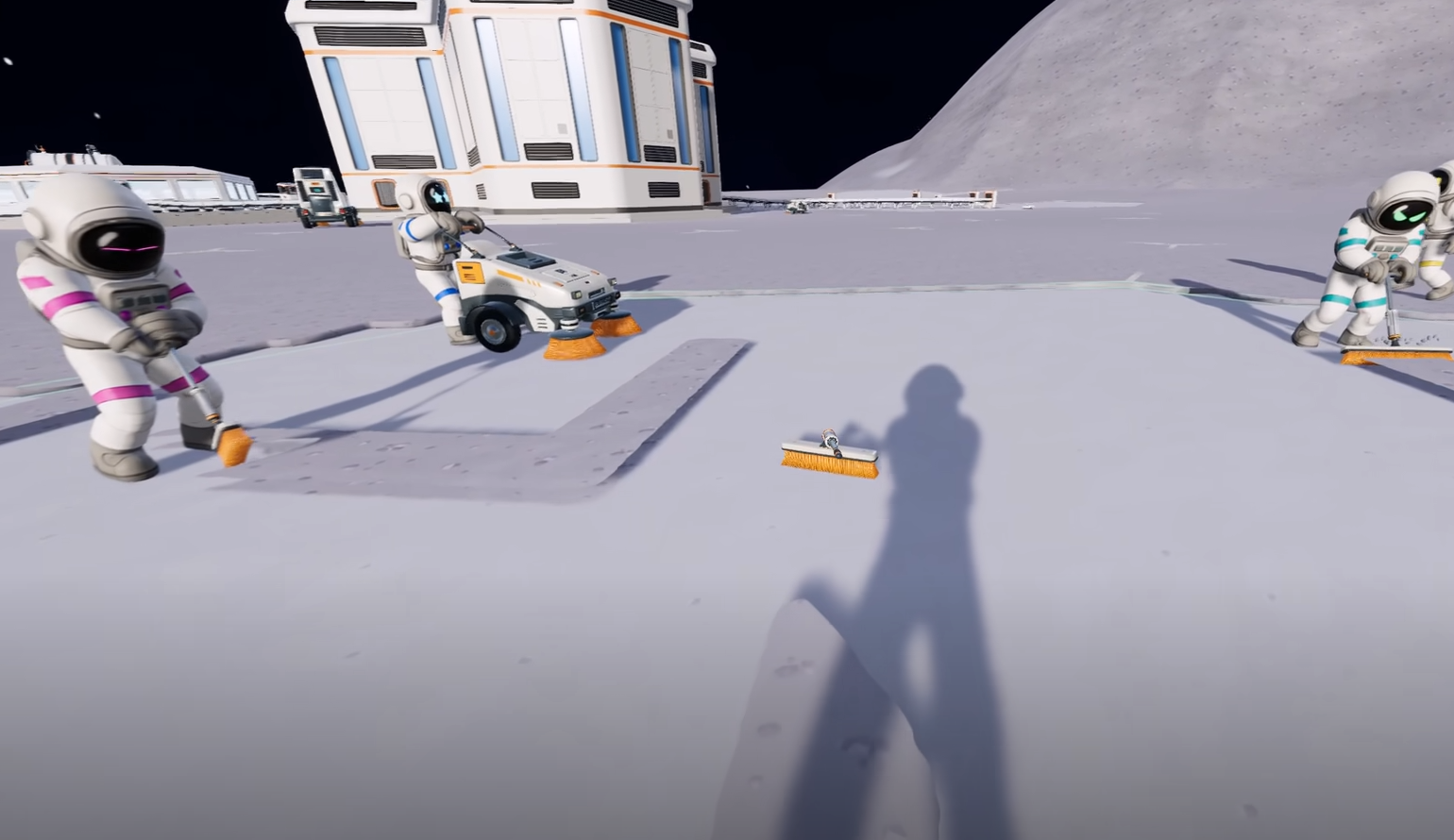
Start with the free Toothbrush, sell collected dust, and work through nearby sectors. Your first meaningful purchase should make cleaning noticeably more practical, rather than providing a tiny improvement you'll replace almost immediately.
The Household Broom is a sensible early investment, and you can improve its container capacity if frequent packing is interrupting your work.
However, I wouldn't spend too long perfecting a handheld setup. There's a point where buying another brush upgrade delivers a smaller improvement than saving for your first vehicle.
During this stage, it's worth collecting nearby flags and completing surveys when you encounter them. Those rewards can accelerate your savings without forcing you to grind through dozens of small dust deposits.
For more on which early purchases are worth making, check our Moon Sweepers guide to spending smarter and cleaning faster.
Your goal here isn't to own the best broom. It's to reach the point where you can comfortably earn money and start working toward equipment that covers much larger areas.
2. Move Into Vehicles When Manual Cleaning Becomes the Limitation
Your first major progression milestone is transitioning from handheld cleaning to vehicles.
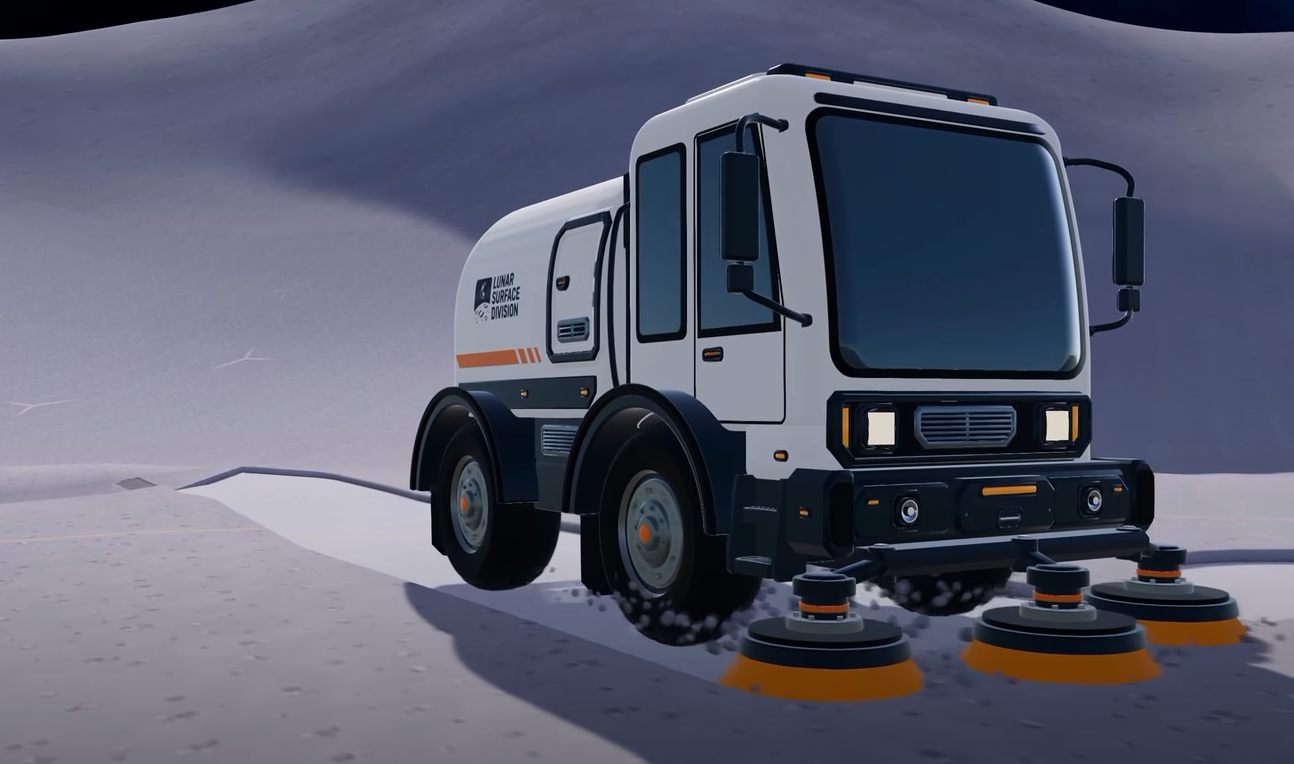
A Garage and Push Sweeper cost $500 together, providing an accessible starting point for vehicle cleaning. From there, you can eventually move into larger sweepers as your income improves.
But here's where I'd be careful: don't treat the vehicle shop as a checklist.
You don't need to purchase every vehicle in sequence, and there's little reason to replace something that's already doing its job efficiently.
Instead, pay attention to how you're spending your time. If you're constantly sweeping back and forth across huge areas, a larger cleaning vehicle can make a noticeable difference.
On the other hand, if your current sweeper fills up quickly and you're spending most of your time unloading it, another vehicle won't solve your immediate problem.
That's the point where progression needs to shift away from collecting more dust and toward handling what you've already gathered.
3. Build a Reliable Dust Delivery System
This is one of the most useful stages to get right before spending heavily on automation.
As your cleaning equipment improves, you'll eventually collect more dust than you can comfortably handle through repeated manual deliveries. Your next objective should be reducing the work involved in getting that material into the selling system.
Start by making sure you can unload your vehicle properly, then establish a conveyor route that transports the collected dust toward its destination.
The Packager can help organize deposits into that system, particularly when you're working around a larger collection area. Our Moon Sweepers Packager guide covers how it fits into your setup.
Before expanding, run a full load through your system and make sure it actually results in a sale.
I'd consider this stage complete when you can collect a substantial amount of dust, unload it, and get back to cleaning without having to constantly rearrange capsules or troubleshoot where your materials are going.
You don't need an enormous factory yet. A small, dependable delivery setup is more valuable than a collection of expensive machines that aren't properly connected.
4. Choose Your Midgame Direction: More Cleaning or Better Processing?
Once you're earning money consistently and your dust transportation is working, Moon Sweepers starts opening up several directions at once.
This is where I'd stop following a strict shopping order and focus on what your operation actually needs.
If You Need More Cleaning Coverage, Start Automating
The Robot Vacuum Mk I is an accessible introduction to automated cleaning, allowing you to clear a fixed area while you're doing something else.
It can be particularly useful when you want to keep working on untouched ground while equipment handles nearby dust.
However, its coverage is limited. Once the surrounding area has been cleaned, leaving it in the same location won't continue making progress.
This makes stationary cleaners useful for specific jobs, but not something I'd endlessly purchase without considering where the remaining dirty ground is located.
If You're Already Collecting Plenty, Start Processing Dust
If your current equipment is bringing back more than enough material, improving its value becomes the more interesting progression path.
The Pressure Chamber is your first major step into processing, converting Moon Dust into Moon Sand that sells for three times the value of raw dust.
This introduces additional requirements, including electricity and properly connected inputs and outputs, so I'd only start building a processing line once your basic material transport is reliable.
You can also consider economy upgrades such as Market Contracts when you're regularly selling large amounts of dust.
The goal is to make an existing operation more profitable before spending money on machinery that requires further infrastructure.
Neither path is mandatory before the other. If you need more dust, improve collection. If you're already swimming in it, work on getting more value from what you've got.
5. Expand Into Moonstone Production Once Your Factory Is Stable
After establishing Moon Sand production, the next major processing milestone is Moonstone.
The Stone Press combines Moon Dust and Moon Sand into a more valuable material, making it an appealing addition once your existing production line is operating reliably.
However, this is where a simple factory begins requiring more careful planning.
You'll need a way to supply both ingredients to the Stone Press. That means you can't simply send every bit of raw dust through the Pressure Chamber and expect the rest of the process to work automatically.
Part of your incoming dust must remain available for the Stone Press, while another portion is converted into Moon Sand.
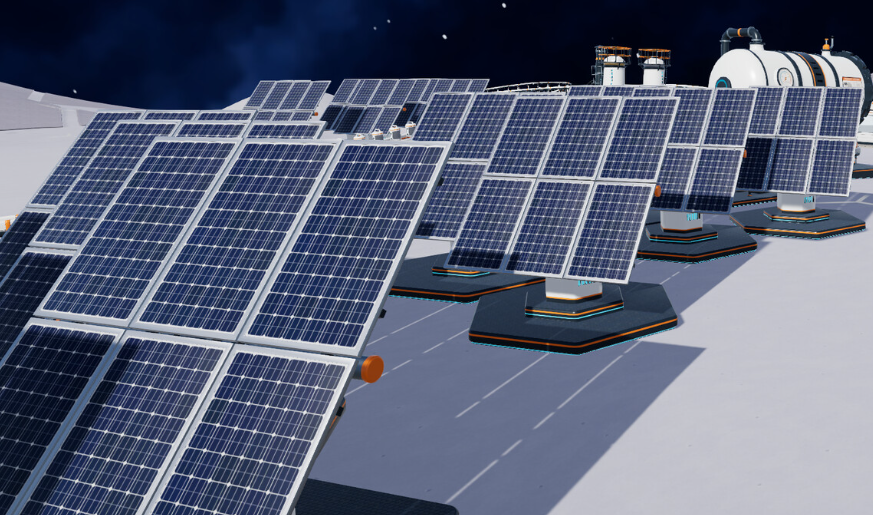
You'll also need considerably more electricity. One Pressure Chamber and one Stone Press require 28 kW of operating power together, so your existing solar setup may need expanding before both can run properly.
Rather than purchasing multiple presses immediately, I'd aim for one working production line that can consistently receive its ingredients, process them, and deliver the finished Moonstone for sale.
It's also worth checking how the line behaves at night. A factory that works during daylight but regularly shuts down when stored electricity runs out isn't ready for a major expansion.
Only increase processing capacity when you've confirmed that your existing machines are receiving enough materials to justify it.
6. Prepare for Late-Game Cleaning and JOONAS
Once you've established reliable income, material processing, and power, the next stage is less about improving individual machines and more about expanding your cleaning coverage across the Moon.
That's where advanced automation becomes particularly useful.
JOONAS costs $20,000 and provides a major change from the stationary cleaning equipment you've been using earlier. Rather than remaining tied to a fixed dock, JOONAS can move between dirty sectors and continue collecting lunar dust.
Pairing JOONAS with a Capsule Catcher gives those collected materials somewhere to go. When ready to unload, JOONAS launches dust capsules toward the nearest Capsule Catcher, allowing them to enter your conveyor system.
I'd treat JOONAS as an expansion milestone rather than something to rush toward while your factory is still struggling.
By the time you're ready for it, you should already have a setup capable of transporting and selling substantial amounts of collected material.
Otherwise, you're adding another powerful cleaner without resolving the limitations that were slowing you down earlier.
Shift Your Attention Toward Moon Completion
As you enter the late game, making more money isn't necessarily the best measure of progress anymore.
Your Moon Map becomes increasingly useful for deciding where cleaning equipment should work next.
Orange sectors are untouched, blue sectors are partially cleaned, and green sectors are complete. Use those indicators to identify unfinished areas and avoid spending too much time revisiting ground that's already been cleared.
Our approach would be to finish partially cleaned areas when they're convenient, then expand into fresh territory rather than concentrating every cleaner around the original station.
Stationary equipment is useful for clearing specific locations, while mobile cleaners and vehicles are better suited to expanding across larger portions of the Moon.
At this point, you're no longer progressing simply by purchasing the next expensive item. You're progressing by increasing how much ground your operation can clean efficiently.
How to Know What You Should Do Next in Moon Sweepers
If you've reached a point where you're not sure what to purchase next, take a look at which part of your operation is currently slowing everything else down.
When manual cleaning takes too long, better cleaning equipment makes sense. When vehicles fill up faster than you can unload them, focus on transportation instead. If collected dust reaches the Depot consistently, consider selling bonuses or higher-value processing.
And if your factory keeps stopping, adding another machine should be the last thing on your shopping list until you've identified whether the problem is power, missing materials, or an overloaded output.
I also wouldn't worry about following this progression route perfectly. Starting with a Robot Vacuum before buying a larger vehicle is perfectly reasonable if that suits the way you're playing. The same goes for investing in money upgrades while saving for your next major purchase.
For additional ways to build up your budget between milestones, our Moon Sweepers Money Making Guide covers the different ways to increase your earnings.
The best progression in Moon Sweepers comes from knowing when your current setup has reached its limit. Improve one part of your operation, make sure the rest can support it, and then move forward. That keeps every major purchase working toward the same goal: cleaning more of the Moon without creating another problem you have to spend money fixing.