Moon Sweepers has five vehicles, but only four actually clean the Moon. The Push Sweeper gets you moving for $300, while larger machines offer wider cleaning paths and much bigger dust hoppers. The real question is whether those improvements justify the extra money, especially when some vehicles are substantial upgrades over the ones before them. Here's how every vehicle compares and which ones I'd prioritize buying.
Jump To Section:
All Vehicle Stats and Prices
Best Vehicle to Buy
What Each Vehicle Does Best
Which Vehicle Upgrades Matter?
Vehicle Unloading and Storage
Vehicles in Multiplayer
All Vehicles in Moon Sweepers: Prices and Stats
Every vehicle is purchased through a Garage, which costs $200 to construct. You'll also need the $50 Building Tool if you haven't unlocked construction yet.
Here's the complete vehicle lineup, including their starting specifications before upgrades.
| Vehicle | Price | Cleaning Width | Hopper |
|---|---|---|---|
| Push Sweeper | $300 | 1.35 m | 100 kg |
| Ride-on Sweeper | $1,000 | 1.98 m | 500 kg |
| Crew Transport Van | $2,000 | None | None |
| Lunar Sweeper | $2,500 | 2.8 m | 1,200 kg |
| Mega Vacuum Rover | $6,000 | 3.7 m | 3,000 kg |
The game's vehicle specifications also list capsule counts of 1 for the Push Sweeper, 2 for the Ride-on Sweeper, 4 for the Crew Transport, 4 for the Lunar Sweeper, and 6 for the Mega Vacuum Rover.
For choosing a cleaning vehicle, I'd pay more attention to cleaning width and hopper size. Those two figures tell you how much ground a vehicle can cover in a pass and how much dust it can hold before unloading.
What Is the Best Vehicle in Moon Sweepers?
The Mega Vacuum Rover is the strongest cleaning vehicle by its starting width and storage capacity, but I wouldn't call it the best purchase for everyone.
My pick for the most useful middle-ground option is the Lunar Sweeper. At $2,500, it offers a substantial increase in cleaning coverage and storage without requiring the $6,000 investment of the Mega Vacuum Rover.
Here's how I'd choose based on your current progress:
- Best cheap vehicle: Push Sweeper, at $300.
- Best first drivable cleaner: Ride-on Sweeper, at $1,000.
- Best balance of price and cleaning capability: Lunar Sweeper, at $2,500.
- Best maximum cleaning capacity: Mega Vacuum Rover, at $6,000.
- Best for transporting a group: Crew Transport Van, with eight seats.
There's no requirement to purchase every vehicle in order. If your current cleaner is working well and you're earning money consistently, you can save for a larger improvement rather than buying every intermediate option.
Moon Sweepers Vehicles Compared: Which Ones Are Worth Buying?
Push Sweeper — $300
The Push Sweeper is the cheapest vehicle and your earliest opportunity to move beyond handheld cleaning tools.
It clears a 1.35-meter-wide path and stores 100 kg of dust, considerably more than even the Extra Wide Broom's 12 kg starting capacity.
For $300, that's a meaningful improvement if you're still completing most of your cleaning manually.
The main limitation is how quickly you'll outgrow its capacity. Once you begin clearing larger regions, you'll be making more frequent unloading trips than you would with a higher-tier machine.
I'd buy the Push Sweeper if you want an affordable improvement immediately. If you've already saved close to $1,000, however, the Ride-on Sweeper offers a much larger hopper and might be worth waiting for.
Ride-on Sweeper — $1,000
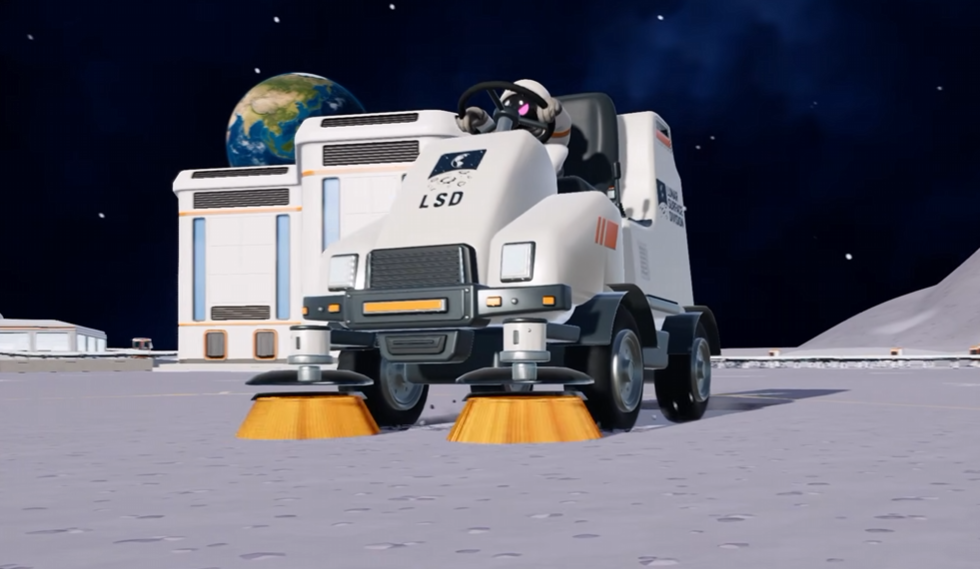
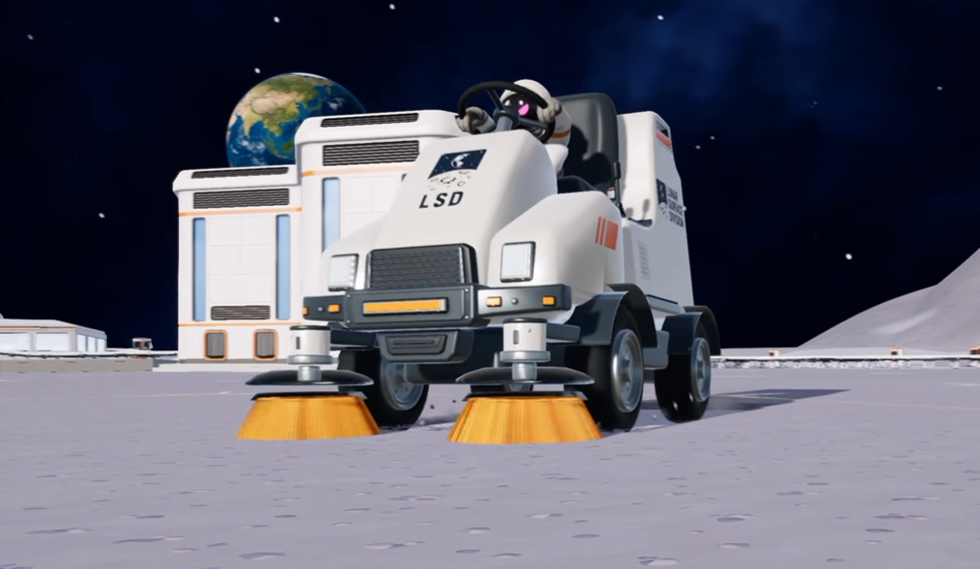
The Ride-on Sweeper offers a 1.98-meter cleaning width and a 500 kg hopper.
Compared with the Push Sweeper, that's approximately 47% more cleaning width and five times the storage capacity.
The increase in storage is particularly appealing. Instead of interrupting a cleaning session every 100 kg, you can collect substantially more material before returning to the Garage.
It's also the first option in the lineup designed around seated driving rather than pushing a machine around the Moon.
For players who enjoy actively clearing the surface, I'd consider it a sensible first major vehicle purchase. The $700 difference over the Push Sweeper buys much more than a small increase in cleaning width.
Crew Transport Van — $2,000
The Crew Transport Van is the exception in the vehicle lineup: it doesn't collect lunar dust.
Instead, it has eight seats, allowing a group to travel together across the lunar surface.
That makes it relevant for multiplayer exploration and transporting teammates between distant working areas.
Because Moon Sweepers supports up to 16 players in co-op, one van can accommodate half of a full 16-player crew at once.
I'd avoid purchasing the van solely because it sits between the Ride-on Sweeper and Lunar Sweeper in price. It isn't the next cleaning upgrade, and spending $2,000 on it won't increase your dust collection capability.
Buy it when moving multiple people together is something your crew actually needs.
Lunar Sweeper — $2,500
The Lunar Sweeper is where I'd start paying serious attention to vehicle efficiency.
It uses three cleaning heads, covers a 2.8-meter-wide path, and holds 1,200 kg of dust.
Compared with the Ride-on Sweeper, you're getting roughly 41% more cleaning width and 2.4 times the hopper capacity.
That's a substantial step up for an additional $1,500.
For longer cleaning sessions, the larger hopper is especially useful because you can continue clearing terrain without returning to unload as often.
It also provides a much wider cleaning strip, allowing fewer passes across the same area compared with smaller vehicles, assuming similar coverage and no overlap.
I'd consider skipping the Ride-on Sweeper and saving directly for the Lunar Sweeper if you're already earning money comfortably with your existing equipment.
On the other hand, if getting to $2,500 would require a lengthy stretch of manual cleaning, buying a cheaper vehicle first may get you working more efficiently sooner.
Mega Vacuum Rover — $6,000
The Mega Vacuum Rover is the largest cleaning vehicle available, with a listed cleaning width of 3.7 meters and a 3,000 kg hopper.
Compared with the Lunar Sweeper, its hopper is 2.5 times larger, while the listed cleaning width increases by approximately 32%.
That makes the capacity improvement more dramatic than the width improvement.
It's a good example of why buying the most expensive vehicle doesn't automatically mean cleaning several times faster. The larger hopper reduces unloading interruptions, but the effective cleaning rate also depends on how you drive and configure the machine.
Its Suction Control upgrade introduces another tradeoff: widening the cleaning area reduces driving speed.
I'd use the Mega Vacuum Rover for extended cleaning sessions across large amounts of untouched terrain, particularly once you have a working Garage unloading system.
For smaller jobs or cleaning around a crowded base, its size and expense may be harder to justify.
Which Vehicle Upgrades Are Worth Buying?
Vehicle upgrades are purchased through the Garage and can improve storage, movement, cleaning coverage, and unloading.
The most useful choice depends on what your current vehicle is struggling with.
| Upgrade | When I'd Consider It |
|---|---|
| Big Hopper | When frequent unloading interrupts cleaning |
| Suction Control | When you want wider cleaning coverage |
| Quick Release | When unloading is taking too long |
| Tuned Motors | When vehicle speed is holding you back |
| Turbo Kit | When additional movement speed is valuable |
I wouldn't immediately purchase every upgrade for a vehicle you're planning to replace.
For example, if you're close to affording a Lunar Sweeper, spending heavily on an older Push Sweeper might delay the bigger improvement you're already working toward.
Once you've settled on a vehicle you plan to use for a while, upgrading its biggest limitation makes more sense.
You can find the broader upgrade options in our Moon Sweepers All Upgrades Guide.
How Vehicle Unloading and Storage Work
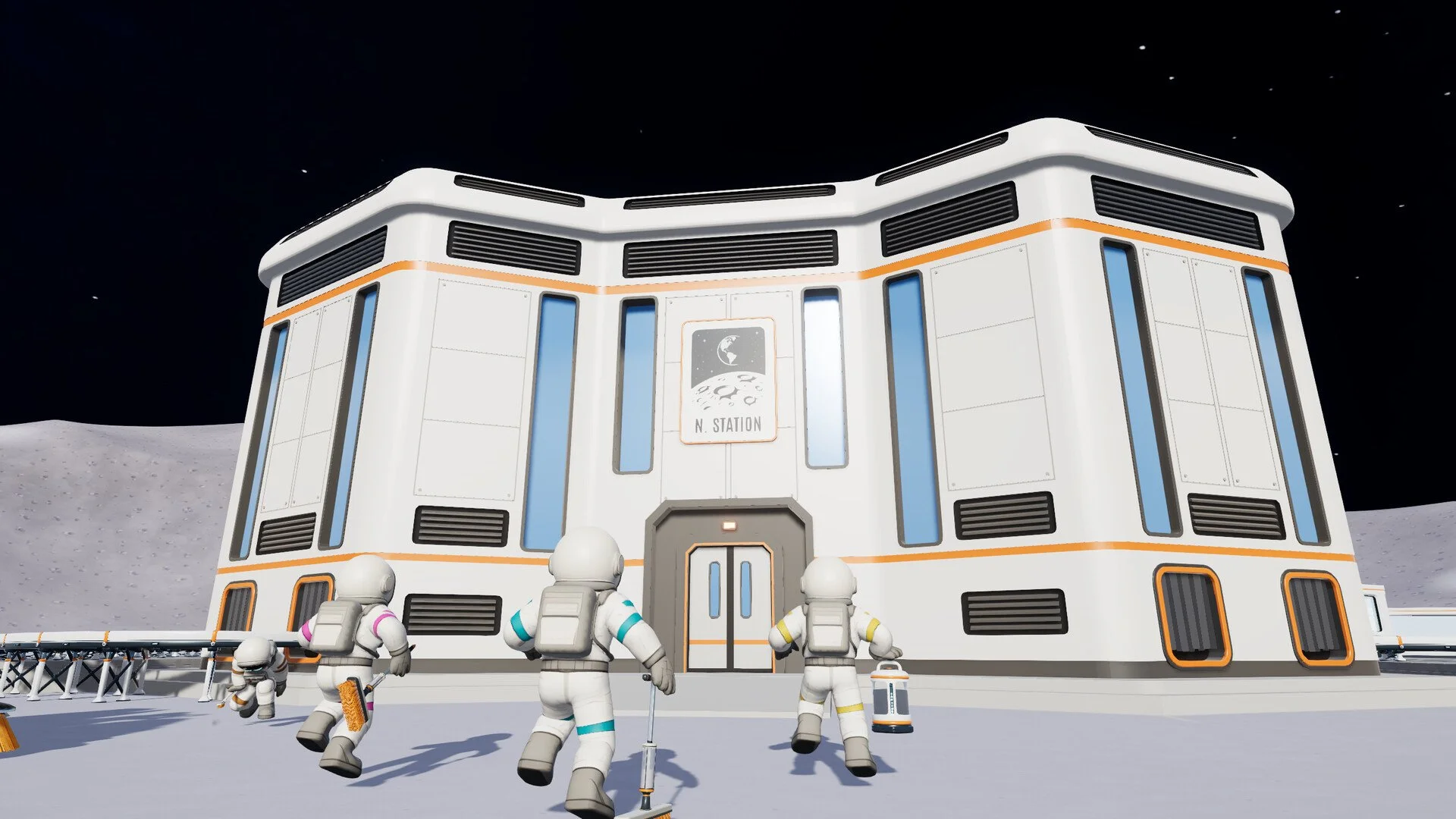
All five vehicles are purchased through the Garage, but the building also handles collected dust from your cleaning vehicles.
Park a cleaning vehicle on the collector pad under the Garage's hood, and its dust unloads automatically into the silo.
The Garage has a listed silo capacity of 6,000 kg and an unloading rate of 600 kg per second.
For perspective, an unupgraded Mega Vacuum Rover holds 3,000 kg. An empty Garage silo therefore has enough listed capacity for two full Mega Vacuum Rover loads before accounting for any dust already stored or sent away.
At the stated unloading rate, a 3,000 kg load would take approximately five seconds to transfer under ideal conditions.
The silo also has two rear output ports for sending collected dust into conveyor routes.
I'd make sure at least one of those routes is connected to a working destination before bringing back large loads. A full silo doesn't turn dust into money on its own.
For the complete building setup, vehicle recall, and conveyor connections, see our Moon Sweepers Garage Guide.
Are Vehicles Shared in Moon Sweepers Multiplayer?
Vehicle ownership is individual in Moon Sweepers. Each player purchases their own vehicles through the Garage.
That's different from the host's Upgrade Matrix, which has shared benefits across the crew following Patch 1.0.3.
I'd account for that distinction when deciding how a multiplayer group spends its money. Purchasing a cleaning vehicle for one player doesn't automatically give every crewmate ownership of the same model.
Patch 1.0.3 also improved vehicle management by allowing players to recall, store, and upgrade their owned vehicles from any Garage, rather than needing to return to the location where the vehicle was originally purchased.
That becomes particularly convenient once teammates are cleaning different regions of the Moon.
The Crew Transport Van is worth mentioning again here because its eight seats give it a clear multiplayer purpose. It won't help with dust collection, but it can help a team travel together instead of making the journey separately.
Ultimately, I'd choose Moon Sweepers vehicles by how much active cleaning you plan to do. The Push Sweeper is an inexpensive introduction, the Ride-on Sweeper is a major improvement in convenience, and the Lunar Sweeper offers a particularly attractive balance of width and capacity. The Mega Vacuum Rover takes both figures further, but it's most worthwhile when you have enough uncleared terrain and a reliable unloading system to make use of its larger hopper.