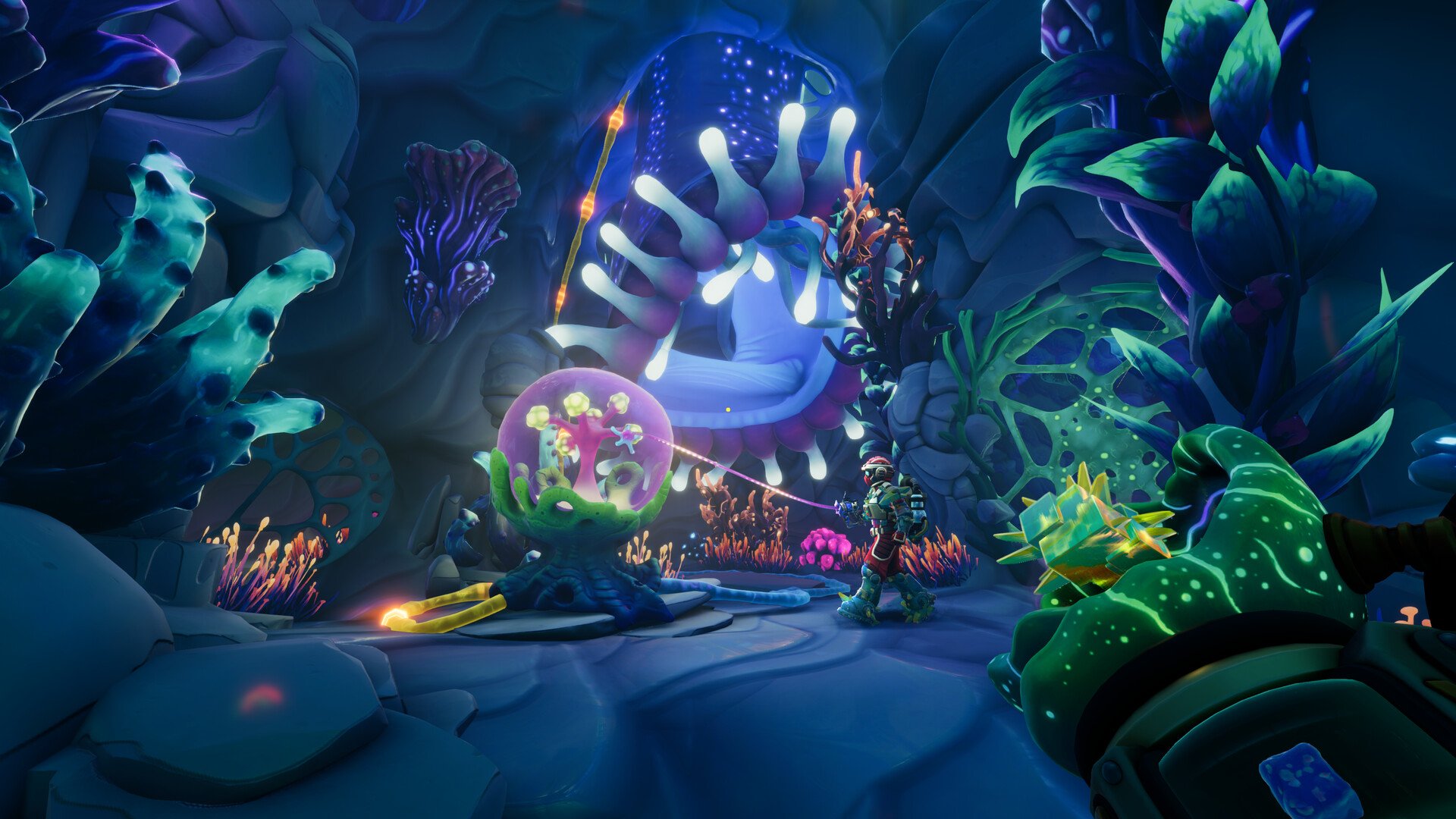
We Were Here Tomorrow Tips
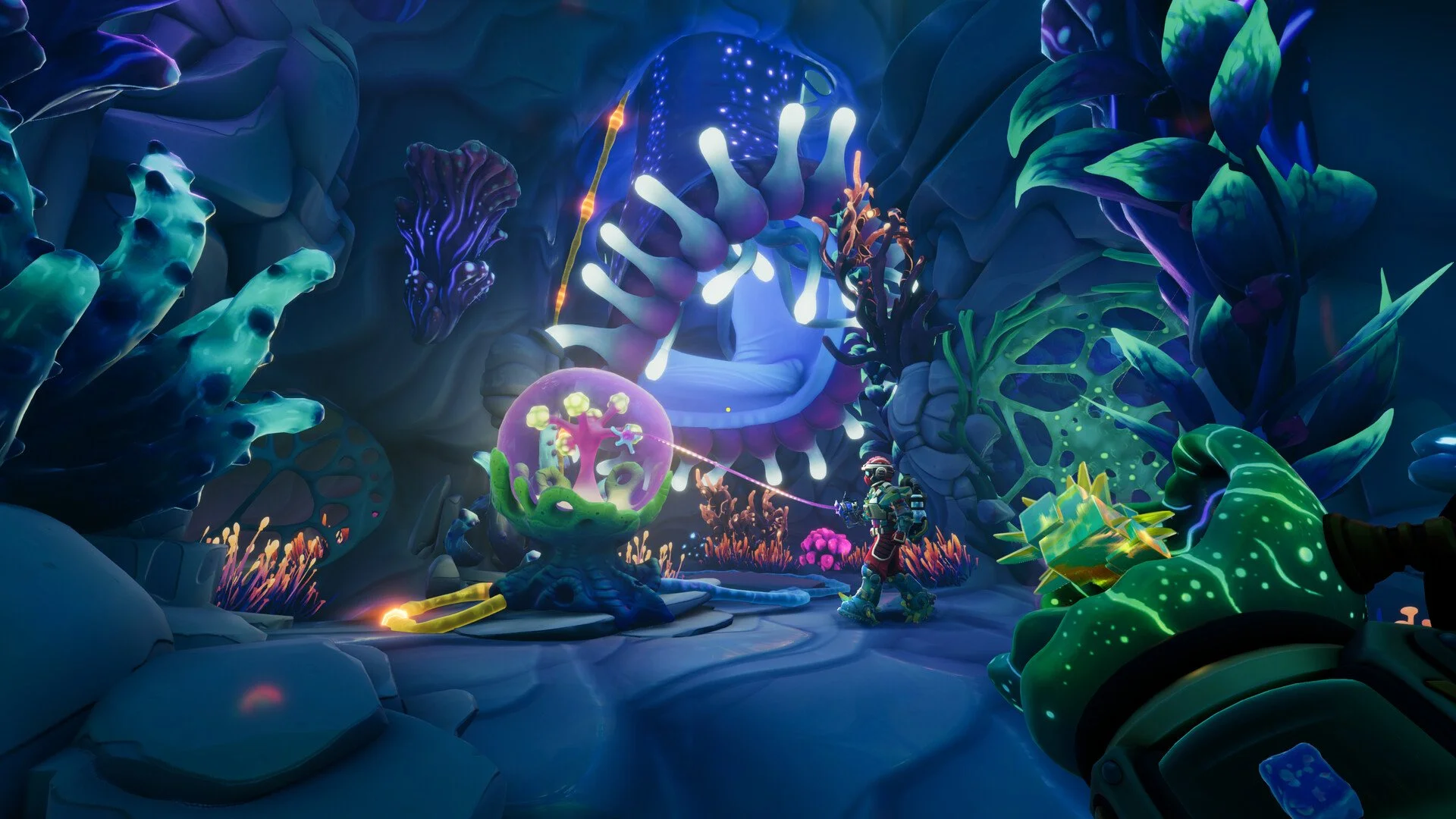
We Were Here Tomorrow is less about being individually good at puzzles than being good at solving a problem with someone who cannot always see what you see. The game repeatedly separates information, tools, and routes between two players, then expects you to build the solution together. The best habits are therefore not just about spotting clues faster; they are about communicating information cleanly, understanding what your equipment can replace, and knowing when a room is asking for reasoning instead of another round of random interactions.
Jump To Section:
Best Tips and Tricks
Describe Before You Solve
Create a Shared Puzzle Language
Separate Information From Actions
Use Your Tools Before Overthinking
Look for More Than One Route
What to Do When You're Stuck
Plan Optional Achievements Early
Avoid Known Softlocks and Bugs
Best We Were Here Tomorrow Tips and Tricks
The most useful rule in We Were Here Tomorrow is to stop treating each puzzle as something one player needs to solve. One Explorer usually has information the other lacks, a tool the other cannot use, or a physical position that changes what the room looks like. Your job is to turn those separate perspectives into one shared model of the puzzle before either player starts guessing at the answer.
Best Habits:
Describe what you see before explaining what you think it means.
Agree on names for symbols, directions, and objects before a complicated puzzle starts.
Let one player manipulate while the other observes when testing a theory.
Try your tools and traversal options before searching for another hidden switch.
When nothing makes sense, rebuild your understanding of the room instead of repeating the same inputs.
That last point matters more than it sounds. Tomorrow's puzzles increasingly layer movement, environmental information, and each player's individual abilities together. Repeating an incorrect solution faster rarely helps; identifying which assumption the two of you accidentally agreed on does.
Describe What You See Before Trying to Solve It
The fastest way to create a bad callout is to mix observation and interpretation together. If you see three illuminated symbols beside a machine, tell your partner what the symbols look like, their order, their colors, and where they are positioned before announcing what you think they control.
There is a practical reason for being this disciplined. Your partner may be looking at the other half of the same system, and one detail you considered decorative may be the exact piece of information needed on their side.
A useful exchange sounds more like, “I have three symbols from left to right: an open circle, two vertical lines, then a triangle,” than, “I think the second one activates your door.” The first statement gives your partner information they can use. The second gives them your theory, which can send both of you down the wrong path if the theory is wrong.
Once both players have described their side, then start interpreting it together. That simple separation between observation and deduction becomes increasingly valuable as the puzzles become more elaborate.
Create a Shared Puzzle Language Early
Two people can look at the same strange symbol and call it completely different things. One sees a fork, the other sees a tree, and five minutes later neither person understands which symbol the other is talking about.
Give unfamiliar shapes short names the first time they appear and keep those names for the rest of the puzzle. Do the same with rooms, machines, directions, colors, and repeated objects.
When orientation matters, establish that too. “Top left from my screen” is much more useful than “the one over there,” and clockwise numbering can turn a complicated circular device into something both players can discuss without seeing each other's screen.
This becomes even more important when the two Explorers are physically separated and relying on the walkie-talkies. You do not need elaborate terminology; you need terminology that both players mean the same thing by.
Separate Information From Actions When Testing a Solution
When both players start pressing buttons, moving objects, and calling out changes simultaneously, it becomes difficult to learn anything from a failed attempt.
Instead, temporarily give each player a job. One Explorer manipulates the puzzle while the other watches for what changes. If pressing one button rotates three objects on the opposite side of the facility, the observer can report that relationship while the first player leaves everything else alone.
Then reverse the roles when necessary.
This is especially effective when a puzzle has several interacting systems. You are effectively mapping cause and effect before trying to solve the final state. Once you know that one control changes A and C while another changes B and D, the puzzle stops being a collection of mysterious buttons and becomes a system you can reason through.
It also prevents one of the most common co-op puzzle failures: accidentally finding part of the solution, changing something else before anyone notices, and then spending the next ten minutes trying to recreate what you already had.
Use the Goop and Hook Tools as Part of the Environment
The tools in We Were Here Tomorrow are not just keys that open predetermined locks. They change what counts as a usable route through a room.
Goop can create climbable blocks and platforms, and those blocks can also interact with parts of the environment such as pressure-based mechanisms. The Hook side of the partnership can pull, connect, and rapidly cross spaces that the other Explorer cannot approach in the same way.
That means a ledge being too high is not necessarily a signal to search for a staircase. A gap being too wide does not automatically mean there is a bridge switch hidden nearby.
When traversal stops you, ask two questions before doing anything else: what could my own tool change here, and what could my partner's tool change for me?
The strongest solutions often come from combining them. One player may create the position the other needs, while the second player uses the Hook to finish the route or manipulate something that was unreachable from the original floor.
Neither role is inherently the support role. Tomorrow is designed around both tools contributing different parts of the same solution, so do not fall into the habit of assuming one player should simply wait while the other “does the puzzle.”
Do Not Assume There Is Only One Way Through a Room
We Were Here Tomorrow deliberately allows multiple approaches to many traversal challenges. A destination may be reachable through your tools, ordinary climbing and jumping, or a smaller environmental puzzle that creates a safer route.
That changes how you should read the environment. If a solution feels absurdly complicated for what amounts to reaching a platform ten feet away, you may be solving the wrong problem.
Try the physical route first. Check whether you can climb the geometry, create elevation with Goop, or reach an anchor point with the Hook. Only then start assuming the room requires a larger machine to be activated.
There is also a useful Goop-specific quirk to remember: if you cannot climb a stack of Goop blocks from one side, move around and try another. A lack of space between your character and the stack can prevent the climb from that direction even when the structure itself is usable.
Temporal anomalies have their own interaction requirement. Stand directly in front of one before assuming it is inactive or that another puzzle needs to be completed first.
When You're Stuck, Reset the Conversation Before Resetting the Puzzle
There is a point in almost every co-op puzzle session where both players become convinced they have explained their side perfectly. That is usually a good time to explain it again.
Do not repeat the same sentence louder. Start over from the room itself.
Have one player describe every relevant object without suggesting a solution. Then have the other do the same. Compare what exists on both sides, what only exists on one side, what can be manipulated, and what changes when an interaction occurs.
If the room contains several controls, test them individually and return them to their previous state when possible. If a sequence matters, say each step aloud before performing it so both players know exactly where the test failed.
It is also worth physically moving around again. Tomorrow uses vertical spaces, gravity changes, unusual sightlines, and traversal tools often enough that the missing piece may be somewhere you stopped considering part of the puzzle.
The game rewards reasoning through a chain of events more often than blindly finding the right timing. If both players understand what should happen next but cannot explain why it is not happening, inspect the chain one step earlier.
Handle the Simple Optional Achievements When They Appear
If you plan to earn every achievement, several requirements are simple enough that there is little reason to postpone them.
Perform a crouch slide early. When the Goop Gun becomes available, Goop your partner and use it to lock them in place. When you have the Hook Gun, hook your partner and remember that grappling to an Energized surface has its own achievement as well.
Collect unique plushies as you encounter them rather than turning the end of the game into a cleanup search.
The Cargo Elevator deserves more attention. Activating it normally awards Onwards and Upwards, but Many Ways specifically requires activating it without using a Fuse. If you want both, recognize that the alternate solution is an achievement condition rather than simply another way to finish the same puzzle.
Christmas Riot is similarly specific: finding the toy is only part of the requirement, because your partner must not see it.
Taking care of these objectives when the relevant opportunity appears keeps the achievement hunt from interfering with the main puzzle flow later.
Avoid Known Softlocks and Know How to Recover
We Were Here Tomorrow launched with several known issues that can interfere with progression, so a few precautions can save considerably more time than another puzzle tip.
Do not crouch while your character is shrinking. That can prevent you from returning to normal size and requires a checkpoint reload.
Avoid unnecessary jumping inside moving elevators as well, and make sure you collect the mission-critical item in Corporate Espionage before moving on. Skipping it can block further progression.
If climbing appears inconsistent, try approaching the platform or object from another side before assuming the route is impossible. The same principle applies to Goop stacks, where the available space on one side can affect whether the character can climb them.
Voice communication is also worth checking before a long session. Some players have encountered walkie-talkie or voice problems, and the game's audio input settings may not always remain saved after leaving the settings menu. Verify that both players can hear each other before pushing deep into a puzzle where separation makes communication essential.
If the built-in voice system fails mid-session, an external voice call can keep the run moving, although it removes some of the intended proximity and walkie-talkie behavior.
Most importantly, a softlock does not necessarily mean restarting the entire adventure.
Softlock Recovery:
Return to the main menu.
Choose Change.
Select Start New Journey.
Have the host manually select the most recent checkpoint.
Use that before attempting increasingly strange workarounds inside a broken puzzle. Tomorrow gives players considerable freedom with its tools and traversal, but if an elevator stops functioning, an object disappears after an interaction, or a required system clearly fails to respond, recovering the checkpoint is usually a better use of time than trying to solve a bug as though it were part of the puzzle.