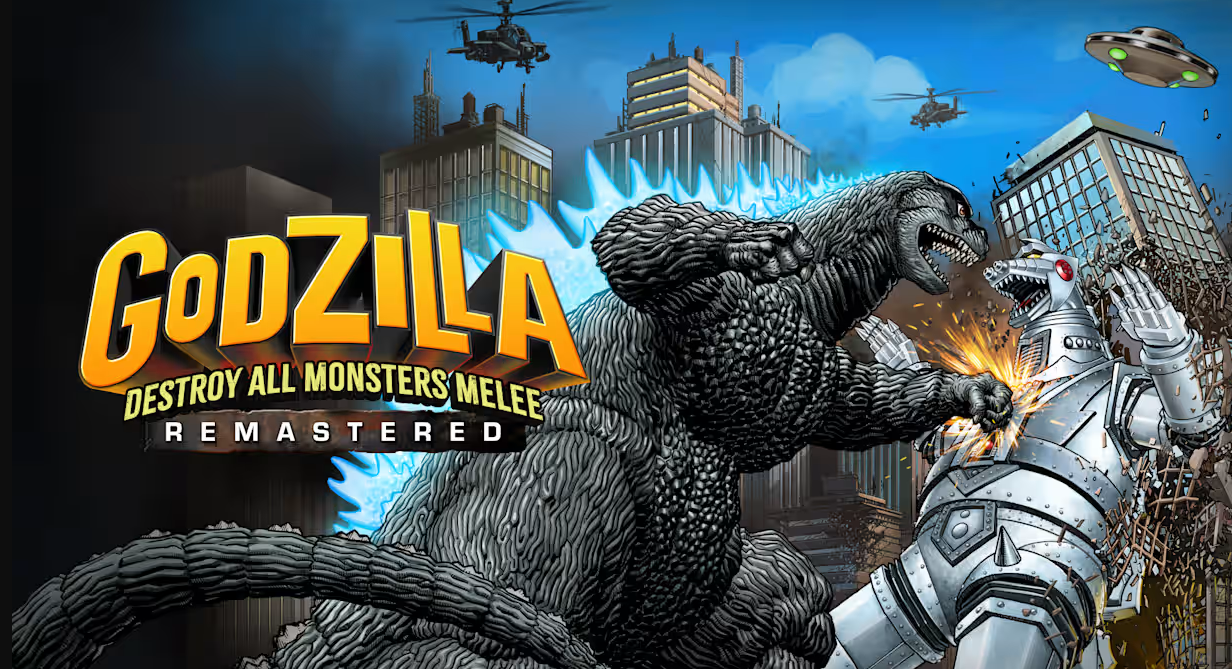
It's been far too long since we've had a proper Godzilla fighting game, and Godzilla: Destroy All Monsters Melee Remastered is a fantastic reminder of why these games were so much fun. There's something incredibly satisfying about controlling a giant monster, smashing your way through a city, and throwing everything you can find at another kaiju. More than two decades after the original release, that simple formula still has plenty of appeal.
A wonderfully entertaining return for one of Godzilla's best fighting games, featuring impressive visual improvements, satisfying monster battles, and enjoyable multiplayer despite some frustrating controls and limited content.
Developed by Pipeworks Studios and published by Atari, this remaster brings the 2002 arena fighter back with completely rebuilt visuals, updated progression, and online multiplayer. It retains the original game's straightforward approach to combat, where choosing your favorite monster and causing as much destruction as possible is really all the motivation you need.
I think the decision to preserve that original formula was the right one. The combat can feel dated in places, the PC controls need improvement, and there's still some noticeable roughness around the edges. However, those shortcomings don't completely overshadow what makes Destroy All Monsters Melee enjoyable. This is a game that embraces the ridiculous spectacle of giant monsters fighting, and that's exactly what I wanted from its return.
Smashing Monsters and Destroying Cities Never Gets Old
Godzilla: Destroy All Monsters Melee Remastered is an arena fighting game built around twelve playable monsters, each equipped with their own attacks and abilities. Rather than overwhelming you with complicated systems, the game focuses on physical combat, throws, energy attacks, and special moves that can turn a fight around.
What makes the fighting entertaining is how naturally the environments become part of the action. You're not confined to a traditional fighting arena with a static background. Buildings can be destroyed, structures can be used as weapons, and entire sections of a city can become collateral damage during a battle.
It's exactly the kind of destruction a Godzilla game should encourage. The spectacle of two enormous monsters fighting is entertaining enough, but being able to interact with the surrounding environment makes those encounters feel much more chaotic.
The combat itself also has more depth than its simple presentation might suggest. Different directional attacks, throws, counters, and monster-specific abilities give players opportunities to improve beyond repeatedly pressing the same buttons. Learning when to attack, defend, or punish an opponent is important, particularly against more aggressive enemies.
That said, some of the older fighting mechanics haven't aged quite as gracefully. Certain attacks have surprisingly limited reach, making it possible to miss opponents who appear close enough to hit. The AI can also be rather unforgiving, occasionally punishing mistakes before you've had much opportunity to recover.
I don't necessarily dislike that older style of combat. It gives the game a distinctive personality, and there's satisfaction in learning how to work around an opponent's attacks. However, a little more consistency with hit detection and attack responsiveness would have made the experience considerably smoother.
The Visual Improvements Are Excellent
One of the strongest aspects of the remaster is how dramatically it improves the game's appearance. Rebuilt using Unreal Engine 5, Destroy All Monsters Melee looks substantially better than its original GameCube and Xbox releases while maintaining the recognizable style of the older game.
The updated monster models are particularly impressive. Godzilla, King Ghidorah, Mechagodzilla, and the rest of the roster benefit from much more detailed designs, making the monsters feel considerably closer to their cinematic counterparts.
The arenas have received similar attention. Cities feature improved buildings, environmental details, and visual effects, giving the destruction much more impact. Watching these enormous creatures fight among skyscrapers is exactly the kind of spectacle that benefits from modern graphics.
I'm also glad the developers retained so much of the original game's audio identity. The familiar announcer, recognizable monster sounds, and returning soundtrack give the remaster a sense of continuity with the 2002 release.
Not every artistic decision is quite as successful. The updated interface is functional, but its relatively simple design lacks some of the personality of the original menus. Certain character redesigns may also take some getting used to, particularly for longtime fans who remember their older appearances.
Those complaints are relatively minor compared to the overall improvement. The remaster looks excellent, and the combination of updated graphics and familiar sounds does a great job of making an older game feel relevant again.
Unlocking Monsters Gives You Something to Work Toward
Outside individual battles, Destroy All Monsters Melee Remastered offers several ways to keep progressing. The game features eight locations with day and night variations, additional single-player campaigns for its monsters, and an updated system for unlocking characters, arenas, and gallery content.
One of the better changes is the freedom to choose what you unlock. Rather than requiring players to complete a rigid sequence to access everything, the remaster introduces a point-based system that allows you to work toward the rewards you're most interested in.
That approach makes a lot of sense for a game where choosing your favorite monster is such an important part of the appeal. Having more control over progression makes the process feel less restrictive, even when there's still a considerable amount of grinding involved.
The additional character progression and research objectives also provide reasons to revisit single-player content. There's satisfaction in gradually expanding the roster and unlocking more of what the game offers.
However, the amount of content remains one of the remaster's limitations. Twelve monsters and eight locations provide a reasonable starting point, but the selection isn't particularly large compared to modern fighting games.
Some monsters also share similar movesets, which can make portions of the roster feel less distinct than their appearances might suggest. I would have liked to see a few additional monsters or more substantial differences between certain characters.
Fortunately, the central gameplay is entertaining enough that repeating battles doesn't immediately become a problem. Still, players who mainly enjoy solo content may eventually find themselves wanting more variety.
Multiplayer Is One of the Biggest Reasons to Play
Destroy All Monsters Melee has always been particularly well suited to multiplayer, and that remains one of the remaster's biggest strengths.
Local multiplayer supports up to four players, turning the arenas into chaotic battles where several giant monsters can attack each other while destroying everything around them. It's the kind of experience that doesn't need a particularly complicated explanation to be entertaining.
There aren't many fighting games where the environment itself plays such an important role, and adding more players only makes that destruction more unpredictable.
The addition of online multiplayer is another welcome improvement, allowing players to challenge opponents without needing everyone in the same room. That's an important addition for a game originally designed around local multiplayer.
Online play does have some limitations, though, and players shouldn't automatically expect the same four-player experience available locally. Supported online player counts differ between platform listings, with PlayStation and Nintendo listing two-player online battles.
Even with those limitations, multiplayer gives the game considerably more staying power. The single-player modes provide useful progression goals, but competitive monster battles are where the fighting system has the greatest opportunity to remain entertaining over time.
For anyone who enjoys straightforward local multiplayer games, Destroy All Monsters Melee is particularly appealing. Sometimes all you need is a few friends, a selection of giant monsters, and a city that probably won't survive the next five minutes.
The PC Controls and Some Rough Edges Need Work
Despite everything the remaster gets right, there are a few issues that prevent it from reaching its full potential.
The most frustrating concern on PC is the lack of proper keyboard customization. The game is clearly designed with controllers in mind, and while that makes sense given its console origins, players should still be able to rebind their controls to something comfortable.
Not everyone wants to use a controller, and requiring players to adapt to an awkward keyboard layout feels unnecessarily restrictive for a modern PC release.
The fighting also suffers from occasional inconsistencies. Some attacks can feel slower or shorter-ranged than expected, while directional inputs and certain special abilities don't always behave as reliably as they should.
Early player feedback has also highlighted issues involving Rage Mode in Adventure Mode, along with occasional problems involving enemy AI and attack tracking. These complaints don't appear to affect every situation, but they indicate that parts of the combat could benefit from further polishing.
Then there's the question of price. At $29.99, I think the remaster offers reasonable value for Godzilla fans who appreciate the original fighting system, particularly with the graphical improvements and additional multiplayer options.
For someone who isn't already interested in Godzilla or arena fighters, however, the relatively limited content might make that price harder to justify.
I'd love to see Pipeworks continue improving the experience through updates. Better keyboard controls, additional combat adjustments, and eventually more playable monsters would go a long way toward making this the definitive version of the game.
Godzilla: Destroy All Monsters Melee Remastered Review Verdict
Godzilla: Destroy All Monsters Melee Remastered is a genuinely enjoyable revival of a game that deserves to be remembered. It preserves the chaotic combat and environmental destruction that made the original entertaining while delivering a substantial visual upgrade and several welcome improvements.
The monster models look fantastic, the fighting remains entertaining, and the addition of online multiplayer makes the game more accessible than ever. I particularly appreciate that Pipeworks didn't try to turn Destroy All Monsters Melee into something completely different. Its old-school approach is a large part of what makes it appealing.
There are some disappointing limitations. The PC controls need considerably more flexibility, combat could use additional polish, and the roster and single-player content aren't especially extensive. Those issues become more noticeable the longer you spend with the game, particularly if you're mainly interested in playing alone.
However, I think the overall package succeeds at what matters most. It's an entertaining Godzilla fighting game that allows players to control iconic monsters, destroy entire cities, and enjoy the sort of chaotic battles that made the original release so memorable.
I'd also love to see this become the beginning of something bigger. Godzilla: Save the Earth and Godzilla: Unleashed are both deserving of modern releases, and additional monsters and arenas would be excellent additions if Pipeworks decides to continue supporting this game.
For longtime fans of the original, this is an easy game to recommend. Newcomers looking for a fun, relatively accessible arena fighter should also find plenty to enjoy, especially with friends.
It may not be the most polished or content-heavy fighting game available, but Godzilla: Destroy All Monsters Melee Remastered brings back something we've been missing for a long time. Sometimes, controlling a giant radioactive monster and smashing everything in sight is more than enough.
Godzilla: Destroy All Monsters Melee Remastered earns an 8/10.
The game is available on Steam, PlayStation 5, Xbox Series X|S, Nintendo Switch, and Nintendo Switch 2.
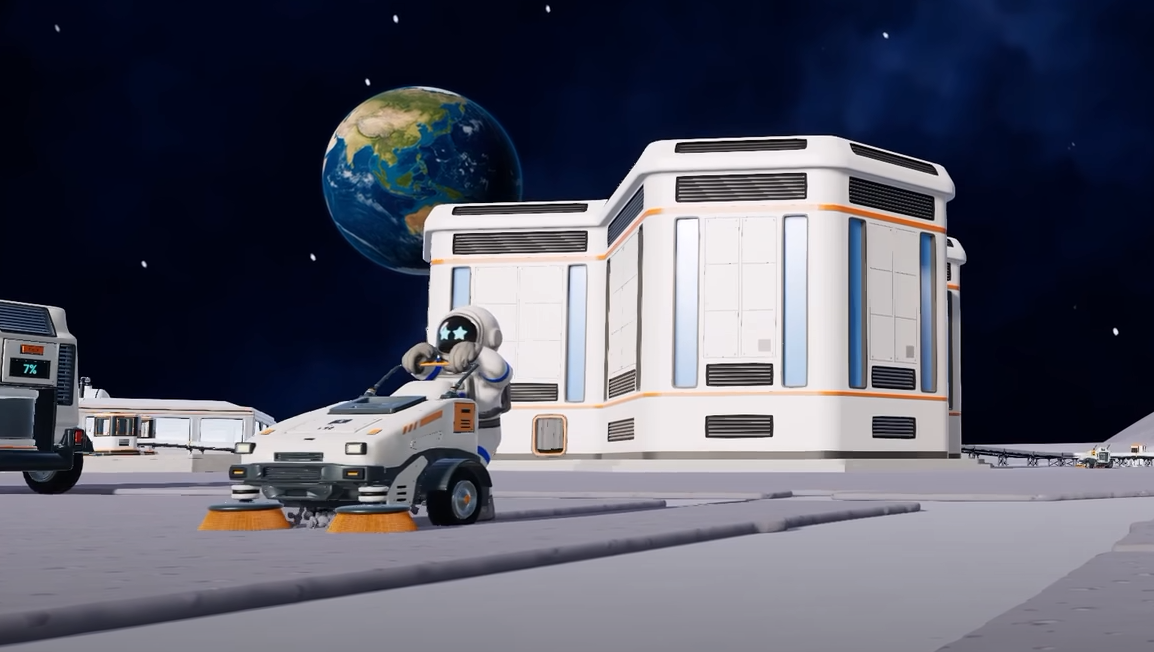
But once I started upgrading my equipment, everything clicked.
Buying a wider brush immediately changed how much ground I could cover. Increasing container capacity meant fewer interruptions, and completing individual sectors gave me extra money to put toward better equipment. Every improvement made the same basic activity feel more productive.
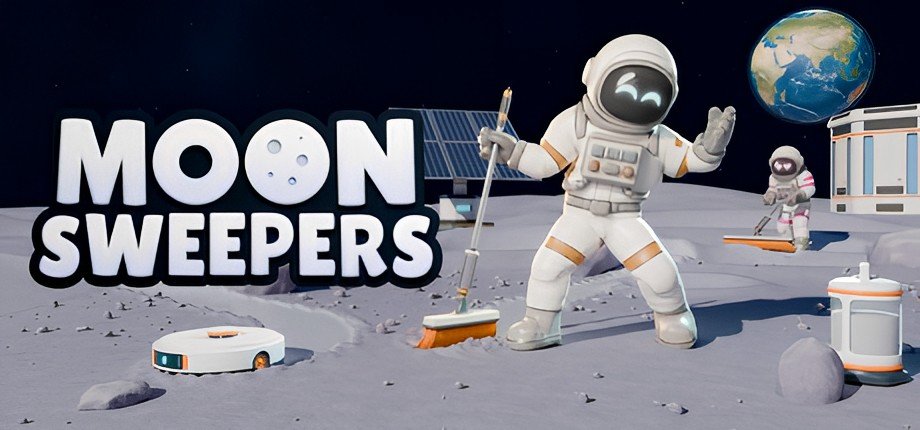
There's something incredibly satisfying about watching a dusty patch of ground become completely clean. The game divides the Moon into individual sections, providing manageable objectives within an otherwise enormous world. Finishing a section and seeing it marked as complete never really gets old.
I also appreciate that Moon Sweepers doesn't constantly interrupt the cleaning with unnecessary objectives. There aren't enemies to fight, survival meters demanding attention, or a complicated storyline getting in the way. I can simply pick an area and get to work.
That simplicity is exactly why it works. I don't always want a game that demands my full concentration, and Moon Sweepers is perfect for those moments when I want to relax while still feeling like I'm accomplishing something.
The Upgrade System Makes Every Dollar Feel Worth Earning
One of my favorite parts of Moon Sweepers is how quickly the early game evolves. Going from a toothbrush to a proper broom feels like a huge improvement, and finally moving into vehicles changes the experience completely.
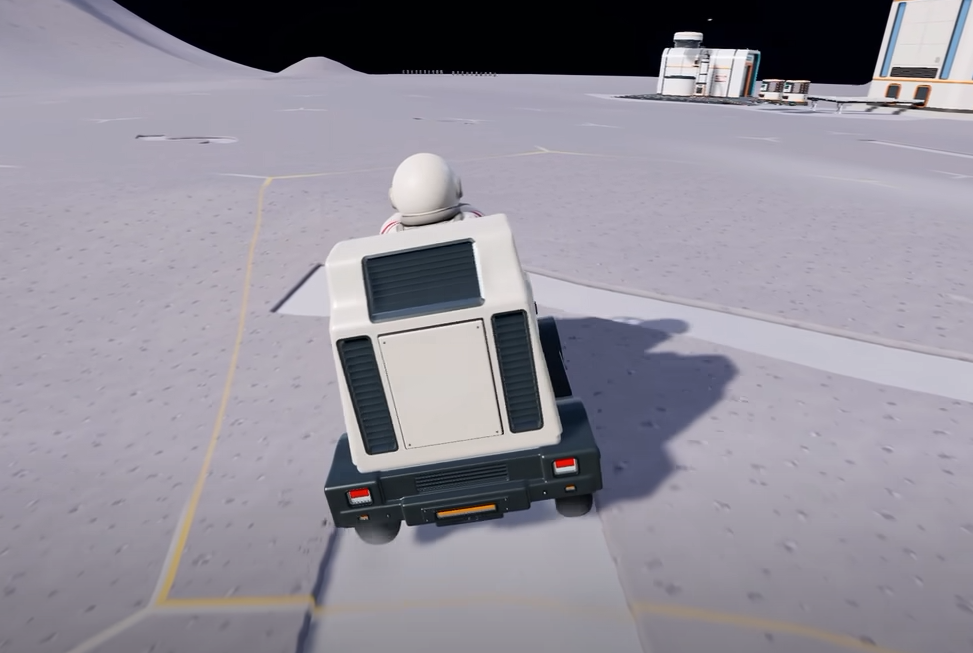
Instead of clearing narrow strips of dust by hand, I can drive across large areas and vacuum up enormous quantities of material. The difference is immediately noticeable, and upgrading into larger cleaning machines gives the game a satisfying sense of progression.
The Mega Vacuum Rover is easily one of the more entertaining pieces of equipment. With its massive intake and enormous dust capacity, it makes the early cleaning tools seem almost laughable. Adjusting its suction also gives me some control over how I approach different areas, trading movement speed for wider cleaning coverage.
Driving around the Moon is enjoyable in its own right. The terrain is uneven, vehicles bounce around more than I'd sometimes like, and the low-gravity environment makes even ordinary trips entertaining. I've found that getting from one place to another can be nearly as enjoyable as the cleaning itself.
There are also flags to discover, survey locations to visit, and distant areas to explore. These don't transform Moon Sweepers into a full exploration game, but they give me reasons to travel beyond my immediate cleaning operation.
The progression does have one noticeable weakness. Some upgrades become irrelevant almost as soon as they become available. Saving for a better tool or vehicle can be more worthwhile than investing heavily in equipment I'm about to replace.
I'd like to see more reasons to develop each stage of the equipment lineup rather than skipping directly toward the best available option. Still, the early progression is enjoyable enough that I was always looking forward to my next purchase.
Building an Automated Cleaning Operation Is Just as Enjoyable
Once I moved beyond manually collecting and selling dust, Moon Sweepers became a different kind of game.
Conveyor belts, processing machines, and automated cleaning robots introduce a more creative side to the experience. Instead of focusing entirely on how much ground I can clean myself, I can start thinking about how to collect, transport, and sell dust more efficiently.
There's something satisfying about putting together a conveyor network and watching capsules travel through the system without having to carry each one back manually. Connecting equipment, improving my layout, and gradually expanding production gives me another reason to keep playing.
The Pressure Chamber converts collected dust into Moon Sand, while the Stone Press provides another level of processing. These machines give the collected material more value and make constructing a functional production line worthwhile.
Automated cleaners are another welcome addition. Robot Vacuums can work through designated areas while I focus on something else, and the expensive JOONAS robot is designed to travel between dirty sectors and launch collected capsules toward a Capsule Catcher.
I particularly like that Moon Sweepers allows me to switch between these activities whenever I want. If I've had enough of driving, I can work on my base. If construction starts getting frustrating, I can head back outside and clear more ground.
However, I do wish the automation system offered more depth. There aren't many processing machines, and I can't meaningfully expand their capabilities through upgrades. Faster conveyor belts, improved production rates, and additional machinery would give me more to work toward.
Construction also isn't always as smooth as it should be. Getting certain pieces to snap into place can be frustrating, especially when working across uneven terrain. I'd also appreciate a proper building relocation feature instead of having to dismantle structures when I want to change a layout.
Despite those limitations, I still enjoy building and expanding my operation. The automation doesn't need to be overwhelmingly complicated to be entertaining, and Moon Sweepers gives me enough flexibility to create something that feels like my own.
The Moon Is Beautiful, Peaceful, and Absolutely Enormous
Moon Sweepers has a wonderfully relaxed atmosphere. The lunar landscape is mostly empty, but I think that works in the game's favor. There's something peaceful about cleaning an enormous stretch of gray terrain while the Earth hangs in the sky above me.
The soundtrack complements that feeling perfectly. It's easy to settle into a routine, listen to the music, and lose track of time while cleaning section after section.
The day and night cycle adds some welcome visual variety, although nighttime can make spotting leftover dust considerably harder. Solar-powered machinery also becomes less reliable when there's insufficient stored electricity, so darkness affects more than just visibility.
What impresses me most is the scale. The Moon contains more than 160,000 cleaning sectors, making the entire project feel almost absurdly ambitious.
Watching my overall completion percentage barely move after clearing a substantial area is both amusing and intimidating. I love that the game gives me such an enormous world to work through, but I also understand why that scale has become one of its biggest criticisms.
The Late Game Needs More Reasons to Keep Going
As much as I enjoy Moon Sweepers, I think its biggest gameplay problem is how early the progression starts to run out.
It's possible to unlock the best cleaning vehicles, purchase the major upgrades, and establish a functioning automation system while still having barely cleaned a fraction of the Moon.
That leaves an enormous amount of work without enough new equipment or improvements to look forward to.
The early game is constantly rewarding me with better tools and more efficient ways to clean. Later, those improvements become less frequent, and I'm left repeating the same activities with equipment that can't get much better.
I don't mind repetition. In fact, repetition is a huge part of why I enjoy Moon Sweepers. But a game built around incremental progression should continue giving me meaningful ways to improve.
JOONAS is a good example of where things need work. Spending $20,000 on a late-game cleaning robot should feel like a major step forward. Unfortunately, its cleaning performance and reliability don't always justify that investment, particularly when it can stop operating after I travel too far away.
I'd love to see more powerful machines, additional vehicle upgrades, faster automation, and perhaps entirely new ways to clean enormous areas. The Moon is certainly big enough to support them.
However, I don't think reaching 100% completion is necessary to appreciate the game. I'm enjoying the process of cleaning and expanding my operation, not just chasing the eventual moment when the entire Moon is finished.
Even so, the game would benefit considerably from a more developed late-game progression system.
The Bugs Are Frustrating, but the Developers Are Making Progress
Moon Sweepers has had a rough launch, and the technical problems are difficult to ignore.
Crashes, performance drops, awkward building interactions, and inconsistent automation can interrupt an otherwise relaxing experience. The last thing I want while working on a large cleaning operation is to worry about whether the game will suddenly close or whether my equipment has stopped functioning.
These problems also affect different parts of the game in different ways. A malfunctioning conveyor can interrupt production, while a robot that stops working at a distance defeats the purpose of investing in automation.
It's disappointing because the gameplay is so enjoyable when everything works properly.
Fortunately, DragDrop Games has been responding quickly. Patch 1.0.3 introduced performance improvements, save recovery changes, conveyor fixes, and several other corrections shortly after launch. Multiplayer upgrades were also changed to work across the crew's shared Upgrade Matrix.
For a game developed by a two-person team, I'm encouraged by how quickly those improvements arrived.
There's still plenty of work to do, and I wouldn't dismiss the frustration of someone who can't play without frequent crashes. The game needs to become more stable, and some of its underlying systems need more attention.
But I also don't think the launch issues tell the entire story. There's an enjoyable experience here already, and the early updates give me reason to believe it can improve further.
Moon Sweepers Is Even Better With Friends
Moon Sweepers supports online co-op for up to 16 players, and I think multiplayer is one of the best ways to approach such an enormous cleaning project.
Being able to divide the work between cleaning, exploration, and construction makes the experience more entertaining. One person can operate a vehicle while others collect dust, build infrastructure, or work toward clearing nearby sectors.
The straightforward gameplay also makes it easy for everyone to contribute. There's no need for a complicated introduction or extensive preparation before someone can start helping.
I like that multiplayer doesn't fundamentally change what makes Moon Sweepers enjoyable. It's still a relaxing cleaning simulator, just with more people sharing the same absurd objective.
The shared Upgrade Matrix introduced after launch is particularly welcome, as it removes some of the frustration caused by players having to purchase the same general upgrades individually.
I would still be careful about opening a world to strangers, since public multiplayer can expose your structures to unwanted interference. For a group of friends, though, Moon Sweepers is an excellent game to enjoy while chatting and working toward a common goal.
Moon Sweepers Review Verdict
Moon Sweepers is one of those games that sounds far less entertaining than it actually is. Cleaning dust from the Moon shouldn't be this much fun, yet I've found the simple process of clearing sectors, earning money, and expanding my equipment surprisingly addictive.
The transition from a toothbrush to enormous cleaning vehicles is satisfying, the automated production systems add welcome variety, and the peaceful lunar atmosphere makes it easy to spend hours working without feeling rushed.
I also appreciate that the game doesn't try to complicate its premise unnecessarily. Sometimes I just want to clean an area, watch my progress increase, and save up for something better. Moon Sweepers understands that appeal extremely well.
There are definitely improvements I'd like to see. The progression system needs more depth after the first several hours, automation should become more reliable, and construction could use some serious polishing. The technical issues also need to be resolved before the experience can consistently deliver on its potential.
Despite all that, I keep coming back to how much I enjoy actually playing it. Even when the upgrade system slows down or the enormous size of the Moon starts feeling intimidating, the act of cleaning remains satisfying.
At $8.99, I think Moon Sweepers offers excellent value for anyone who enjoys cleaning simulators, incremental progression, or relaxing games that can easily consume an entire evening.
It isn't a game I'd recommend to someone looking for a perfectly polished experience or a realistic path to completing every sector of the Moon. But for players who enjoy taking their time, watching small improvements add up, and building an increasingly elaborate operation around a simple task, there's a lot to love.
Moon Sweepers still has plenty of room to grow, but what's already here has won me over. If you can get past the rough edges, it's an incredibly enjoyable game that's well worth checking out.
Reviewed by Alec Braun