In PoE 2 0.5, Expedition is an endgame farming system built around Logbooks, ocean islands, Grand Expeditions, Verisium Remnants, Sagas, and explosive pathing. The best farming strategy is to unlock the Expedition ocean path, use Logbooks to reveal new areas, prioritize high-slot Verisium Remnants, pick strong Island Rumors, use Jado’s Expedition-focused passives, and save Aldur’s Saga for areas with multiple Grand Expedition maps.
The short version: Expedition can make a lot of currency, but only when the setup is right. A random low-investment Expedition is fine for steady loot. A juiced Grand Expedition with strong Remnants, good map mods, useful tablets, and the right Saga can produce huge payouts. The mistake is treating every Expedition node like it deserves the same investment.
Jump To
How Expedition Works In 0.5
Expedition in PoE 2 0.5 is no longer just a small side encounter. It is tied into the ocean endgame, Logbooks, Grand Expedition areas, Verisium Remnants, and Runes of Aldur rewards.
The basic loop is simple. You reveal islands, enter Expedition maps, place explosive chains, wake up buried monsters, and collect rewards from the Remnants and chests along the path. The deeper version is where the money is: deciding which Remnants are worth detonating, how many modifiers the monsters can handle, and when to spend expensive items like Aldur’s Saga.
I would think of Expedition as a scouting farm, not a brain-off farm. The best players are not just exploding everything. They are checking Remnant slots, reading reward text, deciding whether the map deserves investment, and only then committing the bomb path.
That is also why Expedition can feel bad for newer players. The mechanic looks like “place bombs and loot.” In reality, the profit comes from knowing which explosions matter and which ones are bait.
Standard Expedition Vs Grand Expedition
Standard Expedition is the lower-investment version, while Grand Expedition is the higher-ceiling version with more Remnants, better reward potential, and more pressure on Logbook sustain.
| Expedition Type | Best For | Main Risk |
|---|---|---|
| Standard Expedition | Learning the mechanic, farming with low investment, building Logbook supply | Lower ceiling and fewer huge payout moments |
| Grand Expedition | High-slot Verisium Remnants, Aldur’s Saga farming, expensive endgame setups | Harder monsters, higher cost, worse if the area rolls poorly |
Standard Expedition is where I would start if the mechanic still feels messy. Run the maps, learn how Remnants work, and get used to reading the reward lines before blowing up the entire site.
Grand Expedition is where the farm becomes serious. The Remnant density is better, the best maps can be much more rewarding, and Sagas can push the ceiling higher. The downside is that bad decisions cost more. Wasting Aldur’s Saga on a weak reveal feels awful because that item could have powered a much better area.
The clean strategy is to use Standard Expedition for comfort and sustain, then shift into Grand Expedition when the build can handle harder monsters and the map setup is worth juicing.
How To Start Expedition
To start Expedition in PoE 2 0.5, progress into the ocean endgame near Kingsmarch, follow the Expedition quest path, and use Logbooks to reveal new Expedition islands.
The early goal is not max profit. The early goal is unlocking the system. Move through the ocean route, clear Expedition maps, defeat the required bosses, talk to the Expedition NPCs, and keep pushing until Logbooks and Grand Expedition choices become part of the loop.
As the system opens up, pay attention to Island Rumors. These are not random flavor lines. They hint at what kind of island, boss, unique map, or special reward route is ahead. Our PoE 2 Island Rumors guide breaks down the rumor names and which ones are worth picking.
I would not rush into expensive Expedition juicing before finishing the basic unlocks. The mechanic already has enough moving parts. Get access, understand the island flow, then start spending real currency.
Logbooks And Sagas Explained
Logbooks reveal Expedition ocean areas, while Sagas modify the areas revealed by a Logbook.
That distinction matters. A Logbook is the entry point. A Saga is the investment layer. If the Logbook reveals several strong Grand Expedition maps, a good Saga can be worth it. If the Logbook reveals one weak Grand Expedition, the same Saga can feel wasted.
Aldur’s Saga is the big one players chase because it can add special modifiers to Grand Expedition areas. Some versions can improve Verisium Remnants by setting minimum slot counts or making Remnant outcomes stronger. That is why Aldur’s Saga gets expensive. It does not just add flavor. It can change the quality of the entire Expedition area.
I would not use Aldur’s Saga blindly. Scout the area first, check the Grand Expedition count, and make sure the build can handle the monsters. Spending a high-value Saga on a bad reveal is one of the fastest ways to turn a profitable mechanic into a sad spreadsheet.
There is also a recipe-discovery layer through Runic Knowledge and Remnant rewards. If the account has not discovered the relevant rune knowledge or high-end recipes yet, some chase outcomes may not be available. That is another reason to avoid burning the best Sagas too early.
Best Atlas And Master Setup
Jado is the main Atlas Master to care about for serious Expedition farming because of Eastern Knowledge, which gives Verisium Remnants a chance to roll an additional time and keep the rarest outcome.
That passive is exactly the kind of effect Expedition wants. The farm is built around finding better Verisium Remnants, so anything that improves Remnant outcome quality has obvious value.
For early farming, do not overcomplicate it. Get the Expedition access, use Jado when farming Expedition, and prioritize passives that improve Remnants, rare monsters, tablets, and map reward quality. Once the build can handle harder maps, push into higher-tier Waystones because Grand Expedition Remnant scaling improves at higher tiers.
Tablets are the next layer. The best tablet modifiers are the ones that add Expedition density, improve rare monster count, improve Logbook drops, boost Remnants, or increase overall map quantity. If the map is already dangerous, do not stack difficulty just because the reward text looks good. Dead characters have terrible divines per hour.
My practical rule: juice only to the point where the build still clears smoothly. If every Expedition pack turns into a raid boss, the map is not profitable. It is just expensive cardio.
Bomb Pathing And Verisium Remnants
Bomb pathing is the core skill check in Expedition. The goal is to connect valuable Verisium Remnants, chests, and Runic Monster Markers in an order the build can survive.
Before placing bombs, run around and scout. Look for high-slot Verisium Remnants, valuable reward text, strong chests, and any dangerous monster modifiers. Do not start dropping explosives just because the first marker is nearby.
High-slot Verisium Remnants are usually the most important targets. More slots generally mean more reward potential, but also more monster pressure. If a Remnant has 7, 8, or 9 slots and a valuable reward type, that is the kind of thing worth planning the entire chain around.
Pathing should usually start with manageable modifiers and build toward the big payoff. If a dangerous Remnant modifier is going to make the rest of the chain miserable, think twice before putting it early. The dream is to stack reward power into the final wave, not accidentally make the first pack unkillable.
Use the hotkeys for fast placement and reversing if needed. Once the chain is planned, execute cleanly. If the route is bad, reset before committing. Expedition rewards patience more than panic-clicking.
Best Expedition Loot To Chase
The best Expedition loot in PoE 2 0.5 comes from high-slot Verisium Remnants, valuable rune recipes, rare unique outcomes, Sagas, boss drops, and special quest items.
Aldur’s Saga is one of the biggest trade-value targets because it can power future Grand Expedition areas. Valuable rune and recipe outcomes can also be massive, especially when the required Runic Knowledge has already been discovered.
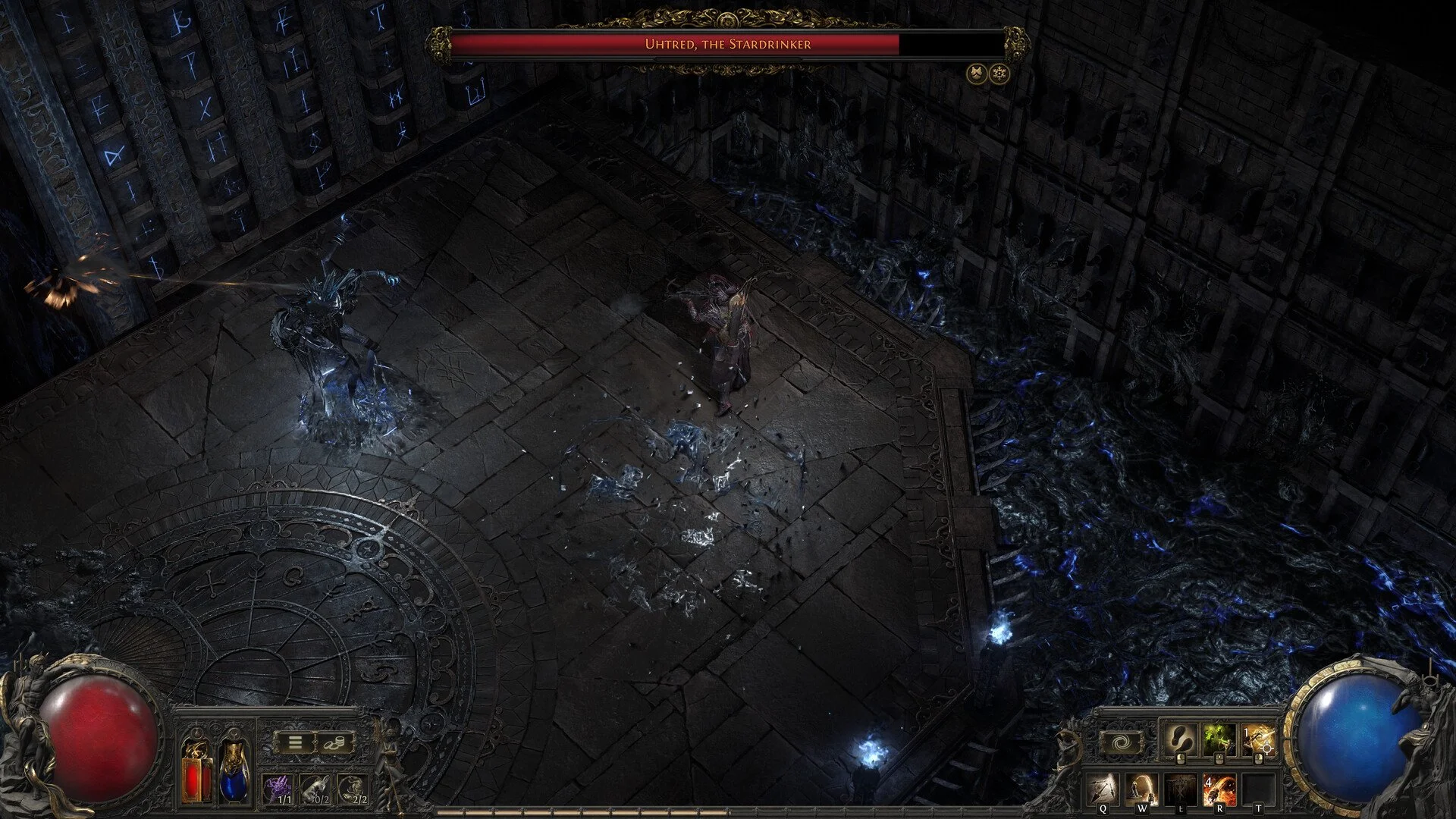
Uhtred is a major boss target because of the Depleted Mana Rune chase. That quest item connects to Runeseeker’s Call, which is why players farm Uhtred even when the drop rate feels brutal. Our PoE 2 Depleted Mana Rune guide explains that secret quest and the 10,000 mana charging step.
Loreweave is another Expedition-adjacent chase because it is tied to the Journey to the East and Dannig’s 60 unique ring turn-in. Our PoE 2 Loreweave guide covers how that recipe works and why duplicate unique rings matter.
The tempting part is chasing only the giant headline drops. Raw mirrors, expensive Sagas, rare uniques, and secret quest items are exciting, but they are not the whole farm. A strong Expedition session also earns through currency, runes, alloys, Logbook sustain, valuable chests, and repeatable Remnant rewards.
Common Expedition Mistakes
The biggest Expedition mistake is spending high-value investment before the map deserves it.
Do not waste Aldur’s Saga on a weak Logbook reveal. Do not force a full bomb chain through bad modifiers. Do not keep stacking difficulty if the build already feels slow. Do not assume a 500 Divine day from someone else’s setup is the baseline result for a normal player.
Another mistake is ignoring Island Rumors. These clues can point toward boss islands, unique maps, trader encounters, or special reward routes. Picking blindly is fine early, but once Logbooks and Sagas become expensive, rumors matter.
Players also overvalue raw slot count without reading the reward. A high-slot Remnant with bad rewards may be less exciting than a slightly lower-slot Remnant with a better reward type. Read the text, not just the number.
The last mistake is using the wrong Expedition passive setup for the job. Some nodes are better for transitional mapping, while others are better for real Expedition maps. If a passive gives one huge bomb or changes how explosives behave, make sure it actually fits the map before opening the area. A setup that speeds through normal maps can be terrible if it ruins the Expedition chain.
Is Expedition Worth Farming?
Expedition is worth farming in PoE 2 0.5 if the build can clear dangerous Remnant chains and the player is willing to scout before detonating.
For low investment, it is a solid farm because Standard Expedition can still produce useful currency, Logbooks, runes, and progression. For high investment, Grand Expedition has one of the better ceilings in the patch, especially when Jado, Aldur’s Saga, strong tablets, high-tier Waystones, and high-slot Verisium Remnants line up.
I would not sell it as guaranteed “500 Divine daily income.” That is content-farm bait unless the player already has the build, currency, knowledge, and volume to support it. But I would absolutely treat Expedition as a serious endgame farm. The mechanic has real money in it.
The best version of the strategy is controlled aggression. Use Logbooks to reveal good areas, read Island Rumors, pick Jado for Remnant quality, save Sagas for strong Grand Expedition clusters, scout before bombing, and chain the best Verisium rewards the build can actually survive.
Expedition is not the cleanest farm in PoE 2 0.5, but it is one of the most rewarding once the system clicks. If the goal is steady currency with a chance at absurd high-end drops, this is a mechanic worth learning instead of button-mashing through.