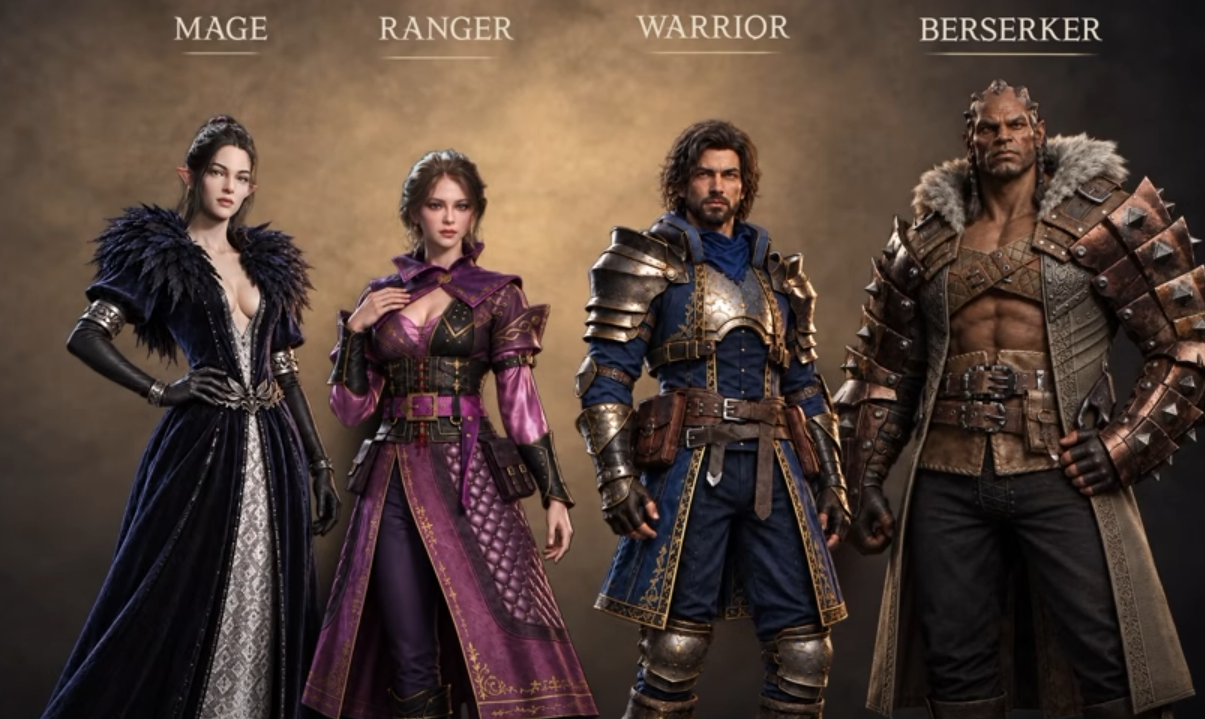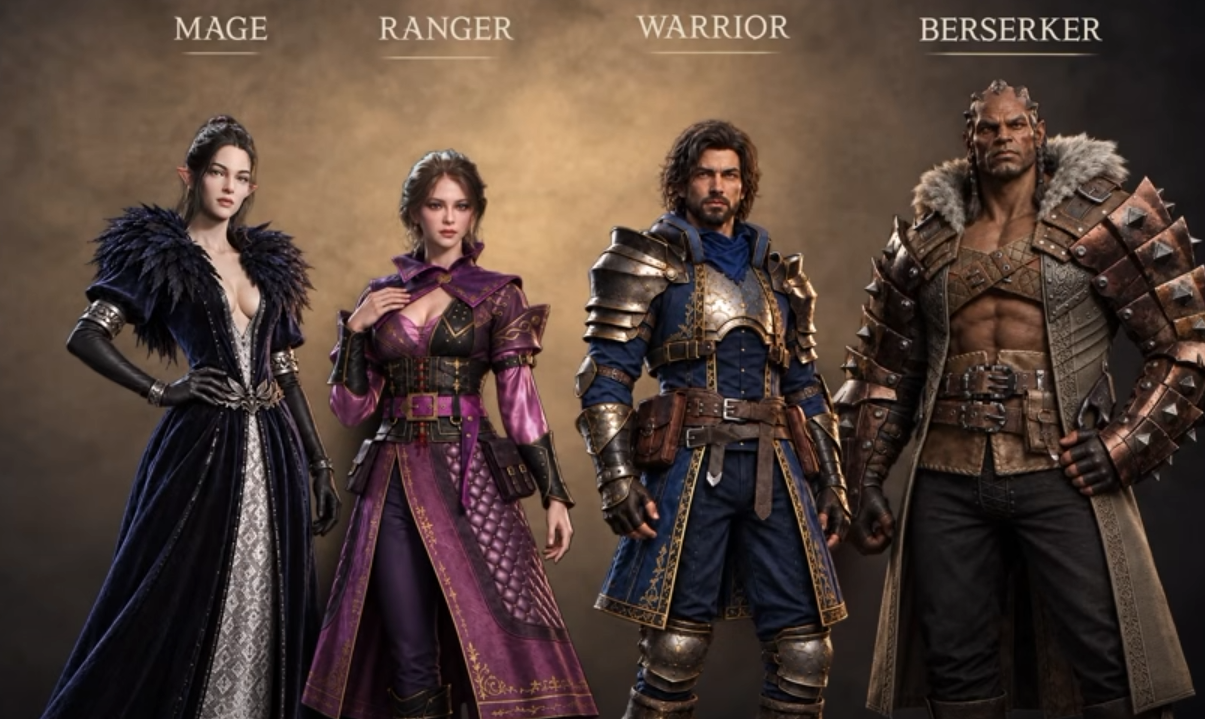
Choosing a class in ArcheAge Chronicles involves more than deciding between melee, ranged attacks, and magic. Each class begins with two distinct weapons, and switching between them can change how you approach difficult encounters. That makes weapon flexibility, defensive options, and the ability to handle unfamiliar enemies especially important when comparing the four launch classes.
Jump To Section:
Classes Tier List
Ranger
Warrior
Mage
Berserker
How the Classes Are Ranked
Best Classes for Different Situations
What Could Change the Rankings?
ArcheAge Chronicles Classes Tier List
Our preliminary ArcheAge Chronicles classes tier list ranks Ranger in S Tier, Warrior and Mage in A Tier, and Berserker in B Tier for early solo progression and general weapon flexibility.
This ranking prioritizes how well each class can respond when an encounter becomes difficult, rather than assuming the class with the heaviest attacks will deal the most damage.
| Tier | Class | Main Advantage | Main Limitation |
|---|---|---|---|
| S | Ranger | Ranged engagement with a mobile melee alternative | Ranged targeting is still being improved |
| A | Warrior | Defensive timing and offensive melee options | Both weapons require close engagement |
| A | Mage | Area magic and an alternative close-range style | More reliance on ability setup and timing |
| B | Berserker | Frontline control and heavy attacks | Both launch weapons emphasize close-range fighting |
These are pre-release editorial projections based on documented weapon mechanics and the announced Early Access systems as of November 2, 2026. They are not rankings derived from launch damage tests, dungeon clear times, or competitive win rates.
The distinction matters because ArcheAge Chronicles uses action combat, including dodging, blocking, and parrying. A class's ability to create a safe attack opportunity may be more valuable during progression than its theoretical maximum damage.
S Tier: Ranger
Ranger takes our top position because its starting weapons offer two noticeably different ways to approach combat. The Longbow lets you engage from a distance, while Hatchets provide a faster, closer-range alternative.
That combination is appealing when exploring unfamiliar regions and encountering enemies whose attacks you haven't learned yet.
Why Ranger Ranks First
One of the biggest advantages of a ranged weapon is being able to observe an enemy's behavior before committing to close combat.
The Longbow provides attacks such as Rapid Fire and Ice Arrow, allowing a Ranger to apply pressure while managing distance. If an enemy closes in, Hatchets offer a different response through abilities such as Stormsplitter and Shocking Kick.
Rather than relying on a single combat approach, Ranger has the option to change how it fights based on the situation.
This is particularly relevant to solo progression, where you won't necessarily have another player available to distract enemies or compensate for an unfavorable encounter.
Where Ranger Could Struggle
Ranger's biggest concern is the ongoing work on ranged soft-lock targeting.
Having a Longbow doesn't automatically guarantee reliable ranged damage against every moving opponent. If targeting inconsistencies interfere with difficult encounters, Ranger's practical advantage could be smaller than its weapon selection suggests.
It also needs to manage positioning carefully. Being able to attack from a distance is useful, but it doesn't remove the need to respond to enemy attacks and movement.
We place Ranger in S Tier for its flexibility and engagement options, not because its damage output has been established as the highest.
A Tier: Warrior
Warrior is our strongest melee-focused recommendation for players who enjoy learning enemy attacks and responding with deliberate counters.
Its Longsword and Greatsword offer different approaches to close-range combat without requiring you to change classes.
Why Warrior Ranks Highly
The Longsword emphasizes controlled fighting and defensive timing, while the Greatsword provides a heavier offensive alternative with abilities such as Armor Break, Sunder, and Sweeping Slash.
This creates an interesting choice during difficult encounters.
When you're still learning an enemy's attack patterns, the Longsword's more reactive approach may be preferable. Once you've identified opportunities to attack, the Greatsword provides another way to capitalize on those openings.
Warrior therefore has two useful approaches to the same melee encounter: controlling its rhythm and exploiting opportunities for heavier attacks.
Why Warrior Isn't S Tier
The biggest limitation is that both weapons require you to operate relatively close to enemies.
Switching between Longsword and Greatsword changes your combat tools, but it doesn't provide the same distance-based alternative available to Ranger or Mage.
Warrior also places considerable importance on player timing. Its strengths become more attractive when you can reliably recognize attacks and respond to them.
For experienced action-game players, Warrior could easily become the better personal choice. However, our general progression ranking gives Ranger the advantage for having more options before an enemy reaches melee range.
A Tier: Mage
Mage offers a different kind of versatility by combining the Elemental Staff with the Wavesword.
The Elemental Staff provides ranged spellcasting and area attacks, while the Wavesword introduces a more direct combat style built around magical melee abilities.
Why Mage Earns A Tier
The Elemental Staff's abilities include Wall of Fire, Retain, and Shooting Star, giving Mage options for controlling areas and preparing stronger magical attacks.
These abilities make the class particularly interesting when enemies can be grouped together or when you have enough room to establish your attack sequence.
The Wavesword creates a useful alternative when close-range pressure becomes unavoidable.
That weapon combination gives Mage more combat variety than a class limited to two conventional melee weapons.
Its strongest advantage is potentially controlling how a fight develops before enemies reach you.
Why Mage Ranks Below Ranger
Mage's known abilities suggest a greater emphasis on preparing and sequencing attacks.
That creates a possible disadvantage when enemies interrupt your preferred approach or force you to respond immediately.
Ranger's Longbow and Hatchets present a different combination of ranged pressure and quick melee responses, which we favor slightly for unfamiliar solo encounters.
This doesn't establish Mage as weaker in damage. In situations where several enemies can be hit by the same abilities, Mage may ultimately prove more efficient.
It's also important not to rank Mage around the planned Life Staff. That healing-oriented weapon isn't part of the announced two-weapon launch selection.
B Tier: Berserker
Berserker finishes fourth in our general progression ranking, but that placement reflects the criteria used rather than a conclusion that the class is weak.
Its Axe and Shield and Warhammer support a direct combat style centered on surviving engagements, disrupting enemies, and delivering heavier attacks.
What Berserker Does Well
Axe and Shield provides the most obvious defensive emphasis in Berserker's starting equipment.
Abilities such as Shield Slam and Brutal Crash support an aggressive frontline style that can interrupt or pressure enemies rather than relying solely on evasion.
The Warhammer offers a heavier alternative, with attacks such as Thundering Hurl and Meteor Hammer.
For players who prefer committing to close combat and controlling the immediate area around their character, this weapon combination has a clear appeal.
Why Berserker Is B Tier
Our main concern is the overlap between its two starting weapons.
Axe and Shield and Warhammer serve different purposes, but both emphasize fighting relatively close to enemies.
That means Berserker cannot switch to a dedicated ranged weapon when a difficult opponent makes close engagement inconvenient.
Warhammer's heavier attack style may also require more careful decisions about when to commit to an animation.
These limitations matter more in a solo-focused ranking than they might in organized group content.
Berserker could be considerably more valuable in parties where its frontline abilities complement other players. However, the final effectiveness of tanking and enemy aggression systems hasn't been established by the available launch information.
How We Ranked the ArcheAge Chronicles Classes
Instead of assigning arbitrary damage scores, we evaluated each class around a practical question: what happens when your preferred way of fighting stops working?
That question is especially important because your chosen weapon determines your available skills and trait tree.
Weapon Switching as a Solution to Difficult Encounters
Each class has two starting weapons, but having two weapons isn't automatically the same as having two substantially different combat solutions.
Ranger can alternate between ranged attacks and mobile close combat. Mage can move between staff-based spellcasting and Wavesword abilities.
Warrior can alternate between reactive swordplay and heavier offense, while Berserker can shift between shield-based fighting and Warhammer attacks.
These are all useful combinations. Our ranking favors weapon pairs that change how the player approaches an encounter, not simply how much damage an attack might deliver.
Boss Access Matters More Than Ordinary Grinding
ArcheAge Chronicles separates character levels from weapon trait progression.
Leveling primarily provides stat points, while trait points are associated with Raeven's Coilstones found near powerful regional bosses.
This gives difficult encounters particular importance during character progression.
A class that clears ordinary enemies quickly isn't necessarily the most useful for a player who struggles to survive tougher boss encounters.
We therefore value defensive alternatives, positioning, and the ability to adjust combat tactics rather than treating general damage potential as the only measure of strength.
Launch Weapons Matter More Than Future Weapons
ArcheAge Chronicles is expected to expand its class weapon selections during Early Access.
However, planned weapons shouldn't influence a current tier placement as though they're already available.
The Warrior's Gladius and additional weapons planned for other classes may eventually change their flexibility and combat roles.
For now, this list evaluates the eight announced launch weapons.
Best ArcheAge Chronicles Class for Different Situations
A single overall tier list won't capture every situation. The best choice also depends on the kind of encounters you enjoy and whether you're playing alone or with friends.
| Your Priority | Our Pick | Reason |
|---|---|---|
| Exploring unfamiliar areas solo | Ranger | Can approach enemies from range and change tactics when pressured |
| Learning boss attack patterns | Warrior | Rewards deliberate melee timing and counter-focused combat |
| Fighting groups with magic | Mage | Area-based spells create opportunities to affect multiple enemies |
| Playing an aggressive frontline role | Berserker | Shield abilities and heavy attacks suit direct engagements |
| Experimenting with ranged and melee styles | Ranger or Mage | Both have launch weapons supporting different engagement distances |
These recommendations reflect the announced weapon toolkits, not measured superiority in specific boss fights or dungeon encounters.
What About PvP?
The overall ranking shouldn't be treated as a confirmed PvP tier list.
Player-versus-player combat places different demands on movement, timing, control effects, and the ability to react to unpredictable opponents.
Warrior's reactive tools could become particularly valuable in duels, while Ranger's effectiveness will depend partly on how ranged targeting performs against moving players.
Berserker's frontline abilities may also become more useful in coordinated group fights than they are during independent exploration.
Since ArcheAge Chronicles offers Peace channels without player attacks, you don't need to choose your first class entirely around PvP if your primary interest is exploration and cooperative content.
What Could Change the Classes Tier List?
Several launch-week developments could change these placements substantially.
Ranged Targeting Improvements
Ranger's S Tier placement depends on the Longbow providing a practical advantage during difficult encounters.
If ranged targeting remains inconsistent, Warrior could become our preferred general progression class. If targeting performs reliably, Ranger's weapon combination becomes more compelling.
Boss Mechanics That Reward Particular Defenses
Some encounters may favor parrying, while others may reward blocking, dodging, or attacking from a distance.
If important progression bosses consistently favor one defensive approach, that could affect which class feels most reliable for solo progression.
Warrior and Berserker would benefit from encounters that reward their particular melee tools, while Ranger and Mage may be more comfortable when spacing provides an advantage.
Dungeon Roles and Group Composition
Dungeon content supports parties of up to four, which introduces a different evaluation from solo questing.
A class that offers valuable frontline control may be especially useful when teammates provide ranged damage or other supporting abilities.
Berserker is the biggest candidate to move upward in a group-focused ranking, depending on how enemy aggression and defensive roles work in the actual Early Access build.
Balance Changes and Additional Weapons
The developer has already discussed changes to several weapons and combat systems following earlier testing.
As Early Access develops, additional skills, balance adjustments, and third-weapon options could change what each class can accomplish.
For that reason, the most useful tier list will eventually be one based on the live version of the game and repeated combat results rather than pre-release assumptions.
For now, Ranger is our recommended starting class for general flexibility, Warrior is the stronger pick for deliberate melee combat, Mage offers promising magical versatility, and Berserker is best suited to players who specifically want a committed frontline style.
Those differences are more useful than treating a preliminary tier placement as a guarantee of which class will deal the most damage. Your preferred combat style still matters, particularly in an action MMORPG where movement and timing influence every encounter.