The Vending Machine in Probably Stolen gives your shop another way to make money, allowing merchandise to sell overnight without requiring a customer at your counter. However, simply filling it with expensive items isn't necessarily the best strategy. The machine has its own selling probabilities, operating costs, and upgrade system, so understanding how those factors work together can make a considerable difference to your earnings.
Jump To Section:
How to Get and Use the Vending Machine
How Overnight Sales Work
Best Items to Sell
Storage vs. Attractiveness Upgrades
Joe Wild vs. Landlord
Making More Profit
Vending Machine Not Working
How to Get and Use the Vending Machine in Probably Stolen
You can obtain the Vending Machine through a starting perk costing 2 perk points, purchase it from Joe Wild's Network for 1,200 Credits on Cozy and Normal difficulty, or accept the landlord's offer to install one in exchange for increased rent.
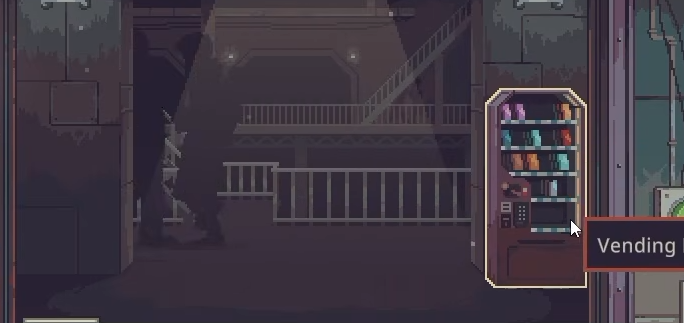
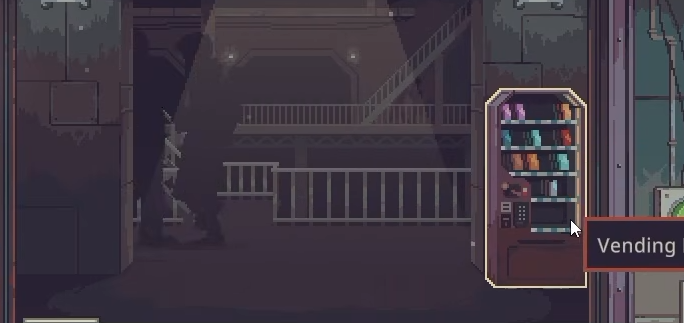
Once unlocked, the Vending Machine is located outside your shop. Open your storefront to access it. It doesn't appear as an ordinary inventory item or a machine you need to place inside a Machine Bay.
To start selling merchandise:
- Open your shop and locate the Vending Machine outside.
- Insert an Energy Cell to supply electricity.
- Place the merchandise you want to sell inside its inventory.
- Finish your business for the day and sleep.
- Return to the machine and check which items sold overnight.
- Use Transfer All Credits to collect your earnings.
The standard Vending Machine consumes 2 kJ of electricity per night before upgrades. It needs sufficient power to operate during the nightly sales cycle.
Items that weren't purchased remain in the machine, allowing you to restock the empty spaces without replacing everything each morning.
How Vending Machine Sale Chances Work
Every item placed inside the Vending Machine receives an individual opportunity to sell during the night. The machine doesn't simply select a fixed number of products to sell each day.
Three factors determine an item's basic selling probability: the machine's attractiveness, the item's category, and its selling price.
Attractiveness begins at 15. Higher attractiveness improves the likelihood of a sale, while more expensive merchandise generally has a lower chance of being purchased.
Vending Machine Selling Formula
The documented calculation for an item's nightly selling chance is:
Sale chance (%) = (Attractiveness × 200 × Category Multiplier) ÷ (200 + Item Price)
This provides a useful way to estimate which goods are worth stocking. Actual outcomes remain random, and exact rounding or probability limits at very high attractiveness aren't established by the available information.
The relevant category multipliers include:
| Category | Multiplier | Effect |
|---|---|---|
| Consumables, including food, treats, beverages, and rations | 1.50 | Higher chance of selling |
| Ordinary categories, such as household goods | 1.00 | Standard selling chance |
| Certain crafting materials | 0.33 | Significantly reduced chance |
These multipliers explain why some inexpensive items sell consistently while other merchandise can remain untouched for several nights.
An Item's Selling Chance Isn't Its Profitability
A high probability of selling is useful, but it doesn't automatically make an item the best choice for your machine.
Consider three hypothetical products with a starting attractiveness of 15. Using the formula above:
| Example Item | Price | Sale Chance | Expected Gross Credits Per Night |
|---|---|---|---|
| Consumable | 30 | 19.6% | 5.87 |
| Household good | 50 | 12.0% | 6.00 |
| Crafting material | 10 | 4.7% | 0.47 |
The expected gross amount represents the item's sale price multiplied by its chance of selling that night. These are illustrative calculations, not guaranteed payouts or actual item prices.
Notice that the hypothetical household product has a lower chance of selling than the consumable, yet slightly higher expected gross revenue per stocked item.
This reveals an important distinction: the fastest-selling product isn't always the one generating the most money over time.
Acquisition costs still need to be deducted before either item can be considered more profitable.
Best Items to Put in the Vending Machine
Consumables are a strong starting choice because their category multiplier improves their chances of selling. However, your existing inventory and the cost of obtaining each item matter just as much.
Use Consumables for Consistent Turnover
Food, drinks, treats, and similar everyday products benefit from the 1.5 category multiplier.
These are particularly useful when your shop can produce or purchase them cheaply enough to maintain a steady supply.
Rather than stocking the most expensive consumables available, compare the cost of replacing each product against its selling price and expected demand.
A lower-value product with a healthy margin can be more useful than an expensive item that ties up your inventory for several nights.
Don't Ignore Household Merchandise
Household goods have a standard category multiplier, making them less likely to sell than similarly priced consumables.
However, that doesn't make them automatically inferior. A moderately priced household product can still generate attractive returns if its selling price and acquisition cost are favorable.
They're worth considering when you already have excess household inventory or when the products are easier to obtain than consumables.
Keep Valuable Crafting Materials for Production
Certain materials receive a substantial selling probability penalty, making them poor choices for consistent vending income.
They may also be more useful in crafting, machinery upgrades, or other shop activities.
I wouldn't fill the machine with Electronic Parts or other important materials simply because there's available space. Selling an essential upgrade component for a small return can delay improvements elsewhere in your business.
Use Your Morning Sales to Adjust Stock
The machine's visible inventory changes as merchandise sells, giving you a quick indication of which spaces need refilling.
If one category repeatedly remains untouched, try replacing some of those items rather than immediately spending Credits on a machine upgrade.
Over several nights, this gives you a practical way to distinguish merchandise that sells regularly from inventory that is mostly occupying storage space.
Should You Upgrade Vending Machine Storage or Attractiveness?
The Vending Machine has two important improvements. Metal Ingots expand its storage, while Electronic Parts increase attractiveness.
Both can increase sales opportunities, but they operate differently.
Storage Upgrades Give More Items a Chance to Sell
Each storage upgrade adds another row of eight inventory cells, allowing you to stock additional merchandise.
Because individual items receive their own overnight selling checks, additional capacity can increase the number of potential transactions.
This is particularly effective when you already have a large supply of suitable products.
However, storage upgrades also increase electricity consumption. In the documented example, two capacity upgrades raised the machine's nightly requirement from 2 kJ to 4 kJ.
More space is therefore useful when you're filling it with merchandise that has a reasonable chance of selling. Empty inventory cells don't generate income.
Attractiveness Improves the Chances of Existing Stock
Attractiveness starts at 15 and increases by 5 with each Electronic Parts upgrade, up to a documented value of 80.
Unlike capacity, attractiveness improves the selling probability of merchandise already inside the machine.
For example, consider an item worth 30 Credits in a category with a 1.5 multiplier.
| Attractiveness | Calculated Nightly Sale Chance |
|---|---|
| 15 | 19.6% |
| 20 | 26.1% |
| 25 | 32.6% |
Increasing attractiveness from 15 to 25 raises the estimated nightly selling chance by approximately two-thirds, without requiring additional copies of the item.
This makes attractiveness especially appealing when you're struggling to fill a large machine with merchandise.
Which Upgrade Should You Buy First?
Before spending your materials, check whether you're limited by available inventory or by customer demand.
| Your Situation | Better Priority |
|---|---|
| You have plenty of merchandise but nowhere to put it | Storage capacity |
| Your machine stays full because items rarely sell | Attractiveness or better merchandise |
| You have limited electricity available | Check additional power costs before expanding storage |
| Your machine sells regularly and you have surplus stock | A combination of both upgrades |
The better investment is whichever removes your current limitation. Additional capacity is wasted when the machine has little to sell, while improved attractiveness becomes less useful if you repeatedly run out of stock.
How to Get Upgrade Materials
Storage upgrades require Metal Ingots, while attractiveness upgrades consume Electronic Parts.
A Material Neon Sign can help attract suppliers carrying electronic components and materials that can be processed into ingots.
This provides another way to support vending upgrades without relying entirely on finding those resources through ordinary transactions.
Consider what else you need the materials for before using them. Electronic Parts can be particularly valuable for other equipment improvements, so the next vending upgrade isn't always their best use.
Is Joe Wild or the Landlord Better for Getting a Vending Machine?
The Vending Machine has three acquisition methods, but they carry different costs.
| Method | Cost | Consideration |
|---|---|---|
| Starting perk | 2 perk points | Early access without a Credit purchase, at the expense of perk choices |
| Joe Wild's Network | 1,200 Credits on Cozy and Normal | One-time purchase |
| Landlord offer | 150 additional Credits in weekly rent per machine | Recurring obligation |
Why the Landlord's Offer Becomes Expensive
The landlord's offer avoids the initial 1,200-Credit purchase, but the increased weekly rent continues to affect your finances.
At a flat additional 150 Credits per week, the payments total 1,200 Credits after eight weeks.
That's already equal to Joe Wild's purchase price, without accounting for any further effects from the game's rent progression.
For a playthrough expected to last many weeks, buying through Joe Wild is generally more attractive.
When Is the Starting Perk Worth Taking?
The starting perk removes the need to purchase the machine after beginning your run, allowing you to start earning from overnight vending much earlier.
However, it consumes two perk points that could have been spent on other advantages.
Its value is therefore tied to your intended business. If you plan to sell large quantities of food or other everyday goods, early vending access could be useful. If your build depends heavily on other starting bonuses, buying the equipment later may be preferable.
For a broader comparison of starting options, see our Probably Stolen Best Perks Guide.
How to Make More Profit With the Vending Machine
The best vending setup isn't necessarily the one with the highest attractiveness or largest storage capacity. What matters is how much you earn after replacing sold merchandise and paying operating expenses.
Calculate Profit Instead of Just Sales
A useful estimate for an individual stocked item is:
Expected nightly gross earnings = Sale probability × Selling price.
For expected profit from sales, subtract the cost of acquiring or producing the item before multiplying by its sale probability.
For example, suppose a consumable sells for 30 Credits and costs you 20 Credits to obtain. At a calculated nightly selling chance of 19.6%, its expected gross sales contribution is approximately 5.87 Credits per night.
However, the profit margin on a completed sale is only 10 Credits, giving an expected merchandise profit contribution of approximately 1.96 Credits per nightly opportunity, before shared costs such as electricity.
The item isn't consuming its full acquisition cost again every night it remains unsold. That inventory is still available for another sales attempt.
This distinction is important when comparing high-value merchandise with cheaper products.
Use Vending for Inventory That Has No Better Immediate Buyer
If your counter customers regularly purchase an entire category of merchandise, diverting that stock into the Vending Machine may not provide much additional benefit.
Vending becomes more interesting when you're accumulating items faster than normal customers buy them.
Rather than automatically stocking your most valuable goods, consider which items are sitting unused at the end of each day.
For example, a food-producing business may benefit from sending surplus products into vending while reserving higher-demand merchandise for regular customers.
Don't Let Electricity Costs Outgrow Sales
The machine's initial power requirement is relatively modest, but additional upgrades can increase its nightly consumption.
Fully upgraded setups have been described with power requirements as high as 12 kJ for the standard Vending Machine and 10 kJ for the Vending Fountain.
Those figures are a reason to monitor the actual displayed electricity requirement after upgrading.
Advanced batteries or other power systems can reduce the amount of manual charging involved, but the profitability of your vending operation still depends on the costs of your overall setup.
A machine consistently selling inexpensive merchandise may not justify every available upgrade.
Treat the Water Vending Machine as a Separate Business
The Vending Fountain provides an additional selling channel specifically for water.
It can be especially useful when you're producing more Basewater than normal customers will purchase.
Its standard-price selling behavior can also make it useful during periods when ordinary water market prices are reduced.
However, if your existing customers purchase all your available water, adding another sales channel doesn't automatically increase production.
For more information on preparing higher-quality water, see our Probably Stolen Water Purification Guide.
Vending Machine Not Working or Not Selling Items?
You Purchased It but Can't Find It
Open your storefront and check outside. The Vending Machine doesn't appear among your regular inventory machines.
You Stocked Items but Made No Sales
Check whether the machine has enough electricity for its nightly operation.
If the power supply is working, inspect the merchandise you've stocked. Low-demand categories can have very small individual selling probabilities, especially when attractiveness is still low.
A night without sales isn't proof of a malfunction. Each item has a chance to sell, not a guaranteed transaction.
You Upgraded Storage but Sales Didn't Increase
More capacity only creates additional opportunities when you use the extra space.
If your machine already contained more merchandise than it could regularly sell, adding storage won't solve that problem.
Try improving attractiveness or stocking goods with stronger category multipliers.
You Upgraded Attractiveness but Earnings Are Still Low
Attractiveness increases the probability of selling existing merchandise, but it doesn't change the item's underlying selling price or acquisition cost.
If your inventory consists mostly of low-value materials with poor selling chances, improving attractiveness alone may produce disappointing returns.
Try a different category or calculate whether the available profit margin justifies keeping that merchandise in vending.
You Can't Find Your Vending Earnings
Money from overnight vending transactions accumulates in the machine.
Open the Vending Machine interface and use Transfer All Credits to move the earnings to your available funds.
Remember to check the inventory as well. Empty spaces show which merchandise needs replacing before the next night.
For a profitable long-term vending setup, concentrate on three things: keeping suitable merchandise available, improving its chances of selling, and controlling the costs of running the machine. A modest Vending Machine stocked with affordable, desirable goods can be more useful than an expensive fully upgraded one filled with products that rarely find buyers.