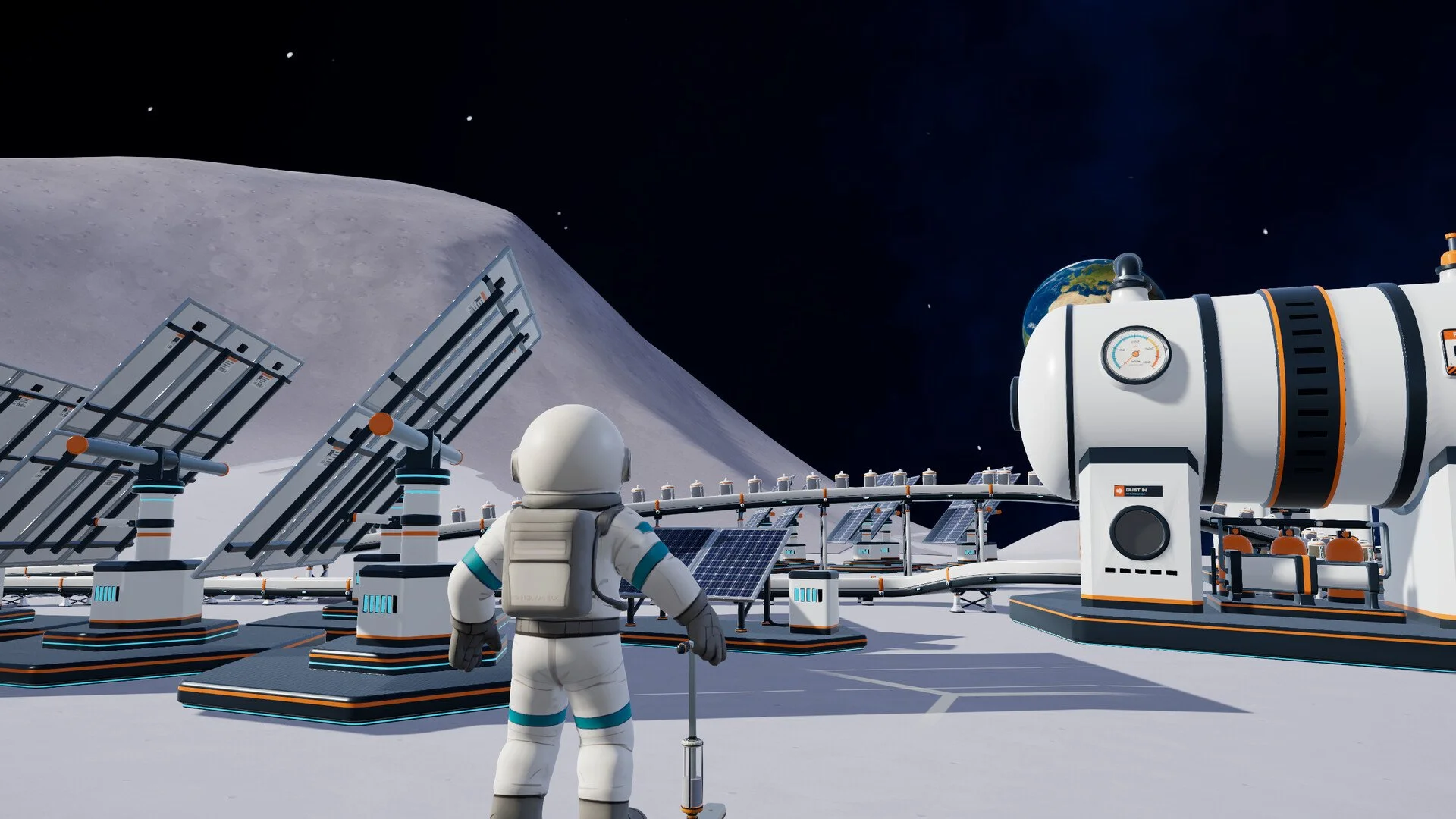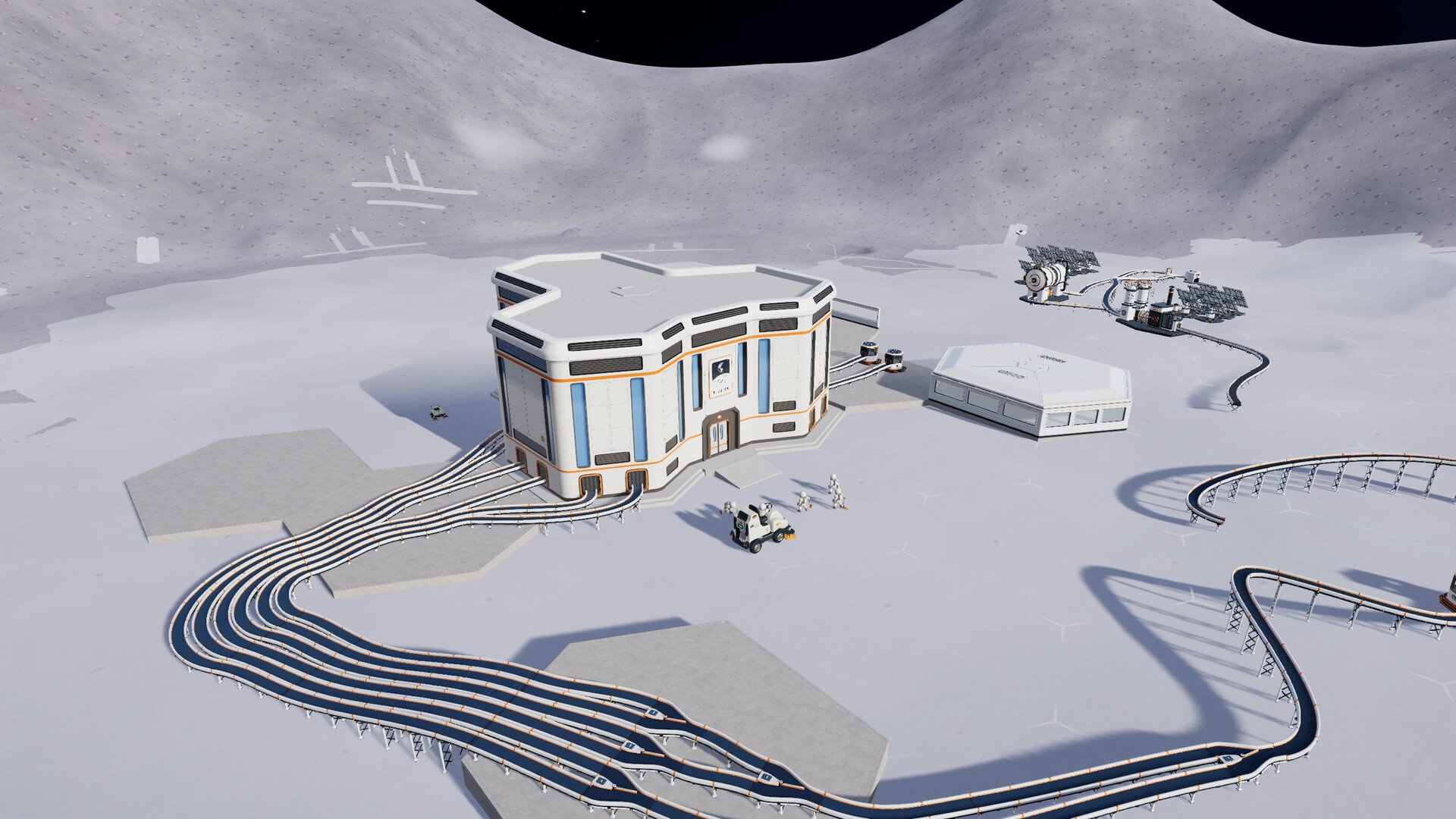
Getting started in Moon Sweepers is easy. Figuring out what to spend your money on is the harder part. You begin with a toothbrush, very little carrying capacity, and a massive amount of lunar dust to remove. The trick is to improve your cleaning speed without wasting money on equipment that doesn't solve your current problem.
For a strong start, work close to your station, finish individual cleaning sections, and save for a better brush. After that, decide whether you need more carrying capacity, a vehicle, or a machine that handles dust while you're doing something else.
This guide covers an efficient early-game route, worthwhile purchases, and the mistakes that can slow down your progress.
Jump To Section:
Best Starting Route
What to Upgrade First
How to Earn Money Faster
Vehicles or Automation?
Beginner Mistakes to Avoid
Best Starting Route in Moon Sweepers
Don't travel far from the starting station immediately. Your first cleaning tool is extremely limited, so long trips make it harder to earn enough money for better equipment.
Instead, use your first few cleaning sessions to establish a repeatable route between the station and nearby dusty ground.
- Take the free Toothbrush from the station's supply wall.
- Choose a dirty section close to the Depot.
- Clean the ground until your dust container fills.
- Press Q to pack collected dust into a capsule when needed.
- Return to the Depot and deposit your collected dust.
- Complete a shipment launch to receive payment.
- Keep cleaning the same nearby section until it reaches 100% completion.
- Put your first earnings toward a wider brush.
The seventh step is especially useful. It's easy to leave several sections almost finished, but completing an entire section can award a separate cash bonus. Early gameplay has shown a $10 reward for finishing one, which is meaningful when your first tool upgrades only cost a few dollars.
When you're close to finishing a section, inspect its edges for thin strips of leftover dust. Clearing the remaining ground can be more worthwhile than starting another area from zero.
What Should You Upgrade First in Moon Sweepers?
The best upgrade depends on what keeps slowing you down. Buying a wider brush won't help much if you're constantly stopping to pack dust, while increased storage won't make an extremely narrow toothbrush clean any faster.
Use this as a quick guide to choosing your next purchase.
| Your Problem | Best Next Improvement |
|---|---|
| Cleaning each patch takes too many strokes | Buy a wider brush. |
| Your container fills constantly | Upgrade dust capacity. |
| You're wasting time carrying dust back | Use a nearby Packager and conveyor route. |
| Large open areas take too long to clean | Start saving for a cleaning vehicle. |
| You want dust collected while you do other jobs | Invest in a Robot Vacuum. |
A Good Early Brush Upgrade Path
The Nail Brush costs $5, the Handbrush costs $10, and the Household Broom costs $25. The Wide Broom and Extra Wide Broom cost $75 and $150 respectively.
If you can afford the Household Broom without a long grind, it's a useful early target. It clears more ground per pass and costs considerably less than the larger equipment you'll eventually unlock.
However, don't feel required to purchase every brush along the way. Skipping an intermediate tool can save money if you're already close to affording a more useful upgrade.
When Is Carrying Capacity Better Than Brush Width?
The Household Broom provides a useful example. Its initial dust container holds roughly 3 kg, and a $30 upgrade increases that capacity to 6 kg.
That upgrade lets you gather twice as much dust before filling the container, but it doesn't make the broom's cleaning head any wider.
Choose capacity when packing and transporting capsules interrupts you repeatedly. Choose a wider brush when you're spending most of your time physically clearing the ground.
For most beginners, improving both eventually makes sense. The order should depend on what you're actually doing most often.
How to Make Money Faster in Moon Sweepers
You earn money by getting collected lunar dust through the game's selling system. Your cleaning operation becomes more profitable when you either collect more material in the same time or spend less time transporting it.
There are a few ways to improve your earnings without immediately purchasing expensive machinery.
Finish Partly Cleaned Sections
Use the Moon Map to identify areas you've already worked on. Its color system helps separate untouched ground from unfinished and completed sections:
- Orange indicates ground you haven't cleaned yet.
- Blue indicates a section where cleaning has started but isn't complete.
- Green indicates a fully cleaned section.
If several blue sections are close to your station, consider finishing them before traveling to distant orange areas.
This helps with section-completion bonuses and achievement progress, and it prevents you from leaving small patches behind that you'll eventually need to revisit.
Pick Up Exploration Rewards When They're Nearby
Cleaning isn't the only way to receive money. Flags and lunar survey sites can provide additional rewards.
For example, early gameplay has shown a $100 reward from untangling a flag and $250 from completing a survey. These are useful bonuses when you're still saving for your first vehicle.
However, don't abandon a productive cleaning area for a long trip just to collect one reward. Exploration becomes considerably more convenient after you have a vehicle.
Spend Less Time Transporting Dust
If your cleaning area is getting farther from the Depot, the return trip can start taking more time than the actual sweeping.
The Packager is one solution. For $100, it lets you unload manually collected dust into a machine that releases capsules onto a connected conveyor belt.
This is useful when you're working away from the main station but still want your dust delivered back to the selling system. It does not collect dust on its own.
For the setup process, see our Moon Sweepers Packager guide.
Should You Buy Vehicles or Automation First?
This is one of the biggest decisions in the early game. Vehicles help you clean larger areas personally, while automated cleaners work on the ground within their assigned coverage.
Neither is automatically the best first investment.
Option 1: Start With a Robot Vacuum
A Robot Vacuum Mk I costs $250, while the Building Tool needed for construction costs $50. You'll also need conveyor belts if you want its collected dust delivered automatically.
The robot cleans up to 19 hexes around its dock and returns dust to that dock for packaging.
This makes it useful for cleaning a defined area while you continue doing other work. Its biggest limitation is coverage: once the surrounding ground is clean, it won't simply roam across the entire Moon looking for a new job.
If you choose automation early, place the dock where most of its coverage contains untouched ground. Make sure its output can reach the Depot before investing in additional robots.
Option 2: Save for a Cleaning Vehicle
The Garage costs $200, and the Push Sweeper costs $300. That puts the entry cost for the basic vehicle-stage setup at $500.
The drivable Ride-on Sweeper costs $1,000, while the larger Lunar Sweeper costs $2,500.
Vehicles are useful when you're ready to move between large cleaning areas rather than staying near a single station. They also make exploring for flags and survey sites more convenient.
Before buying one, figure out how you'll unload its collected dust. A larger vehicle can fill up quickly, and a huge load isn't especially helpful if you haven't prepared a reliable way to deliver it.
For an early solo operation, I'd favor a Robot Vacuum if you want to build up a small fixed cleaning area while working elsewhere. If you prefer actively cleaning and exploring large sections, saving for a vehicle makes more sense.
Moon Sweepers Beginner Mistakes to Avoid
Buying Machines Without a Delivery Route
A cleaning robot can gather dust, and a Packager can create capsules, but the material still needs somewhere to go.
Before expanding your base, make sure your existing conveyors deliver capsules all the way to the Depot. If the belt ends before the receiving intake, you can end up with piles of dust instead of additional income.
Buying a Pressure Chamber Too Early
The Pressure Chamber converts regular Moon Dust into Moon Sand, which has a higher selling value. However, the chamber costs $500 and needs 10 kW of electricity.
That's a significant investment if you're still collecting dust with a small brush and haven't established a steady supply.
I'd prioritize getting dust to the Depot reliably before building a processing line. A Pressure Chamber is much more useful when there's enough incoming material to keep it operating.
Ignoring the Day-Night Cycle
Cleaning can continue at night, but reduced visibility makes it easier to overlook dusty patches.
If you're working in darkness, use your helmet lighting and the Moon Map rather than guessing where unfinished ground begins.
Powered machinery has an additional concern. Solar generation falls when sunlight is unavailable, so production equipment may stop if the power network doesn't have enough stored energy.
Wasting Shared Money in Multiplayer
Moon Sweepers supports up to 16 players in online co-op. Working as a group can make cleaning faster, but major purchases should still be coordinated.
As of Patch 1.0.3, the Upgrade Matrix is shared across the crew. When one player purchases an upgrade through the host's matrix, it applies to everyone. This changed how upgrades worked at launch, so older multiplayer advice may be outdated.
Vehicles and other individually purchased equipment still need their ownership requirements checked separately. Don't assume one player's vehicle purchase gives everyone an identical vehicle.
For an organized group, have some players finish nearby sections while others handle exploration, equipment, or the dust delivery network. This reduces the chance of everyone collecting more material than the current system can handle.
What's the Best Overall Strategy in Moon Sweepers?
The best strategy changes as your equipment improves. Early on, a wider brush and completed nearby sections offer meaningful progress for very little money. Later, reducing the time spent packing, carrying, and selling dust becomes just as important as cleaning speed.
I'd follow this general progression: get a practical brush, improve its capacity when needed, establish reliable dust deliveries, and then choose between vehicles and automated cleaners based on how you want to play.
Don't measure your progress by money alone, either. A profitable base is useful, but the larger objective is still cleaning the Moon. Check how many sections you've actually completed and whether each purchase is helping you remove more dust, handle it more efficiently, or both.