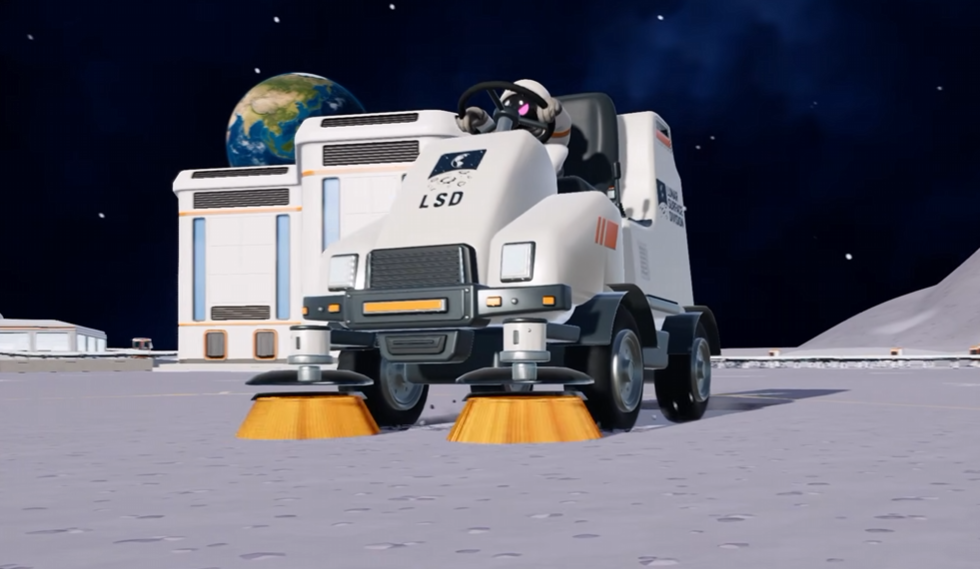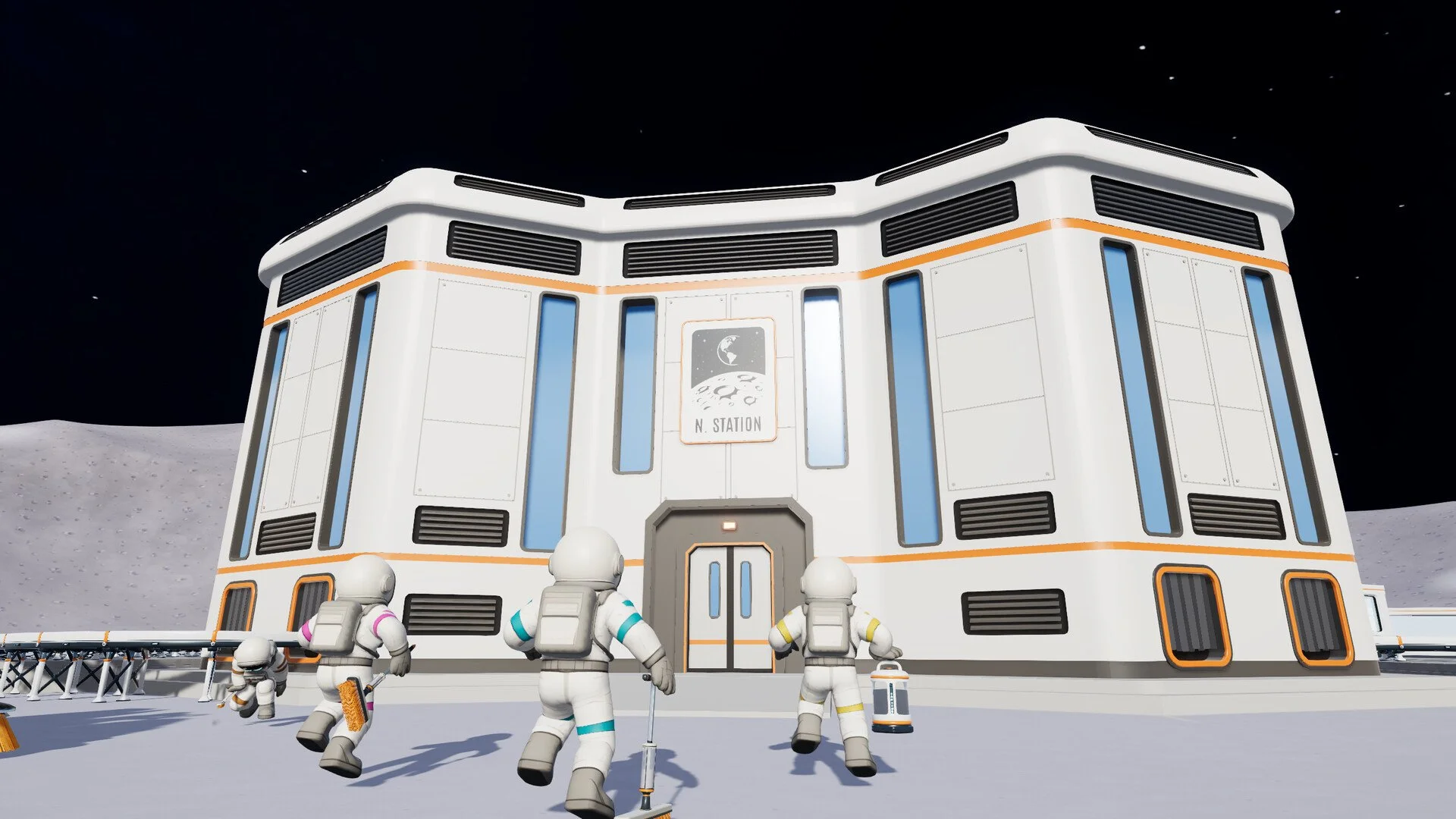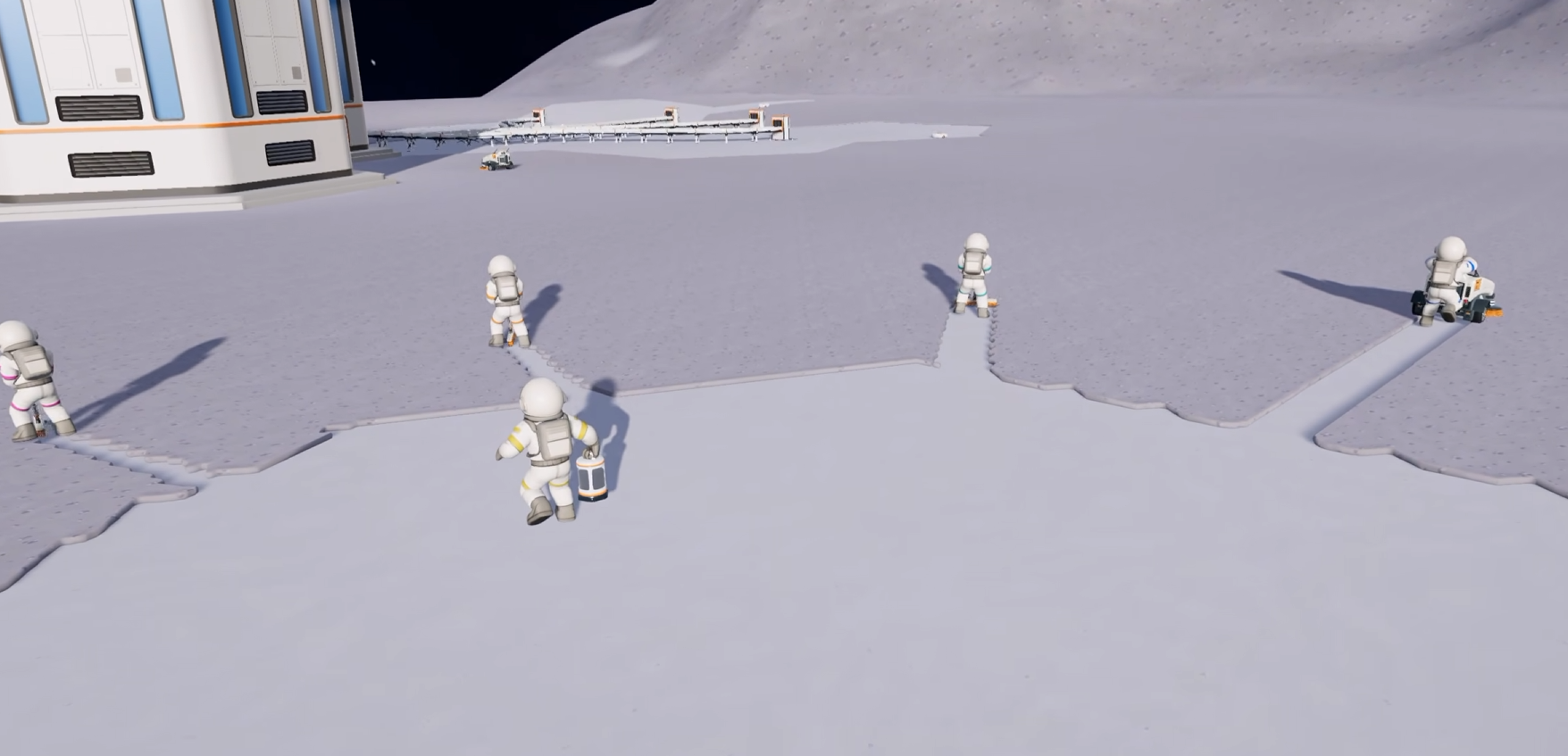
Once you've bought the Mega Vacuum Rover, unlocked JOONAS, and started producing Moonstone, Moon Sweepers becomes a very different game. Money isn't necessarily your biggest problem anymore. You're trying to clean an enormous amount of lunar terrain while keeping robots, conveyors, and production machines working together. It's surprisingly easy to spend thousands on more equipment without making much additional progress, so here's how I'd approach the late game once the major unlocks are out of the way.
Jump To Section:
What to Prioritize in the Late Game
Scaling JOONAS and Capsule Catchers
When to Skip Moonstone Production
Building a Better Moonstone Factory
Using Vehicles and Robot Vacuums
Finding Your Biggest Bottleneck
What Should You Prioritize in the Moon Sweepers Late Game?
By the late game, you should have access to much stronger cleaning equipment, production machinery, and automated systems. The challenge is making those purchases contribute to actual cleaning progress.
I'd separate your late-game operation into two goals: clearing more of the Moon and earning enough money to keep expanding.
They're related, but they aren't the same thing.
A complicated factory might produce valuable Moonstone while doing little to improve how quickly your cleaners reach untouched ground. On the other hand, a large fleet of JOONAS units might collect plenty of dust but struggle to unload it through an overloaded Capsule Catcher.
My main priority would be getting automated dust collection working reliably, then improving the selling and processing systems only when they can keep up with the amount being collected.
That approach gives you something useful to measure after every major purchase: whether more lunar terrain is actually being cleaned.
How to Scale JOONAS and Capsule Catchers
JOONAS costs $20,000 and provides mobile automated cleaning. Unlike a stationary Robot Vacuum, it can move between dirty areas rather than remaining inside a small fixed cleaning zone.
Patch 1.0.4 made JOONAS considerably more useful by improving its cleaning behavior, increasing its cleaning speed, and allowing it to continue working when players move farther away.
Once you can afford several units, the temptation is to keep purchasing more and let them handle the Moon.
The problem is that collecting dust and delivering it are two separate jobs.
More JOONAS Units Don't Automatically Mean Faster Deliveries
JOONAS launches collected dust capsules toward the nearest Capsule Catcher, which costs $1,500.
That nearest-Catcher behavior is particularly important when you're expanding. JOONAS doesn't intelligently divide its deliveries among all your available Catchers simply because you've built several.
If multiple robots keep targeting the same receiving point, its outgoing Conveyor can become overwhelmed while another Catcher receives very little.
Adding another Catcher beside the first one isn't necessarily going to solve that.
Instead, think about which Catcher is physically closest to the robots you're deploying. If you want to distribute incoming capsules across different routes, the placement of those receiving points matters.
I'd add JOONAS units in manageable groups and check their unloading behavior before purchasing the next batch. If capsules are already accumulating at the receiver, more robots will only increase the amount waiting to be sold.
Our Moon Sweepers JOONAS Guide covers the robot itself, including how it collects dust and delivers capsules.
When Should You Skip Moonstone Production?
Turning raw dust into more valuable materials sounds like the obvious late-game strategy, but processing every capsule isn't always the most practical option.
A Pressure Chamber converts dust into Moon Sand, while the Stone Press uses dust and sand to create Moonstone. Those products are worth more than untreated lunar dust, but every processing stage introduces another place where materials can stop moving.
When you've got multiple JOONAS units launching capsules, that becomes a genuine concern.
One useful approach is to maintain a direct-selling route from your Capsule Catchers to the station intake, without forcing every shipment through your production machinery.
Raw dust sells for less, but that route avoids the extra processing time and electricity requirements.
I'd use direct selling when your main objective is expanding the cleaning fleet and you've already got a reliable way to earn money. If the factory is slowing everything down, bypassing it lets collected dust continue generating income instead of piling up.
You can still operate a separate Moonstone production line. The two approaches don't have to compete for every capsule.
For help setting up those delivery connections, see our Moon Sweepers Auto Selling Guide.
How to Build a Better Moonstone Factory
If you do want to keep processing dust, understanding what your machines can consume is more useful than filling a platform with Stone Presses and hoping the conveyors distribute everything evenly.
The Pressure Chamber and Stone Press have different production requirements:
| Machine | Production | Power |
|---|---|---|
| Pressure Chamber | Up to 5 kg of dust converted into sand every 12 seconds | 10 kW |
| Stone Press | 1 kg dust + 1 kg sand into 2 kg Moonstone every 6 seconds | 18 kW |
A Pressure Chamber can theoretically convert up to 25 kg of dust into Moon Sand per minute.
Meanwhile, one Stone Press can consume 10 kg of sand and another 10 kg of raw dust per minute when operating continuously.
That gives us a useful starting point for designing a production line.
Start With One Pressure Chamber and Two Stone Presses
Rather than constructing a massive processing facility immediately, I'd begin by balancing one Pressure Chamber with two Stone Presses.
At full Stone Press production speed, this setup requires:
- 20 kg of Moon Sand per minute to supply both Stone Presses.
- 20 kg of additional raw dust per minute for the presses themselves.
- 20 kg of raw dust per minute converted into sand by the Pressure Chamber.
That's 40 kg of incoming raw dust per minute to keep both Stone Presses working continuously, assuming the sand output is delivered correctly.
The two presses could then produce up to 40 kg of Moonstone per minute.
These are calculated machine capacities, not guaranteed factory output. Your actual production still depends on dust deliveries, conveyor throughput, and electricity.
But the calculation immediately reveals a common setup problem: Stone Presses need both sand and untreated dust. Sending all incoming dust through the Pressure Chamber leaves nothing available for the second Stone Press ingredient.
Make sure your conveyor network supplies both material paths.
Don't Overlook the Electricity Cost
One Pressure Chamber and two Stone Presses require 46 kW of power while all three machines are operating.
That's 10 kW for the chamber and 18 kW for each press, before accounting for any additional powered equipment.
Your solar generation needs to cover that demand during the day, while stored energy must support nighttime operation if you want the factory running continuously.
Since solar output stops at night, having enough generation for daylight production doesn't automatically mean your factory will survive the entire dark period.
I'd test one complete day-and-night production cycle before copying the setup across your base. If the original line shuts down when stored energy runs out, multiplying the same design will only multiply the power problem.
Do You Still Need Vehicles and Robot Vacuums?
Even with several JOONAS units operating, your other cleaning machines still have a role.
The Mega Vacuum Rover costs $6,000 and has a 4-meter intake with 3,000 kg of starting storage. It's useful when you want to personally clear a large area rather than leave everything to automated cleaners.
Its Suction Control also lets you trade driving speed for wider cleaning coverage.
I'd use wider suction when actively clearing untouched ground and favor movement speed when traveling between distant areas. There's little reason to spend the journey to a new cleaning location moving at your slowest setting if you're not collecting anything along the way.
The Robot Vacuum Mk II is different. At $500, it cleans a fixed area of 37 hexes around its dock.
That's useful for assigning a machine to a defined patch while you concentrate elsewhere. However, its cleaning work is limited to that area, so buying additional docks without enough untouched terrain inside their coverage doesn't accomplish much.
In a larger operation, I'd use the Mega Vacuum Rover for active cleaning sessions, stationary vacuums for suitable fixed areas, and JOONAS for broader autonomous cleanup.
They don't need to compete for the same patch of ground.
How to Tell What's Slowing Down Your Late-Game Setup
Before buying another expensive machine, spend a moment checking what your current operation is doing.
The location where materials stop moving is often more useful than the number of machines you own.
| What You're Seeing | What to Check Next |
|---|---|
| JOONAS capsules gathering at a Catcher | Outgoing Conveyor capacity and destination |
| Stone Presses waiting despite plenty of dust | Moon Sand supply and both machine inputs |
| Processing stops after dark | Stored electricity and total machine demand |
| Robot Vacuum isn't collecting anymore | Whether its fixed cleaning area is already clear |
| Money is increasing but cleanup barely advances | How many cleaners are actively reaching dusty terrain |
That last situation is the one I'd pay the most attention to in the endgame.
Moon Sweepers has an enormous amount of terrain to clear, and eventually you can reach a point where you have enough money to buy more equipment but still aren't making much progress toward cleaning the Moon.
When that happens, I'd stop improving the profitability of every individual capsule and start concentrating on how much fresh ground the operation covers.
For example, purchasing another JOONAS can make more sense than building an additional processing machine if your existing conveyors are already moving everything successfully and you're no longer struggling to afford equipment.
But if the Catchers are overloaded, fix the delivery network before increasing dust collection again.
There's no universal number of JOONAS units, Capsule Catchers, or Stone Presses that guarantees the best late-game performance. Their effectiveness depends on where your cleaners are working, which Catchers receive their capsules, and how much material the rest of the system can process.
Once you've unlocked the major equipment in Moon Sweepers, I'd judge every new purchase by what it adds to the operation rather than how expensive it is. Keep JOONAS cleaning, make sure the Catchers aren't overwhelmed, process dust where it's worthwhile, and leave yourself a straightforward route for selling anything the factory can't handle. The late game is ultimately about turning all that machinery into steady progress across the lunar surface, not just building the biggest collection of machines.