NBA 2K27 Best Jumpshot: Best Shots for Every Build
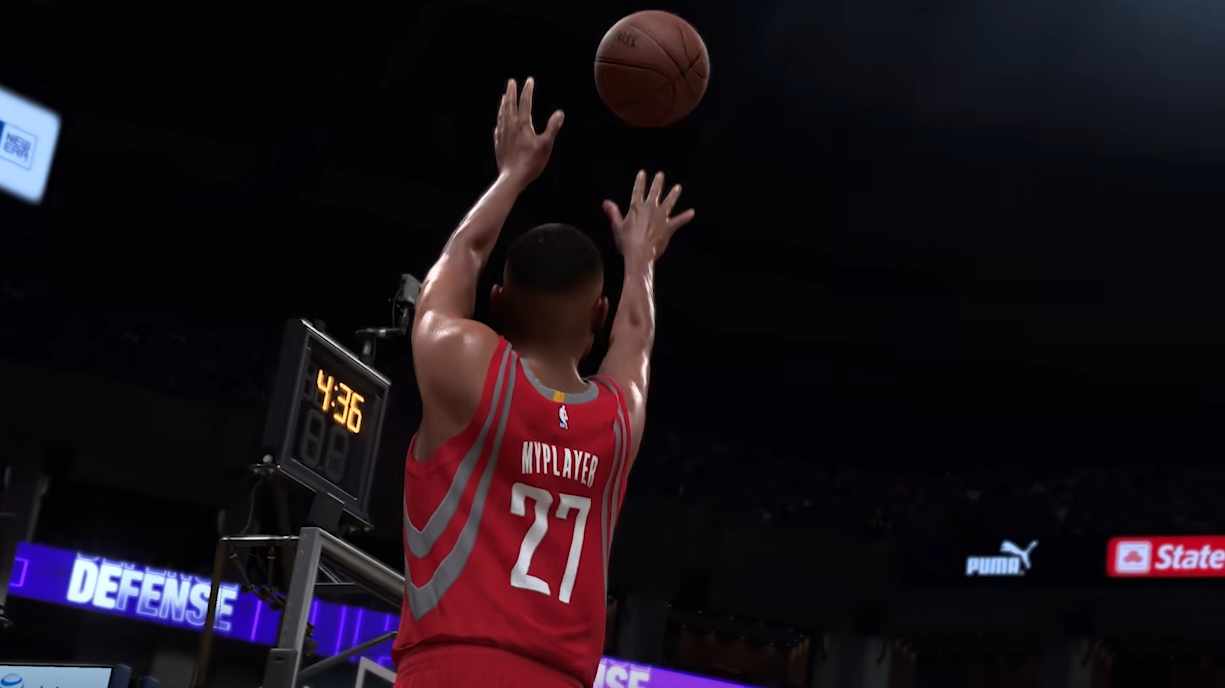
The best jumpshot in NBA 2K27 isn't simply whichever custom shot has the fastest release. Your height controls which animations are available, your Mid-Range or Three-Point rating can lock you out of specific shots, and even two good jumpers can feel completely different depending on whether you're three-hunting off the dribble or mostly catching and shooting.
There are already a handful of custom jumpshots that stand out for guards, wings, and bigs, but I think the bigger mistake is copying one without understanding why it works. The best shot for your build should get the ball out quickly enough for the looks you create while still giving you a release cue you can actually recognize consistently.
Jump To Section:
Best Jumpshots in NBA 2K27
Best Jumpshot for Guards
Best Jumpshot for 6'5"-6'9"
Best Jumpshot for Bigs
What Makes a Jumpshot Good?
Best Release Speed
Best Visual Cue
Button vs Rhythm Shooting
Why Your Jumpshot Feels Bad
How to Find Your Best Jumpshot
What Are the Best Jumpshots in NBA 2K27?
For most MyPLAYER builds, these are the three custom jumpshots I would use as the starting point based on height:
5'9"-6'4": Quentin Grimes base, Devin Booker Release 1, Darius Garland Release 2, 40% Booker / 60% Garland, maximum release speed, Release visual cue.
6'5"-6'9": Ray Allen base, Beluba Release 1, Brandon Ingram Release 2, 74% Beluba / 26% Ingram, maximum release speed.
6'10"-7'4": Dwight Powell base, Ousmane Dieng release at 100%, maximum release speed, Release visual cue.
I would not call any one of these the universal best NBA 2K27 jumpshot. The point of separating them by height is that animation availability already makes a universal answer impossible, and your shooting rating can restrict the list even further.
If you're on a 6'7" shot creator, for example, I'd start with the Ray Allen setup. If you're a 6'3" three-hunting guard, the Quentin Grimes setup makes more sense. If you're a 7-footer primarily shooting on pick-and-pops and kick-outs, start with Dwight Powell.
From there, the best jumpshot is the one you can actually time while playing your role. That's much more useful than chasing whichever combination is getting passed around on launch week.
Best Jumpshot for Guards in NBA 2K27
For builds between 5'9" and 6'4", I'd start with Quentin Grimes as the base, Devin Booker as Release 1, and Darius Garland as Release 2. Set the blend to 40% Booker and 60% Garland, use maximum speed, and begin with the visual cue at Release.
Small guards benefit the most from prioritizing release speed because their open windows are usually created through movement rather than height. You're chaining dribble animations, getting the defender to lean in one direction, stopping, and trying to shoot before they can recover.
That's also why I wouldn't evaluate this jumper by standing still in the corner and taking 50 uncontested shots. If you're building a small guard, test it the way you're actually going to score.
Create separation, stop, and shoot.
The L2/LT method in my NBA 2K27 quick stop guide is especially useful here because it lets you transition directly from full-speed movement into a planted jumper. A fast custom shot matters a lot more when you've only created a fraction of a second before the defender recovers.
There are other guard combinations worth experimenting with too. Community suggestions already include Allen Iverson with Beluba and Steph Curry, Cameron Thomas with Beluba and Curry, and different Quentin Grimes release blends.
I would treat those as alternatives rather than automatically better shots. Early 2K27 discussion is already full of players giving completely different answers to the exact same "best jumpshot" question, which tells me there isn't one secret combination everybody else has somehow missed.
Best Jumpshot for 6'5"-6'9" Builds
The 6'5" to 6'9" range is where I think NBA 2K27 gets the most interesting because those builds can fill wildly different offensive roles.
My first choice is Ray Allen base with Beluba and Brandon Ingram, blended 74% Beluba and 26% Ingram at maximum release speed.
It's a strong fit for a player who isn't purely a spot-up wing. If you're taking pull-ups, stopping after dribble moves, or creating your own three, getting into the release quickly matters.
There's also a very simple Ray Allen alternative: use Brandon Ingram for the full release rather than blending two different uppers.
I actually think that's a useful option for someone who keeps changing jumpers because nothing "feels right." If you like the Ray Allen base but struggle reading the blended upper, simplifying the release is a much smaller adjustment than throwing the entire shot away.
Another option in this height range uses Quentin Grimes as the base with different releases. That flexibility is exactly why I wouldn't present 6'5"-6'9" as having one mandatory meta shot.
A 6'7" primary ball handler should value a fast plant-to-release transition much more than a 6'9" lock whose offensive possessions mostly consist of standing ready for a kick-out.
Same height category, completely different definition of "best."
Best Jumpshot for Bigs in NBA 2K27
For builds from 6'10" through 7'4", the best starting setup is Dwight Powell base with Ousmane Dieng at 100% for the release, maximum release speed, and the Release visual cue.
I wouldn't intentionally choose a slow shot simply because you're tall.
Your height already makes it harder for smaller defenders to bother the release, but a slow animation can erase that advantage when a help defender is rotating back toward you. On a pick-and-pop, for example, you're often working with the time between the defender collapsing into the paint and realizing you've been left alone outside.
That doesn't mean speed should be your only concern. A big generally gets more catch-and-shoot opportunities than a primary guard, so having a very obvious release cue can be worth more than shaving every possible millisecond off the animation.
My rule for a big is simple: make the shot fast enough that normal closeouts don't erase open looks, then prioritize whichever animation you can read most consistently.
What Actually Makes a Jumpshot Good in NBA 2K27?
This is the part that gets lost in most best jumpshot lists.
A custom jumper can be evaluated using more than the animation grades shown in the creator. Actual jumpshot testing can look at release speed, the size of the green window, how often shots green throughout that window, the stronger area near its center, and even how often perfectly centered attempts convert.
That gives us several different things to care about.
Release speed is how quickly you can reach a timing capable of producing a green. This is especially important when you're creating small shooting windows against another player.
Green window is the total range of timing where the shot has a chance to green.
Total green rate tells you how frequently attempts across that entire green window actually go in.
The inner portion of the window matters too because shots can become much more reliable around the center than they are near the edges.
And peak green rate answers another question entirely: when the shot is timed right in the heart of the window, how reliable can it actually be?
This is why saying "use the fastest jumpshot" is incomplete. Imagine one jumper gets out slightly faster but becomes extremely unforgiving if you're a few milliseconds off, while another releases just behind it but gives you noticeably more room for imperfect timing. Which one is better depends on what you're trying to accomplish.
For an elite guard trying to get shots off against tight contests, that extra speed may be worth it. For most players taking open threes, I'd rather have slightly more forgiveness if the tradeoff in speed is small.
What Release Speed Should You Use?
I'd start the recommended jumpshots at maximum release speed, particularly on guards and shot-creating wings.
But I don't think maximum speed should be treated like a commandment.
NBA 2K27's custom jumpers are already very quick compared with the previous game. Even reducing the release speed can still leave you with a fairly fast animation, so there's room to adjust if max speed makes your cue feel almost impossible to see.
That's the decision I would make based on how you're missing.
If you're consistently open when you start the shot but getting contested before the release, I'd want a faster animation.
If you're getting completely open looks but constantly bouncing between early and late timing, your problem probably isn't that the shot needs to be even faster. You may actually benefit from slowing it slightly or adjusting the visual cue until the animation becomes readable.
The fastest jumpshot you can't time isn't the best jumpshot.
The best jumpshot is the fastest one you can time reliably.
What Is the Best Visual Cue for NBA 2K27 Jumpshots?
I would start on Release.
NBA 2K27's custom jumpers can come out extremely quickly, and players accustomed to timing around Push can find that the animation reaches that point much sooner than expected.
Release gives you a later visual reference, which can make the faster custom jumpers easier to read while you're adjusting to the new shooting pace.
That doesn't mean Release automatically makes the jumper more accurate. The important thing is matching the timing setting to the part of the animation your eyes naturally recognize.
I would also avoid changing everything simultaneously.
If a jumper feels slightly early, don't immediately replace the base, change both releases, move the blend, lower the speed, and change your visual cue. At that point you have no idea what actually fixed the problem.
Find a base and release combination you like, then fine-tune the cue around it.
Does the Best Jumpshot Change for Button or Rhythm Shooting?
This is another reason I wouldn't blindly copy somebody else's jumper without knowing how they shoot.
NBA 2K27 gives Button Shooting and Rhythm Shooting the same base shooting-window size, while shooting with the meter disabled provides an accuracy bonus to both methods. So one method doesn't simply receive a bigger fundamental timing window than the other.
The difficulty comes from how you execute the shot.
Rhythm Shooting now asks you to handle both timing and the rhythm of the Pro Stick movement. You have to hit the timing window while also matching the movement of the player's animation, which gives it a higher execution requirement.
It does have interesting advantages for players who take a lot of moving shots, stepbacks, pull-ups, and other attempts created directly through the stick.
Button Shooting is more straightforward, particularly if your offense is built around catch-and-shoot opportunities or quick stops. You have one primary release judgment instead of coordinating the additional rhythm input.
I wouldn't select an entirely different base solely because you switch between Button and Rhythm Shooting, but I would absolutely judge the release differently. A jumper that gives you a clear visual rhythm may feel much better with the Pro Stick, while a button shooter may simply want the cleanest, most repeatable release point possible.
Quick Trigger Matters More Than It Looks
Your custom jumpshot also doesn't exist in isolation from the rest of your build.
NBA 2K27 ties its No-Dip Shooting behavior to the Quick Trigger badge. Higher Quick Trigger levels improve the speed and consistency of those shots, while a low level can leave the same basic shooting situation feeling slower and less reliable.
That's important because it creates a trap when comparing yourself with another build.
You can copy somebody's exact custom jumper and still wonder why their shot seems cleaner or faster in actual games. The animation is only one part of the equation; badge level and the circumstances leading into the attempt can change what you're experiencing.
I would always check your build before deciding the custom jumpshot itself is broken.
Why Does My Jumpshot Feel Bad?
Instead of immediately searching for another "best NBA 2K27 jumpshot," I'd diagnose what is actually going wrong.
If you're being contested before the ball comes out, the release may be too slow for the type of shots you're creating.
If you're open but alternating between early and late releases, you probably have a timing or visual-cue problem rather than a speed problem.
If the jumpshot everybody recommends doesn't appear in your creator, check your build height and shooting-rating requirements. Different bases and releases are restricted by both.
If your shot works perfectly while standing still but falls apart after dribbling, practice it after actual game actions rather than only from a stationary position.
If you're using the same jumper you loved in NBA 2K26 and can't understand why it feels wrong, don't assume the game is broken. Early community discussion already includes players discovering that familiar bases from last year don't necessarily have the same value in 2K27. Matt Ryan, for example, has already drawn complaints about its green window this year despite players liking it previously.
That's useful information because it shows why carrying an old meta shot into a new game can be misleading. The name of the animation is the same; the value of the animation doesn't have to be.
Other NBA 2K27 Jumpshots Players Are Using
If none of the three main setups work for you, there are already several other combinations circulating among NBA 2K27 players.
Those include Allen Iverson base with Beluba and Steph Curry at a 54/46 blend, Ray Allen with 100% Brandon Ingram, Cameron Thomas with Beluba and Steph Curry at 58/42, Carmelo Anthony base with Rudy Gay and Saddiq Bey at 57/43, and various Quentin Grimes combinations.
I would not dump all of these into the creator and spend an hour changing shots after every miss.
What I find more useful about the community discussion is how little consensus there actually is. One player will recommend an animation while another says the same base is terrible this year. That's exactly why I would use community shots as candidates rather than proof that one combination is objectively the best.
Start with a good candidate for your build, then judge the timing yourself.
How I Would Find the Best Jumpshot for Any Build
If I were setting up a new MyPLAYER, I would do this in a pretty specific order.
First, filter out anything my height and shooting rating can't equip. There's no point comparing shots that aren't actually options.
Second, pick a proven base for that height range. For the builds covered here, that means starting with Quentin Grimes for a small guard, Ray Allen for a 6'5"-6'9" build, or Dwight Powell for a big.
Third, use the recommended release and blend as the baseline rather than immediately modifying it.
Fourth, test the shot in situations your build actually creates. A guard should be shooting after dribbles and stops. A wing should mix self-created and catch-and-shoot attempts. A center should practice from the pick-and-pop and common spot-up locations.
Fifth, identify the failure before changing anything.
Too slow? Increase speed or choose a quicker shot.
Can't see the timing? Adjust the visual cue or try a cleaner release.
Easy to time but misses too often around the edges? That's where actual green-window and make-rate data becomes more useful than creator grades.
Finally, once you find something good, stop changing it constantly.
Muscle memory is part of what makes a jumpshot consistent. If you replace your custom shot every two games because somebody posted a new "DEMI GOD 100% GREEN WINDOW" jumper, you're constantly resetting the exact timing you're trying to learn.
So, What Is the Best Overall Jumpshot?
If I had to pick one setup from the current options for the broadest group of players, I'd choose Ray Allen base with Beluba and Brandon Ingram at a 74/26 blend for 6'5"-6'9" builds.
That's not because Ray Allen has secretly solved NBA 2K27 shooting. It's because that height range supports a huge number of common MyPLAYER styles, and the jumper is fast enough for immediate shots after dribble moves while still being useful for normal catch-and-shoot opportunities.
For a small guard, I'd still take Quentin Grimes. For a true big, I'd take Dwight Powell.
And that's ultimately the answer to the best jumpshot question in NBA 2K27: there isn't one shot everyone should equip. There are a handful of strong starting points, and the best one is determined by what your build can unlock, how quickly you need the shot to come out, and whether you can consistently recognize the release.
Get those three things right and you're much closer to finding your actual best jumper than you are by copying the newest combination you see online.