Star Wars Zero Company Best Specializations Tier List
Scout is my pick for the best specialization in Star Wars Zero Company, with Scoundrel close behind. I'm ranking the eight standard classes by how much they improve an entire four-Operator squad rather than just their personal damage, which heavily favors specializations that create Advantage, guaranteed crits, assists, or other opportunities the rest of the team can exploit.
Jump To Section:
Specialization Tier List
Why Scout Is Best
Scoundrel
A Tier Specializations
B and C Tier
How To Use The Tier List
Star Wars Zero Company Specialization Tier List
| Tier | Specializations |
|---|---|
| S | Scout, Scoundrel |
| A | Gunslinger, Medic, Sharpshooter |
| B | Assault, Heavy |
| C | Soldier |
My full ranking is Scout first, Scoundrel second, Gunslinger third, Medic fourth, Sharpshooter fifth, Assault sixth, Heavy seventh, and Soldier eighth.
That doesn't mean Soldier is unusable or that every squad should contain Scout and Scoundrel. Zero Company is built around combining different roles. I'm ranking how difficult each specialization's contribution is to replace, how many different teammates can benefit from it, and whether the class creates opportunities beyond simply dealing its own damage.
Scout Is the Best Specialization Overall
Scout takes my number-one spot because Advantage is one of the few resources that effectively belongs to the entire squad.
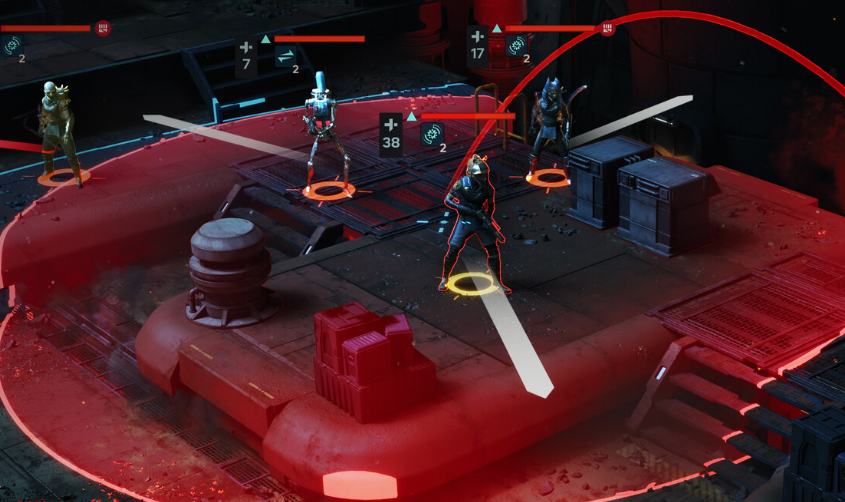
Combat Recon lets Scout survey enemies and generate Advantage for the targets it detects. Advantage can then be spent on Special Actions, which means the value Scout creates isn't locked to Scout itself. You can generate the resource with one Operator and spend it wherever the strongest opportunity exists.
That's a huge distinction for me. A class that deals more damage makes one character better. Scout can make the next decision available to all four characters better.
It also means Scout doesn't need to be the star of a mission to justify its slot. If another Operator has the ability that matters most on a particular turn, Scout can help enable that character rather than competing with them.
I think this becomes more valuable rather than less valuable as the campaign progresses. As your roster develops and you gain more strong Special Actions, you're also gaining more worthwhile places to spend the Advantage Scout generates.
Scout's Ambush Ultimate gives the class its own way to convert Advantage into damage when necessary, so you're not completely dependent on everybody else either. The important part is knowing when not to spend that resource on Scout. Sometimes the best Scout turn is the one that enables somebody else's Ultimate.
That flexibility is why I'd put Scout over Medic. Medic is excellent when something goes wrong. Scout helps you produce stronger turns before it does.
Scoundrel Is the Best Setup Specialization
Scoundrel is second, but I think it's probably the easiest specialization to underestimate if you're staring at individual damage numbers.
Identify Weakness makes an enemy Vulnerable so the next damaging attack against them is guaranteed to critically hit. Easy Mark creates an Assist opportunity when an ally attacks the marked enemy, while Scoundrel's own assists deal additional damage. Its attacks also gain Defense Penetration.
The result is a class that doesn't need to personally own the strongest attack on the team. Scoundrel can take the strongest attack somebody else already has and make the setup around it better.
That's especially valuable against priority targets. If I'm facing one enemy that absolutely needs to disappear this turn, a guaranteed critical hit is more interesting to me than simply adding another normal attacker to the firing line.
Scoundrel also has less of a rigid combat identity than some of the other classes. Heavy wants enemies interacting with the frontline. Sharpshooter wants range. Assault wants to close distance. Scoundrel mostly wants an opportunity worth exploiting, which is a condition that shows up in nearly every mission.
Weapon choice matters more here than it does for some specializations because I don't want Scoundrel spending so much AP firing that it can't use the setup tools that justify bringing the class in the first place. I've broken that side of the build down separately in my Star Wars Zero Company best Scoundrel weapon guide.
Gunslinger, Medic, and Sharpshooter Are A Tier
Gunslinger is the highest specialization in A Tier and my favorite pure offensive class.
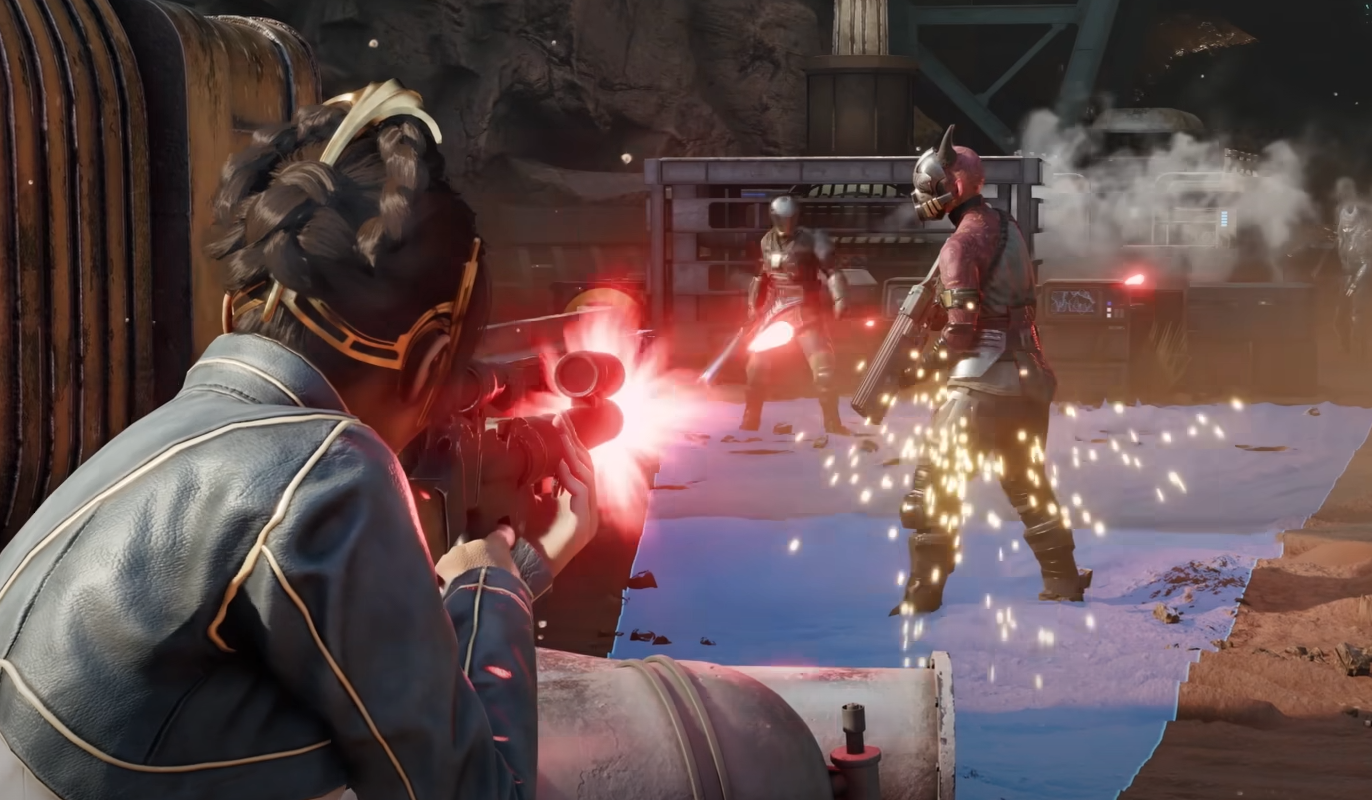
The reason is action density. Gunslinger is built around attacking repeatedly rather than placing all of its value into one shot. Open Fire provides multiple attacks, Quick Draw adds another sidearm attack, Keen Eye improves ranged Critical Chance, and Onslaught rewards successive blaster attacks during the same turn.
That creates more opportunities to finish weakened enemies rather than wasting a high-damage attack on something with almost no health remaining. Multiple attacks can also be concentrated into the same target when you actually need focused damage, so the class isn't restricted to cleaning up weak enemies.
I'd take Gunslinger over Medic in a squad that's already surviving comfortably. Removing an enemy before it gets another action is effectively its own form of protection, and Gunslinger gives you a lot of control over how that damage gets distributed.
Medic is fourth overall, which is considerably lower than I'd rank it for a blind Hawks build. That's intentional.
As an individual specialization, Medic is fantastic. It improves Medpacs, can Rally allies more effectively, heals and buffs the squad, and provides an obvious safety net when an encounter starts going badly. On high difficulty or with Permadeath enabled, I could easily justify moving it into S Tier.
The reason I don't universally rank it there is that healing is inherently more reactive than what Scout or Scoundrel provides. If your squad is controlling the battlefield and avoiding serious damage, some of Medic's strongest advantages aren't being asked to solve anything. Scout generating Advantage or Scoundrel creating a guaranteed crit remains useful while you're already winning.
That's not a knock against Medic. It's actually why I think its ranking changes more with difficulty than any other specialization.
Sharpshooter takes fifth. Accurate long-range attacks, Overwatch, and dependable priority-target damage are exactly what I want from a tactical sniper, and the class has one of the clearest jobs in Zero Company.
What keeps it out of the top four is that its value is more self-contained. Sharpshooter is excellent at solving the enemy standing at the other end of the map. Scout and Scoundrel can instead create opportunities that change what several different Operators are capable of doing that turn.
Assault and Heavy Are B Tier, Soldier Is C Tier
Assault is sixth, and this is probably the placement I'd expect people to disagree with most.
The class has mobility, close-range damage, and tools for attacking enemies around cover. On maps where closing distance quickly or forcing enemies out of defensive positions is the main problem, Assault can obviously be one of the most useful characters available.
That's also why I leave it in B Tier. The specialization becomes more dependent on the geometry of the encounter than my higher-ranked options. Scout generating Advantage or Medic keeping someone alive doesn't require Hawks—or any other Assault Operator—to reach the right part of the battlefield first.
Heavy is seventh. Taunting enemies, improving defensive stats, counterattacking, and increasing survivability gives the class a real frontline identity, and there are squads where having someone deliberately absorb pressure makes everything behind them easier to operate.
My issue with Heavy is that a tank is at its most valuable when enemies are actually interacting with the tank the way you planned. The higher-ranked support classes create value without requiring as much enemy cooperation.
Soldier lands last, although it's probably the specialization I'd be least worried about seeing at the bottom of a tier list.
Soldier mixes gunfire, explosives, and a melee attack capable of dazing enemies. That's a perfectly useful package. The problem is that being an all-rounder becomes less valuable once you have enough Operators to deliberately build specialists into the squad.
If I specifically need healing, I want Medic. If I need Advantage, Scout solves it directly. If I want a priority target set up for a huge hit, Scoundrel does that. If I need concentrated ranged offense, Sharpshooter or Gunslinger gives me a clearer answer.
Soldier's flexibility is therefore strongest when you don't yet know exactly what the slot needs to accomplish. Once you do know, there's usually another specialization whose entire kit is designed around solving that exact problem.
Don't Build a Squad by Taking the Four Highest Classes
This is the most important caveat to the entire tier list: I would not simply put Scout, Scoundrel, Gunslinger, and Medic together because they're my four highest-ranked standard specializations.
A tier list measures individual value. A squad has to solve actual battlefield problems.
Scout and Scoundrel are ranked highly because they're force multipliers, but multiplying nothing isn't particularly useful. Somebody still has to convert the Advantage, Vulnerable targets, and Assist opportunities into damage. That's where Gunslinger, Sharpshooter, Assault, or another offensive Operator can become more important to that specific composition than their tier placement suggests.
The same applies to Heavy. I rank it seventh overall, but if the other three Operators desperately need someone taking pressure away from them, Heavy can suddenly be the most important specialization in the squad.
That's the way I'd actually use these rankings: start with the difficult-to-replace tools, then cover whatever they're missing.
A Scout gives you Advantage but doesn't automatically give you healing. A Scoundrel creates a guaranteed crit but still needs somebody to deliver the attack. A Medic can keep everybody alive but won't necessarily end the threat causing the damage. The strongest teams are combinations where one specialization creates a problem for the enemy and another one cashes it in.
You Don't Have to Commit to One Specialization
Zero Company also gives you enough freedom that I wouldn't treat this ranking like a permanent character-building decision.
You can change standard specializations through Personnel once the option becomes available, and the process doesn't require you to throw away your specialization progression. If your current squad makes one of these rankings feel completely wrong, change the class rather than forcing the team to match a generic tier list.
I have the exact menu location and unlock requirements in my Star Wars Zero Company how to change class guide.
For me, though, Scout remains the best standard specialization overall. It isn't number one because it produces the biggest individual attack or gives you the largest safety net. It's number one because Advantage lets one character create options for everybody else, and in a game built around four Operators combining their turns, I value more good options over making one Operator slightly better at a job the rest of the squad can't share.