Angels Fall First Review: A Brilliantly Janky Sci-Fi War
Angels Fall First feels like a multiplayer shooter recovered from an alternate timeline where Battlefield 2142 and the original Star Wars Battlefront 2 continued evolving without battle passes, cosmetic stores, or someone trying to sell a reload animation for $14.99.
It is a large-scale science-fiction shooter covering infantry battles, tanks, mechs, aircraft, space dogfights, capital ships, boarding actions, and tactical squad commands. Most games would struggle to make 2 of those ideas work together. Angels Fall First throws all of them into the same package and, despite plenty of old-school jank, somehow makes the whole thing work.
There are rough animations, confusing menus, dated presentation, weak controller support, and moments where the screen becomes an unreadable mixture of bloom, markers, explosions, and people shooting from somewhere you cannot quite identify. The game often makes a poor first impression because it explains its enormous collection of systems with the grace of someone emptying a toolbox onto the floor.
Once it clicks, though, Angels Fall First becomes one of the most ambitious and entertaining combined-arms shooters available. It offers the kind of scale, freedom, and mechanical variety that modern multiplayer games regularly promise but rarely deliver.
What Angels Fall First Is
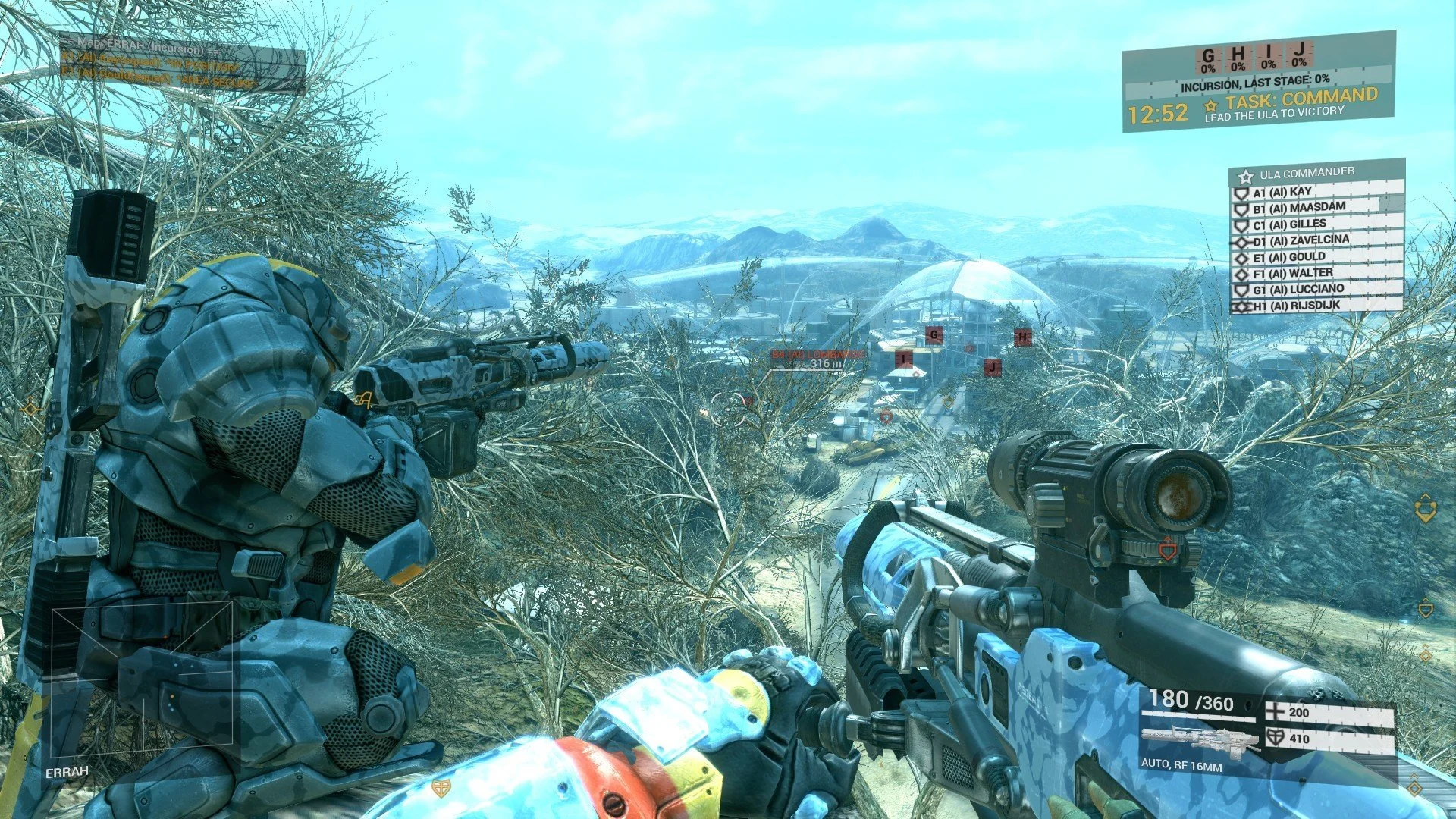
Angels Fall First is a first person combined-arms shooter where 2 factions battle across large objective-based maps. Depending on the scenario, that may involve capturing ground installations, defending fortified positions, operating armored vehicles, flying fighters, commanding capital ships, boarding enemy vessels, or sabotaging them from within.
Matches can support human players, AI soldiers, or a mixture of both. That last part is important because Angels Fall First does not become useless when the online population drops. Matches can be played offline with bots, hosted privately with friends, or filled out with AI when there are not enough people available.
The bots are not merely moving targets added to make the scoreboard look busier. They capture objectives, use vehicles, follow commands, fight through interiors, and help maintain the illusion of a much larger conflict. They are not flawless, but they are competent enough that offline matches still feel like real battles rather than target practice.
Angels Fall First is also unusually generous. Its weapons, equipment, vehicles, and customization systems are available without a maze of premium currencies or seasonal unlock tracks. The reward for playing is the match itself, which apparently used to be legal in multiplayer games.
The Scale Is Angels Fall First’s Greatest Achievement
Angels Fall First is at its best when a match starts connecting several different layers of combat.
A player might begin aboard a carrier, launch in a fighter, and join a dogfight around massive capital ships. From there, they can board an enemy vessel, fight through its corridors as infantry, sabotage critical systems, escape before the ship is destroyed, and then join the ground assault taking place elsewhere in the same scenario.
These transitions are not scripted set pieces. They are systems operating together during a live battle. The ships have interiors, important components, defensive weapons, repairable systems, and positions that can be occupied by players or AI. Boarding an enemy vessel is not a short animation followed by a separate map. The player physically enters the ship and starts causing problems inside it.
That is where Angels Fall First separates itself from the usual Battlefield comparisons. It certainly has familiar class-based infantry combat, vehicles, squads, and objective modes, but the space layer pushes it into much stranger territory.
The game sells the fantasy of participating in a full science-fiction war rather than only one carefully controlled section of it. Sometimes the player is the soldier capturing an objective. Sometimes they are the pilot providing air support. Sometimes they are standing inside a cruiser repairing damage while another player attempts to keep the entire ship pointed in a useful direction.
Very few shooters provide this much freedom within a single battle.
Space Combat Is More Than A Side Activity
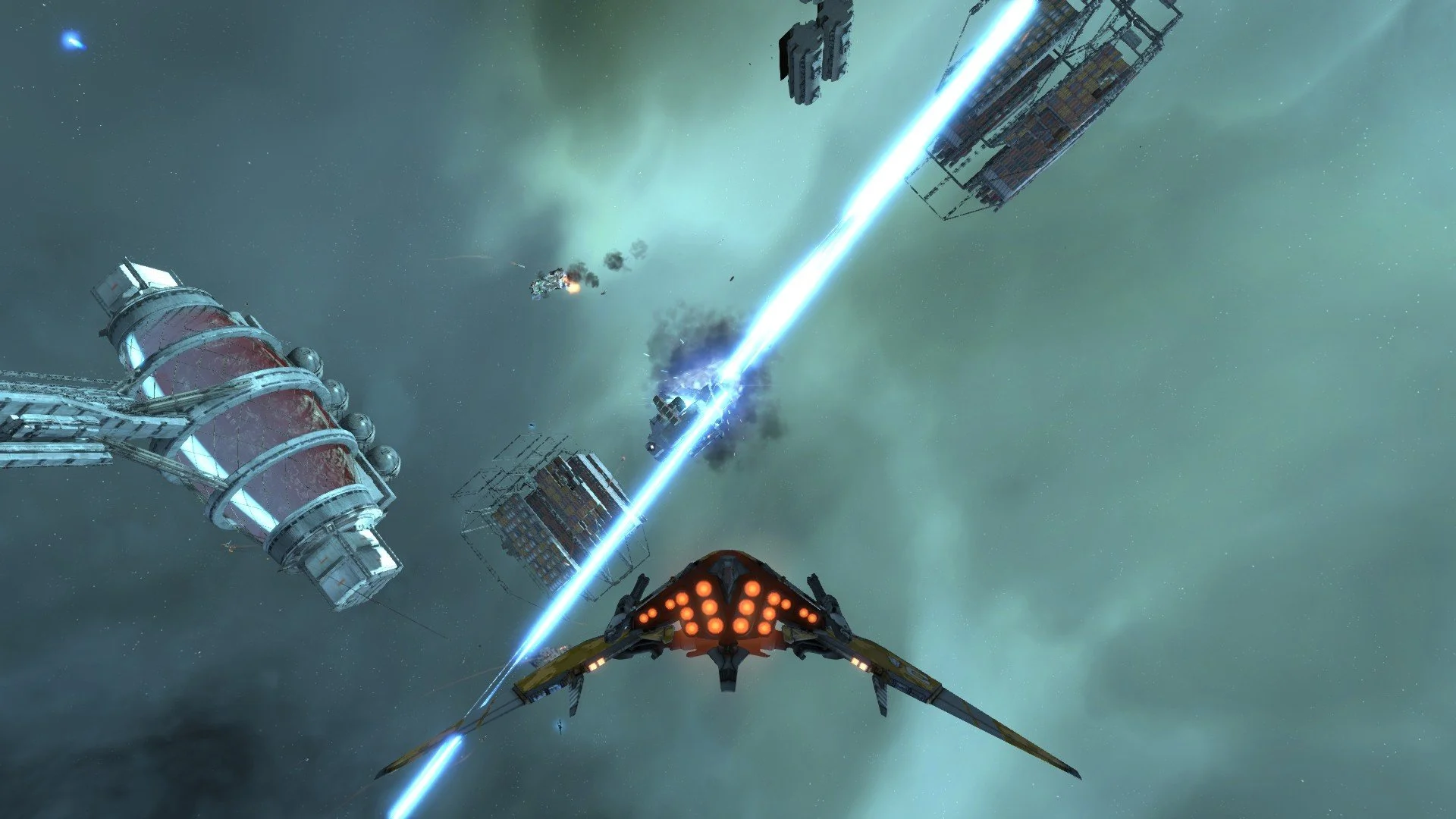
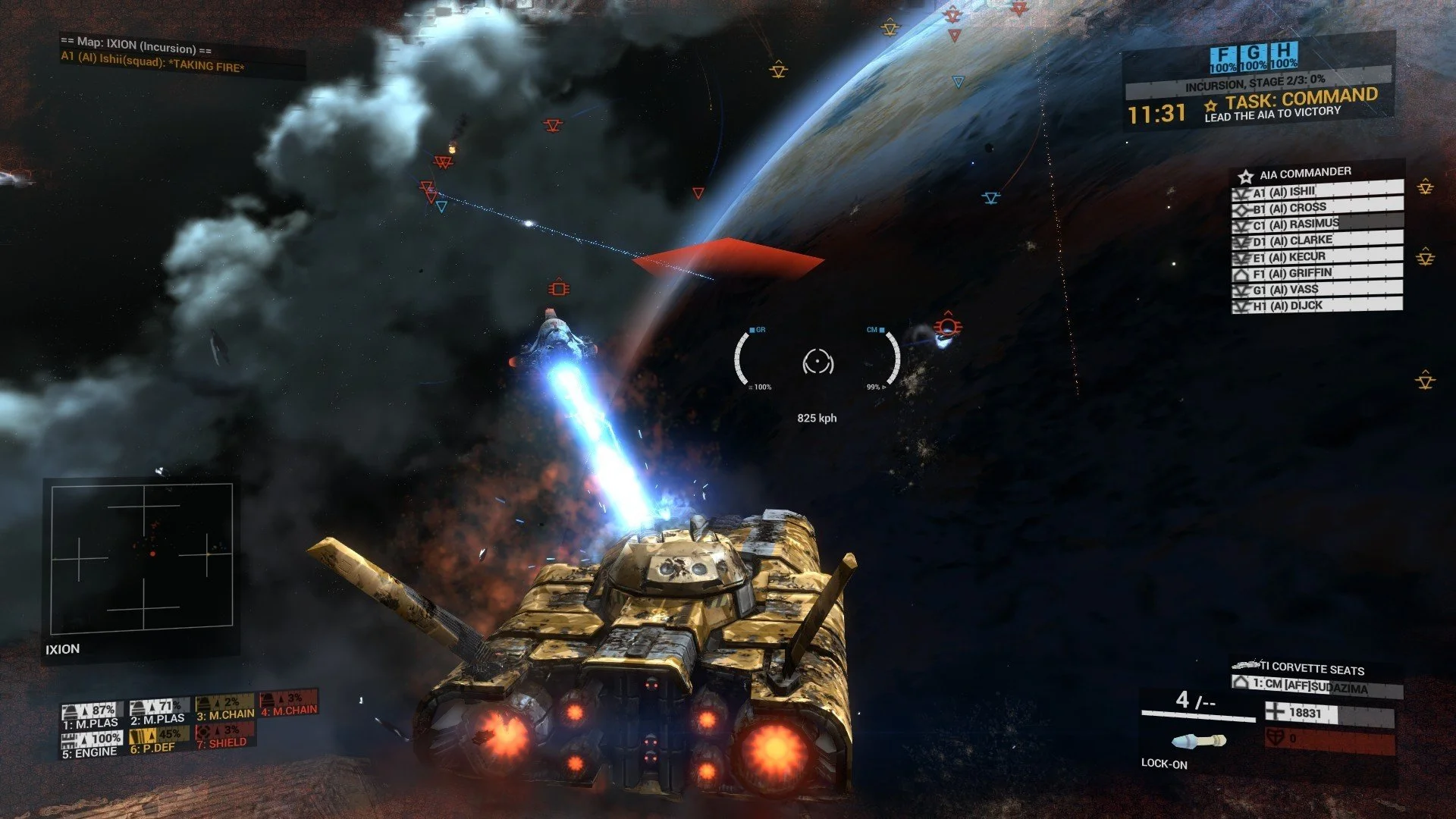
Space combat could have easily been a novelty attached to the more conventional ground battles. Instead, it is one of the strongest parts of Angels Fall First.
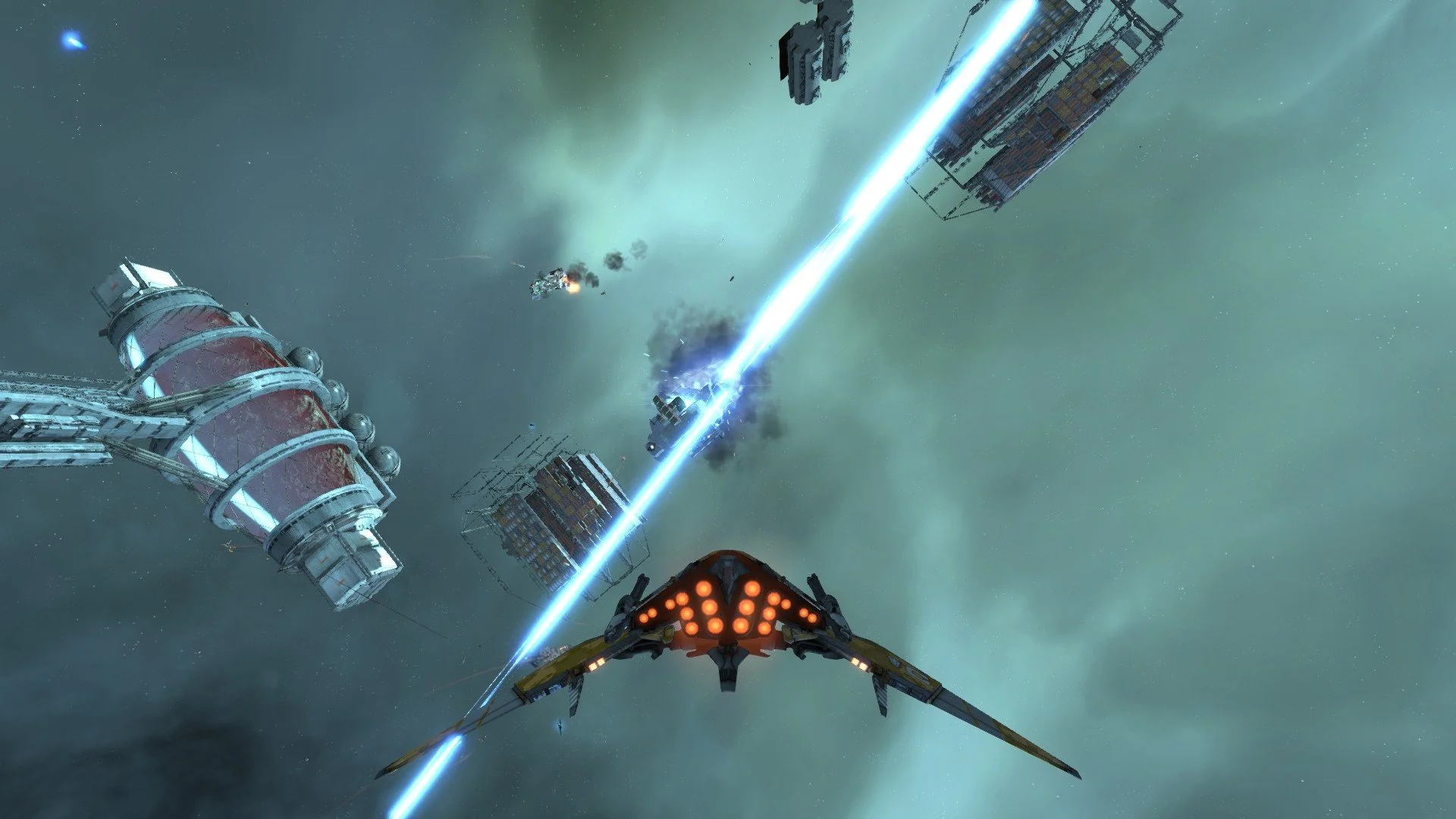
Small fighters are responsive enough for dogfights, while larger ships feel appropriately heavier. Players can attack enemy vessels directly, run bombing missions, escort transports, command larger ships, operate turrets, or use boarding craft to get soldiers inside an enemy target.
The ability to move around inside larger ships adds an important sense of physical scale. These are not vehicles represented only by a cockpit and a health bar. They are spaces where crew members can operate weapons, repair damaged systems, and fight off boarding parties.
A damaged ship can become its own miniature combat map as one team attempts to keep it operational and the other tries to destroy it from within. Looking through a window and seeing fighters and capital ships continuing the battle outside gives Angels Fall First a sense of scale that expensive modern shooters rarely attempt.
The controls take some adjustment, and the game does not always explain its spacecraft clearly. The interface can make it difficult to understand which ship performs which role or how to reach the part of the battle you want. Once those systems become familiar, however, the space scenarios are remarkable.
Ground Combat Is Messy, Heavy, And Fun
The infantry combat is more traditional, mixing classes, squads, customizable loadouts, deployable equipment, objective captures, and vehicles across large maps.
Weapons generally have a satisfying weight, particularly when the audio and hit feedback line up correctly. Headshots matter, rifles feel dangerous, and the slower pace separates Angels Fall First from shooters built around constant sliding, diving, and bouncing around corners like someone dropped a military uniform onto a pinball.
There is still movement tech, and some players will inevitably find ways to turn knives and directional jumps into crimes against balance. The broader combat is more deliberate, though. Positioning, cover, vehicles, squad movement, and objective pressure matter more than maintaining maximum velocity at all times.
The maps support several different combat styles. Some are broad combined-arms spaces where infantry must cross dangerous ground under vehicle fire. Others become close-range battles through stations, trenches, or ship interiors. The strongest maps give every role something meaningful to do.
The weaker maps can become frustrating meat grinders. Long runs between objectives, exposed approaches, excessive verticality, and unclear spawn logic occasionally make the game feel more exhausting than tactical. Angels Fall First has enough variety that one poor map does not define the experience, but the quality and readability are not completely consistent.
Customization Has Real Mechanical Depth
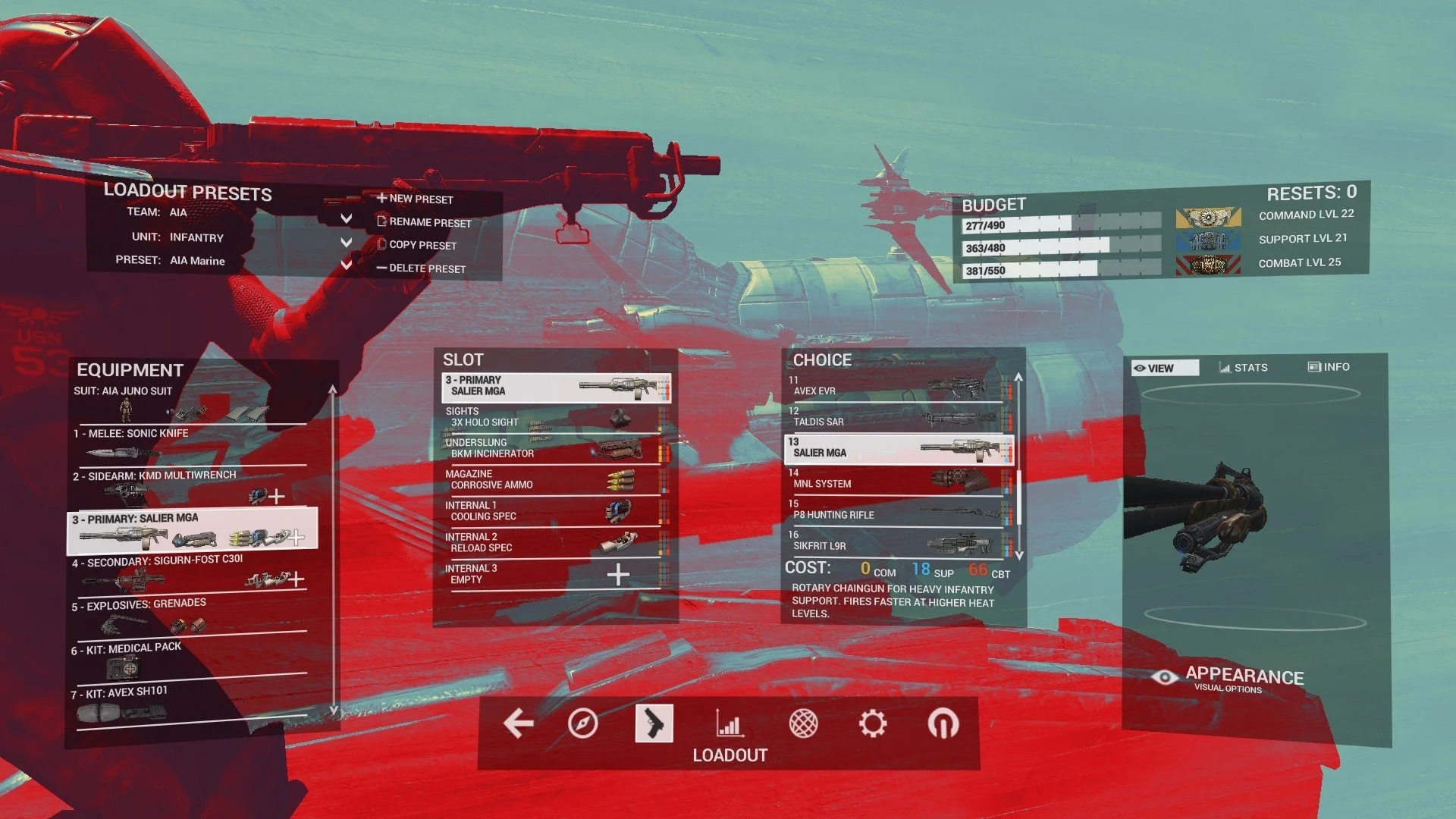
Angels Fall First provides an enormous amount of control over weapons, equipment, armor, vehicles, and cosmetic appearance.
Loadouts are not limited to selecting a premade class and choosing between 2 nearly identical rifles. Players can adjust their equipment around a specific role, trading mobility, protection, firepower, and utility. Weapons support numerous configurations, and some of the available combinations feel like the developers continued adding attachments until someone finally hid the toolbox.
Vehicles receive similar treatment. Players can modify their appearance and configure parts of their loadout without purchasing skins or opening randomized boxes. The customization exists to support experimentation rather than monetization.
That depth gives Angels Fall First significant replay value, but it also contributes to the difficult onboarding. New players are presented with a large number of menus, terms, weapons, vehicles, roles, and systems before they understand what any of them mean.
The game has a tutorial, but it cannot fully solve an interface that often feels designed for people who already know how everything works. Angels Fall First rewards curiosity, but it does not always reward it quickly.
Offline Bots Keep The Game Alive
Full offline bot support may be Angels Fall First’s most important feature.
Multiplayer-focused indie games live under the constant threat of low player counts. A brilliant shooter can become difficult to recommend once its servers empty out and matchmaking stops finding games. Angels Fall First avoids that problem by allowing bots to fill matches and participate across its major systems.
Players can host offline battles, create private matches, play with friends, and populate the remaining slots with AI. The bots fight, use vehicles, move toward objectives, and respond to commands well enough to preserve the game’s scale.
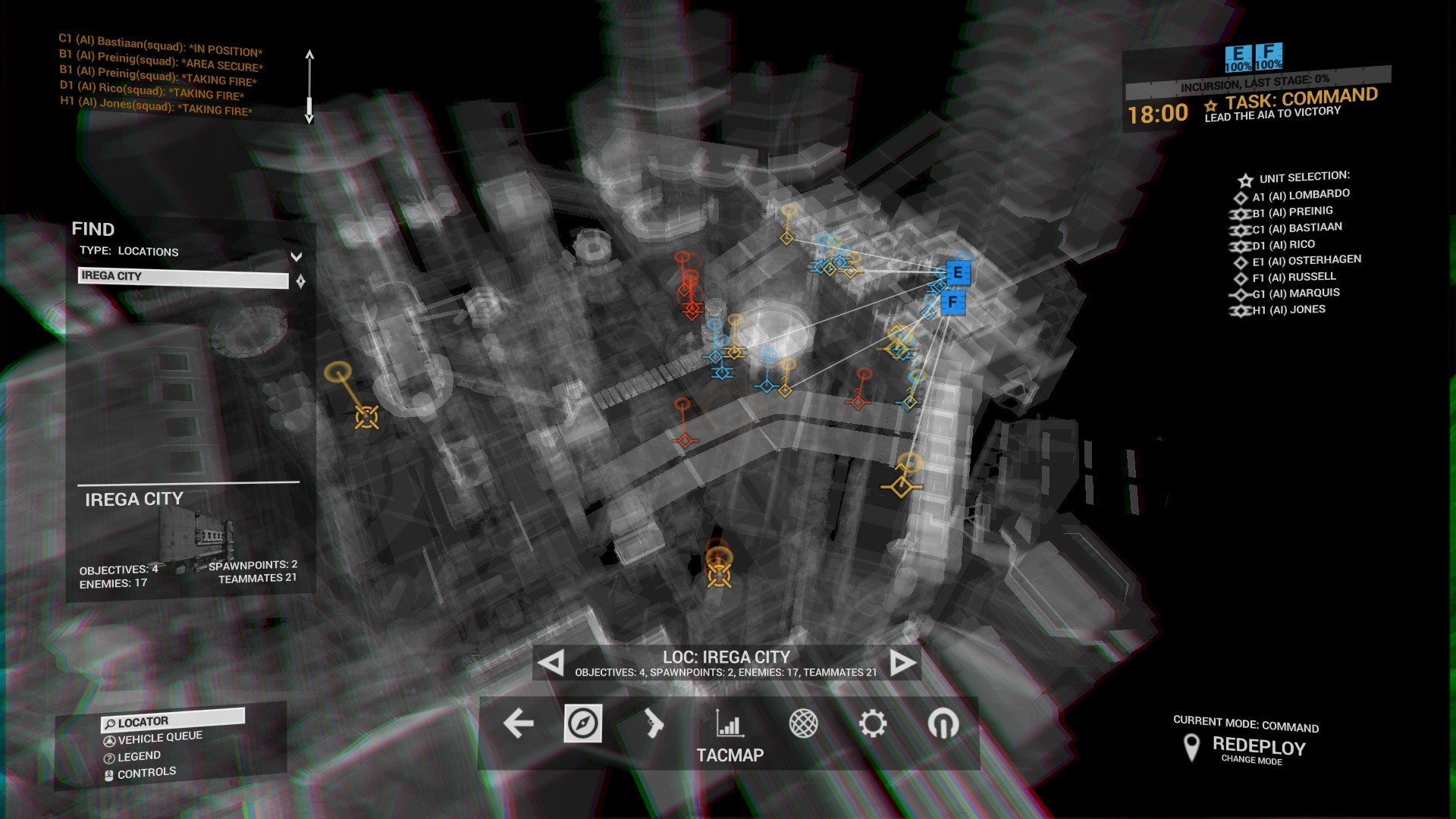
There is also a commander layer that allows orders to be issued across the battlefield. Squad members can be directed toward objectives, and players interested in the tactical side can spend more time organizing the fight rather than only chasing kills.
The AI occasionally makes strange decisions, and team balancing can feel uneven. There are matches where the opposing bots appear to have attended military academy while your own squad is studying the architectural qualities of a nearby wall. Even then, the system is far more capable than the token bot support found in many multiplayer games.
Angels Fall First remains playable regardless of whether thousands of people are online. That gives it long-term value and makes the low population much less frightening than it would be elsewhere.
The Presentation Is Stuck In Another Era
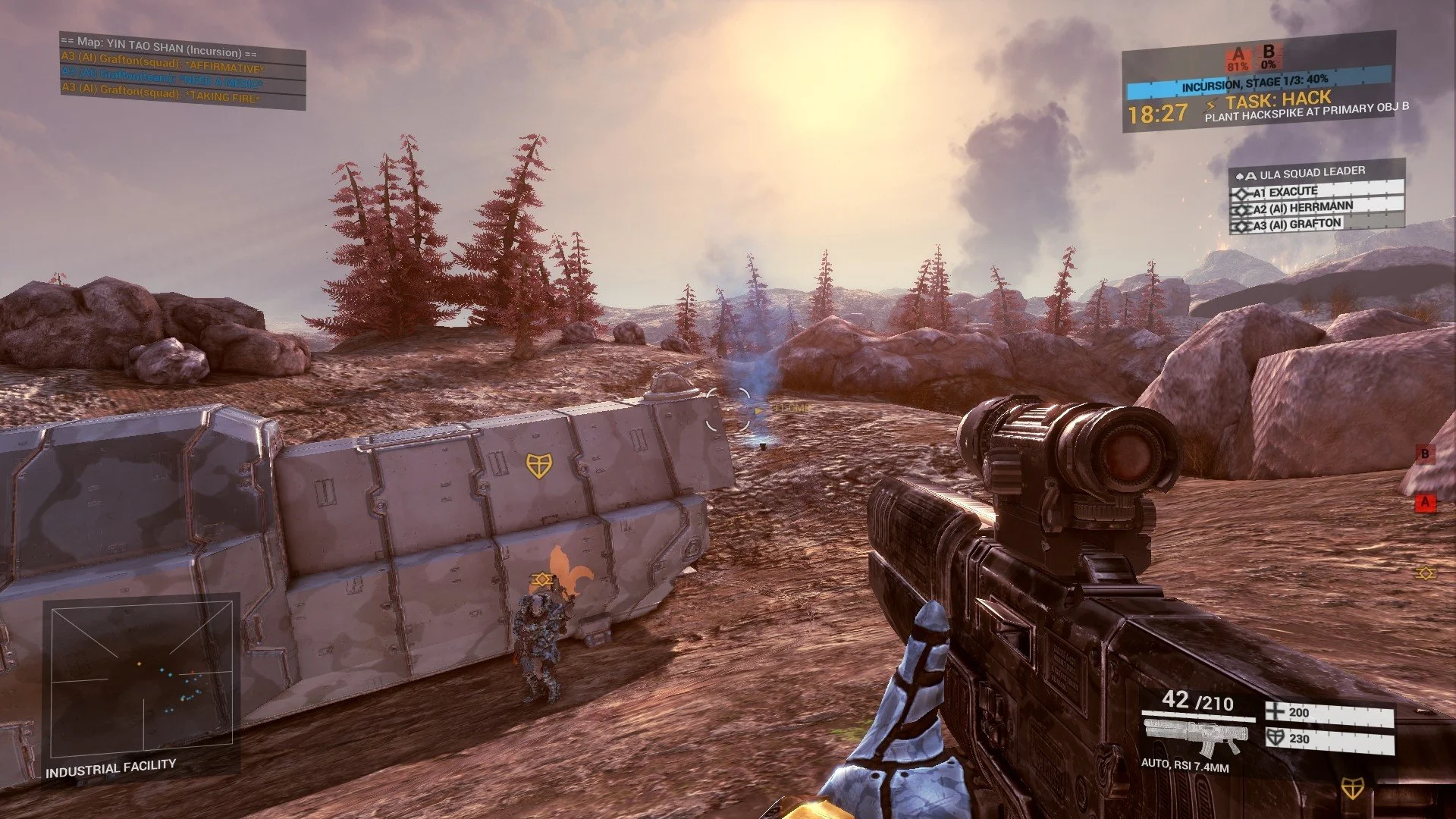
Angels Fall First looks and feels like a game from the Xbox 360 and PlayStation 3 era. That description will either sound like high praise or an immediate warning.
The science-fiction environments, weapon designs, armored soldiers, industrial interiors, and enormous ships have a strong military sci-fi identity. The art direction recalls Battlefield 2142, Killzone, Halo, Unreal Tournament, and Battlefront without becoming a direct copy of any one of them.
Its age is still obvious. Animations can be stiff, character movement sometimes looks awkward, interfaces are dense, and certain visual effects overwhelm the image. Heavy bloom, dark environments, objective markers, spotting icons, and older rendering techniques can make it difficult to read a battle.
Enemy visibility is one of the more persistent problems. At times, the player is not fighting the opposing team so much as fighting the screen to determine where the opposing team is located. The spotting system helps, but it can also cover the battlefield in icons and create a different visibility problem.
The sound is similarly uneven. Weapons and explosions can feel appropriately powerful, while other effects and interface sounds feel dated or poorly balanced. The music, however, supports the military sci-fi atmosphere well and helps larger battles feel properly dramatic.
Angels Fall First is not polished by modern blockbuster standards. It is visually coherent, often atmospheric, and capable of producing spectacular scenes, but no one will mistake it for a newly built Unreal Engine 5 showcase.
The advantage is that it runs on relatively modest hardware and occupies a fraction of the storage demanded by many modern shooters.
The Interface Fights New Players
Angels Fall First’s biggest weakness is not its graphics or even its mechanical jank, but rather how difficult the game makes itself to understand.
The menus contain a huge amount of information without always presenting it clearly. Loadouts, vehicle selection, squad commands, map objectives, ship roles, spawn options, and customization systems can feel overwhelming during the first few hours.
The HUD is similarly crowded. Players must process objectives, squad information, enemy markers, vehicle statuses, weapon information, and the actual battle at the same time. When the fighting becomes chaotic, the interface can obscure more than it explains.
Some default keybindings are also questionable enough that remapping them should be treated as part of the installation process. Keyboard and mouse players can adjust the experience, but controller users face a larger problem.
Controller support exists, yet it is extremely limited. Button remapping and sensitivity options are inadequate, menus often require awkward pointer controls, and players may need Steam Input configurations to make the game comfortable. A shooter this complex needed significantly better controller support at launch.
This does not make Angels Fall First unplayable, but it narrows the audience. Players willing to learn the controls and configure the experience will find an excellent shooter. Anyone expecting to connect a controller and immediately begin playing may have a very different first impression.
Multiplayer Has Some Launch Problems
The release population has given Angels Fall First more active matches than it had through much of Early Access, but the online experience is not perfect.
Players have reported server connection issues, lag, and official servers that do not always support the game’s maximum possible scale. Even locally hosted matches can sometimes feel less responsive than expected.
The current population is also a legitimate concern. Angels Fall First is exactly the kind of game that benefits from crowded servers and coordinated teams. Its relatively quiet history means there is no guarantee that public matchmaking will always remain active.
Fortunately, the bot support prevents that concern from becoming fatal. A shrinking population would reduce the number of full human matches, but it would not remove most of the game itself. Angels Fall First can still be enjoyed alone, with a small group, or in mixed bot matches.
That makes it a much safer purchase than the typical multiplayer indie shooter. Its future does not depend entirely on keeping tens of thousands of players online.
It Rejects Everything Annoying About Modern Shooters
Angels Fall First does not have a battle pass, rotating cosmetic store, daily challenge treadmill, premium currency, or collection of operators designed around selling increasingly ridiculous outfits.
Players buy the game and receive the game.
While that should not feel radical, the current multiplayer market has done its best to make basic ownership seem nostalgic. Angels Fall First comes from a design philosophy where experimentation, replayability, and memorable matches are supposed to provide the motivation to continue playing.
There is progression and plenty to explore, but the game does not constantly interrupt itself to advertise the next unlock. Its customization systems are broad because the developers wanted players to customize things, not because each color needed to become a separate transaction.
That old-school approach is central to the game’s appeal. Angels Fall First feels unconcerned with retention metrics and focused instead on creating a giant science-fiction battlefield where almost anything can happen.
It is rough, but it is not cynical.
What Angels Fall First Does Well
Angels Fall First delivers a level of combined-arms variety that few games attempt. Ground combat, armored vehicles, aircraft, spacecraft, capital ship command, boarding operations, and infantry sabotage all fit within the same broader experience.
Its space battles are especially impressive. Boarding an enemy ship, fighting through the interior, damaging its systems, and escaping into an active fleet battle produces moments that remain memorable long after the match ends.
The customization is deep, the weapons feel satisfying, and the offline bot support protects the game from its modest online population. Players can experience nearly everything without relying on public matchmaking.
It also captures an older multiplayer spirit. Matches feel chaotic and playful instead of carefully engineered around unlock schedules. Angels Fall First offers systems and lets players create their own stories with them.
For a comparatively inexpensive indie shooter, the amount of content and mechanical ambition is exceptional.
What Angels Fall First Could Do Better
The onboarding needs substantial improvement. Angels Fall First has too many systems for its interface and tutorial to explain elegantly. Learning the game requires patience, experimentation, and probably a trip into the control settings.
Controller support is another obvious weakness. Basic functionality is not the same as good support, and the inability to comfortably remap or tune a controller will make the game inaccessible to some players.
The visual presentation also needs cleanup. Bloom, dark environments, excessive markers, weak enemy visibility, and dated animations can make fights harder to follow than they should be.
Infantry movement and gunplay feel good once adjusted to, but neither has the immediate polish of a modern AAA shooter. Certain weapons and movement techniques may also need balancing, while some maps produce frustrating runs or overcrowded objective fights.
Server reliability and population remain concerns as well. Bots soften both problems, but players looking exclusively for populated competitive multiplayer should understand the risk.
Angels Fall First has been in development for an extraordinarily long time, yet parts of it still feel unfinished. The important distinction is that the missing polish surrounds an enormous amount of working, enjoyable content rather than replacing it.
Who Should Play Angels Fall First?
Angels Fall First is built for players who miss Battlefield 2142, the original Star Wars Battlefront games, PlanetSide 2, Unreal Tournament, and the broader era of multiplayer shooters that prioritized large battles over constant monetization.
It is particularly easy to recommend to players interested in combined arms, space dogfights, capital ships, vehicle combat, objective modes, or offline battles against competent bots.
It also works well for small groups. Friends can create private matches, add AI to populate the battlefield, and enjoy large-scale scenarios without needing a full public server.
Players expecting modern graphics, clean interfaces, polished controller support, fast matchmaking, or highly refined competitive balance may struggle with it. Angels Fall First asks the player to accept a significant amount of crust before revealing how much game exists underneath.
Anyone willing to make that trade will find something unusually special.
Final Verdict
Angels Fall First is an ambitious science-fiction shooter that combines infantry, vehicles, aircraft, space combat, capital ships, boarding operations, and tactical command in ways that much larger studios have rarely attempted.
It is also clunky. The interface is confusing, controller support is poor, visual readability is inconsistent, and the presentation frequently reveals both the game’s age and its limited resources. Some maps, systems, and controls require patience before they become enjoyable.
None of those flaws erase what Angels Fall First accomplishes.
Few games can move naturally from a fighter dogfight to boarding an enemy cruiser, destroying it from inside, and then joining an infantry assault below. Fewer still support that entire experience offline with AI capable of using the same systems.
Angels Fall First feels like a lost shooter from an era when developers could pack a game with mechanics simply because those mechanics sounded fun. It is messy, overwhelming, and occasionally difficult to read, but it is also packed with memorable battles and ideas that modern shooters have largely abandoned.
The game spent more than a decade reaching 1.0, and some corners could still use another coat of paint. The foundation underneath them is remarkable. Angels Fall First is not merely an old game surviving in 2026. It is a reminder of how ambitious multiplayer shooters used to be.
GamerBlurb Score: 9/10
Reviewed by Andrew B.