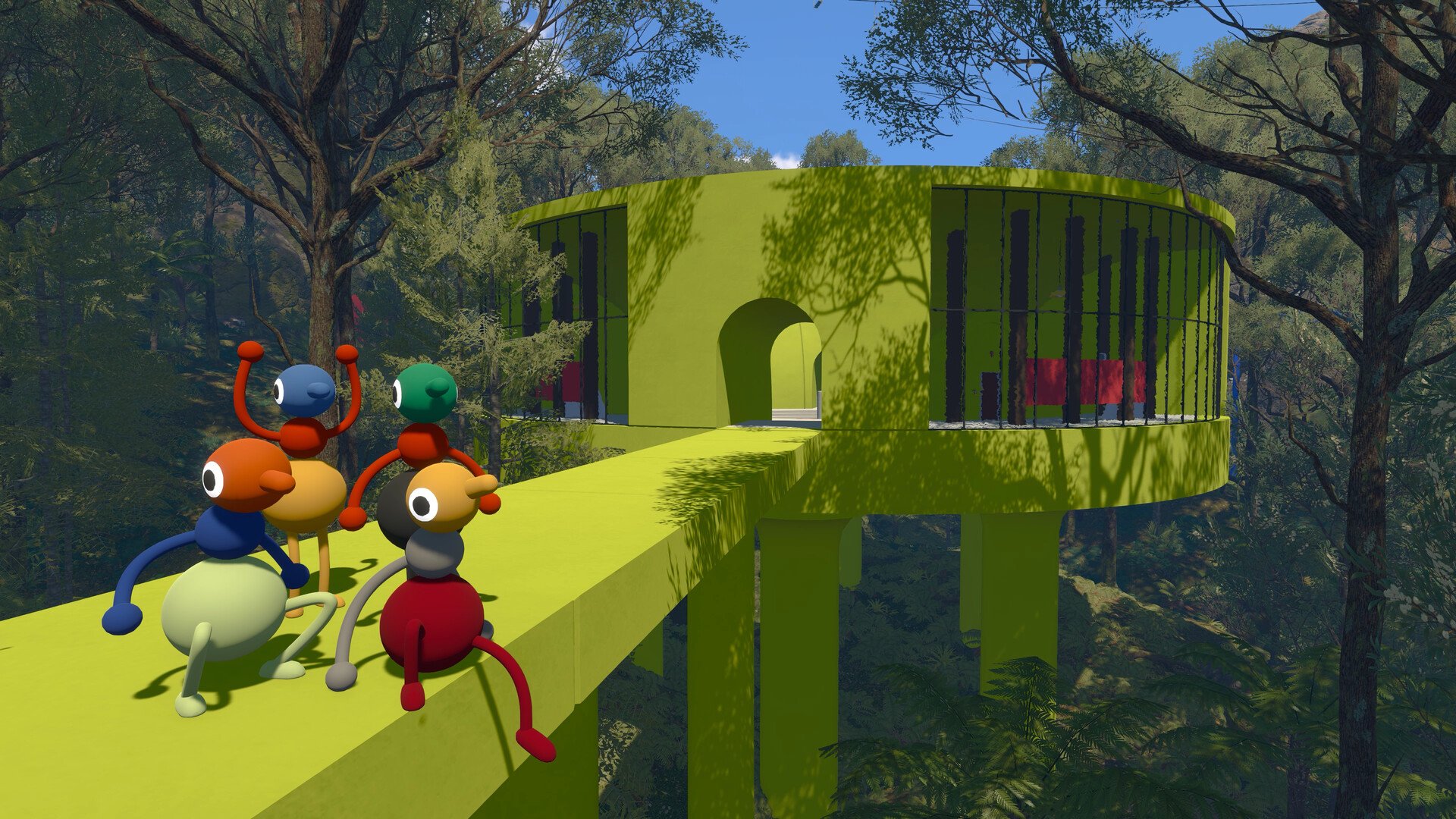
Big Walk is replayable, but probably not in the way some players expect from a modern co-op game. It does not turn every session into a new run with a shuffled island, random objectives, or procedural puzzles. The adventure is handcrafted, and once you understand where everything is and how the puzzles work, that knowledge follows you into the next playthrough.
That does not automatically make Big Walk a one-and-done game. It just means most of its replay value comes from the people you bring back with you rather than the island rebuilding itself every time you load in.
Jump To Section:
How Replayable Is Big Walk?
What a Second Playthrough Loses
Why Different Groups Matter
Replaying With a Different Player Count
Finish Everything Before Restarting
What You Can Do After the Ending
Is Big Walk Worth Replaying?
How Replayable Is Big Walk?
Big Walk has limited mechanical replayability and much stronger social replayability.
The mechanical side is fairly fixed. You return to the same handcrafted island, work toward the same major tower unlocks, use the same transportation systems, and eventually follow the same broader route toward the ending. There is no advertised roguelike mode or random map generator that turns a second campaign into a completely unfamiliar trip.
The social side is much harder to predict. A puzzle can play out completely differently when one group stays organized and another loses the person carrying the important item somewhere across the mountain. Even when the solution itself has not changed, the way people communicate, separate, improvise, and misunderstand each other can create a different experience.
That distinction is important because Big Walk is not really selling an endless supply of puzzle layouts. It is selling a cooperative adventure where communication is intentionally unreliable and your friends are part of the problem.
What a Second Big Walk Playthrough Loses
The first playthrough benefits heavily from not knowing what the island expects from you. You do not know where each path leads, what an unusual object is used for, how the towers connect to the larger progression, or whether the person running away with something important actually has a plan.
Once that mystery is gone, several parts of the game naturally become faster:
- You recognize important landmarks and puzzle areas.
- You know which tools are useful and where they belong.
- You understand how tower rewards and keys work.
- You remember solutions that originally required discussion.
- You can move around the island without becoming lost as often.
That efficiency is not always a good thing. A communication puzzle that originally created 10 minutes of confusion may become one returning player telling everyone exactly where to stand. You still complete it, but the most memorable part of the puzzle may have already happened during the first run.
I think that is where some returning players could accidentally ruin the replay for themselves. If you treat the second group like a speedrun team and immediately explain every solution, you are basically removing the part of Big Walk that changes most naturally between groups.
A returning player needs to be comfortable letting new people get confused. That may mean watching someone take the wrong path or misunderstand a clue you already recognize, but correcting everything immediately turns the replay into a guided tour rather than another adventure.
Different Friends Create Most of the Replay Value
Big Walk can feel dramatically different with another group even when the island itself has not changed.
Some groups will naturally appoint one person to organize every objective. Others will divide into several smaller teams and only realize much later that nobody knows what the other groups completed. One player may spend the entire session carrying useful equipment, while someone else becomes fascinated with the train horn and contributes almost nothing to the actual puzzle.
Those personality differences affect the game more than they would in a normal co-op campaign because communication is part of the design. Voice and text chat are limited by distance and the environment, and tools such as walkie-talkies become important when people separate. A group that communicates calmly will solve the same situation differently from a group where everyone begins talking over each other as soon as something goes wrong.
Replaying with new people can also change who takes particular roles:
- Who gives directions
- Who carries important objects
- Who searches for unexplored paths
- Who stays behind to operate equipment
- Who wanders off and creates another objective for everyone else
None of this creates new puzzle content, but it can create new stories around that content. For a social co-op game, that matters quite a bit.
The downside is that Big Walk has no public matchmaking. You cannot finish your first playthrough and then immediately queue into another group of strangers. You need to organize another session yourself, and the game still requires at least two real players. Our Big Walk solo and single-player guide explains why entering the island alone does not provide a complete alternative.
Replaying With a Different Player Count
The host chooses between a two-player, three-player, or four-plus-player version of the world when starting a session. Some parts of Big Walk change to account for that choice, so replaying with a different number of people offers more variation than simply restarting with the exact same group.
A two-player playthrough is much more concentrated. Both people are involved in nearly every decision, and it is difficult for one player to disappear without the other immediately noticing. Communication also tends to be simpler because there is only one other person to understand.
A larger group changes the pace. Players can work in separate areas, carry more objects, and handle several parts of a problem at once, but the group becomes harder to manage. You may spend less time operating a specific puzzle and more time trying to understand what everyone else has already done.
The game does not consider one group size the proper version. Two players are not receiving an incomplete experience, and a 12-player group is not necessarily seeing a better one. They are different types of cooperative chaos.
For someone considering another playthrough, changing from two players to four or more will probably make a bigger difference than restarting with the same two people immediately after the credits. The island remains recognizable, but the way responsibilities are divided becomes less predictable.
Do Not Restart Before You Actually Finish Big Walk
Reaching the first ending does not mean you have exhausted everything in your current world.
Big Walk allows the group to reach its regular ending without completing every puzzle. Afterward, seven additional purple challenges become available, and any original puzzles you skipped still remain part of the route toward full completion.
This means there is a difference between finishing the story and completely finishing the game. The Big Goodbye achievement is tied to the first ending, while Big Game requires every puzzle and the full ending.
Players who reach the credits and immediately wonder whether they should restart would be better off returning to the existing island first. You still have your transportation systems, tower progress, equipment, and map access, which makes cleaning up unfinished areas less repetitive than beginning from the drawbridge again.
The later purple puzzles also revisit ideas from earlier challenges with more demanding versions. They are not a randomized second campaign, but they do provide additional cooperative content after the initial ending.
Our Big Walk trophy and achievement guide covers the difference between Big Goodbye and Big Game, along with the optional objectives that can remain unfinished when the group first reaches the end.
What Can You Do After Finishing Big Walk?
Big Walk is also meant to be somewhere friends can return to without treating every session like another full campaign attempt. The official description presents it as both an adventure and a place to hang out, and the island remains available when your group simply wants to walk around together.
A completed world still gives you access to the systems you unlocked along the way. You can ride the train, use the chairlift and tunnels, revisit areas, change your character, or explore places the group rushed past earlier.
Whether that keeps the game installed for months depends almost entirely on what your friends want from it. Some groups can spend an evening messing around in a familiar sandbox without needing another progression bar. Others will lose interest as soon as there are no new puzzles or discoveries waiting for them.
Big Walk does not add an endless objective loop after completion. There are no rotating missions or repeatable rewards pushing the group back into the world every week. Returning is something you choose because you enjoy being there, not because the game has generated another checklist.
Is Big Walk Worth Replaying?
Big Walk is worth replaying when something about the group changes. A new set of friends, a larger player count, different roles, or enough time away from the game can all make another playthrough feel worthwhile.
It is much less replayable for players whose enjoyment came almost entirely from discovering puzzle solutions. Once you know the island and remember what each challenge expects, the second run cannot fully recreate that first sense of confusion and discovery.
Someone looking for the long-term unpredictability of a procedural co-op game may be disappointed. Big Walk has a set adventure with a real ending, and the developers clearly built it around experiencing that journey with friends rather than repeating randomized runs forever.
At the same time, calling it completely one-and-done ignores how much of the experience comes from the group itself. Different people will communicate differently, divide responsibilities differently, and create problems that never happened during the first playthrough.
My overall view is that most groups will get the most out of one complete run through both endings, followed by another playthrough later with new people or a substantially different group size. Repeating it immediately with the exact same friends will expose how fixed the puzzle content is, while changing the group gives the social side room to surprise you again.
Big Walk does not offer infinite replayability, but it does not really need to pretend that it does. The island provides the structure once you know it, while the people you bring along determine whether the next walk still has somewhere interesting to go.