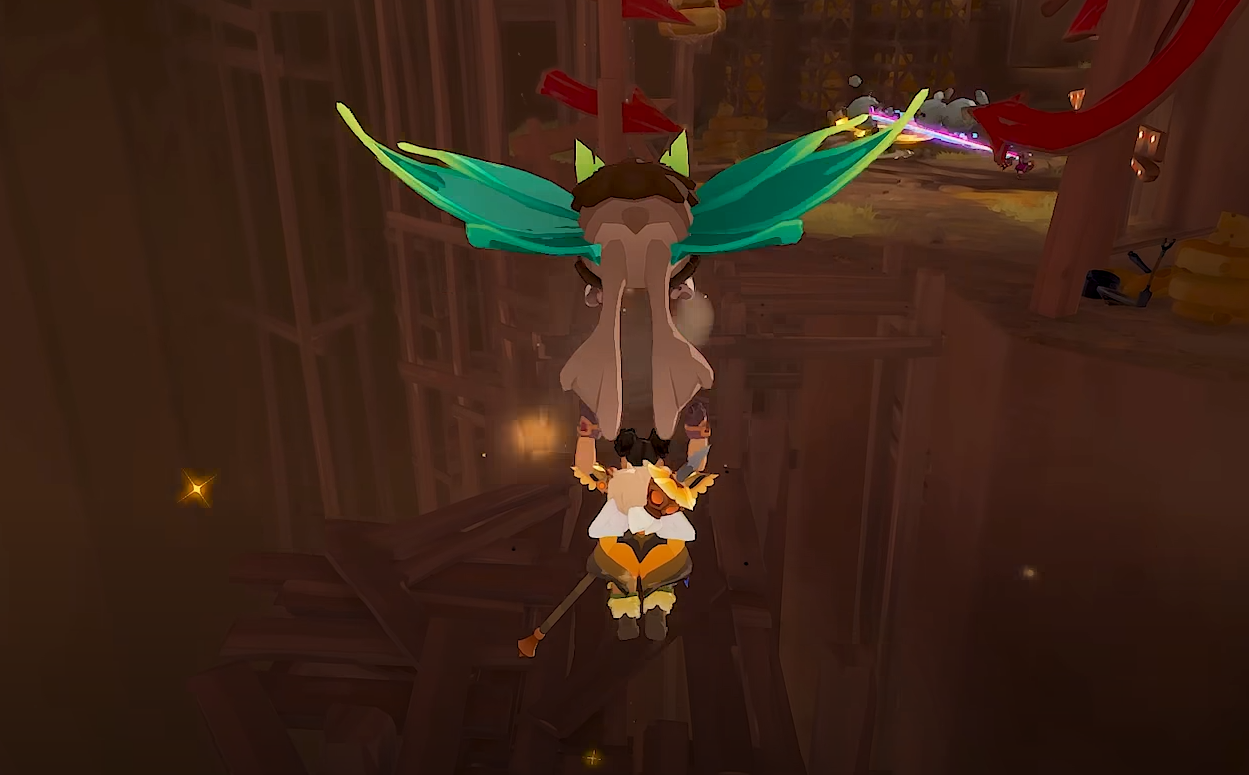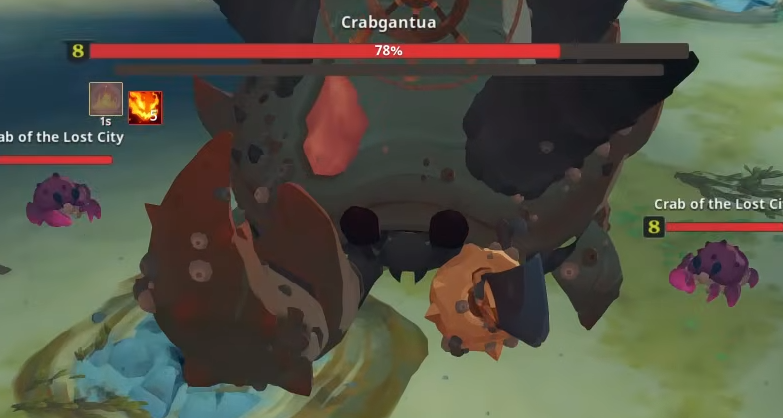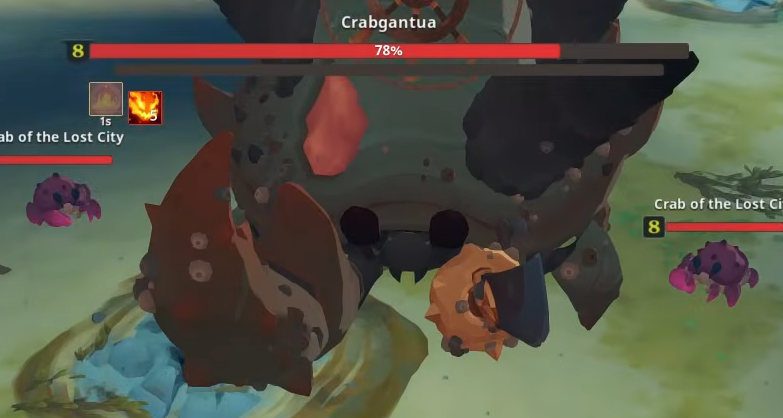
Crabgantua is one of Farever’s first real boss walls because the fight tests more than damage. The boss forces players to manage Tidal Slash windows, Devour movement, Naya’s Fury water sprout timing, crab add clear, and arena awareness all at once.
For more boss, class, weapon, and progression help, the Farever guide hub collects the main GamerBlurb Farever guides in 1 place.
Jump To
- How To Beat Crabgantua
- Why Crabgantua Is Hard Solo
- Crabgantua Attack Rotation
- Crabgantua Attacks
- How To Use Tidal Slash Windows
- How To Survive Devour
- How To Survive Naya’s Fury
- How To Clear Crab Adds
- Best Solo Strategy
- Warrior Strategy
- Best Classes And Weapons
- Gear Checks Before Farming
- Co Op Strategy
- Common Mistakes
- Crabgantua Video Guide
How To Beat Crabgantua In Farever
To beat Crabgantua in Farever, dodge Tidal Slash by moving out of the frontal attack, stop attacking during Devour, use the water sprout around the final 2 to 1 seconds of Naya’s Fury, and clear crab adds quickly before returning to boss damage.
Crabgantua is a mechanics fight and a build check at the same time. The attacks are readable, but the fight becomes rough when the crab adds stay alive too long. Once the arena gets crowded, Devour has less room, Naya’s Fury setup gets messier, and safe boss damage windows disappear.
The safest way to fight Crabgantua is to assign each mechanic a job. Tidal Slash is the damage and recovery window. Devour is the movement check. Naya’s Fury is the water sprout and platform check. Crab adds are the AoE check. Boss damage comes after those jobs are handled, not before.
Once that rhythm clicks, the fight becomes much less random. Crabgantua still hits hard, still floods the arena, and still acts like a giant crab with personal problems, but the fight becomes readable instead of miserable.
Why Crabgantua Is Hard Solo
Crabgantua is hard solo because one player has to handle boss damage, add clear, instant kill movement, water sprout timing, resource recovery, and arena positioning without help.
The boss itself is not the only problem. The crab adds are often the real solo wall. If they stay alive too long, they crowd the screen, interrupt clean movement, make Devour harder to escape, and steal the time needed to damage the boss. This is why a single target setup can feel fine in normal fights but rough against Crabgantua.
Defensive builds can run into the same problem. Staying alive is good, but if the build cannot clear the adds, the fight slowly turns into a mess. Crabgantua asks for survival and enough AoE. Having only one of those usually feels bad.
The fight gets much cleaner when the build can wipe the crabs quickly. That opens movement lanes, protects the Devour escape route, and gives enough breathing room to focus on the boss again.
Crabgantua Attack Rotation
Crabgantua usually opens with Tidal Slash and may use it 2 or 3 times before moving into Devour. After Devour, the boss often follows with 2 more Tidal Slashes, then dashes toward the center of the arena to start Naya’s Fury.
This rotation is useful because it tells the player when to attack and when to hold movement tools. Tidal Slash is the safest time to deal damage, recover resources, restore health, or reset positioning. Devour is when damage should mostly stop. Naya’s Fury is when the player needs to move near a water sprout early, then activate it late.
The rotation can still feel hectic once crab adds enter the fight, but the core pattern gives the fight structure. After surviving the first full loop, Crabgantua begins cycling through these mechanics again, so the goal is to stay patient and avoid letting the add waves break the rhythm.
| Rotation Moment | Best Response |
|---|---|
| Tidal Slash starts | Move out of the frontal attack and use the cast as a damage or recovery window. |
| Devour starts | Stop attacking and focus on movement until the chase ends. |
| Boss returns to Tidal Slash | Take safe damage windows while saving mobility for the next danger mechanic. |
| Boss dashes to center | Prepare for Naya’s Fury and move toward a water sprout. |
| Naya’s Fury reaches final seconds | Use the water sprout around 2 to 1 seconds left and land on a platform. |
Crabgantua Attacks And Counters
Crabgantua’s main mechanics are Tidal Slash, Devour, Naya’s Fury, and crab add summons.
| Attack | What It Does | Best Counter |
|---|---|---|
| Tidal Slash | Charges a frontal AoE swipe for about 4.5 seconds. | Move behind the boss or leave the marked attack zone. |
| Devour | Chases the player for about 10 seconds and can instantly kill if caught. | Run, dodge, and save mobility tools for this mechanic. |
| Naya’s Fury | Charges an arena wide wave attack for about 10 seconds. | Use a water sprout late in the cast and land on a mushroom platform. |
| Crab Add Summon | Spawns smaller crabs that crowd the arena and pressure the player. | Clear them quickly with AoE, crowd control, or strong Arsenal skills. |
The mistake is treating every moment as a damage window. Crabgantua gives safe attack openings, but it also has mechanics that should be respected immediately. Tidal Slash can be punished. Devour should be escaped. Naya’s Fury should be prepared for. Crab adds should be cleared before they snowball.
How To Use Tidal Slash Windows
Tidal Slash is one of the best damage windows in the Crabgantua fight because the attack has a long cast and only threatens the marked frontal area.
When Crabgantua begins Tidal Slash, move out of the attack zone. Melee builds can usually move behind the boss, while ranged builds can stay outside the marked area and keep attacking. Since the cast takes around 4.5 seconds, it also gives time to recover resources, heal, or reset position.
This is where players should be aggressive. Tidal Slash is not only something to dodge. It is the fight’s built in breather. If the arena is clean and crab adds are under control, this is the safest time to get meaningful boss damage.
Try not to waste major movement tools on Tidal Slash unless positioning is already bad. Normal movement should handle it most of the time. Save stronger mobility for Devour or emergency Naya’s Fury positioning.
How To Survive Devour
Devour is survived by stopping damage, creating distance immediately, and saving mobility skills until Crabgantua begins the chase.
Devour can instantly kill the player if Crabgantua catches them, and the chase lasts around 10 seconds. That means the mechanic should be treated as a full survival phase. This is not the time to finish a combo, greed a cast, or pretend the boss is only jogging for dramatic effect.
Skills like Blink, Shadowstep, Charge, or other mobility tools are strongest here. The key is not burning those tools before Devour starts. If a movement skill gets wasted on a small reposition, there may not be enough space when the boss actually begins chasing.
Ranged characters can sometimes sneak in a few safe hits during Devour if they already have distance, but that should never come before survival. If the choice is damage or space, pick space.
How To Survive Naya’s Fury
Naya’s Fury is survived by moving near a water sprout early, using it around the final 2 to 1 seconds of the cast, and landing on a mushroom platform before the wave hits.
The biggest mistake during Naya’s Fury is using the water sprout too early. The attack has a long cast, and launching too soon can make the character fall back down before the wave passes. The better play is to prepare early but activate the lift late.
The safe rhythm is simple. When Crabgantua dashes to the center and begins Naya’s Fury, move toward a water sprout. Watch the cast timer. At around 2 to 1 seconds left, use the sprout, get launched upward, and land on a mushroom platform.
The blue circles on the ground show where mushroom platforms will appear. That makes platform planning easier if the player is close enough to see the landing spots. Do not wait until the final panic second to look for the platform. The fight is hard enough without turning it into airborne guesswork.
Mage has a useful backup option because Blink can be timed through the wave. This still requires timing, but it gives Mage another way to survive if the water sprout or platform setup gets messy. Other classes should not rely on that kind of escape unless they have a similar tool ready.
How To Clear Crab Adds
The crab adds should be cleared immediately with AoE, crowd control, or strong Arsenal skills before they crowd the arena and interrupt the next mechanic.
This is the real fight check for many solo players. The boss mechanics are readable, but the adds make every mechanic worse. If crabs are still alive during Devour, movement gets blocked. If they are alive during Naya’s Fury setup, reaching the water sprout becomes harder. If they live through Tidal Slash windows, the player loses safe boss damage time.
Single target damage can kill Crabgantua eventually, but it does not solve the add problem fast enough for every build. AoE and crowd control are what keep the fight stable. A build that deletes adds quickly will have a much easier time than a build that slowly picks them off one by one.
Crit based sustain can also help if the weapon setup supports it. Enhanced Cheese Moon can heal on crits, which makes it much more valuable than it looks from a basic weapon glance. In a fight with repeated add waves, healing from crits can turn enemy density into survival value.
| Add Problem | Best Fix |
|---|---|
| Crabs live into the next mechanic | Bring better AoE or crowd control. |
| Crabs block Devour movement | Clear adds before tunneling boss damage. |
| Crabs drain health slowly | Use sustain, blocks, crit healing, or safer ranged pressure. |
| Boss damage uptime disappears | Use Tidal Slash windows after add waves are cleaned up. |
Best Solo Strategy For Crabgantua
The best solo strategy for Crabgantua is to bring strong AoE, save mobility for Devour, use Tidal Slash for damage and recovery, and time Naya’s Fury water sprouts late instead of early.
Solo Crabgantua is harder because every job belongs to 1 player. There is no teammate handling adds while the boss is being damaged. There is no extra player covering crowd control while the chased player escapes Devour. The build needs to be self sufficient.
The clean solo rhythm is to damage during Tidal Slash windows, clear adds as soon as they spawn, stop everything during Devour, move near the water sprout during Naya’s Fury, and launch around the final 2 to 1 seconds. After the wave passes, reset and repeat the cycle.
| Solo Priority | Why It Matters |
|---|---|
| Add clear | Keeps movement lanes open and protects later mechanics. |
| Mobility discipline | Prevents Devour from becoming a reset button. |
| Late sprout timing | Stops Naya’s Fury from catching the player after an early launch. |
| Tidal Slash pressure | Turns a boss attack into damage, healing, and recovery time. |
If the fight keeps failing, check the add clear first. If the crabs are not dying fast enough, the boss attempt is already unstable before the one shot mechanics even start.
Warrior Strategy For Crabgantua
Warrior can beat Crabgantua solo, but the class needs enough AoE, crit sustain, or Arsenal support to stop the crab adds from taking over the fight.
The biggest Warrior trap is building too safely and clearing too slowly. Glory and Shield can feel stable, but if the crabs are not dying fast enough, the fight becomes harder over time. A 2 handed axe or stronger AoE focused setup can feel better because Crabgantua rewards group clear more than pure defense.
Cheese Moon is worth considering when enhanced because it can heal on crits. That means crit stacking can help Warrior stay alive while clearing groups. Dominion can also make sense as part of an Arsenal setup for defensive value and combo attack support, depending on the rest of the build.
Warrior should treat the fight as an add clear test first and a boss damage test second. Once the crab waves are controlled, Warrior has a much easier time using Tidal Slash windows and surviving the major mechanics.
For class specific weapon planning, the Farever Warrior weapons guide breaks down Great Sword, Axe, Spear, Great Mace, Shield, and how each option fits the class.
Best Classes And Weapons For Crabgantua
The best classes and weapons for Crabgantua are the ones that bring AoE, mobility, and enough sustain to survive a longer fight.
Mage has one of the smoother paths because fire staff style AoE can clear crab adds quickly, and Blink gives a special backup option for Naya’s Fury if timed correctly. Mage also gets safer ranged pressure during Devour if there is already enough distance.
Rogue can work well because mobility helps with Devour and repositioning. The class still needs enough damage or AoE to clear the adds, but its movement tools fit the fight’s demands better than slower setups.
Warrior is viable, but more gear sensitive. The class can survive pressure, but it needs the right weapon and Arsenal setup to clear adds fast enough. A low AoE Warrior setup will often feel like the mechanics are solved but the fight still refuses to die.
Some players may want to farm other bosses before pushing Crabgantua harder. The Farever Golcano boss guide is useful here because Golcano can drop Magma Mia, a Fire affinity Shield for Warrior and Mage, along with Gorgon Ratsay’s Toothpick and the Ebral Dragoon Glider.
Lady Bee is another upgrade route worth knowing because her fight can lead players toward stronger weapon options. The Farever Lady Bee boss guide covers the palace fight, cannon phase, and phase 2 hazards.
For the full weapon system, the Farever weapons guide explains movesets, 4 unique skills, weapon leveling, class compatibility, and Arsenal slots.
Gear Checks Before Farming Crabgantua
Before farming Crabgantua, the build should be checked for add clear, mobility discipline, sustain, and Naya’s Fury timing.
This fight exposes weak setups fast. If the crabs live too long, the build needs better AoE. If Devour keeps killing the run, movement tools are being spent too early or the arena path is too crowded. If Naya’s Fury keeps landing, the water sprout is probably being used too early or too late.
| Build Check | Good Sign | Bad Sign |
|---|---|---|
| Add clear | Crabs die quickly after spawning. | Crabs survive into the next boss mechanic. |
| Mobility | Escape tools are ready for Devour. | Movement skills are wasted before the chase starts. |
| Wave timing | Water sprout is used around 2 to 1 seconds left. | The player launches early and falls back into the wave. |
| Sustain | Small hits can be recovered through healing, blocking, or safe resets. | Crab chip damage slowly ruins the attempt. |
| Boss uptime | Tidal Slash windows are used for damage or recovery. | Damage is forced during Devour, wave setup, or crowded add phases. |
If multiple checks are failing, farming upgrades is usually better than forcing the same Crabgantua attempt again. Better AoE, a useful Arsenal skill, crit based sustain, or a safer shield can change the fight more than another sloppy pull.
Crabgantua Co Op Strategy
Crabgantua becomes much easier in co op because players can split add clear, boss damage, and mechanic handling instead of forcing 1 build to do everything.
The best co op setup is simple. One player brings strong AoE or crowd control for the crab adds, while another keeps steady boss damage. During Devour, the chased player should focus only on movement while the other player prepares to reset damage or clean up adds after the chase ends.
Co op also makes Naya’s Fury less stressful because each player can prepare for the water sprout without also managing every add alone. Both players still need to time the mechanic correctly, though. Co op does not make the wave less rude.
If Crabgantua feels miserable solo, grouping up is a practical answer. The fight is still dangerous, but splitting jobs makes the whole encounter much more manageable.
Common Crabgantua Mistakes
The biggest Crabgantua mistake is ignoring crab adds and trying to force boss damage through mechanics.
The fight rewards patience. Crabgantua gives windows to attack, but it also demands full attention during Devour and Naya’s Fury. The build has to clear adds quickly, then use safe openings instead of trying to win through panic damage.
| Mistake | Better Play |
|---|---|
| Ignoring crab adds | Clear them quickly with AoE, crowd control, or Arsenal skills. |
| Attacking during Devour | Stop attacking and focus only on movement. |
| Using the water sprout too early | Move near the sprout early, but activate it around 2 to 1 seconds left. |
| Missing mushroom platform tells | Watch the blue circles that show where platforms will fall. |
| Wasting mobility before Devour | Save major movement tools for the chase. |
| Running a low AoE Warrior setup | Use stronger AoE weapons, crit sustain, or a better Arsenal setup. |
Most failed attempts come from poor add control, mistimed water sprouts, or wasted mobility. Fix those 3 things and Crabgantua becomes a much cleaner fight.
Crabgantua Boss Video Guide
This video walkthrough shows the Crabgantua fight in motion, including Tidal Slash damage windows, Devour movement, Naya’s Fury water sprout timing, crab add control, and the late fight rotation.
Final Blurb
Crabgantua is one of Farever’s first major boss checks because it tests damage, movement, add clear, and timing in the same fight. Tidal Slash should be used as a damage and recovery window, Devour should be treated as a full movement phase, and Naya’s Fury should be handled by using the water sprout late instead of early.
Solo clears are completely possible, but the build has to solve the crab add problem first. Mage and Rogue have smoother tools for the fight, while Warrior needs better AoE, crit sustain, or Arsenal support to keep the arena under control. Once the adds die fast and the water sprout timing clicks, Crabgantua becomes much less miserable. Still a giant crab with a flooding problem, but beatable.