Xenonauts 2 Tips and Tricks: Surviving the Alien Invasion
Xenonauts 2 gets ugly fast when a campaign starts slipping. A mission can look fine, then 1 bad landing zone, 1 missed intercept, or 1 stretched roster turns into a mess that keeps snowballing. The runs that stay under control usually are not the ones with perfect luck. They are the ones where the important systems stay ahead before the pressure really kicks in.
The Main Rule That Carries A Campaign
The biggest key in Xenonauts 2 is managing risk across the whole campaign, not trying to play every mission perfectly.
That is what the game keeps teaching over and over. You can lose soldiers, take damage, and have ugly ground fights, then still be in a strong spot if your research is moving, your radar coverage is growing, and your economy is not falling apart.
That is also why early losses do not automatically mean a bad run. What matters is what those losses cost you afterward. If 2 soldiers go down and now you cannot run the next mission properly, your roster is shaky, and your tech is lagging, that is when the damage starts to stack. Xenonauts 2 is less about one mission going wrong and more about whether your overall system can absorb it.
Base Placement Decides How Smooth The Early Game Feels
Your first base matters more than most new players expect.
Radar coverage drives the campaign because detected UFOs turn into opportunities. More detections means more missions, more resources, more crash sites, and more chances to keep funding regions happy. A bad starting position does not just feel a little worse. It quietly lowers the number of things you can react to, and that hurts for the rest of the campaign.
A central location helps because it gives broader reach and reduces dead space on the map. You will still miss things. That part is normal. The problem is when you are missing too much and entire regions feel like they barely exist because your coverage never gets there in time.
Once the campaign opens up, expansion becomes one of the biggest priorities. If UFOs are flying through huge uncovered areas, you start feeling behind even before the numbers make it obvious.
Early Base Facilities Need To Solve Real Problems
Not every facility helps you the same way early on. Some pay off later. Some keep the campaign from wobbling right now.
The strong early choices are usually the ones that keep your campaign moving without delays. A Medical Center matters because wounded soldiers sitting around too long can wreck your mission cadence. A Laboratory matters because slow research makes every future mission harder. Living Quarters help you support a deeper roster, which becomes a bigger deal the moment multiple soldiers get hurt in the same week.
The important thing is not just building useful rooms. It is building rooms that fix the bottlenecks you actually feel. If your soldiers are constantly injured, healing speed matters. If enemies are starting to outscale your gear, research matters more. Xenonauts 2 punishes pretty base planning that does not solve current problems.
Research Is What Keeps The Campaign From Falling Behind
Research is the long term engine behind almost everything that feels good in Xenonauts 2.
When tech progression slows down, you notice it in combat first. Enemies start feeling harder to crack, missions get more dangerous, and the tools you have stop matching the problems in front of you. That is when a campaign starts feeling heavier than it should.
A lot of runs go bad because things look stable for a little while, so research stops feeling urgent. Then suddenly your equipment is behind, your options are narrower, and every fight feels more punishing than the last one. We have all had those stretches where a campaign looks fine on the Geoscape, then a ground mission makes it obvious your gear is not keeping up.
The best research choices are usually the ones that solve immediate pressure. Better survivability often does more for a campaign than raw damage. New tools for specific threats can matter more than general upgrades. The big thing is making sure research never drifts into the background just because nothing exploded this week.
Good Positioning Wins More Fights Than Good Aim
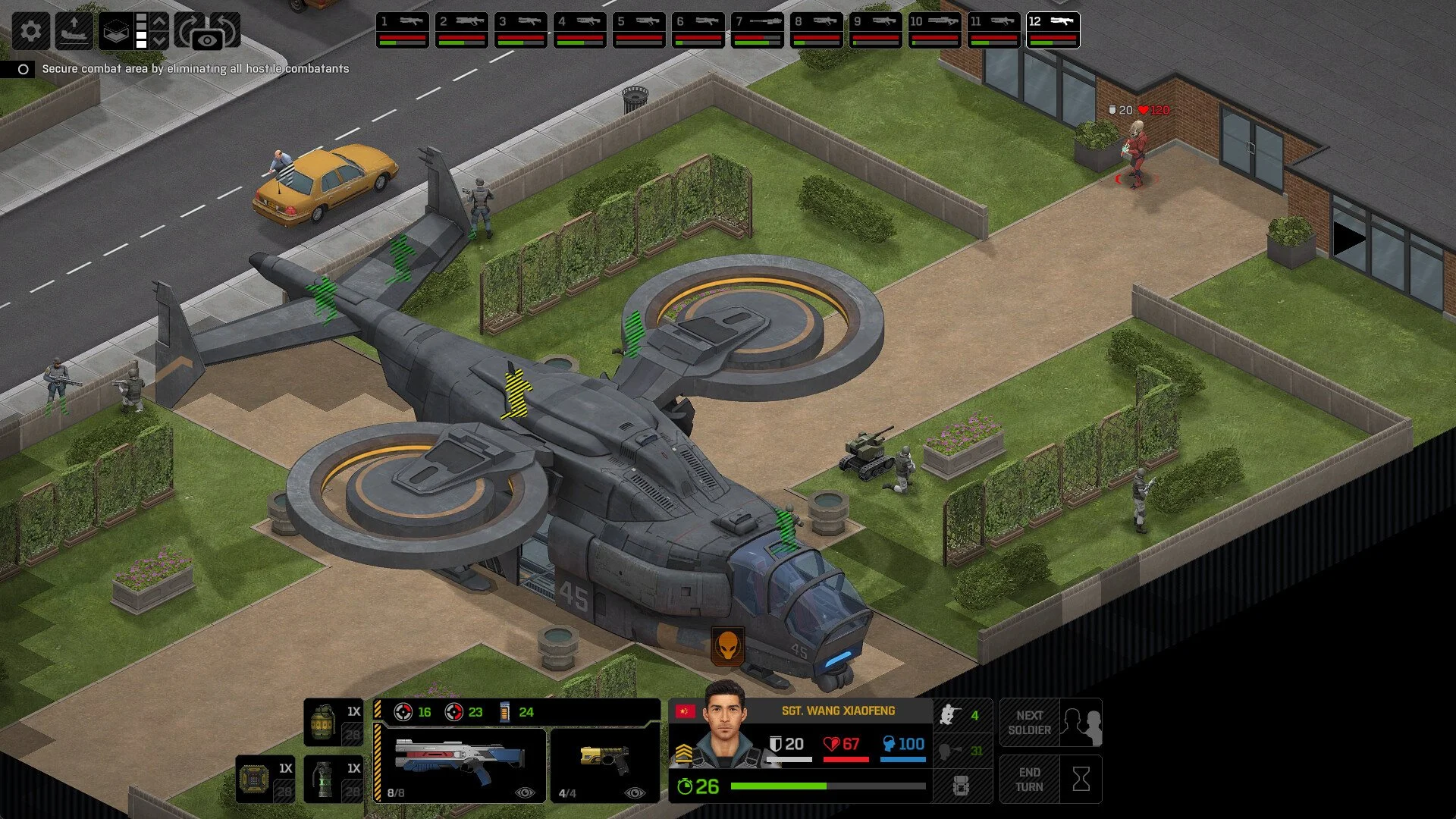
Combat in Xenonauts 2 is brutal when your squad is standing in the wrong places.
Bad aim is frustrating, sure, but bad positioning is what gets people killed. A soldier in the wrong tile can expose another one. A squad packed too tightly can get punished by a grenade. A unit pushed too far ahead can get isolated before support can do anything. That is why missions often go bad in 1 turn instead of gradually.
The safest squads stay close enough to support each other without bunching up. They use cover well, they respect corners and doors, and they do not assume a firefight is over just because 1 enemy dropped. That balance matters a lot. Too spread out and people get picked off. Too clumped and 1 mistake hits half the team.
What players notice after improving is that missions start feeling calmer even before accuracy changes. Fewer desperate recoveries, fewer soldiers ending turns exposed, fewer chain reactions from 1 bad peek. That is the real payoff.
Time Units Are The Resource You Feel Every Turn
Time Units are not just movement points. They are your safety net.
A clean Xenonauts 2 turn usually comes from leaving yourself options. That might mean firing and still having enough left to move back into cover. It might mean not spending everything on a long advance because you are not fully sure what is ahead. It might mean taking a slightly weaker position now so the whole squad stays flexible if contact happens.
That is why turns fall apart when every soldier ends up empty. Once all your Time Units are gone, mistakes become permanent. You cannot correct positioning, cannot react to a surprise enemy, cannot tuck someone back into safety. A lot of deaths happen because the turn was effectively over before the player realized the position was bad.
The strong habit here is simple. Do not spend all your Time Units just because you can. Save room for things going wrong, because in Xenonauts 2 they absolutely will.
Explosives Are Great, But They Have A Cost
Explosives are strong for a reason. They break cover, crack tough positions, and let you force progress when a normal firefight looks ugly.
That said, they are not free value. Blowing enemies apart can also destroy equipment and reduce what you get back from the mission. So while explosives can absolutely save a bad situation, they can also chip away at your long term gains if you lean on them too much.
The sweet spot is using them to create openings, not just to end every problem instantly. Blow up cover, soften armor, open terrain, and then clean up with conventional weapons when possible. That gives you the tactical control without constantly burning away the rewards.
This is one of those systems where players usually feel the lesson naturally. A mission goes smoothly, but the recovery feels thin because too much got turned into scrap. After that, the tradeoff becomes a lot more obvious.
You Do Not Need To Maximize Every Opportunity
Trying to squeeze perfect value out of every UFO, every mission, and every situation can actually slow your campaign down.
Some crash sites matter more than others. Some missions are worth the time and risk. Some are just distractions that look useful until they start draining your roster and schedule. Xenonauts 2 is much better when you think in terms of momentum instead of perfection.
That usually means prioritizing things that open new progress. New UFO types are valuable because of what they unlock. Important missions matter because they keep the bigger campaign moving. Chasing every possible reward can feel smart in the moment, but if it spreads your forces too thin, you start paying for it everywhere else.
The game rewards players who know what to ignore. That sounds boring until you realize how many failing campaigns came from overextending for something that was never that important.
Your Soldier Roster Needs Depth, Not Just Stars
It is easy to get attached to individual soldiers, and honestly that is part of the fun. But the campaign works better when your roster is treated like a full system instead of a few favorites and some background extras.
Injuries are common. Deaths happen. Even good missions can leave multiple troops out of action. If there is no bench behind your main squad, then every casualty hurts twice, once in the mission and again on the calendar.
A deeper roster gives you flexibility. It lets you keep running operations without waiting around for the same few soldiers to recover. It also makes losses less campaign ending. Equipment load matters here too, because a soldier who is overloaded or badly matched to their role becomes another weak point you will notice the second a fight gets tense.
The campaigns that feel stable usually have replacements ready before they are needed.
Final Blurb
Xenonauts 2 usually rewards control more than hero plays. You do not need every mission to be clean, and you definitely do not need every soldier to survive. What you need is a campaign that keeps functioning when things go wrong.
That means strong radar coverage, useful base development, steady research, disciplined positioning, and enough roster depth to absorb losses without stalling out. Once those pieces are working together, the whole game feels more manageable. Still punishing, still stressful, but manageable, which is about as close to comfort as Xenonauts 2 likes to get.
FAQ
What is the most important tip in Xenonauts 2?
Managing long term risk is the biggest thing. A campaign can survive ugly missions, but it usually does not survive falling behind on research, radar coverage, and roster stability.
Why do soldiers die so often early on?
The early game is rough by design. Your gear is weaker, your roster is thinner, and mistakes cost more. Early casualties are common. The real goal is keeping the campaign healthy around them.
What matters more in combat, aim or positioning?
Positioning usually matters more. Good positions prevent bad fights before accuracy even becomes the issue.
Should you capture every UFO?
No. Prioritize the ones that actually push your campaign forward, especially new UFO types or targets that give important research value.
What should you focus on first in a new campaign?
Strong base placement, expanding radar coverage, and keeping research moving are the big early priorities. Those are the systems that make everything else easier later.