Ace Combat 8 How to PSM: Post Stall Maneuver Guide
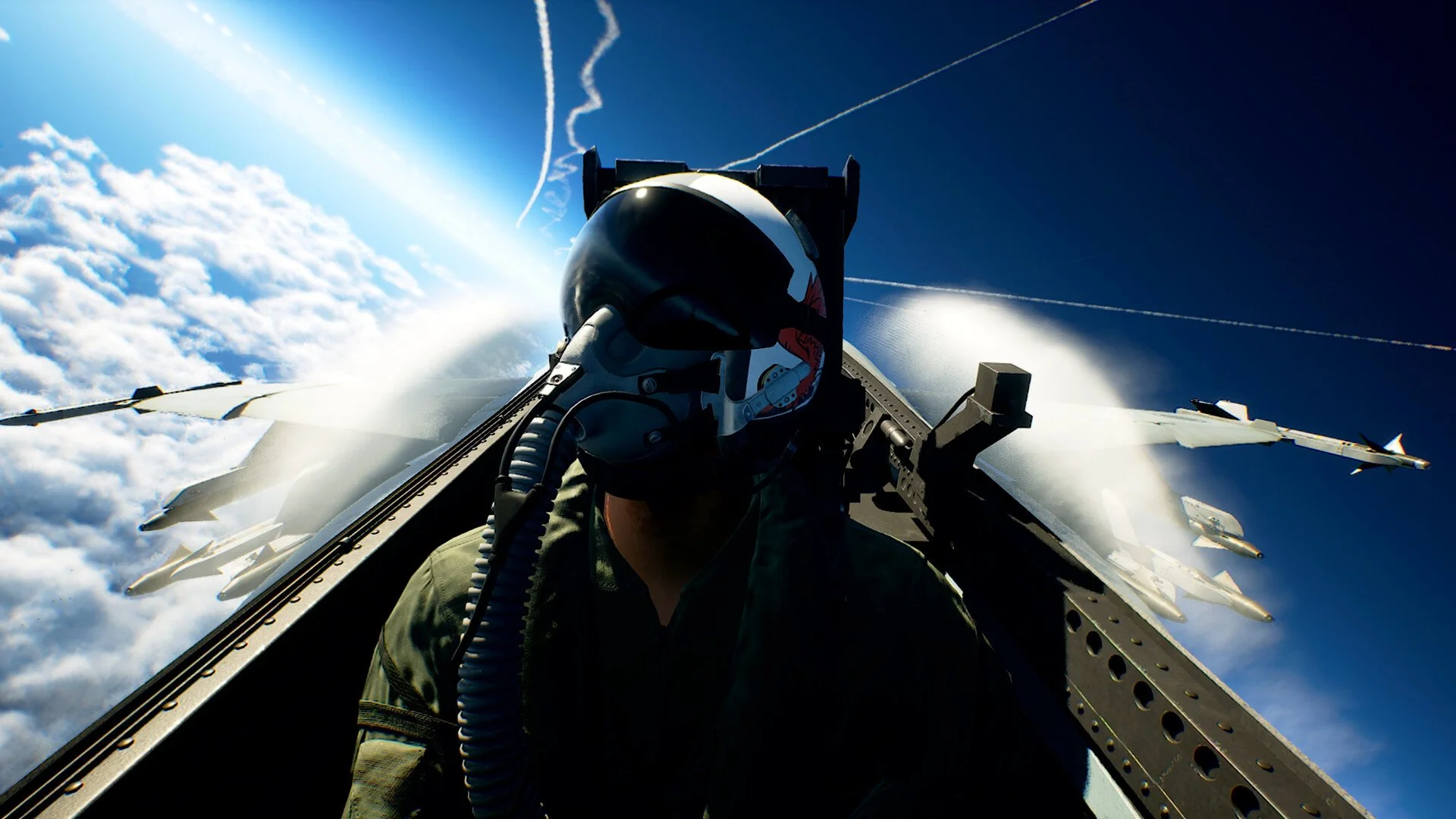
Post-Stall Maneuvers let you do something a normal turn can't: sacrifice most of your forward speed to whip the nose of your aircraft around in an extremely small amount of space. In a close dogfight, that can turn an enemy sitting comfortably behind you into the aircraft suddenly flying through your sights.
Actually performing a PSM in Ace Combat 8 comes down to a short input sequence, but there are a couple of conditions you need to meet before the game will let the aircraft enter the maneuver.
If you're still deciding what to equip, my Ace Combat 8 best parts guide covers the strongest BODY, ARMS, and MISC upgrades for different builds.
Jump To Section:
How to PSM in Ace Combat 8
PSM Controls and Input Timing
PSM Speed Requirement
Why Your PSM Isn't Working
Which Aircraft Can PSM?
Cobra vs. Kulbit
How to Use PSM in Dogfights
Best Way to Practice PSM
How to PSM in Ace Combat 8
To perform a PSM in Ace Combat 8, slow below roughly 500 km/h, briefly return your directional controls to neutral, hold acceleration and brake at the same time, then pull back hard on the flight stick.
How to Perform a PSM
• Decelerate below roughly 500 km/h
• Let your pitch and roll controls return to neutral
• Hold acceleration and brake together
• Pull the flight stick all the way back
• Control how far the aircraft rotates
• Release the brake and accelerate to recover
When the input registers, the aircraft should pitch upward much more aggressively than it would during a normal turn. From there, you can either cut the rotation short or continue pulling through a much larger post-stall movement.
The neutral input is the part I pay the most attention to. If I try to roll straight from a normal turn into the throttle-and-brake command, the maneuver is much less consistent. Briefly centering the controls gives the PSM a much cleaner starting point.
Ace Combat 8 PSM Controls and Input Timing
The easiest mistake is treating PSM like one giant simultaneous button combination. It works more consistently when you think of it as a sequence with a very short reset in the middle.
Start by braking normally until you're inside the PSM speed range. Once you're slow enough, stop actively pitching or rolling and let the stick return to center. Then engage acceleration and brake together before pulling back.
The Input Rhythm
Brake → Center Stick → Acceleration + Brake → Pull Back → Recover
You don't need a long pause at neutral. In fact, sitting there for too long simply leaves you crawling forward with very little energy. What you're looking for is a brief break between the directional input you were already holding and the pitch input that starts the PSM.
Once the nose begins coming around, the rest of the maneuver becomes much more situational. You aren't locked into completing a full rotation every time.
What Speed Do You Need for a PSM in Ace Combat 8?
You generally need to be below roughly 500 km/h before attempting a Post-Stall Maneuver.
I wouldn't aim for the absolute edge of that threshold while you're learning. Trying to initiate at 498 or 499 km/h gives you almost no margin if the aircraft gains a little speed or your inputs are slightly late.
Instead, bleed off a little more speed than necessary and get the maneuver working consistently first. Once you understand the timing, you can start pushing closer to the threshold so you're entering the PSM with more energy available.
This also explains why trying to PSM during a high-speed pass doesn't work. The aircraft needs to be in a very low-energy state before the post-stall input becomes available.
Why Your PSM Isn't Working in Ace Combat 8
If you're pulling back and getting a normal turn instead of a Post-Stall Maneuver, don't keep repeating the exact same input. What the aircraft does usually tells you which part of the setup is wrong.
PSM Troubleshooting
• Normal wide turn — You're probably still above the PSM speed range
• Tight conventional turn — You may be triggering a High-G turn instead
• No post-stall rotation — Make sure you briefly centered the stick first
• Correct inputs but nothing happens — Check whether your aircraft supports PSM
• Successful rotation followed by loss of control — You're staying slow for too long afterward
The High-G turn is probably the easiest failure to mistake for a partial PSM because both involve acceleration and braking. The difference is that a High-G turn continues directly from your steering input, while the PSM requires that brief neutral state before you pull back.
If the aircraft enters the maneuver correctly but you keep falling out of the sky afterward, your input isn't actually the problem anymore. That's a recovery problem.
Which Aircraft Can Perform a PSM in Ace Combat 8?
Not every aircraft can perform a Post-Stall Maneuver, so changing your timing won't help if you're testing the input with an incompatible plane.
Aircraft associated with PSM capability include the F-22A Raptor, Su-57, F/A-18F Super Hornet, MiG-29A Fulcrum, and X-02S Strike Wyvern, although the amount of post-stall rotation available can differ between aircraft.
That distinction matters because PSM capability isn't simply an on-or-off question. Some aircraft can perform a more limited Cobra-style maneuver, while others can continue much farther through the rotation and perform a full Kulbit.
If you're learning the mechanic for the first time, I'd start with an aircraft capable of the larger maneuver. It makes it much easier to recognize when you've successfully entered the post-stall state rather than wondering whether a small pitch change actually counted.
Cobra vs. Kulbit: How Far Should You Rotate?
A Cobra and Kulbit both begin from the same basic PSM mechanic. The difference is how far you allow the aircraft to continue rotating.
A Cobra aggressively pitches the nose upward before returning toward forward flight. A Kulbit carries that rotation much farther until the aircraft essentially loops around itself at extremely low speed.
Cobra
Enter PSM → Pitch the nose sharply upward → Recover before completing the rotation
Kulbit
Enter PSM → Continue pulling back → Carry the aircraft through the full post-stall rotation
The Kulbit is more dramatic, but that doesn't automatically make it the better dogfighting maneuver.
If your opponent crosses your nose halfway through the rotation, continuing another 180 degrees just throws away the firing angle you created. The useful skill is learning how to interrupt the maneuver at the point that gives you the best position.
How to Recover After a Post-Stall Maneuver
A PSM works because you're voluntarily giving up airspeed for rotation. That makes the recovery just as important as the initial flip.
Once your nose reaches the position you want, release the brake and stay on acceleration. Level the aircraft as needed and start rebuilding speed immediately.
The worst habit you can develop is admiring the maneuver after you've completed it. At the end of a PSM, you're extremely slow, and an aircraft with almost no energy is an easy target for anyone who wasn't involved in the original engagement.
Altitude gives you considerably more room for error here. If you're still learning, don't practice ten feet above the ocean just because the maneuver looks better there. Give yourself enough height to recover from a bad rotation without turning every missed input into a restart.
How to Use PSM in Ace Combat 8 Dogfights
The best PSM isn't necessarily the biggest one. It's the one that changes the geometry of the fight in your favor.
The classic situation is a fast enemy sitting close behind you. If they're committed to chasing at speed, suddenly decelerating into a PSM can force them to fly past while your aircraft rotates toward their new position.
That gives PSM two advantages at once: you're changing the direction of your nose while also changing the relative position of the aircraft around you.
PSM Works Best When:
• A pursuing aircraft is already very close
• The enemy has enough speed to overshoot you
• You're already approaching the PSM speed range
• You need a major nose-angle change immediately
• You have enough space to accelerate afterward
It's much less attractive when you're already winning the turning fight. If a normal or High-G turn gets your weapons onto the enemy without destroying your airspeed, throwing away all that energy for a PSM doesn't buy you much.
I think this is the difference between knowing how to PSM and actually being good with it. Triggering the animation is the easy part. Recognizing when losing almost all of your speed will genuinely improve your position is what makes the mechanic useful.
Best Way to Practice PSM in Ace Combat 8
Practice the maneuver in pieces rather than immediately trying to pull it off against an aircraft shooting missiles at you.
Start at a comfortable altitude with a PSM-capable aircraft. Slow down, center the controls, perform the input, and recover. Don't worry about completing a perfect Cobra or Kulbit yet. Your first goal is simply being able to enter the post-stall state whenever you want.
Once you can do that consistently, start changing where you exit the maneuver.
Recover with the nose pointed slightly upward. Then stop around 90 degrees. Then carry it farther around. Finally, practice rolling as you recover so you can control not only how far the aircraft pitches, but where it ends up afterward.
PSM Practice Order
• Trigger the PSM consistently
• Learn to recover immediately
• Practice stopping at different pitch angles
• Practice Cobra-style reversals
• Practice full Kulbit rotations
• Add the maneuver to actual close-range dogfights
That approach builds something much more useful than muscle memory for one exact flip. Eventually, the PSM becomes a controllable extension of your normal flying rather than a special move you either complete or don't.