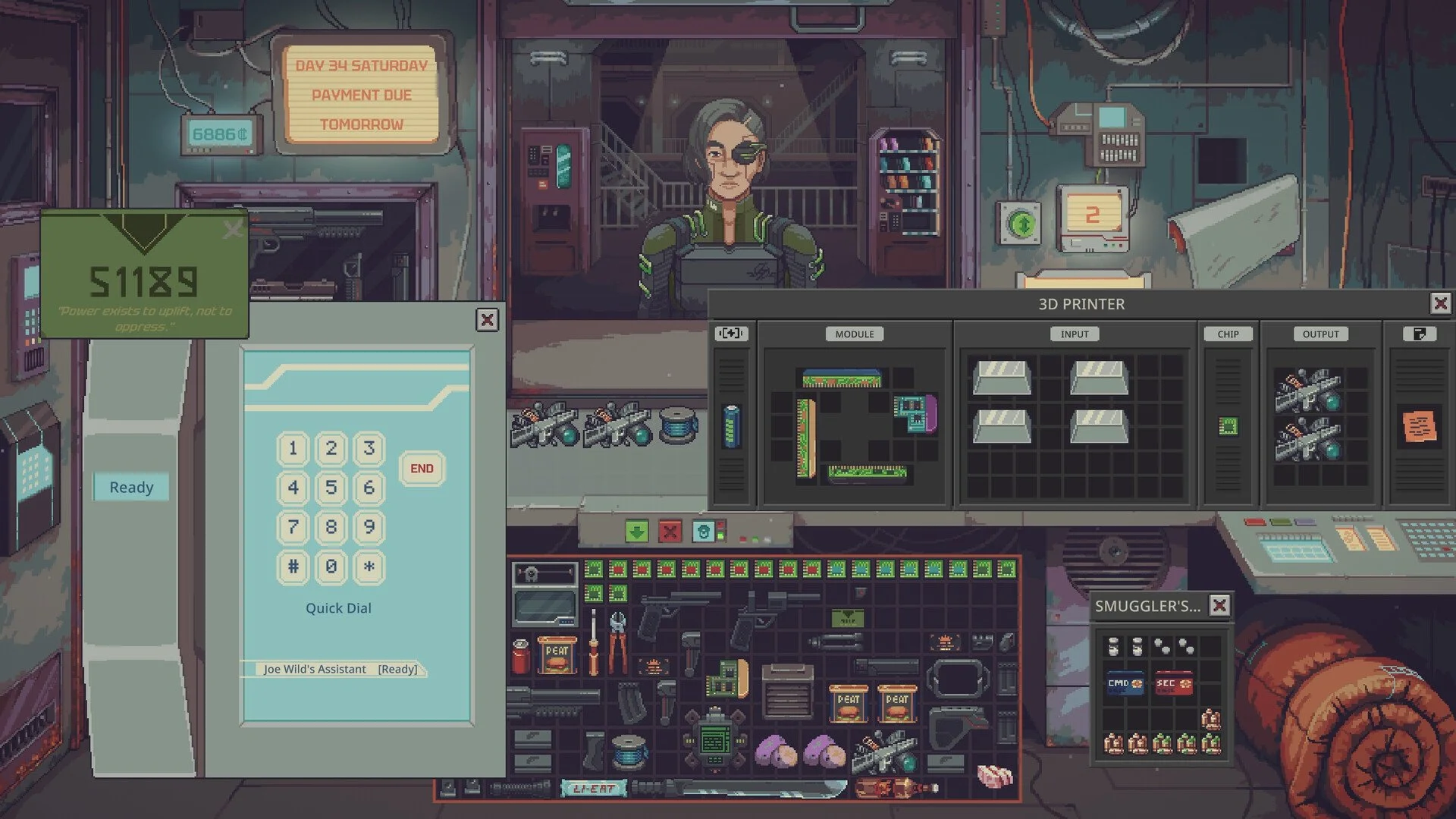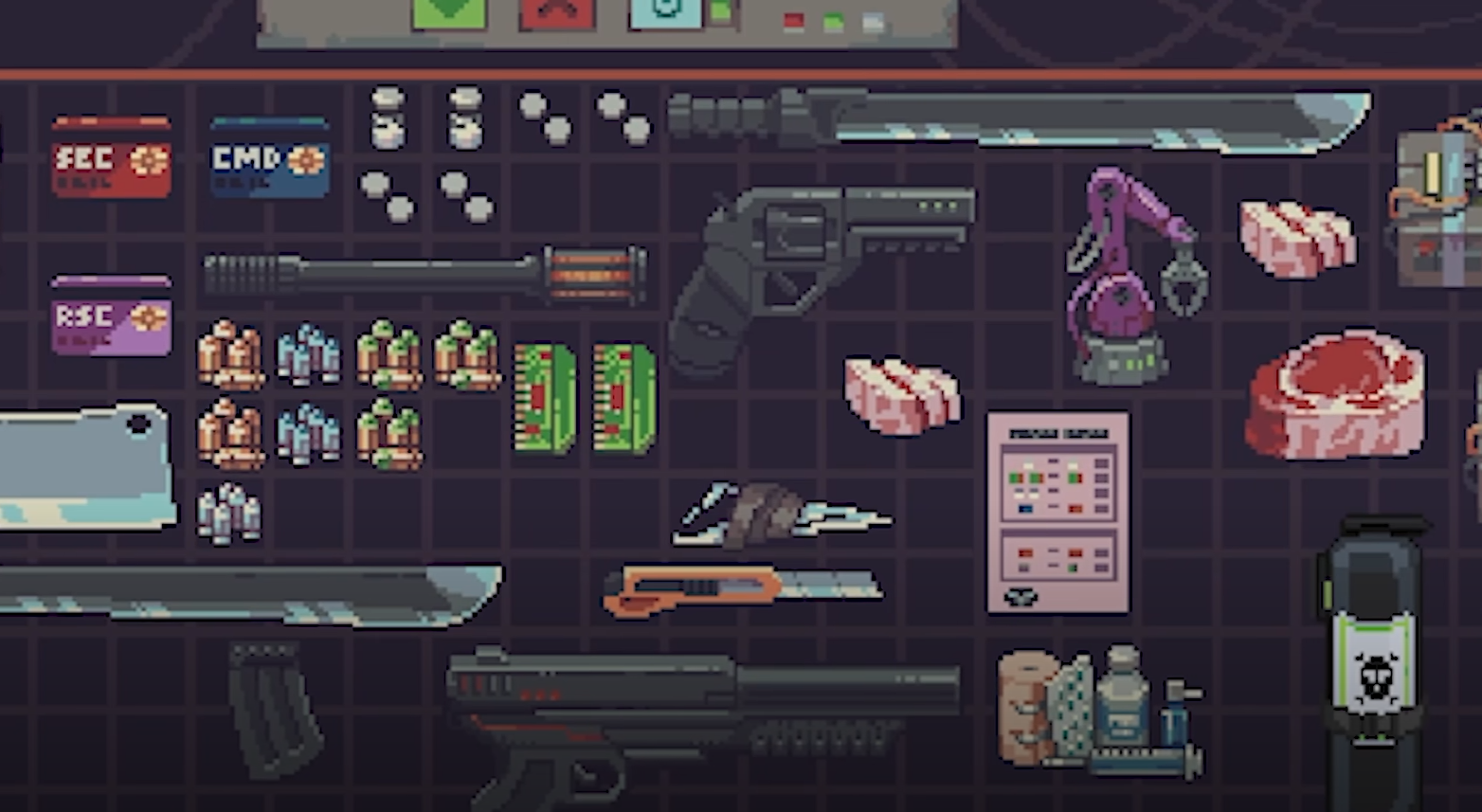
The best money maker in Probably Stolen isn't necessarily the item with the highest selling price. A valuable product can sit in storage for days, while smaller trades can generate consistent Credits without requiring expensive machinery. Your profits depend on how quickly you can find buyers, what each transaction costs, and whether your business leaves enough money available for the next rent payment. Understanding those differences makes it much easier to decide where to invest.
Jump To Section:
Best Money Maker
How to Make Money With Materials
Other Profitable Methods
Making Money From Junk
How to Maximize Your Profits
Money-Making Mistakes
What Is the Best Money Maker in Probably Stolen?
For consistent early-game income, one of the strongest money-making methods is buying inexpensive materials from customers and reselling them to Dr. Jackson. His Material Neon Sign can help attract more material sellers, giving you opportunities to purchase stock with an established resale destination.
The advantage is that you don't need to manufacture a product or wait for an unpredictable regular customer to purchase your inventory. You already know a potential buyer for the materials you're acquiring.
However, it only makes money when Dr. Jackson's actual offer exceeds your purchase price. His buying prices can change with market conditions, so not every material transaction is profitable.
For players without enough capital to purchase inventory, appraisal work is another useful option once unlocked. Later in the game, water purification, machinery, and other production businesses can offer larger opportunities, although their setup and operating costs make direct comparisons difficult.
Rather than treating one method as the highest earner in every playthrough, I recommend starting with material resale and adding other income sources once your shop can comfortably cover its expenses.
How to Make Money With Dr. Jackson and Materials
Material flipping works by purchasing merchandise below the amount a specialized buyer is prepared to pay.
Unlike crafting, the item doesn't need to be transformed before resale. Your earnings come from the difference between the two transactions.
How to Set Up the Material Resale Method
- Visit Dr. Jackson and look for the Material Neon Sign, which has a base value of 100 Credits.
- Use the sign to improve your chances of attracting customers carrying raw materials.
- Inspect the materials offered by visiting sellers.
- Compare the proposed purchase price against what Dr. Jackson currently pays for those materials.
- Buy merchandise only when the available margin justifies the transaction.
- Resell the materials to Dr. Jackson when he offers a favorable price.
- Reinvest part of the proceeds into additional profitable purchases.
The sign helps create opportunities, but it doesn't guarantee that every visitor will have profitable stock.
That's why the most important step is checking your buying price before accepting a deal.
How Much Profit Do You Need to Recover the Sign's Cost?
The Material Neon Sign is an investment in attracting suitable suppliers. It doesn't generate Credits directly.
For example, imagine a material purchase costs 40 Credits and Dr. Jackson offers 55 Credits for the same merchandise.
That creates a gross margin of 15 Credits.
| Hypothetical Calculation | Credits |
|---|---|
| Purchase price | 40 |
| Resale price | 55 |
| Gross margin per trade | 15 |
| Seven trades at that margin | 105 |
At that margin, seven additional profitable transactions would produce 105 Credits, enough to cover a 100-Credit sign before other expenses.
These are illustrative prices, not established in-game offers. More importantly, the sign only pays for itself through additional profit that you wouldn't otherwise have earned.
If you were already finding those same customers without it, the sign hasn't necessarily improved your income by the full amount.
Don't Buy Materials Just Because They're Discounted
A discount doesn't automatically mean an item can be resold profitably.
Before purchasing a large quantity, consider the actual resale offer, current market conditions, and how much cash will remain afterward.
An item purchased for 20 Credits that can be sold for 30 provides a clearer opportunity than an expensive product purchased for 200 Credits without a suitable buyer.
The goal is to complete profitable transactions repeatedly, not accumulate impressive-looking inventory.
Other Best Ways to Make Money in Probably Stolen
Material flipping is a useful starting business, but other methods become attractive depending on your available equipment, resources, and how urgently you need Credits.
| Method | Best Situation | Main Drawback |
|---|---|---|
| Material flipping | Repeatable early trading | Requires favorable buying and selling prices |
| Appraisals | Income without purchasing each item | Requires unlocking the service and accurately evaluating goods |
| Scavenging and smelting | Turning recovered junk into merchandise | Time, power, equipment, and potential lost customers |
| Water purification | Developing a repeatable production business | Filters, equipment, and operating expenses |
| Wine production | Selling processed, higher-value products | Fermentation time and buyer budgets |
| Energy Cell recharging | Reselling charged cells when demand supports it | Recharge equipment and electricity requirements |
Appraisals: Earn Credits Without Buying Every Item
Appraisal work is especially interesting when you have limited money available for purchasing inventory.
After unlocking the service through its representative and paying the required entry fee, customers can bring items to your shop for evaluation.
You inspect the merchandise, determine the correct appraisal value, and receive payment for the service.
That creates income without requiring you to purchase every item being evaluated.
This makes appraisals a useful complement to ordinary trading. When you don't have enough Credits to accept an attractive purchase offer, appraisal work can still provide opportunities to earn money.
The tradeoff is accuracy. You need to understand the appraisal requirements rather than guessing values.
Our Probably Stolen Appraisal Guide covers the system in more detail.
Water Purification: Turn Low-Quality Stock Into Better Merchandise
Water trading offers a different type of business because you can improve the product itself rather than simply reselling it unchanged.
Low-quality water can be treated using filtration and purification equipment, potentially producing more valuable grades.
The profitability depends on what you paid for the water, how much treatment it needs, and what buyers are offering for the finished product.
Water Supply Crisis events can also increase water prices, making them worth considering when deciding when to sell.
However, don't assume every bottle should be purified to the highest possible grade.
If reaching Pure Water requires significant additional filters, electricity, or equipment, compare those costs against the additional selling value first.
A less expensive purification process with a healthy margin may be more practical than maximizing quality on every container.
For the mechanics involved, see our Probably Stolen Water Purification Guide.
Wine and Energy Cells: Profit Depends on Timing
Wine production and Energy Cell recharging can both increase the value of merchandise, but they introduce additional waiting time.
BloomBerry Wine fermentation can take four days without yeast, two days with Standard Yeast, or one day with Super Yeast.
That means a potentially profitable bottle doesn't necessarily provide money when you need it.
Similarly, rechargeable Energy Cells can be worth more after charging, particularly when demand increases during power outages.
However, that business needs suitable equipment and enough energy to charge the merchandise.
I would treat both methods as additions to an established shop rather than spending your last Credits on them while rent is approaching.
How to Make More Money From Junk and Scrap Metal
Scavenging provides another source of materials, but selling everything immediately isn't necessarily the best way to use what you recover.
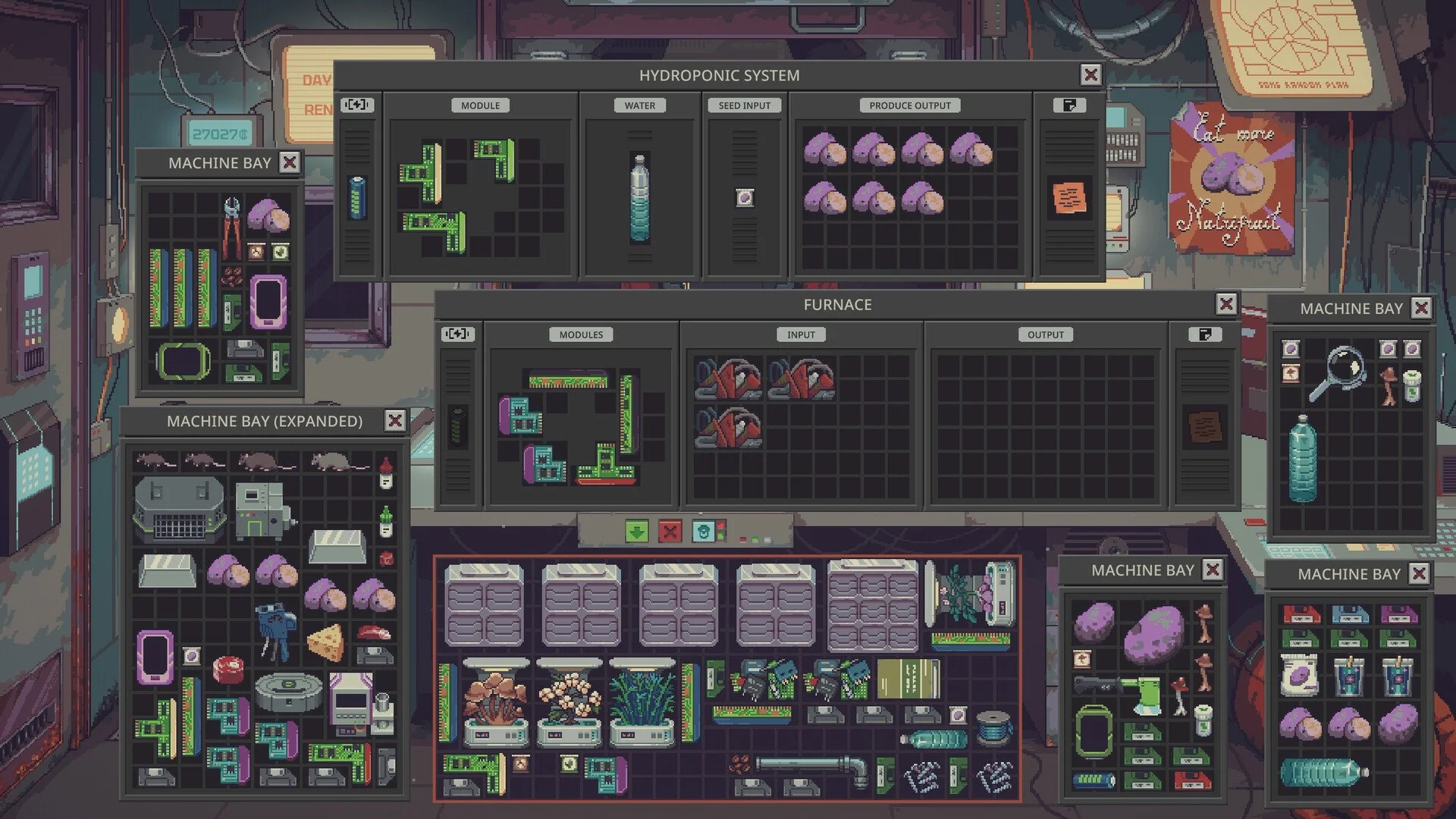
With the Furnace and its Junk Processing module, you can turn ordinary Junk into materials suitable for further processing.
The Six-Junk Conversion Strategy
The documented Junk Processing recipe converts six pieces of Junk into four pieces of Scrap Metal.
The standard Furnace recipe can then use two pieces of Scrap Metal to produce one low-purity Metal Ingot.
Combining those two recipes creates the following potential production chain:
| Stage | Materials |
|---|---|
| Starting inventory | 6 Junk |
| After Junk Processing | 4 Scrap Metal |
| After two standard smelting operations | 2 low-purity Metal Ingots |
This provides a useful way to evaluate whether recovered junk is worth processing rather than selling directly.
However, two ingots aren't automatically more profitable than six pieces of Junk.
You still need to consider the market value of each product, electricity, equipment costs, and the time required to complete the processing stages.
When Is Scavenging Worth the Night?
Nighttime scavenging can help you obtain stock without purchasing it from customers, but it has an opportunity cost.
According to the supplied gameplay information, going to the Dumping Grounds normally causes you to lose one random customer the following day unless you have the Short Sleeper perk.
That matters more as your shop becomes profitable.
If an ordinary customer could have provided a valuable transaction, your scavenging trip wasn't entirely free, even if the recovered materials cost no Credits.
The Proficient Scavenger perk offers two additional searches per trip, making it potentially useful for characters who plan to rely heavily on the dump.
For players focused mainly on ordinary trading, scavenging is better treated as an alternative when the potential recovered value justifies the missed business opportunity.
How to Maximize Your Money-Making Profits
One of the biggest differences between a profitable business and a struggling shop is when its earnings actually become available.
A method can provide excellent returns eventually while still leaving you unable to afford this week's rent.
Think About Three Different Money-Making Timelines
Instead of comparing methods only by their potential selling value, separate them into three categories.
| Income Type | Examples | Main Question |
|---|---|---|
| Transaction-based income | Material resale, ordinary trading, appraisals | Can you complete another profitable transaction? |
| Production-based income | Smelting, purified water, wine, charged Energy Cells | Does processing add enough value to justify its costs? |
| Delayed investment returns | Giorgio's spaceship project | Can you afford to leave those Credits unavailable? |
This approach explains why the highest theoretical return isn't necessarily the best choice for a shop with limited working capital.
Giorgio's spaceship project, for example, has been described as returning four times the invested amount, potentially as late as Day 69.
That may be attractive for spare Credits, but it doesn't help with an immediate payment if the money remains committed until much later.
Protect Your Rent Money Before Reinvesting
Weekly rent creates a deadline that ordinary trading and long-term investments don't necessarily share.
Before buying additional machinery, materials, or upgrades, check the next payment and set aside enough Credits to cover it.
Then consider what you can afford to invest with the remaining money.
This is particularly important when purchasing equipment that requires further supplies or electricity before it can generate income.
Buying a machine isn't the same as having a profitable production business.
If your longer-term goal is property ownership, see our Probably Stolen How to Buy the Store Guide.
Use Existing Buyers Before Creating More Inventory
When deciding what to produce next, look at your available customers and selling opportunities.
If Dr. Jackson is offering good prices for materials, there's little reason to manufacture unrelated products solely because you have the equipment.
Similarly, if water demand is favorable, producing more water that you can actually sell may be more useful than tying up funds in a new business.
Try to connect purchases and production to an identifiable selling opportunity.
This reduces the chance of filling your shop with merchandise that looks valuable but has no convenient buyer.
Money-Making Mistakes That Can Cost You Credits
Don't Confuse Relabeling With Creating Value
Relabeling low-quality water as a higher grade can create a larger apparent selling price, but it doesn't improve the actual water.
Customers with suitable testing equipment can identify misleading labels, and repeated misrepresentation can attract Security attention.
The supplied reports describe investigations developing after relatively small volumes of mislabeled water were sold. There is no reliable safe amount to assume you can sell without consequences.
For a business you intend to maintain over many weeks, producing genuinely better water is a more dependable approach than relying on false labels.
Don't Assume Every Passive Machine Makes a Profit
Vending Machines can sell stocked items overnight, while other equipment can process materials without requiring you to complete every step during ordinary shop hours.
However, automated operation doesn't eliminate costs.
Vending equipment needs electricity and suitable merchandise. Some acquisition arrangements can also increase recurring rent.
A machine that produces a small amount of revenue while creating substantial expenses isn't necessarily improving your finances.
Compare the additional income with the actual cost of keeping it operational.
Don't Keep Every Valuable Item Waiting for a Perfect Buyer
It's reasonable to hold merchandise when you expect a better selling opportunity, particularly during market events or when trading specialized products.
However, inventory that remains unsold also represents Credits you cannot use elsewhere.
If rent is approaching or a more reliable business opportunity becomes available, accepting a reasonable offer can sometimes be preferable to waiting indefinitely.
The strongest money-making setup is one that keeps generating usable Credits while leaving you enough flexibility to take advantage of new opportunities.
For most early-game shops, that makes repeatable material trading and appraisal work particularly appealing. As your available capital grows, water purification, manufacturing, and other production businesses become worth evaluating on their actual margins rather than their headline selling prices.