Castlevania Belmont's Curse Best Weapon
Castlevania Belmont's Curse has 28 weapons spread across seven weapon families, but the strongest weapon depends on whether you mean absolute endgame power or the best choice for actually progressing through the game. Excalibur has the strongest overall endgame case once everything is unlocked, while Vampire Killer is the better all-purpose weapon for most of a first playthrough.
Jump To Section:
Best Weapon Overall
Why Excalibur Is Best
Best Weapon for a First Playthrough
Best Weapons by Playstyle
Best Early-Game Weapon
How to Get Excalibur
What Is the Best Weapon in Castlevania Belmont's Curse?
Excalibur is the best endgame weapon in Castlevania Belmont's Curse. It is a Legendary two-handed sword with 100 ATK, heavy charged attacks, and an additional effect that fires projectiles of light, giving a normally close-range heavy weapon a way to damage enemies at distance as well.
There is one important caveat: Excalibur is not available during most of your first run. You need to reach the first ending before you can properly obtain it, which means Vampire Killer is the better answer if you are asking which weapon is best for progressing through the story itself.
Best Endgame Weapon: Excalibur
Best First-Playthrough Weapon: Vampire Killer
Best Ranged Weapon: Chauve-Souris
Best Defensive Weapon: Alucard's Sword and Shield
Best Combo Weapon: War and Famine
The reason for separating those answers is that Belmont's Curse does not make weapon strength purely about ATK. Legendary weapons add effects on top of their normal family mechanics, while attack speed, range, recovery time, positioning, and how reliably you can exploit a weapon's special mechanic all affect its real performance.
Why Excalibur Is the Best Weapon
Excalibur takes the top spot because it addresses the main weakness of the two-handed sword family without giving up what makes those weapons powerful.
Two-handed swords already excel at converting large enemy openings into heavy damage. Their weakness is commitment: slower attacks become dangerous against enemies that recover quickly or refuse to stay within melee range.
Excalibur's light projectiles change that equation. Charged attacks can still deliver the heavy punishment expected from the weapon family, but the added projectile gives those swings reach beyond the blade itself.
That makes Excalibur particularly strong once you know boss patterns. Instead of trying to maintain a long combo, you can avoid an attack, wait for the recovery window, and turn that single opening into a high-value charged punish.
This is also why its slower speed does not automatically disqualify it from being the best weapon. The goal is not to attack more often than every other weapon. It is to make the safe openings you already have worth more.
Vampire Killer Is the Best Weapon for a First Playthrough
Vampire Killer is the weapon I would recommend keeping equipped through normal story progression once you obtain it.
It is another 100 ATK Legendary weapon, but its advantage is consistency rather than maximum punishment. Whips attack from farther away than most melee weapons, deal additional damage when you connect with the tip, and handle enemies above or around Rose more comfortably than weapons that rely on close-range strings.
Vampire Killer then adds burn to enemies it hits and causes defeated enemies to explode. That gives it value against both bosses and groups rather than making its Legendary effect dependent on one specific type of encounter.
The difference between it and Excalibur is therefore less about which number is bigger and more about how the damage is delivered.
Choose Excalibur: For the strongest endgame boss-punish weapon once the first ending is complete.
Choose Vampire Killer: For safer range, easier damage uptime, groups, exploration, and the remainder of a normal first playthrough.
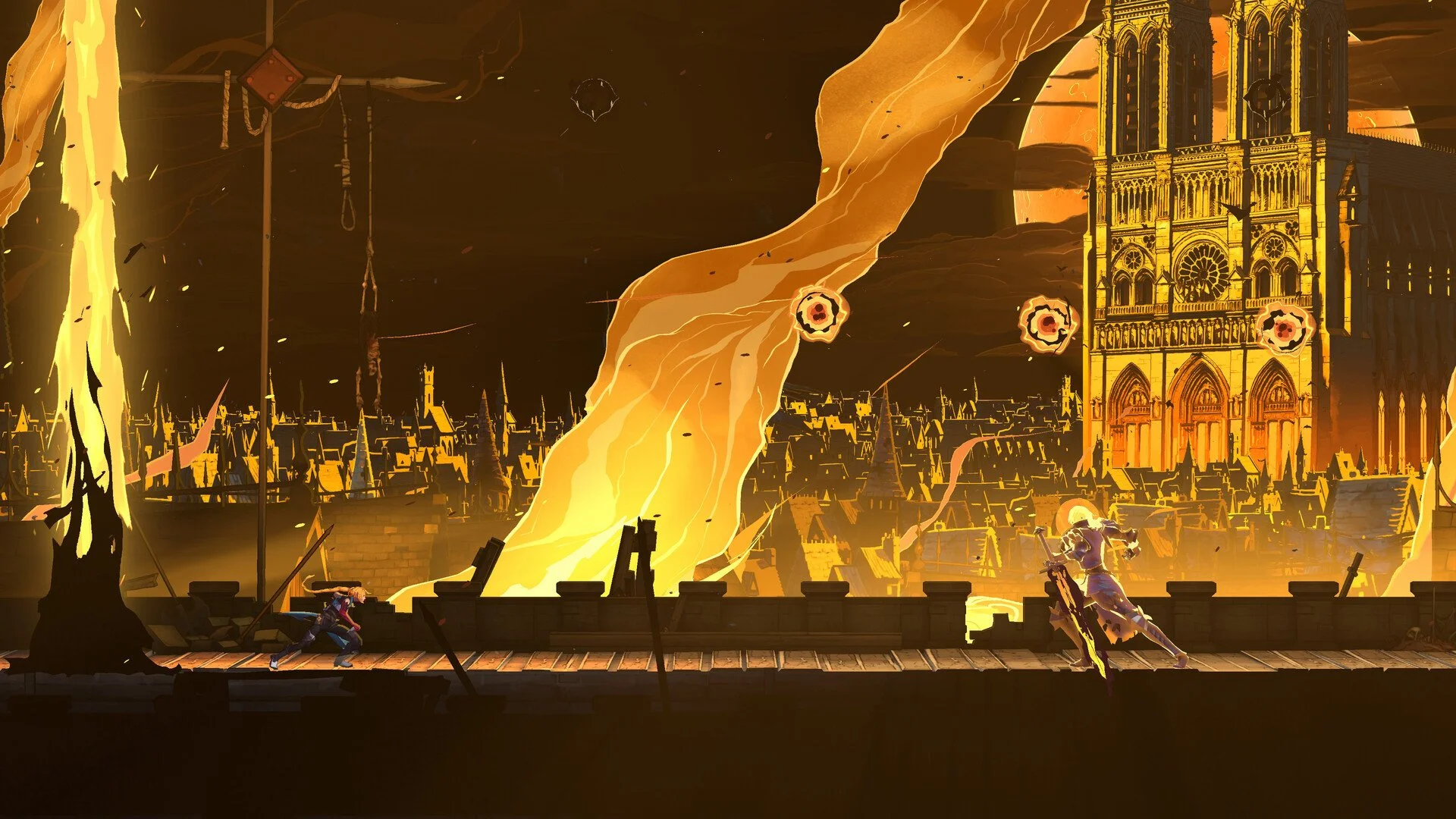
Vampire Killer also arrives naturally through story progression after the later Death encounter in Notre Dame, so you get meaningful time to actually use it before finishing the initial run.
If you have not reached that point yet, our Castlevania Belmont's Curse Double Jump guide covers the progression through Notre Dame and the Death fight.
Best Weapons by Playstyle
Excalibur and Vampire Killer are the strongest general answers, but several Legendary weapons can be better if you deliberately build around what they do.
Chauve-Souris is the best choice when distance is the priority. Spears can already be thrown, while the Legendary version can pursue consecutive targets and pierce enemies in its path. That makes it extremely useful against flying enemies, casters, and fights where remaining on a safe platform is more valuable than maximizing melee damage.
War and Famine is a stronger choice for players who consistently finish Dual Blade attack strings. Dual Blades extend their combo when attacks are timed correctly, and the Legendary version creates an empowering area when the sequence is completed. The potential is high, but an enemy interrupting the sequence removes much of the advantage.
Alucard's Sword and Shield is the safest specialist. The weapon family can block attacks from the front, while the Legendary set adds teleportation to Rose's attacks. It is particularly valuable when learning encounters because it gives you another defensive tool without completely giving up offensive mobility.
Valmanway is better suited to an evasive rhythm. One-handed swords reward attacks performed after movement such as a backdash or slide, and Valmanway causes its attacks to strike again after a short delay. Players who naturally dodge out and immediately retaliate can get more from it than someone trying to remain planted beside a target.
Bernhard's Wrath has one of the more aggressive risk-reward profiles. Fists gain damage as an uninterrupted combo continues, while the Legendary version adds healing as that combo grows. It can be extremely effective against an enemy you already understand, but its short reach means mistakes are more likely to interrupt the exact sequence the weapon wants you to maintain.
Best Early-Game Weapon in Castlevania Belmont's Curse
The Lance is one of the best weapons to use before the stronger Masterpiece and Legendary options become available.
Its main advantage is that it solves more early-game problems than its ATK alone suggests. The normal attacks have excellent reach, while holding the attack input lets Rose throw the spear, giving you a ranged answer to flying enemies and dangerous targets without spending another resource.
That makes it particularly useful while you are still learning enemy behavior. You can stay outside the range required by Cestus or other close-range weapons without accepting the slower commitment of a Greatsword.
The basic Longsword is still a good alternative if its movement and attack rhythm feel more natural. Belmont's Curse rewards the mechanics of each weapon family enough that a weapon you consistently use correctly can outperform a nominally stronger option that constantly puts Rose in bad positions.
How to Get Excalibur
Excalibur becomes obtainable after you reach the first ending by defeating Dracula in both of his forms.
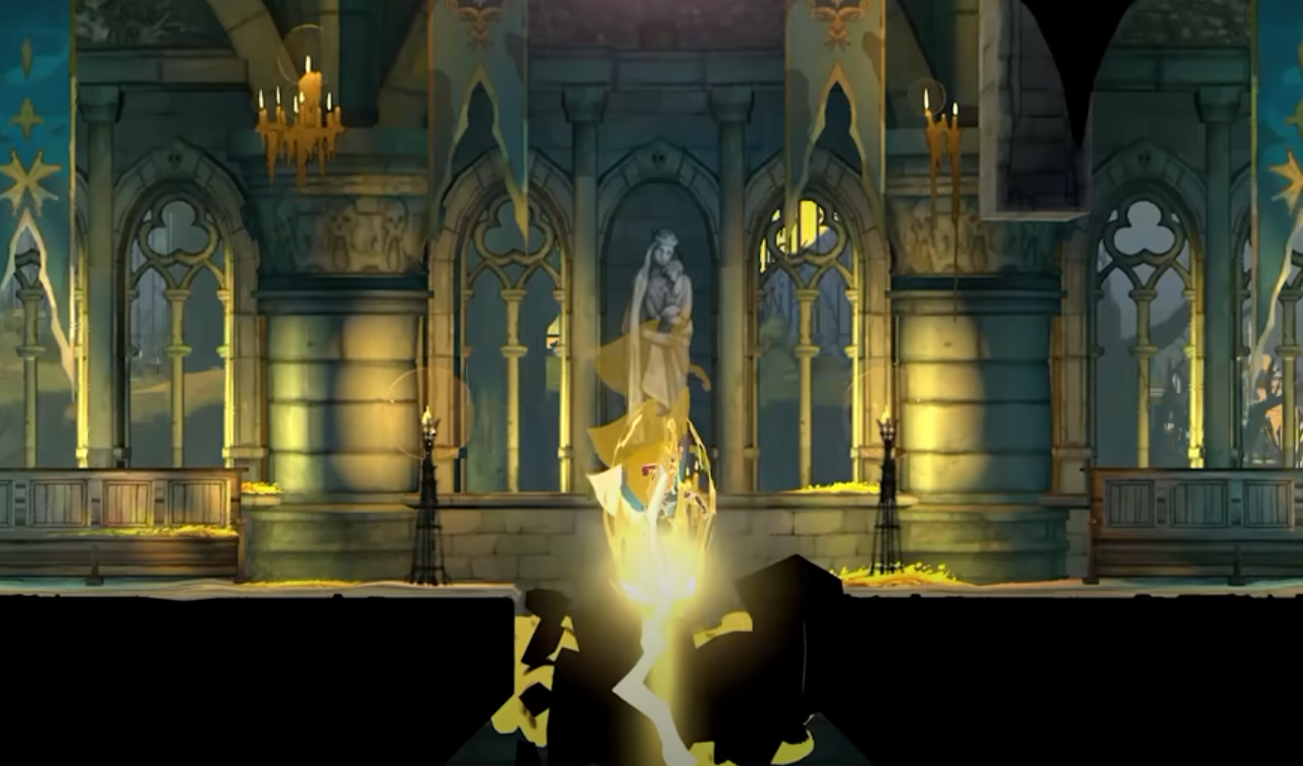
Return to the Chapel in Notre Dame and interact with the sword in the stone altar. Continue interacting with it until the sequence with Arthur, The Brittle King begins, then defeat Arthur to claim Excalibur.
This timing is a major part of why Vampire Killer remains such an important weapon even though Excalibur is stronger at the very end of the game. Excalibur is effectively a post-first-ending reward, while Vampire Killer can carry you through the stretch leading into that ending.
That gives the two weapons different jobs. Vampire Killer is the weapon to equip when you want dependable performance across whatever room or boss comes next. Excalibur becomes the better choice once you have access to the endgame and can take advantage of its charged attacks against encounters whose openings you already understand.
If you are still clearing traversal barriers on the way through the game, our Castlevania Belmont's Curse Yellow Blocks guide explains how Smash works and why some reinforced floors require a higher starting point.