Planet Zoo 2 Breeding Spreadsheet & Guide
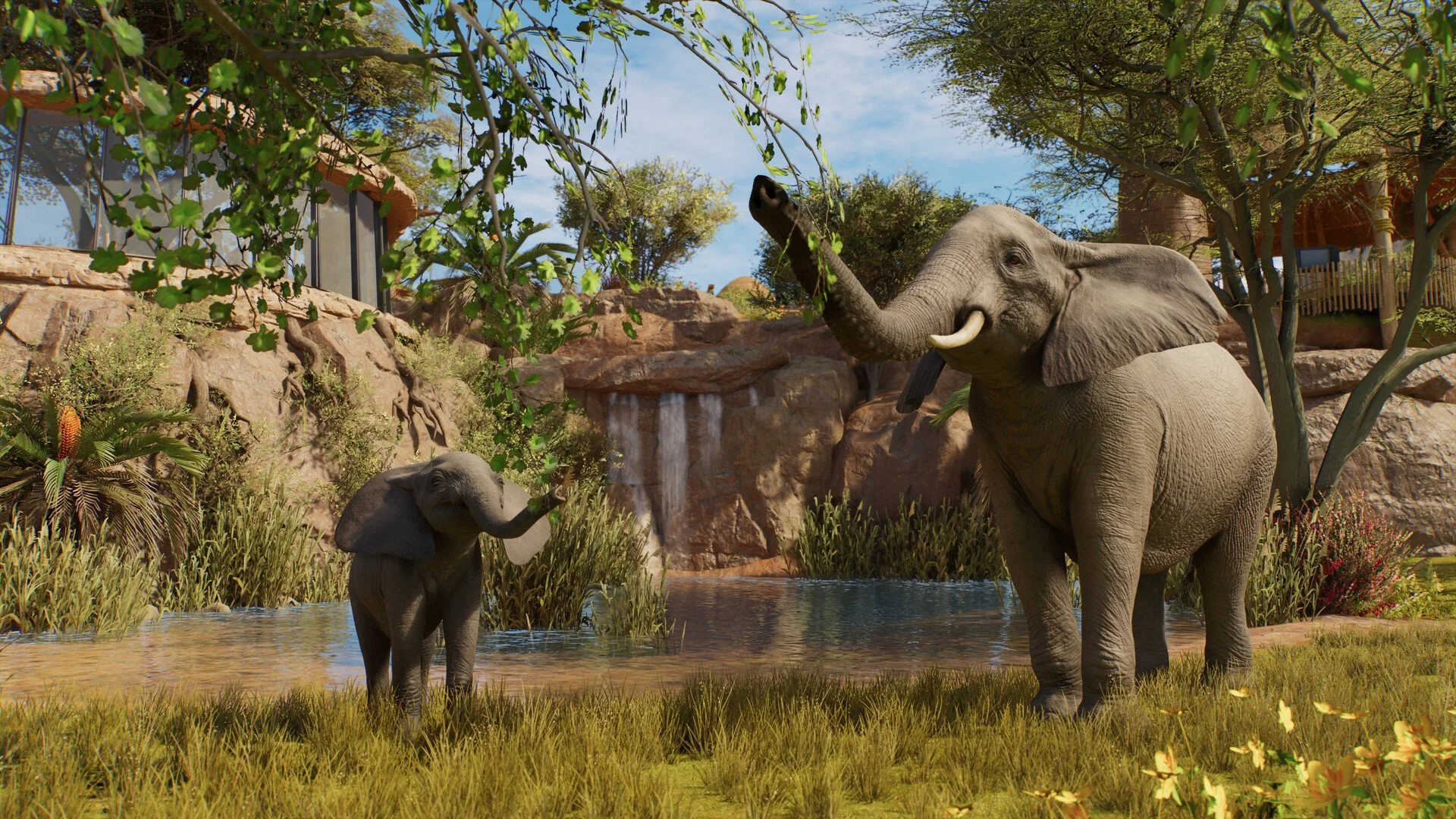
Breeding animals in Planet Zoo 2 becomes much easier once you stop treating every healthy male and female as an equally good pair. Animals need to meet the basic reproductive requirements first, but building a strong breeding program also means comparing Genetics, tracking family relationships, avoiding inbreeding, researching fertility improvements, and planning where offspring will go once they mature.
Jump To Section:
How to Breed Animals
Breeding Spreadsheet
Breeding Requirements
How Compare Mates Works
How Genetics Work
How to Avoid Inbreeding
Research & Fertility
Nesting Requirements
Why Animals Aren't Breeding
Managing Offspring
How to Breed Animals in Planet Zoo 2
To breed animals in Planet Zoo 2, place compatible healthy adults of the same species together during their mating season, make sure their welfare is good, turn contraception off, and satisfy any species-specific nesting requirements. Research and Genetics can further improve your chances, while Compare Mates helps you decide which animals are worth pairing before reproduction begins.
There is no button that instantly forces two animals to mate. Once the necessary conditions are met, breeding happens through the animals themselves, so the real work is creating a suitable group and removing anything preventing conception.
- Use healthy adult animals.
- Wait for the species' mating season.
- Keep animal welfare high.
- Follow the species' social and gender requirements.
- Turn contraception off.
- Provide an accessible nest when the species requires one.
- Research the species for available fertility improvements.
- Use Compare Mates before choosing a long-term breeding pair.
If you still need animals for a breeding group, the Planet Zoo 2 how to get animals guide covers Animal Trading, Animal Storage, and bringing new animals into your zoo.
Planet Zoo 2 Breeding Spreadsheet
Once you start maintaining several generations of the same species, remembering parents, family lines, contraception settings, Genetics, and potential mates becomes much harder than managing a single pair. Use the interactive Planet Zoo 2 breeding spreadsheet below to keep those details in one place, organize multiple generations, and flag animals that are not ready to breed or may be too closely related.
This is an on-page interactive spreadsheet rather than a separate Excel download, so you can add animals, edit fields, and compare potential pairs without leaving the guide.
Interactive Planet Zoo 2 Breeding Spreadsheet
Enter your breeding animals, Genetics, family lines, and readiness directly into the spreadsheet below. Your entries are saved locally in your browser.
| Animal | Species | Sex | Life Stage | Sterile? | Welfare Ready? | Mating Season? | Contraception | Nest Required? | Nest Ready? | Research Boost? | Fertility | Immunity | Vitality | Longevity | Parent 1 | Parent 2 | Family Line | Status |
|---|
Genetics: Enter the six A/B/C/D gene pairs exactly as they appear in-game if you want to keep a record of each animal's Genetics. Species-specific mating seasons, sterile ages, and nest requirements should still be checked in the Zoopedia. This spreadsheet does not calculate offspring Genetics; use Compare Mates in Planet Zoo 2 for that.
Breeding Pair Planner
Select two animals to check their basic breeding readiness and flag obvious family relationships before using Compare Mates in-game.
The spreadsheet includes separate fields for Fertility, Immunity, Vitality, and Longevity Genetics, along with parents, family line, life stage, mating season, contraception, nesting readiness, and Research. Add as many animals as you need, then use the Pair Planner to select two recorded animals and run the basic checks against that information.
The Pair Planner pulls information from the spreadsheet and checks for obvious problems such as mismatched species, animals that are not currently breeding-ready, shared parents, parent-and-offspring pairings, or matching family lines. It should still be used alongside Compare Mates in the game, since Planet Zoo 2 itself provides the actual projected genetic outcome of a pairing.
Planet Zoo 2 Breeding Requirements
The first requirement is age. Animals begin life as juveniles and only become capable of successful mating once they mature into adults. Some species can also become sterile later in life, with the relevant age listed in the Zoopedia.
Being an adult alone is not enough. Healthy animals have their best breeding chances when welfare is high, and the game also considers Genetics and species Research. If a pair is technically compatible but living under poor conditions, fixing the habitat should come before repeatedly waiting for them to reproduce.
The species' social rules matter as well. Planet Zoo 2 gives different animals their own population ranges and gender limits, so adding more potential mates is not automatically an improvement. An oversized or improperly balanced social group can create welfare problems, fighting, or Outsiders instead.
Animals Only Mate During Their Mating Season
Planet Zoo 2 uses species-specific mating seasons, so two otherwise suitable adults may spend part of the year together without reproducing simply because the species is outside its reproductive period.
The Zoopedia contains the species-specific breeding information, making it the first place to check when an apparently valid pair is doing nothing. This is especially important before changing the habitat or replacing a mate that may not actually be causing the problem.
Timing also matters if you are maintaining several breeding populations at once. Tracking whether a species is currently in season can help separate genuinely unsuccessful pairings from animals that are simply waiting for the appropriate time of year.
How to Use Compare Mates
Compare Mates is the most useful tool for choosing breeding pairs because it shows the likely genetic outcome between two animals before they reproduce.
Open an animal's Info Panel, go to the Genetics section, and use Compare Mates to evaluate the available partners. This is more useful than simply choosing whichever animal has the highest-looking individual Genetics because offspring inherit information from both parents.
If you have several compatible adults, compare each possible combination instead of automatically using the same male or female for every generation. A different pairing may produce a better balance of additive Genetics while also protecting Fertility and Immunity from excessive genetic similarity.
How Genetics Work in Planet Zoo 2
Every individual animal has DNA inherited from its parents. Planet Zoo 2 represents each gene using six pairs of letters made from A, B, C, and D, and offspring receive genetic information from both parents when those pairs are formed.
The four main Genetics are split into two different types. Vitality and Longevity are additive Genetics, while Fertility and Immunity are diversity Genetics. Understanding that difference is important because the strongest breeding strategy is not identical for all four traits.
- Vitality → Additive Genetic.
- Longevity → Additive Genetic.
- Fertility → Diversity Genetic.
- Immunity → Diversity Genetic.
For Vitality and Longevity, higher-quality Genetics contain more A and B information. Selective breeding can therefore be used over multiple generations to increase the amount of stronger additive genetic information within a line.
Fertility and Immunity instead benefit from diversity. Repeated letter pairs become more common when genetically similar animals reproduce, which is why closely related breeding can gradually damage those traits even when the parents initially appear strong.
How to Avoid Inbreeding
Inbreeding reduces the potential of Fertility and Immunity over successive generations, making family tracking one of the most important parts of a long-running breeding program.
Use the Genealogy screen to check an animal's parents, siblings, mates, and offspring before selecting another member of your population as its partner. Siblings and other closely related animals may still have individually attractive Genetics, but repeatedly breeding within the same family creates more duplicate genetic information.
If most of your breeding population has become closely related, the cleanest solution is usually to introduce an unrelated animal through Animal Trading rather than trying to keep pairing members of the same line.
That is also where the breeding spreadsheet becomes useful. Giving each family a simple line name and recording both parents makes it much easier to spot relationships before you open Compare Mates.
Use Multiple Family Lines for Long-Term Breeding
If you intend to breed the same species for several generations, maintaining more than one family line gives you far more flexibility than allowing the entire population to descend from the same original pair.
For example, one habitat or group can establish Line A while an unrelated pair establishes Line B. Descendants can later be evaluated across those lines rather than continually breeding siblings or animals sharing the same parents.
You do not need to create a complicated real-world pedigree system. Even a simple family label combined with the parent names is enough to make obvious relationships much easier to identify before they become a Genetics problem.
Research Can Improve Breeding Chances
Species Research is another part of breeding that is easy to overlook. Research can unlock fertility improvements, which increases the value of continuing to study a species if you plan to maintain a breeding population for a long time.
This is especially useful when the habitat and pairing already look correct but conception is still inconsistent. Rather than adding more potential mates or repeatedly replacing animals, continue the species' Research and make sure the underlying welfare conditions remain strong.
Research also contributes to a broader understanding of the species, including its Thriving requirements, so a zoo built around long-term breeding benefits from keeping Research active instead of stopping after the first few unlocks.
Egg-Laying Animals Need the Correct Nest
Egg-laying species add another requirement to the normal breeding setup. A mixed-sex group needs at least one accessible nest for each breeding pair, and that nest has to be a type the species can actually use.
The Habitat Browser can be filtered by species to find suitable nesting sites. If a pair appears healthy and ready but still will not reproduce, an incorrect or inaccessible nest is one of the first things worth checking.
Nesting behavior also differs by species. Some animals incubate eggs and provide parental care to their young, while others bury their eggs and leave offspring to become independent when they hatch.
Make Sure Contraception Is Off
Animals using contraception do not breed. It sounds obvious, but it becomes easy to overlook once you are managing a large population and have previously used contraception to keep a habitat from becoming overcrowded.
Check both intended parents before troubleshooting anything more complicated. If contraception was enabled earlier, turn it off and then wait for the other breeding conditions to line up.
Contraception is still extremely useful once a breeding group becomes productive. It lets you temporarily stop additional offspring without permanently separating animals, which can give you time to reorganize habitats or decide which adults to keep.
Why Are My Animals Not Breeding?
If two animals are not reproducing, work through the actual requirements one at a time rather than replacing the pair immediately.
- Confirm both animals have reached adulthood.
- Check whether either animal has become sterile.
- Make sure the species is currently in its mating season.
- Turn contraception off.
- Check animal welfare.
- Make sure the social group and gender ratio are valid.
- Provide the correct accessible nest for egg-laying species.
- Continue species Research for fertility improvements.
- Reduce unnecessary competing mates if conception remains poor.
Planet Zoo 2 specifically notes that conception can improve when animals have good welfare and are not distracted by additional mating partners. That means adding more animals to a struggling breeding habitat can sometimes make the setup less controlled rather than more productive.
How to Manage Offspring
A successful birth creates another management problem later: juveniles eventually become adults, and adult population rules are different from juvenile ones.
Juveniles require less space and may fit comfortably into a habitat that will become overcrowded once they mature. They can also change the social balance of the group, particularly in species with strict limits on the number of adult males or females.
Plan what will happen to offspring before maturity rather than waiting for fighting or welfare warnings to begin. Adults can remain as future breeders, move into another habitat or zoo, be released, or enter Animal Trading when they meet the relevant requirements.
Animal Storage is shared between your zoos, but its capacity is limited and increases with Accreditation. If a large breeding program starts filling storage, the Planet Zoo 2 Accreditation guide explains how the higher tiers expand your wider zoo network.
Shoals and Colonies Breed Differently
Not every animal in Planet Zoo 2 uses the individual breeding system described above. Many fish are managed as shoals, while some smaller Exhibit animals are managed as colonies.
These populations regenerate their members over time instead of handling every birth and death as a separate individual animal. Good welfare allows the group to grow toward its maximum size, while poor welfare causes numbers to decline.
Shoals and colonies also do not use individual Genetics in the same way as normal animals. If their populations become large enough to split, contraception can be used to prevent new shoals or colonies from forming.
Best Planet Zoo 2 Breeding Strategy
The most reliable long-term breeding strategy is to start with unrelated healthy adults, stabilize their welfare, research the species, and use Compare Mates before deciding which animals should reproduce.
Track the offspring rather than immediately treating every new animal as another future breeder. Once they mature, compare their Genetics against unrelated candidates and keep enough separate family lines that you are not forced into increasingly close pairings.
For Vitality and Longevity, look for pairings that improve the additive Genetics over time. For Fertility and Immunity, protect genetic diversity and avoid repeatedly pairing animals that share the same family history.
Combined with the game's Genealogy and Compare Mates tools, the breeding spreadsheet makes it much easier to build strong populations over several generations without losing track of which animals should actually be paired next.