Farever Classes Guide: All Classes And Best Class To Pick
Farever Early Access launches with 4 playable classes: Warrior, Rogue, Mage, and Cleric. Each class has its own resource, signature skill, and combat role, so the best class comes down to playstyle, party needs, and how much speed, support, spellcasting, or front line pressure fits the run.
For the full early access guide list, use the Farever guides hub.
Jump To
Best Class To Pick In Farever
The best class to pick in Farever is Warrior for a safer melee start, Rogue for fast movement and burst damage, Mage for magic damage and spell setup, and Cleric for healing, shielding, and group support.
Farever's first 4 classes have clear identities. Warrior builds Rage and spends it on heavy melee skills. Rogue builds Combo Points and cashes them in with Finisher. Mage uses Spark to power Conduits and keep magic damage moving. Cleric uses Prayers to add damage, healing, or shielding effects to Judgement.
Warrior is the easiest class to recommend first because its loop is direct and sturdy. Rogue is the better pick for speed and active damage. Mage is for players who like spell resource timing. Cleric is the support pick, especially for co op groups that want healing and shields covered early.
All Farever Classes At Early Access Launch
Farever has 4 classes available in Early Access: Warrior, Rogue, Mage, and Cleric. The lineup covers the main fantasy RPG roles without making the first choice feel overloaded.
| Class | Main Resource | Signature Skill | Best Fit |
|---|---|---|---|
| Warrior | Rage | Raging Smash | Close range combat, tanking, heavy physical damage, and front line pressure. |
| Rogue | Combo Points | Finisher | Fast movement, burst damage, weapon skill rhythm, and quick enemy control. |
| Mage | Spark | Spark Beam | Magic damage, Spark timing, Conduits, and ranged spell pressure. |
| Cleric | Rosary Prayers | Judgement | Healing, shielding, divine damage, and safer party progression. |
The important part is the resource system. Each class plays around a different kind of buildup and payoff. Warrior wants to stay active to generate Rage. Rogue wants to vary attacks to build Combo Points. Mage wants to spend Spark at the right time for Conduit effects. Cleric wants to prepare Prayers and release them through Judgement when the moment is right. Each class also pairs differently with Farever's weapon system, since weapon skills and the Arsenal can shape how each class plays in practice.
Warrior Class Explained
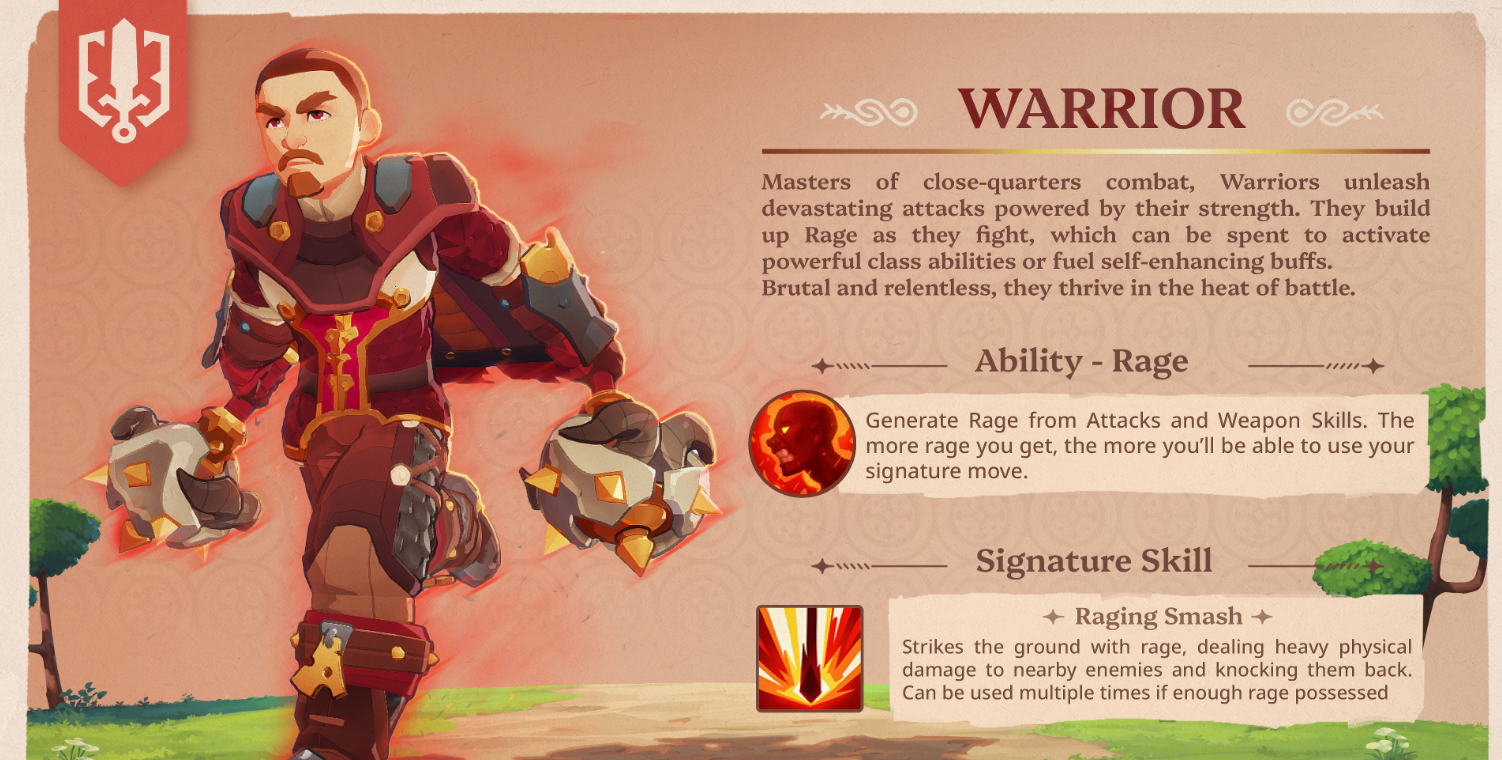
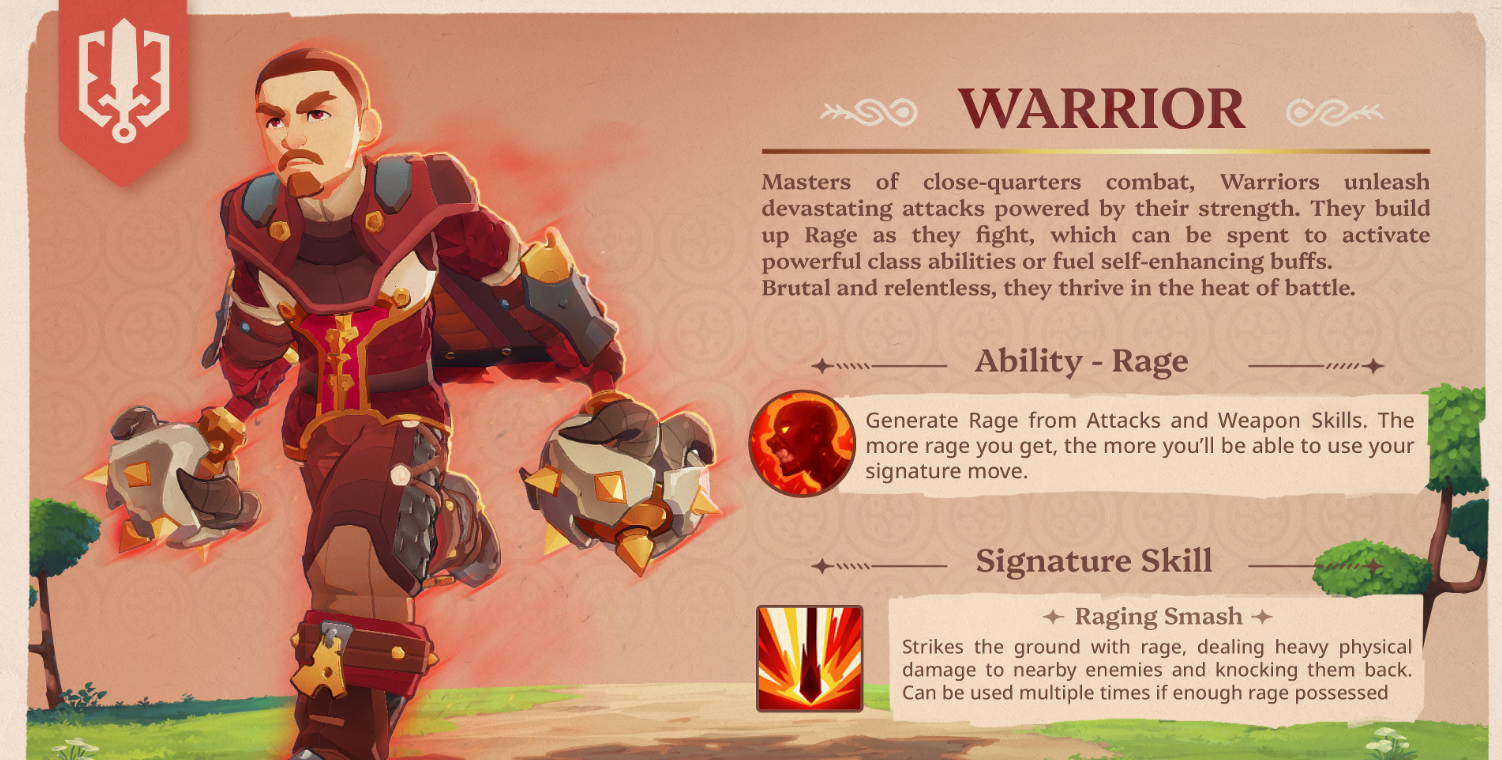
Warrior is the strength based melee class in Farever, built around close range fighting, Rage generation, and heavy physical attacks.
For a deeper breakdown of Rage, Raging Smash, Warrior skills, and early build direction, read the Farever Warrior guide.
The Warrior's main class mechanic is Rage. Rage is generated through attacks and Weapon Skills, then spent on class abilities or self enhancing buffs. That gives Warrior a simple but useful rhythm: stay in the fight, build Rage, then spend it when a stronger hit or defensive push is needed.
Warrior's signature skill is Raging Smash. It strikes the ground with rage, deals heavy physical damage to nearby enemies, and knocks them back. It can also be used multiple times when enough Rage is available, which makes resource management a real part of the class instead of background decoration.
Warrior is the best first class for a safer melee start. It fits players who want to tank, play front line DPS, block actively, and stay close to enemies without needing a delicate setup before every fight. It has the most obvious beginner friendly loop of the 4 launch classes.
Rogue Class Explained
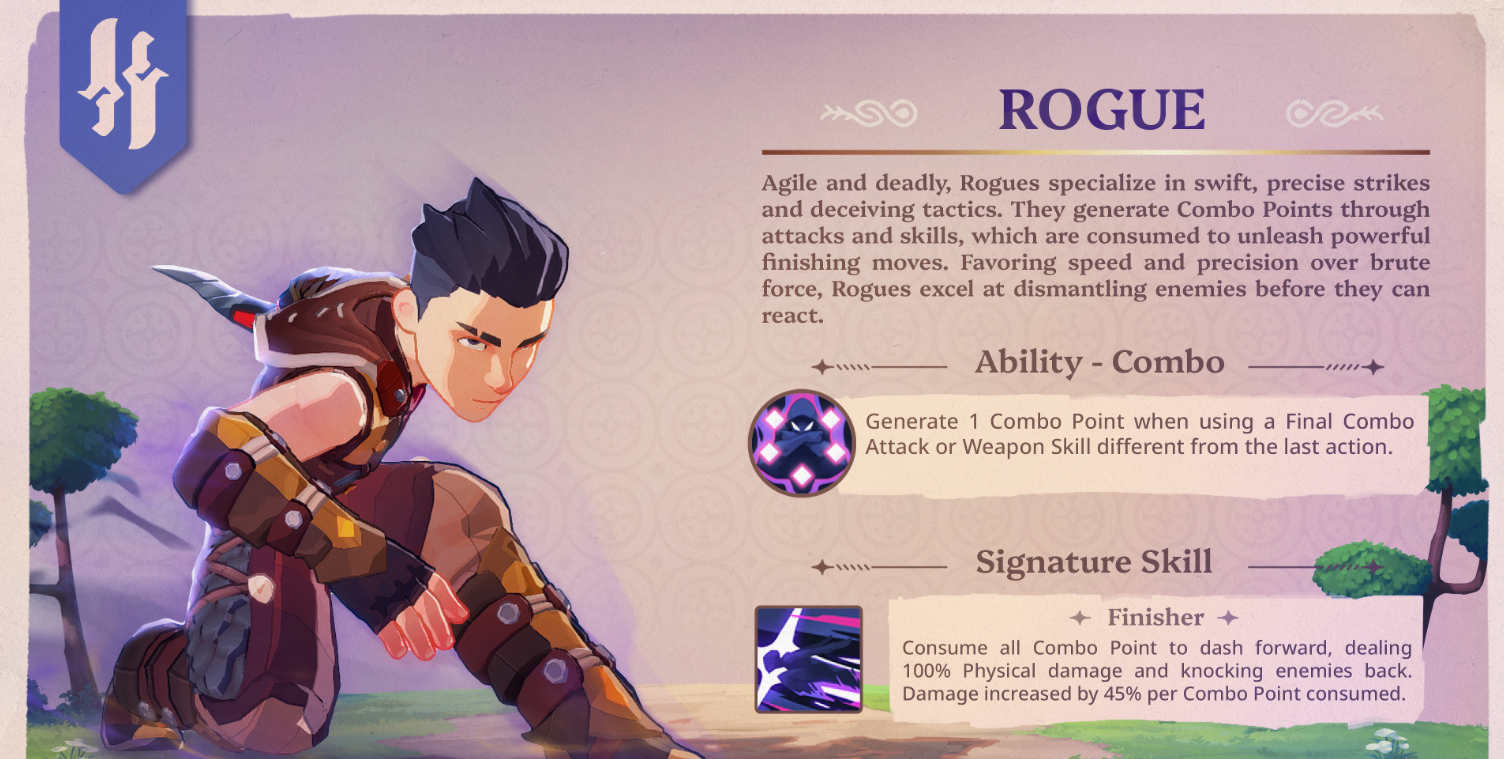
Rogue is the fast physical damage class in Farever, built around movement, action variety, Combo Points, and burst windows.
For a deeper breakdown of Combo Points, Finisher, Rogue skills, and early build direction, read the Farever Rogue guide.
Rogue's main class mechanic is Combo. Rogue generates 1 Combo Point when using a Final Combo Attack or a Weapon Skill different from the last action. That means Rogue is not designed around repeating the same move forever. The class rewards a cleaner rhythm where attacks and Weapon Skills are rotated to keep Combo Points building.
The signature skill is Finisher. Finisher consumes all Combo Points to dash forward, deal 100% Physical damage, and knock enemies back. Its damage increases by 45% for each Combo Point consumed, so Rogue gets stronger when Combo Points are built before the skill is used.
Rogue is the best class for players who want speed first. It should feel sharper than Warrior, but also less forgiving if the attack flow gets sloppy. The class has a strong "keep moving, build points, finish hard" identity, which is exactly why it will probably be the early favorite for anyone who values movement over standing in front of danger and politely trading blows.
Mage Class Explained

Mage is the magic damage class in Farever, built around Spark, Conduits, and spell timing.
For a deeper breakdown of Spark, Sparkmaster, Spark Beam, Mage skills, and early build direction, read the Farever Mage guide.
The Mage's main class mechanic is Sparkmaster. Using a Weapon Skill or Final Combo Attack consumes Spark. When enough Spark is available, consuming it activates a Conduit. Mage can select any combination of Conduits, which gives the class more build shaping than a simple spell spam setup.
The shown Conduit examples are Shard and Power. Shard fires 2 shards that deal magic damage. Power increases magic mastery and can stack. That gives Mage a clear damage engine: spend Spark, trigger Conduit effects, and keep the spell loop running.
Mage's signature skill is Spark Beam. It channels a beam that deals 200% Magic damage over 2 seconds, and each tick regenerates 12 Spark. That makes Spark Beam both a damage tool and a resource recovery tool, which is a nice setup for players who like keeping a class engine alive instead of dumping everything at once and praying the enemy had the decency to fall over.
Mage is the best class for players who want ranged magic pressure and a little more resource planning. It is not as blunt as Warrior or as zippy as Rogue, but Spark and Conduits give it a stronger spellcraft identity.
Cleric Class Explained
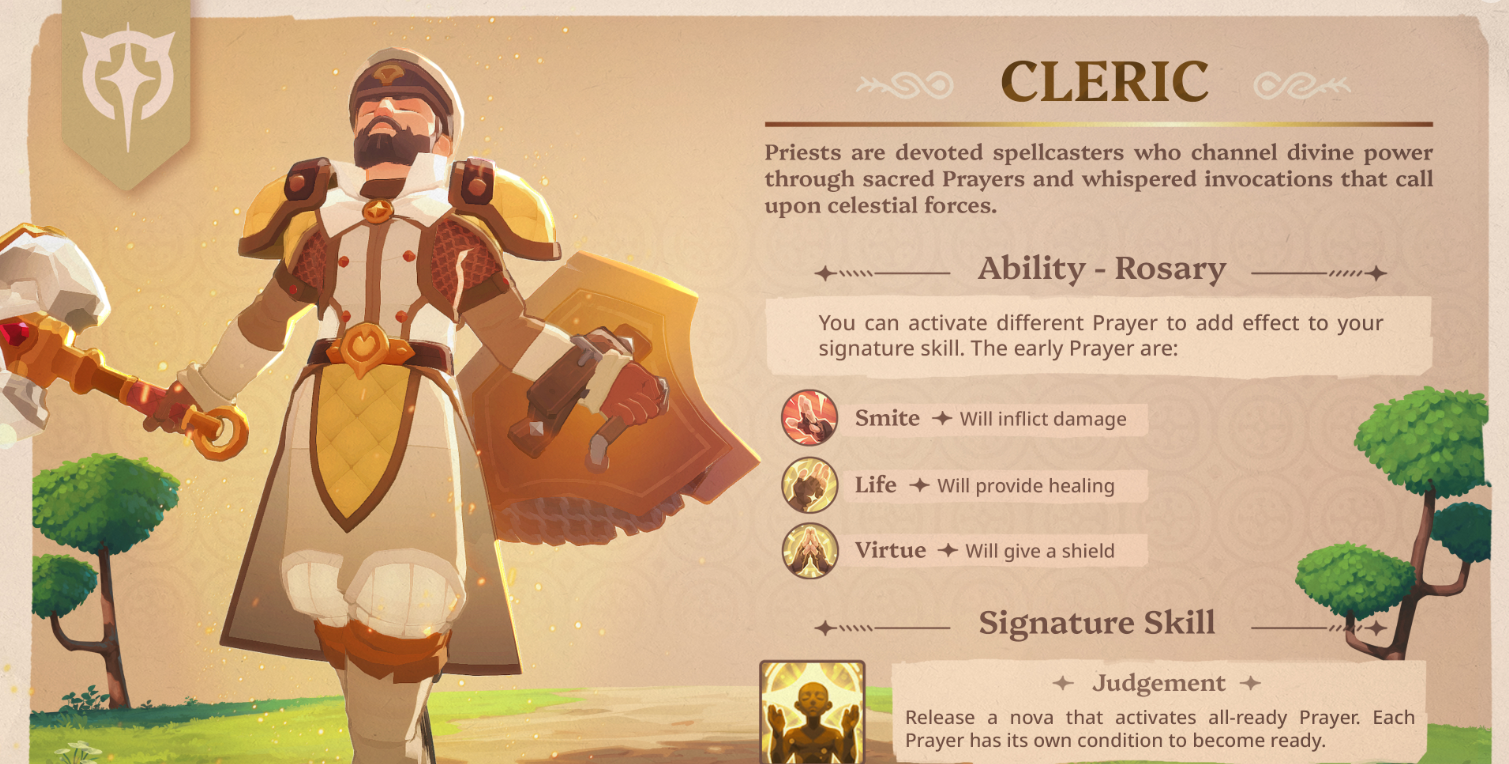
Cleric is the divine support class in Farever, built around Prayers, healing, shielding, and flexible Judgement effects.
For a deeper breakdown of Rosary Prayers, Judgement, Cleric skills, and early build direction, read the Farever Cleric guide.
The Cleric's main class mechanic is Rosary. Cleric activates different Prayers to add effects to its signature skill. The shown Prayers are Smite, Life, and Virtue. Smite adds damage, Life provides healing, and Virtue gives a shield.
Cleric's signature skill is Judgement. Judgement releases a nova that activates all ready Prayers. Each Prayer has its own condition to become ready, so Cleric has to manage timing instead of pressing one support button whenever the party looks sad.
Cleric is the best class for healing, shielding, and safer co op progression. It should be especially strong for groups that already have damage covered and need someone keeping fights stable. For solo play, Cleric also has a practical advantage because healing and shielding can cover mistakes while still giving access to divine damage through Smite. Players already thinking ahead to Farever's planned PvP modes will also find Cleric's healing and shielding toolkit worth keeping in mind for group PvP scenarios.
| Cleric Prayer | Effect |
|---|---|
| Smite | Adds damage. |
| Life | Provides healing. |
| Virtue | Gives a shield. |
Farever Class Comparison
The cleanest way to compare Farever classes is by looking at what each class is trying to build and spend during combat. The class resource tells most of the story.
| Class | Combat Style | Main Loop | Pick This Class For |
|---|---|---|---|
| Warrior | Melee brawler | Build Rage through attacks and Weapon Skills, then spend it on heavy class power. | Safe melee play, tanking, blocking, and direct physical damage. |
| Rogue | Fast striker | Build Combo Points by rotating actions, then spend them with Finisher. | Speed, movement, burst damage, and active attack rhythm. |
| Mage | Spellcaster | Spend Spark to trigger Conduits, then use Spark Beam to deal damage and regain Spark. | Magic damage, spell setup, Conduits, and resource timing. |
| Cleric | Support caster | Prepare Prayers, then activate ready effects through Judgement. | Healing, shielding, support, and safer group play. |
Warrior and Rogue are the most immediate action picks. Warrior has the smoother learning curve because Rage comes from normal combat actions. Rogue has more movement and burst, but it also expects cleaner action variety to keep Combo Points moving.
Mage and Cleric are the better picks for players who enjoy class systems with setup. Mage is focused on Spark and Conduits, while Cleric is focused on Prayers and Judgement. Both classes should reward timing more than button mashing, which is deeply unfair to button mashers but probably healthy for the game.
Which Farever Class To Play First
Warrior should be played first for the safest start, Rogue for the fastest combat feel, Mage for spell damage, and Cleric for support or co op groups.
Warrior is the cleanest first character for players who want a reliable melee class. Rage is easy to understand, Raging Smash gives clear payoff, and the class has a strong front line identity. It is the least complicated class to recommend to someone who wants to learn the game without fighting the class kit at the same time.
Rogue is the better pick for players who care about movement and burst. Combo Points give it a more active rhythm, and Finisher creates a clear payoff for building points first. It is probably the class that will feel best to players who enjoy quick movement and sharp damage windows.
Mage is the best pick for magic damage. Sparkmaster, Conduits, Shard, Power, and Spark Beam all point toward a class that rewards spell flow and resource timing. It should appeal most to players who want their class to feel like a magic engine instead of a basic ranged attacker.
Cleric is the best pick for support. Smite, Life, Virtue, and Judgement let the class cover damage, healing, and shielding in one kit. For co op groups, Cleric is the obvious early comfort pick because it can keep a party alive while still contributing to fights.
Final Blurb
Farever's 4 Early Access classes all have a clear role. Warrior brings the sturdy melee start, Rogue brings speed and Combo Point burst, Mage brings Spark based magic damage, and Cleric brings Prayers for healing, shielding, and divine support.
The best class depends on what the first character needs to do. Warrior is the safest first pick, Rogue is the fastest, Mage has the strongest spell setup, and Cleric is the best support choice. The lineup is small, but it covers the important playstyles cleanly, which is better than launching with 12 classes where 8 of them are just different hats for hitting goblins. From there, understanding how weapons and the Arsenal system work is the natural next step for building around whichever class feels right.