Mistfall Hunter Best Sorcerer Build Guide
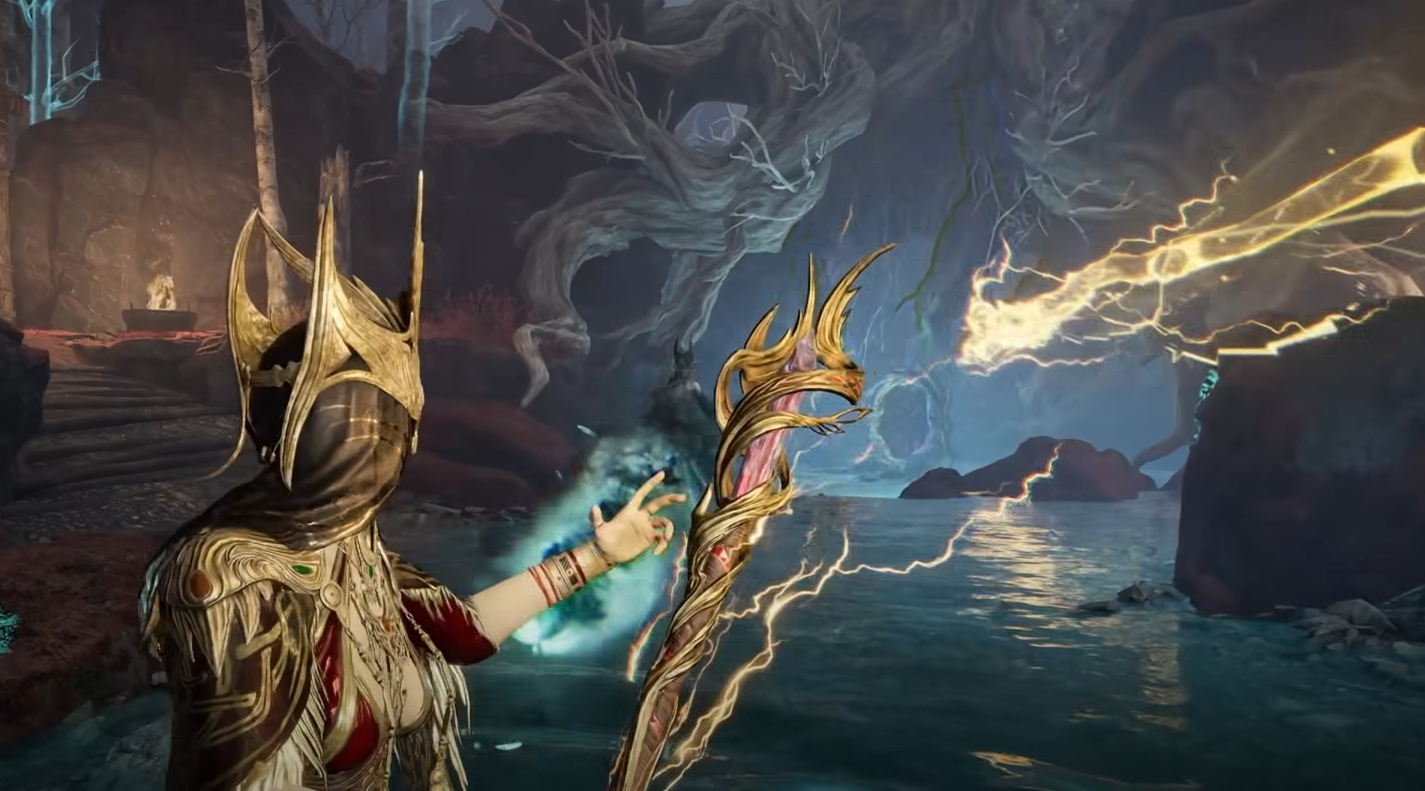
Sorcerer has enough damage to erase groups of enemies, but the class only looks effortless when the battlefield is already under control. Its low health and limited mobility make close-range pressure extremely dangerous, so a good build needs more than the largest spell available. It needs a reliable way to stop enemies from reaching you in the first place.
This setup combines fire and ice spells with Deep Freeze, Gravitational Vortex, and one defensive option. The goal is to establish control, group or freeze the most dangerous targets, and then spend your major damage while they cannot interrupt the cast. It works particularly well in PvE and trios, while retaining enough protection to handle solo expeditions and unexpected PvP.
Jump To Section:
Build Overview
Fire and Ice Combos
Best Sorcerer Skills
Defensive Spells
Talents and Itemization
Combat Rotation
Solo and Trio Adjustments
Common Mistakes
Best Sorcerer Build Overview
The strongest general Sorcerer setup is built around three jobs: stopping an approach, concentrating enemies into a predictable area, and dealing enough burst damage to end the fight before your control expires.
Deep Freeze provides the most dependable answer to a target that is already threatening your position. Gravitational Vortex handles groups by pulling enemies together and stunning them, creating the setup needed for Meteor Impact, Stardust Tempest, or another heavy area spell.
Fire and ice should both be represented in the build. Alternating between the two schools amplifies the Sorcerer’s damage, so repeatedly casting one element leaves a meaningful part of the class unused. A straightforward fire spell such as Fire Bolt can maintain pressure, while ice supplies the control needed to safely prepare a larger attack.
The final slot should normally be reserved for protection rather than another damage spell. Cryptic Ward, Arcane Armor, Forbidden Gate, and Mistwalk all address different dangers, but each is more valuable than a redundant attack when Shadowstrix or Withered Knight reaches melee range.
The Sorcerer ranks among Mistfall Hunter’s strongest PvE and group classes, although its low tolerance for mistakes keeps it below the more durable options in some situations. Our Mistfall Hunter class tier list compares its damage ceiling with the survivability and utility offered by the rest of the roster.
Build Around Fire and Ice Alternation
The Sorcerer’s fire and ice schools should function as one damage engine rather than two separate themes. Alternating elements increases the value of each cast, while ice naturally prepares enemies for the slower and more destructive fire spells.
Begin with ice when the target is mobile or already moving toward you. A freeze or slow creates a safer casting window and prevents the enemy from simply walking out of the next attack. Fire can then capitalize on that control with heavier damage.
Against a target that has not noticed you, the order can be reversed. Opening with fire applies immediate pressure and forces a reaction, after which ice can stop the retreat or punish an enemy that tries to rush your position.
The important part is maintaining the alternation without turning the rotation into a rigid sequence. If an enemy is already frozen, there is little reason to spend another control spell solely to preserve an ideal pattern. Use the element that solves the current problem, then return to the alternating rhythm once the battlefield is stable.
Best Sorcerer Skills
Deep Freeze is the central control tool because it protects the Sorcerer from the situation that causes most deaths: an enemy reaching close range while important spells are still being cast. It can stop a dangerous PvE target, interrupt pressure from another Hunter, or hold an enemy in place long enough for a larger spell to land.
Gravitational Vortex gives the build its strongest setup against groups. Pulling enemies together increases the efficiency of every area spell that follows, and the stun prevents the group from immediately scattering or interrupting the cast.
Vortex should not be thrown at the first enemy you see. Its real value appears when several targets can be caught or when controlling one specific area matters more than dealing immediate damage. Waiting a moment for enemies to converge often produces a much stronger result.
Meteor Impact is the better choice when you want concentrated burst damage against enemies held in place. It pairs naturally with Vortex or Deep Freeze because both reduce the risk of the target escaping before the impact.
Stardust Tempest is better suited to sustained area coverage. It can punish a larger pack, control a chokepoint, or force another player to abandon a route rather than walking directly through the spell.
Fire Bolt provides a more practical source of repeatable pressure between major cooldowns. Sorcerer becomes vulnerable when every equipped spell is a large commitment, so keeping one attack available for ordinary enemies and shorter openings makes the build less dependent on perfect setup.
Thunder Pierce offers another ranged damage option when a fast and direct attack is more useful than a delayed area spell. The exact choice between it and another offensive ability depends on whether you need more immediate pressure or additional crowd-clearing power.
Choose One Defensive Layer You Will Actually Use
Cryptic Ward and Arcane Armor improve the Sorcerer’s ability to survive damage that would otherwise remove a large portion of its health. They are useful when avoiding every hit is unrealistic, particularly in PvE encounters with several sources of damage.
Forbidden Gate is more proactive. Instead of helping after an enemy reaches you, it can block a route, protect an objective, or make a chokepoint much harder to cross. This becomes especially valuable around extraction areas, where opponents often have limited approaches and cannot simply wait forever for the obstruction to stop mattering.
Mistwalk provides movement and repositioning, making it the better option when the main danger is being trapped rather than slowly worn down. It gives the Sorcerer a way to relocate after a melee class commits, although it should be saved for that moment rather than spent to move slightly faster between ordinary enemies.
Do not equip several defensive tools and then play as if they make the class durable. Sorcerer still has the lowest health pool and remains vulnerable once an opponent stays within melee range. The defensive slot creates one opportunity to recover control; it does not turn the class into Mercenary.
Sorcerer Talent and Item Priorities
The supplied information does not identify specific Sorcerer talent names, so the safest build approach is to prioritize effects according to the job they perform rather than inventing a fixed talent list.
Elemental damage and any bonuses tied to alternating fire and ice should receive the highest offensive priority. The build already intends to move between both schools, so these bonuses improve the normal rotation rather than requiring an additional condition.
Cooldown reduction is particularly valuable because the Sorcerer’s safety depends on having control available when an enemy commits. Reducing the downtime on Deep Freeze, Gravitational Vortex, or a defensive spell provides more practical value than adding damage to a rotation that already kills quickly when everything lands.
Cast speed and effects that reduce the risk of interruption are also useful. Large Sorcerer spells are most dangerous when the enemy has enough time to move out of the area or reach you before the animation finishes.
Defensive itemization should focus on surviving the first mistake rather than trying to match a melee class’s health or protection. A modest increase in durability can prevent an ambush from ending the fight immediately, giving you enough time to freeze the attacker, use Mistwalk, or place a barrier.
Pure damage remains valuable, but it should be added after the build can execute its spells reliably. Increasing Meteor Impact damage achieves little when every fast enemy forces you to cancel or abandon the cast.
How to Play the Sorcerer Build
Approach each fight by deciding where the enemy should be when your main damage lands. Sorcerer is strongest when it creates a dangerous area and forces opponents to remain inside it, rather than trying to chase targets around the map with disconnected spells.
Against a group, allow enemies to move close enough for Gravitational Vortex to catch several of them. Follow with an ice effect if additional control is needed, then cast Meteor Impact or Stardust Tempest while the group is still concentrated.
Against a single dangerous target, Deep Freeze can provide a cleaner opening than Vortex. Use the frozen window for a high-damage fire spell, then create distance before the target fully recovers.
Fire Bolt or another lower-commitment attack should handle ordinary damage between those larger sequences. Spending Vortex and a major area spell on one weak enemy leaves the Sorcerer exposed if a player or elite creature appears immediately afterward.
Do not spend every control and defensive cooldown during the opening burst. If Vortex, Deep Freeze, and Mistwalk are all unavailable at the same time, the build has no answer when a surviving enemy reaches melee range.
The cleaner rhythm is to use one spell to establish control, one to punish it, and one to remain safe afterward. That leaves the Sorcerer with a response if the original target survives or another Hunter enters the encounter.
Positioning Matters More Than Maximum Range
Playing at range does not mean standing as far away as possible. Extreme distance may protect you from melee attacks, but it can also make enemies harder to group and give them more room to leave delayed area spells.
The better position is one that forces opponents through a narrow route. Doorways, stairs, bridges, and enclosed objective areas improve the value of Vortex, Tempest, and Forbidden Gate because enemies have fewer directions available.
Keep solid cover within reach whenever possible. Blackarrow can pressure Sorcerer from range, while Shadowstrix can use stealth to bypass the obvious approach entirely. Open ground gives both classes more freedom to attack on their terms.
Against Mercenary, avoid allowing the fight to settle into a sustained close-range exchange. Against Withered Knight, preserve enough control to respond after its initial approach rather than assuming one freeze will permanently solve the matchup.
Shadowstrix is the most dangerous opponent because stealth makes it harder to prepare the battlefield in advance. If you suspect one is nearby, avoid spending every cooldown on PvE and remain close to a route that Mistwalk or a barrier can protect.
Adjusting the Build for Solo and Trio Play
Solo Sorcerer needs a balanced loadout because there is no teammate available to protect the casting area. Deep Freeze and a defensive spell should be treated as mandatory parts of the setup, even if replacing one of them with additional damage produces a more impressive burst.
Solo fights should also be shorter. Sorcerer has enough damage to eliminate enemies quickly, but extended encounters create more opportunities for a third party to arrive while your control spells are unavailable.
Our Mistfall Hunter best solo class guide explains why Sorcerer has a high solo ceiling but less room for error than Mercenary or Shadowstrix.
In a trio, the Sorcerer can lean further into area damage. A Mercenary or Withered Knight can hold attention near the frontline, allowing Vortex and Meteor Impact to be cast without accepting the same risk faced during a solo expedition.
Deep Freeze still matters in a group because it creates openings for melee teammates and stops an enemy diving the backline. Forbidden Gate also becomes more useful when the team can coordinate around the route it blocks instead of treating it only as a personal escape tool.
Using Sorcerer at Extraction Points
Extraction areas suit the Sorcerer because enemy routes are usually easier to predict. Gravitational Vortex can disrupt a group approaching together, while Forbidden Gate and Stardust Tempest can make a doorway or narrow path temporarily unsafe.
Do not stand directly beside the Returner Woodling unless you are the player beginning the channel. The Sorcerer is more useful covering the approaches from a protected position where it can see an enemy before they reach the extraction area.
During solo runs, clear nearby PvE enemies before starting the bell. The Sorcerer can remove groups quickly, but being interrupted during the channel forces you to regain distance and establish control all over again.
Our Mistfall Hunter extraction guide covers the Returner Woodling, the five-second bell channel, extraction campers, Safe Pockets, and Merchant Woodlings.
Common Sorcerer Build Mistakes
The most common mistake is equipping too many high-damage spells. The build may clear one perfect group instantly, but it becomes unusable once those spells are on cooldown and a surviving enemy continues applying pressure.
Another mistake is using Deep Freeze only as part of a planned damage combo. The spell is also an emergency control tool, and spending it on an enemy that was already harmless can leave the Sorcerer defenseless against the next threat.
Gravitational Vortex is often cast too early. Catching one target provides some value, but waiting until enemies converge can transform it into the setup for an entire group clear.
Sorcerer players also have a tendency to retreat in a straight line while continuing to cast. This makes movement predictable and may lead directly into another enemy or an exposed section of the map. Move toward cover or a chokepoint that improves the next spell rather than creating distance with no plan.
Finally, do not mistake Arcane Armor or Cryptic Ward for permission to trade hits. Their purpose is to keep one mistake recoverable, not to erase the Sorcerer’s core weakness.
Control the Fight Before Spending the Damage
The best Sorcerer build combines fire and ice with Deep Freeze, Gravitational Vortex, one major area spell, and a defensive option suited to the content you are playing. Meteor Impact provides concentrated burst, Stardust Tempest offers wider area pressure, and Fire Bolt or Thunder Pierce keeps the class functional between major cooldowns.
The build succeeds when control and damage are treated as one sequence. Freeze or group the target, punish the opening with the opposite element, then preserve enough protection to survive anything that remains.
Sorcerer has one of the highest damage ceilings in Mistfall Hunter, but that damage only matters while the class still controls its casting space. Build enough protection to keep that space intact, and the Sorcerer becomes one of the strongest PvE and trio classes available.
If the class feels too fragile or dependent on positioning, our guide to switching classes in Mistfall Hunter explains how class changes, valuable-item restrictions, fees, and the reversion period work.