Pax Autocratica Tips for Running a Better Regime
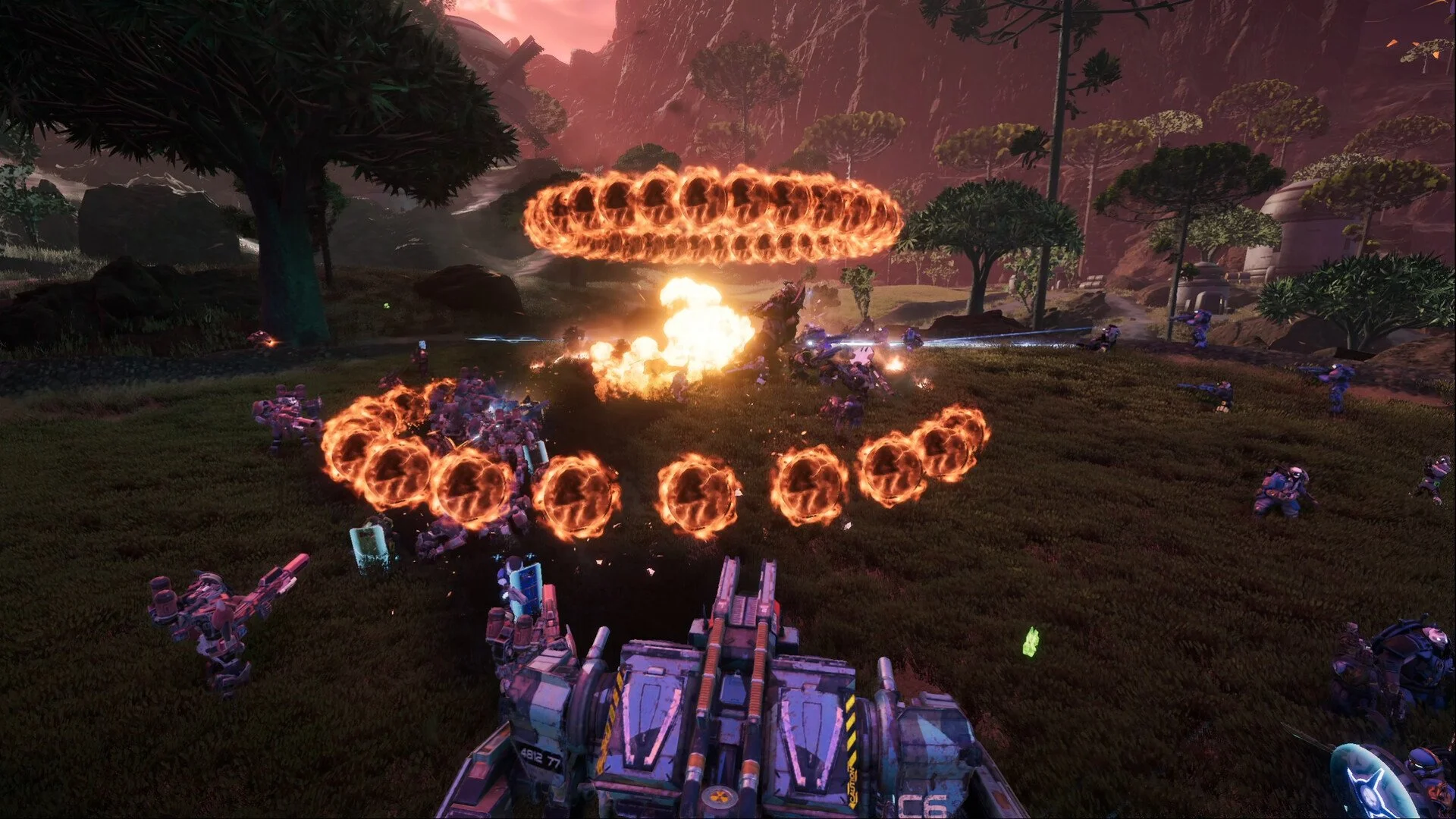
Pax Autocratica has a habit of making the thing directly in front of you look more important than it actually is. When you are at the colony, it feels like a colony sim. Once you leave, suddenly the only thing that seems to matter is your squad and whatever Core Fragments you can stack together. Then you come home and discover that half the people who normally keep the base moving were on the ship with you.
That is where most of my early priorities would change. The game is not really asking you to build the strongest colony or the strongest expedition separately. It is asking you to keep one system from quietly sabotaging the other, which means some of the best decisions are the ones that look inefficient when you only judge them from the screen you are currently standing in front of.
Jump To Section:
Your Strongest Soldiers May Be the Wrong Ones to Bring
Build a Colony That Works Without You
Every Extra Map Stop Needs to Earn Its Cost
Capturing Enemies Is Really an Economic Strategy
Combat Has Its Own Economy
Give Each Expedition Build an Identity
Your Political Decisions Eventually Reach the Factory Floor
Going Home Early Can Be the Greedy Play
Your Strongest Soldiers May Be the Wrong Ones to Bring
The obvious way to prepare for an expedition is to grab the best fighters you have, especially after ship research begins increasing how many soldiers you can deploy. The problem is that those soldiers do not exist in two places at once. Anyone you take into space stops contributing to the jobs they normally perform at the colony, so the strongest possible combat squad can also be the squad that removes exactly the workers your economy depended on.
I would start looking at expedition soldiers in pairs: what do I gain by bringing this person, and what disappears from the base when I do? A soldier who is only slightly worse in combat but much less important to an active production chain can be the better choice overall, because the expedition still gets enough firepower without forcing the colony to spend the entire trip falling behind.
This is also why assigning soldiers to basic jobs such as mining, logging, and gathering matters even when the colony seems calm. They can leave those assignments for other work and return afterward, which means the job acts more like a productive default than a permanent restriction. The less idle time your population has between important tasks, the less you need to compensate by constantly expanding.
Build a Colony That Works Without You
The best test for a Pax Autocratica production chain is not whether it works while you are standing there fixing it. It is whether you can leave the planet and come back without discovering that one missing handoff stopped everything downstream.
The Resource Transport Station is important for exactly this reason. Greenhouses, Animal Farms, Deep Drill Towers, and Wood Harvest Plants can all produce resources, but output sitting where it was created is not the same thing as output reaching the Warehouse Center. If collection cannot keep up, another producer does not really give you another producer; it gives you another place for resources to pile up.
I would therefore expand backward from the bottleneck instead of forward from the thing I want more of. If production exists but transportation is failing, improve transportation. If materials are arriving but you keep manually restarting the same crafting job, use the Warehouse Center's production modes instead. Stock Mode is particularly useful for items you always want sitting above a minimum quantity, while Order Mode makes more sense for a one-time batch and Continuous Mode should be reserved for something you are happy to manufacture whenever the inputs exist.
Once those systems are doing their jobs without constant intervention, leaving on an expedition stops feeling like abandoning the factory floor.
Every Extra Map Stop Needs to Earn Its Cost
Pax Autocratica quietly makes exploration more expensive as you do more of it. Moving farther through the space map raises Enemy Strength, while completing battles pushes Expedition Progress toward the final confrontation. That means another node is never simply another chance at loot; it is also part of the price you will pay in later encounters.
I would judge each detour by what the expedition currently lacks. If I need Core Fragments badly enough that another stop could complete the build, increasing Enemy Strength may be worth it. If I already have a setup that is deleting encounters comfortably, wandering around just because unexplored locations remain can make the final battle harder without fixing anything.
This is one of the places where the game rewards having an objective before leaving the base. A resource run, merchant trip, prisoner hunt, and sector-conquest attempt should not necessarily follow the same route. You are allowed to return without defeating the Overlord, so there is no reason to turn every expedition into a full campaign when the thing you came for was already acquired three encounters ago.
Capturing Enemies Is Really an Economic Strategy
Capture Rounds initially look like specialized combat ammunition, but I think their more important role is population growth. A normal kill removes an enemy from the battlefield. A successful capture can eventually put another soldier inside your regime, where that same person may contribute to future combat or the workforce that supports it.
That makes population one of the resources you can bring home from an expedition, except unlike a normal pile of materials, a recruit can keep producing value afterward. The effect becomes even stronger when an Elite or Boss has a useful combination of soldier type and affixes, because those affixes remain after capture.
I would therefore stop treating Capture Rounds as something to use whenever an enemy happens to be weak enough. Save them for targets that would actually improve the organization you are building. If your colony already has plenty of interchangeable workers but lacks exceptional combat personnel, a strong Elite is much more interesting than another ordinary recruit. If manpower itself is the bottleneck, broader capturing makes more sense.
That turns the question from “can I capture this enemy?” into “what would this enemy become if I brought them home?”
Combat Has Its Own Economy
A fight in Pax Autocratica is not only about how much health you lose. Ammunition, healing, grenades, squad condition, and the resources generated by how you finish enemies all affect how many additional encounters the expedition can realistically support.
Melee is particularly interesting because melee kills can restore ammunition while also producing more Health Shards and improving your chances of getting Potions and Grenades. That means finishing a manageable enemy up close can effectively refund part of the expedition cost instead of spending another burst of ammunition to end a fight you have already won.
The important word there is manageable. Running into a dangerous cluster because melee has better sustain completely defeats the point if you lose more health than the drops replace. I would use it selectively when an enemy is already controlled or nearly finished, especially during longer expeditions where every resource you preserve extends the amount of time the current build can remain viable.
Medics and Second Chance fit into the same idea. They are not simply safety options; they increase how much punishment the expedition can absorb before you have to abandon it, which effectively raises the number of mistakes or difficult encounters your current trip can afford.
Give Each Expedition Build an Identity
Core Fragments are easy to evaluate like conventional roguelite upgrades where you repeatedly select whichever description contains the biggest number. That wastes a lot of what makes the system interesting, because Fragments can grant abilities and alter how weapons actually function rather than simply making the same attack stronger.
I would try to identify what the current build is becoming as early as possible. If your weapon is developing around explosions, homing attacks, energy effects, missiles, or another behavior, later Fragment choices should ideally strengthen that direction or cover a weakness it creates rather than starting three unrelated ideas at once.
The extra Core Fragment slots available through Tactical Bureau progression become especially valuable once you think this way. A slot is not merely another stat bonus; it gives you another piece with which to finish an interaction that would otherwise remain incomplete.
The Tactical Bureau itself deserves early attention for another reason too. Its mobility unlocks, including options such as double jumping, hovering, and flying, obviously help in combat, but they also make physically navigating an increasingly large first-person colony considerably less annoying. Research that improves both the shooter and management sides of the game is much harder for me to postpone than something that only adds another small production increase.
Your Political Decisions Eventually Reach the Factory Floor
Morale, Fear, and Loyalty can look like flavor attached to the dictatorship theme until citizens start working poorly, protesting, spreading dissatisfaction, abandoning the colony, or breaking down. At that point politics has become production whether you intended it to or not.
The more interesting complication is that consequences are social. Punishing one citizen does not necessarily affect only that citizen, because friends, family members, lovers, rivals, and other connections can react as well, while individual traits determine how people respond to the regime in different ways.
I would therefore be careful about judging policies entirely by their immediate result. A harsh action that solves one disciplinary problem but causes several productive workers to deteriorate may have cost more than it fixed, while throwing rewards at every problem can create a different resource problem entirely.
The useful question is not whether the colony is being ruled harshly or generously. It is whether the political state you are creating still supports the military and economic machine you need to keep expanding.
Going Home Early Can Be the Greedy Play
It is easy to think retreating means choosing the conservative option, but Pax Autocratica's progression can make leaving early the more aggressive long-term decision. You do not lose your existing soldiers, blueprints, or previous progression when an expedition fails, but you can lose part of what you collected during that trip, while continuing to explore also keeps increasing Enemy Strength.
If you already captured a soldier your colony needed, acquired useful resources, completed an important trade, or assembled enough of what you came for, returning home converts those gains into the next round of colony growth instead of gambling them for another possible reward.
You can even abort an expedition when a fight becomes too difficult without taking the same kind of losses as simply failing it, and difficulty itself can be adjusted back at the base. Higher difficulties offer better rewards, so I would rather play at a setting where successful trips are consistently feeding meaningful progression than stay at a level where every expedition becomes an all-or-nothing attempt.
That is probably the biggest shift I would make when learning Pax Autocratica: stop asking whether the current screen is optimized and start asking what happens one step later. Taking another soldier may improve the battle but cripple production. Visiting another node may improve the build but raise the final battle's Enemy Strength. Capturing an enemy may cost specialized ammunition now but solve a population problem later. Even going home can be the choice that lets you expand faster.
Pax Autocratica becomes much more manageable once you start playing those connections rather than trying to maximize every individual system on its own.