Over the Hill Tips and Tricks Guide
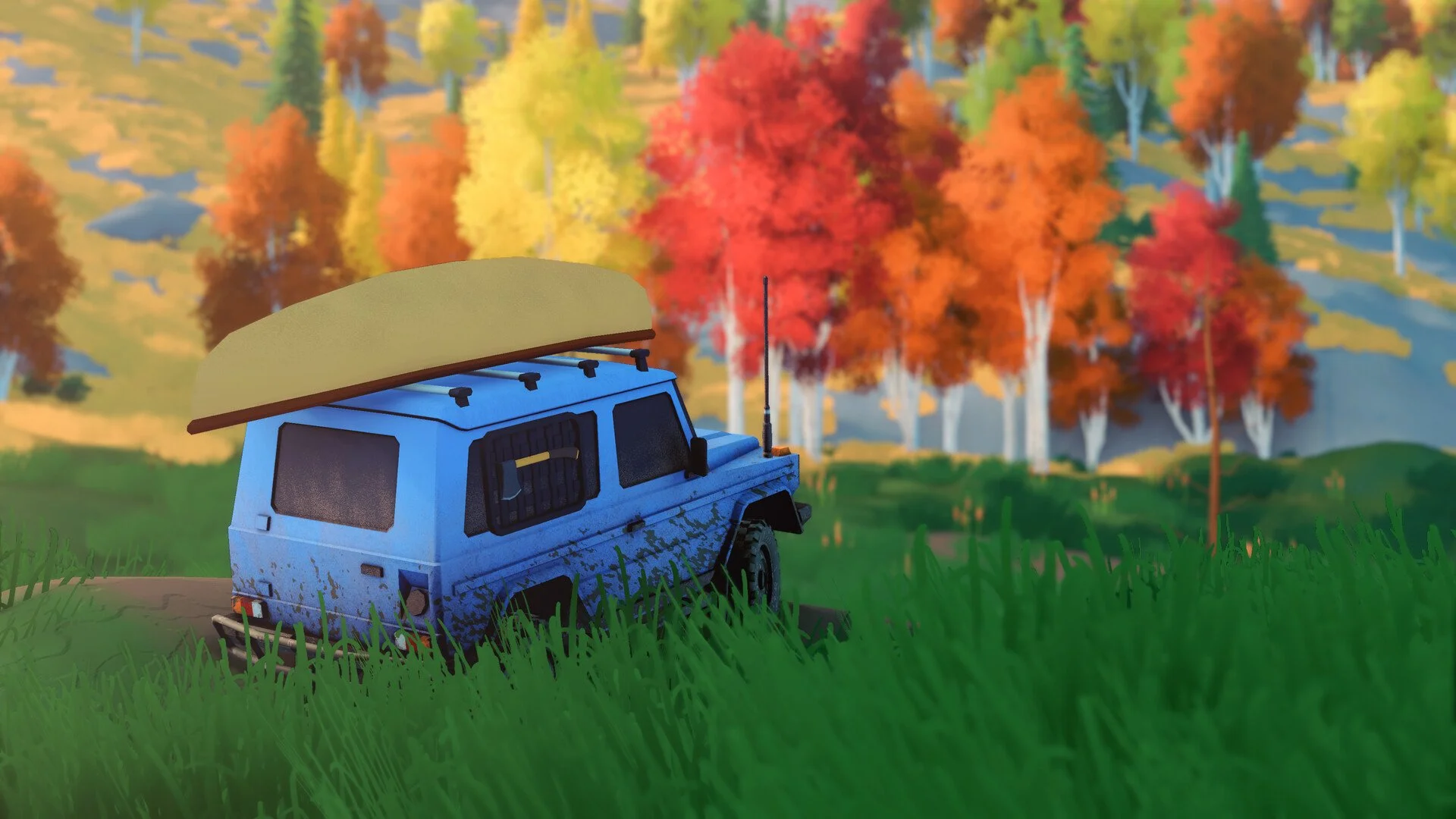
Over the Hill looks relaxed, but getting a 4x4 across its harder terrain is less about driving faster and more about understanding what the landscape is asking you to do. The strongest early strategy is to build a recovery setup, learn when to use low range, establish cabins across the map, and spend upgrades on control and flexibility before chasing raw engine power.
Jump To Section:
Best Over the Hill Tips and Tricks
Unlock Cabins Before Exploring Too Far
Use Low Range on Difficult Terrain
Read the Terrain Instead of Driving Straight
Carry Tools That Solve Different Problems
Best Upgrades to Get First
Use Weather and Time to Your Advantage
Don't Rush Challenge Trails
Explore Maps by Elevation
Use the Meteorite Radar on Explored Maps
Best Over the Hill Tips and Tricks
The best tip for Over the Hill is to prioritize traction, recovery, and route planning over speed. Upgrade your Inventory early so you can carry more tools, improve your Tires and Winch before heavily investing in the Engine, use low range when climbing or crawling across difficult terrain, and activate cabins whenever you find them so you always have useful fast-travel and recovery points nearby.
You also do not need to treat every point of interest as something that must be reached in a straight line. Over the Hill's maps are built around elevation and terrain, and the easiest route to something above you may begin far away from the destination itself.
My early priorities:
1. Find and activate cabins.
2. Upgrade Inventory for another tool slot.
3. Improve Tires for better control.
4. Increase Winch capability.
5. Add Engine power once harder climbs demand it.
6. Keep recovery tools equipped before attempting difficult routes.
Unlock Cabins Before Exploring Too Far
Cabins are some of the most useful discoveries on any Over the Hill map because they do far more than mark another point of interest. They become fast-travel locations, provide a way to advance time, and can restore a damaged vehicle.
That makes finding cabins one of the first things I would prioritize on a new map. Instead of immediately driving toward every crate or challenge trail you see, establish a few cabins first and turn the map into a network of safe return points.
This becomes increasingly useful as you move farther away from the starting area. If a route damages your vehicle, the weather deteriorates, or you simply want to explore another side of the map, having a nearby cabin removes a lot of unnecessary driving.
There is also no fuel requirement to worry about, so you do not need to plan expeditions around making it back before a tank runs dry. Your real constraints are the terrain, vehicle condition, weather, and whether you have the tools to recover from a bad situation.
Use Low Range on Difficult Terrain
Over the Hill gives you both high and low range, and learning when to switch between them matters more than simply holding the accelerator harder.
High range is suitable when you are moving comfortably along easier roads and open terrain. Low range is the better choice when the route becomes steep, uneven, muddy, rocky, or otherwise requires slower and more controlled movement.
Do not wait until the vehicle has already stopped halfway up a difficult section before thinking about gearing. If you can see that a climb or technical obstacle is coming, slow down and prepare for it before your tires lose traction.
This is also why additional Engine power should not automatically be your first upgrade. More power is useful later, but being able to put the power you already have into the ground is often more important.
Read the Terrain Instead of Driving Straight
The shortest line between you and an objective is frequently not the easiest route in Over the Hill. A marker may look close on the map while sitting above a cliff, across a ravine, or on top of a mesa that can only be approached from another side.
When that happens, stop thinking about the destination and look at the landscape around it. Search for roads, slopes, ridgelines, and gradual elevation changes that can get the vehicle onto the correct level first.
This becomes especially important on maps with large vertical features. Reaching something on top of a rock formation can involve circling around the entire structure until you find a manageable ascent rather than trying to climb directly underneath the marker.
A useful rule is to solve elevation before distance. Getting yourself onto the correct ridge or plateau is usually more important than getting horizontally close to the objective.
Carry Tools That Solve Different Problems
Your equipped tools effectively determine which mistakes you can recover from, making Inventory space one of the most valuable early upgrades.
The standard Winch is invaluable when there is a usable tree nearby, but it cannot solve every situation. A portable winch point gives you another option when the terrain does not provide a convenient anchor. Planks can help with gaps and rough surfaces, while the Jack lets you recover a vehicle that has rolled over.
The Repair Kit covers vehicle damage away from a cabin, while the weather-clearing Bell can remove another obstacle entirely when poor conditions are making a difficult drive worse than it needs to be.
A balanced exploration loadout should cover:
Traction or pulling when stuck.
Recovery after rolling the vehicle.
Crossing terrain your tires cannot handle cleanly.
Damage or weather when you are far from a cabin.
That is more useful than filling every available slot with tools that solve the same problem. The objective is not to prepare for one specific obstacle; it is to give yourself a way out when the map surprises you.
Best Upgrades to Get First in Over the Hill
I would upgrade Inventory first. Your starting capacity is restrictive enough that another tool slot immediately gives you more options whenever something goes wrong.
Tires are my next priority because better control affects normal exploration as well as difficult terrain. A stronger vehicle is not much help if it cannot maintain traction on the route you are attempting.
Winch improvements come next. Increasing the usefulness of your Winch means you can recover from positions where the nearest usable anchor would otherwise be out of reach.
Engine upgrades become more valuable after that. Harder maps and climbs eventually demand more from the vehicle, but you benefit far more from extra power once the rest of the vehicle is capable of controlling it.
Protection and other specialized upgrades are more situational. Water protection becomes useful when your route repeatedly exposes the vehicle to deep water, while general durability matters more if you are regularly damaging the vehicle on rough terrain. Neither needs to be the first thing you buy if your immediate problem is simply getting enough grip to climb.
Use Weather and Time to Your Advantage
Rain, thunderstorms, snow, and darkness can turn an otherwise manageable route into a much harder drive. You are not required to force your way through those conditions just because they appeared.
Cabins allow you to advance time, and the Camp tool provides another way to move time forward while away from one. The weather-clearing Bell can also remove poor weather when you would rather continue immediately.
This makes time and weather another resource to manage. If you have found a particularly difficult challenge trail at night during bad weather, there is little reason to insist on completing it under the worst possible conditions.
Explore somewhere else, wait until visibility improves, or use the tools available to you. Over the Hill rarely rewards rushing an obstacle simply because you happened to reach it.
Don't Rush Challenge Trails
Challenge trails are where Over the Hill asks much more from both the vehicle and the driver. These can involve narrow cliff routes, rock crawling, difficult climbs, or unstable crossings where careful wheel placement matters considerably more than it does during normal exploration.
You also do not need to complete every challenge the moment you discover it. Their rewards are cosmetic, so walking away from a difficult trail does not lock you out of an upgrade required to continue exploring.
Mark the location mentally, improve the vehicle, increase your tool capacity, and come back later. A trail that feels brutal with the starting setup can become much more manageable once you have better Tires, additional recovery options, and enough experience to recognize how the vehicle behaves on difficult surfaces.
When you do attempt one, slow down. Getting one wheel into a bad position can matter more than your approach speed, and recovering early is usually easier than continuing until the entire vehicle is committed to a poor line.
Explore Over the Hill Maps by Elevation
Over the Hill's exploration becomes more interesting once you stop treating its maps as flat collections of icons. Some locations are deliberately positioned around cliffs, mesas, hills, and layered terrain that turn reaching them into a navigation puzzle.
When you spot several undiscovered locations at higher elevation, look for one route that can get you onto that entire upper section of the map. Once you are there, explore laterally and collect everything accessible from that level before descending again.
This is much more efficient than repeatedly climbing and descending for individual objectives, and it makes the natural road network easier to understand.
Roads are not mandatory, either. Over the Hill lets you leave them and drive through forests or open terrain, so use established roads when they provide the elevation you need and then cut across country when the landscape allows it.
Use the Meteorite Radar When a Map Feels Finished
The Meteorite Radar becomes especially useful once you have already explored the obvious roads and points of interest. Activating it creates another search objective somewhere on the map and gives you a compass direction rather than simply handing you the destination.
That makes it more than another collectible tool. It gives you a reason to approach familiar terrain from a different direction and can lead you into parts of a map you previously had no reason to visit.
I would save it for the point where normal exploration begins slowing down. Early on, cabins, crates, abandoned vehicles, challenge trails, and other discoveries already give you plenty of direction. Later, meteorite hunts can turn a map you thought you understood into another navigation problem.
The same mindset applies to Over the Hill as a whole: there is rarely a need to rush toward the next marker. Build a capable vehicle, establish useful recovery points, learn the shape of the landscape, and let exploration determine where you go next.