The best way to make money in Probably Stolen is to buy goods when they're cheap, attract customers who want them, and sell when demand is favorable. Early on, scavenging and ordinary trading are your most accessible options. Once you've built up some Credits, appraisals, water purification, farming, and other production methods can provide additional income. The key is knowing what to prioritize at each stage rather than spending all your money on equipment before your shop is profitable.
Jump To Section:
How to Make Money Fast
Best Daily Money-Making Routine
Best Money-Making Methods
What to Spend Your Credits On
Money-Making Mistakes to Avoid
How to Make Money Fast in Probably Stolen
If you're starting with very little money, focus on getting something worth selling before worrying about expensive production equipment. The Dumping Ground is a useful starting point because you can scavenge items and materials at night without first purchasing them from a customer.
Scavenging comes with some risk, including injuries, so bring a bandage when possible. You also won't necessarily find valuable goods on every visit.
Once you have items to sell, your priority should be getting the right customers into the store. That's where your display case becomes important.
Attract Buyers Instead of Waiting for Them
Probably Stolen's customers are interested in different categories of goods. Someone looking for food isn't automatically going to buy your spare materials or medical supplies.
Use the display case to attract customers interested in merchandise you're actually carrying. If your inventory consists mostly of food, you want food buyers visiting the store. If you're collecting materials, you need customers interested in those products instead.
When you're short on stock, reverse that approach and use neon signs to encourage relevant sellers to visit. This helps you acquire merchandise that you can resell later.
The important distinction is simple: displaying goods helps you find buyers, while category signs help you acquire stock from sellers.
What to Do at Each Stage
| Shop Progress | Best Priority |
|---|---|
| Almost no Credits | Scavenge at night and sell useful finds. Avoid unnecessary purchases. |
| Small cash reserve | Buy discounted merchandise and attract buyers using your display case. |
| Steady daily sales | Invest in targeted seller signs or appraisal services. |
| Established business | Expand into water, farming, metal processing, wine, or animal production. |
| Saving to own the shop | Prioritize reliable profit and keep enough Credits available for rent and the eventual purchase. |
Best Daily Money-Making Routine in Probably Stolen
One of the easiest ways to waste money is to open your shop without checking what's happening in the market. The calendar helps you identify events that affect demand and pricing, giving you a better idea of what to buy and what to sell.
I'd use the following routine each day:
- Check the calendar before opening to identify shortages, production bonuses, or other market events.
- Choose whether the day is better for acquiring goods or selling existing inventory.
- Set up your display case or neon signs to attract the customers you need.
- Inspect merchandise before purchasing it, negotiate when appropriate, and avoid spending money reserved for rent.
- After closing, prepare goods for the next day through scavenging, processing, or other available production activities.
Use Surpluses to Buy and Shortages to Sell
Market events are particularly valuable when you plan ahead. A strong harvest or production event can create an opportunity to acquire goods at favorable prices. A shortage can make those same categories more valuable to buyers.
For example, consider a food-focused shop:
- During a favorable food production event, use a food-related seller sign to attract suppliers and purchase suitable inventory.
- Keep enough stock available if you expect better selling conditions later.
- When food demand rises during a shortage, put relevant merchandise in your display case to attract buyers.
You aren't guaranteed a shortage immediately after every production event, so don't tie up all your Credits waiting for one. The advantage comes from recognizing opportunities and buying inventory you can still sell if market conditions don't change quickly.
The same thinking applies to water, medical supplies, household goods, and materials. Match your trading decisions to the current market instead of buying the same products every day.
Best Money-Making Methods in Probably Stolen
Once ordinary trading is covering your expenses, you can start building income around the equipment and resources available to you. Each production method has different requirements, so the best choice is the one you can operate consistently without exhausting your cash.
1. Water Purification and Selling
Water is an attractive production business because you can improve its quality instead of relying entirely on buying and reselling finished products.
The Water Merchant scenario is particularly useful for this approach because it provides water-related equipment from the beginning. Other starts can work toward obtaining the necessary machinery.
A typical water business involves obtaining water, testing it, removing contaminants, improving its grade, and preparing it for sale. Moisture Farms can provide a renewable water source, while filters and Water Purifiers improve the finished product.
Higher-quality water can be more valuable, especially when market shortages increase demand. However, filters, machines, and containers all affect how much you actually earn.
For a full production setup, see our Probably Stolen Water Purification Guide.
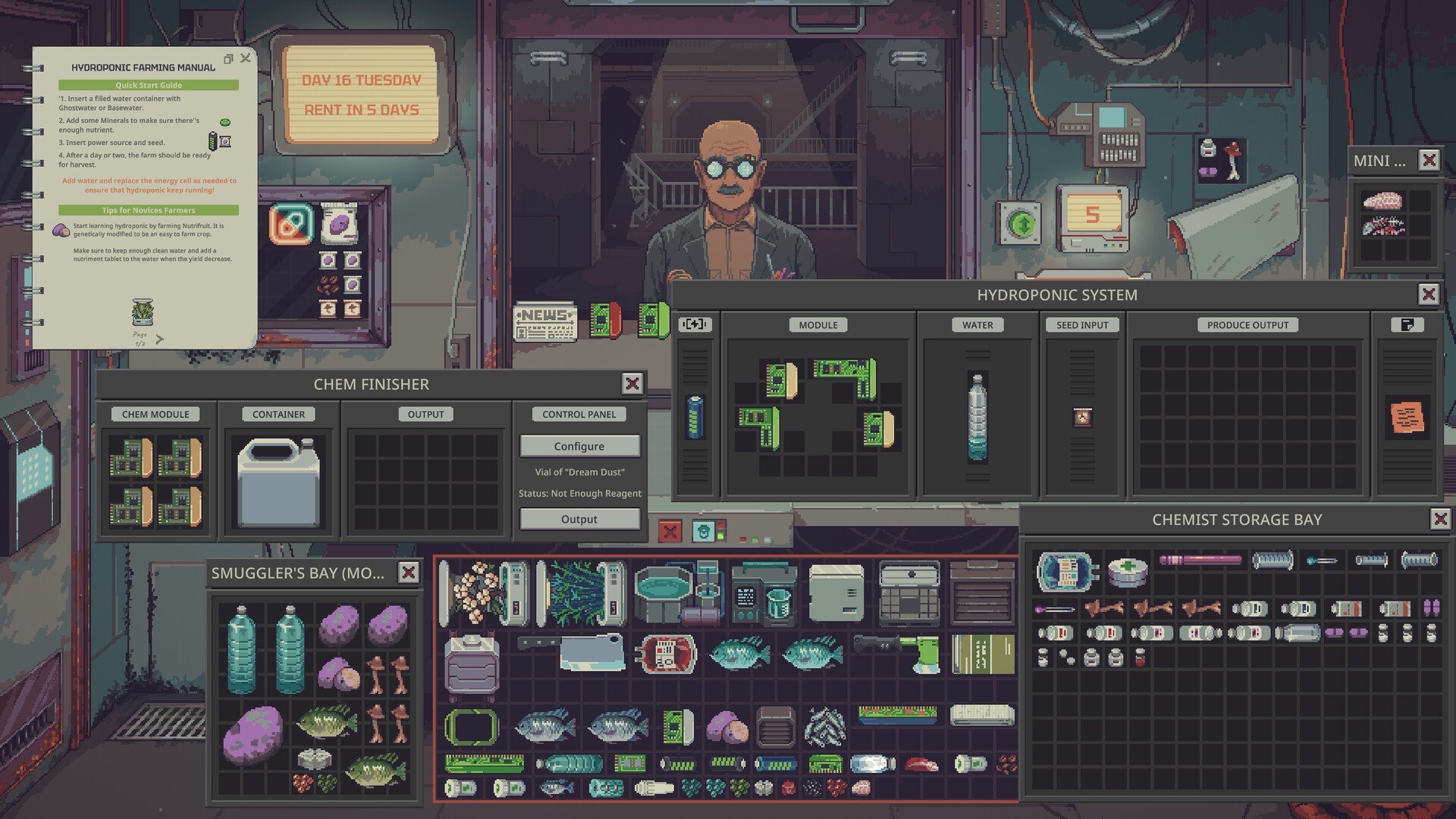
2. Hydroponic Farming and BloomBerry
Hydroponic farming gives you a way to produce food without purchasing every individual item from a trader.
BloomBerry is a useful example because its production output is predictable:
- One Bloomberry Seed produces six BloomBerries through a Hydroponic System.
- Each BloomBerry has a base value of 14 Credits.
- Six berries have a combined base item value of 84 Credits.
- BloomBerry can also be used to produce BloomBerry Wine.
The 84 Credits represent item value, not guaranteed profit. You'll still need to consider the costs of growing the crop and the amount buyers actually pay.
BloomBerry is useful because it supports both direct food sales and additional processing. You can learn more in our Probably Stolen BloomBerry Guide.
3. Medical Supplies and Appraisals
Medical supplies offer another trading category worth considering. A Medicine neon sign can attract relevant sellers, helping you build stock without depending entirely on random customer visits.
Be careful when buying unfamiliar or suspicious merchandise. Inspecting items before purchasing them is important, particularly when dealing with products that may be counterfeit, mislabeled, or damaged.
The Appraisal Board also provides an additional income stream. Once you've joined, you can earn money through appraisal work rather than relying solely on the profit from merchandise sales.
Appraisals are most useful when you can reliably identify the items you're assessing. Getting an appraisal wrong can damage your reputation, so accuracy is more important than attempting every opportunity.
4. Metal Ingots, Wine, and Rat Farming
These methods are worth considering once you're comfortable operating machinery or managing a longer production cycle.
| Method | How It Makes Money | Main Consideration |
|---|---|---|
| Metal Ingots | Process scrap and ore into ingots using a Furnace. | Material costs, energy use, and finished quality. |
| Winemaking | Produce wine and potentially increase its value through aging. | Time and inventory tied up in unsold bottles. |
| Rat Farming | Breed animals and produce goods such as meat. | Colony management, feeding, and available space. |
There's no reason to operate all three immediately. If your shop already has a dependable source of materials, metal processing may be easier to expand into. If you've invested in farming equipment, food and wine production may be a more natural next step.
What Should You Spend Your Credits On First?
Making money faster doesn't always mean buying more equipment. A purchase is worthwhile when it helps solve an actual problem with your business, such as not having enough sellers, struggling to attract buyers, or lacking a dependable product to sell.
Some early equipment and services have relatively modest entry costs. The following figures are useful budgeting references from earlier game builds, although prices should be checked against your current version.
| Purchase | Reference Cost | When It's Useful |
|---|---|---|
| Materials Neon Sign | 100 Credits | When you regularly need scrap or materials from sellers. |
| Medicine Neon Sign | 200 Credits | When you're building a medical supply trading business. |
| Appraisal Board Access | 85 Credits | When you're confident identifying items and want additional income opportunities. |
Don't assume a sign immediately pays for itself. For example, if an upgrade costs 200 Credits and generates an extra 20 Credits of profit per sale, you'd need ten additional sales just to recover the purchase price.
That's why I'd prioritize upgrades that support merchandise you're already trading. Buying a specialized sign before you have any money left to purchase its goods doesn't solve your immediate cash problem.
Use Trades to Reduce Equipment Costs
Not every valuable item needs to be purchased directly. The Underground Exchange lets you barter specific goods for other items through overnight transactions.
It doesn't directly generate Credits, but a worthwhile exchange can help you obtain equipment or supplies without paying their ordinary purchase price. Always compare the value of the required materials with what you'll receive.
Our Probably Stolen Underground Exchange Guide
Money-Making Mistakes to Avoid in Probably Stolen
Even a busy shop can struggle financially if too many Credits are tied up in stock, equipment, and operating costs.
Spending Everything Before Rent Day
Rent should be accounted for before making optional purchases. Falling behind can reduce store attractiveness, potentially making it harder to bring in enough customers to recover.
Before buying a new machine or a large batch of stock, subtract your upcoming rent and essential expenses from your available Credits. The remaining amount is what you can realistically afford to invest.
If your goal is to eventually purchase the property, our Probably Stolen How to Buy the Store Guide
Buying Goods Without a Buyer in Mind
A discounted item isn't necessarily a good investment if you have no reliable way to sell it. Consider who buys the product, whether you can attract those customers, and how much space or money the item will occupy in the meantime.
This matters even more with expensive inventory. One unsuccessful purchase can leave you short on funds for several smaller, more dependable transactions.
Confusing Revenue With Profit
Always compare your selling price with the full cost of obtaining the product. A processed item might sell for more Credits than its raw ingredients, but the additional machinery, power, and materials can reduce your actual margin.
The same applies to buying suspicious merchandise. A cheap counterfeit or stolen item may come with consequences that outweigh the potential profit.
For a dependable business, I'd focus on repeating a small number of profitable transactions before expanding into multiple production systems. Check the calendar, attract the right customers, keep inventory moving, and protect your rent reserve. Once those basics are working, the Credits you reinvest into equipment have a much better chance of producing a meaningful return.