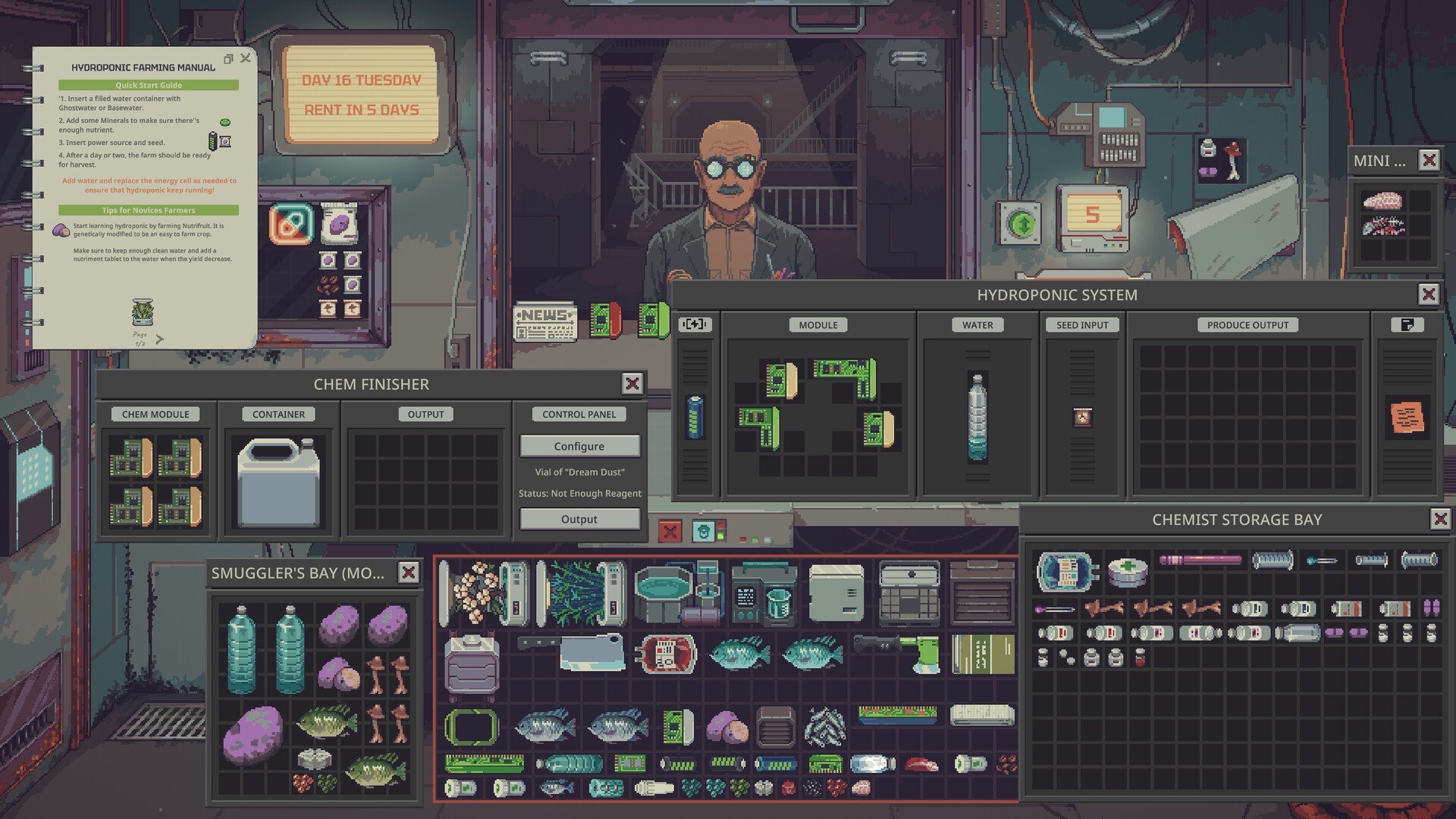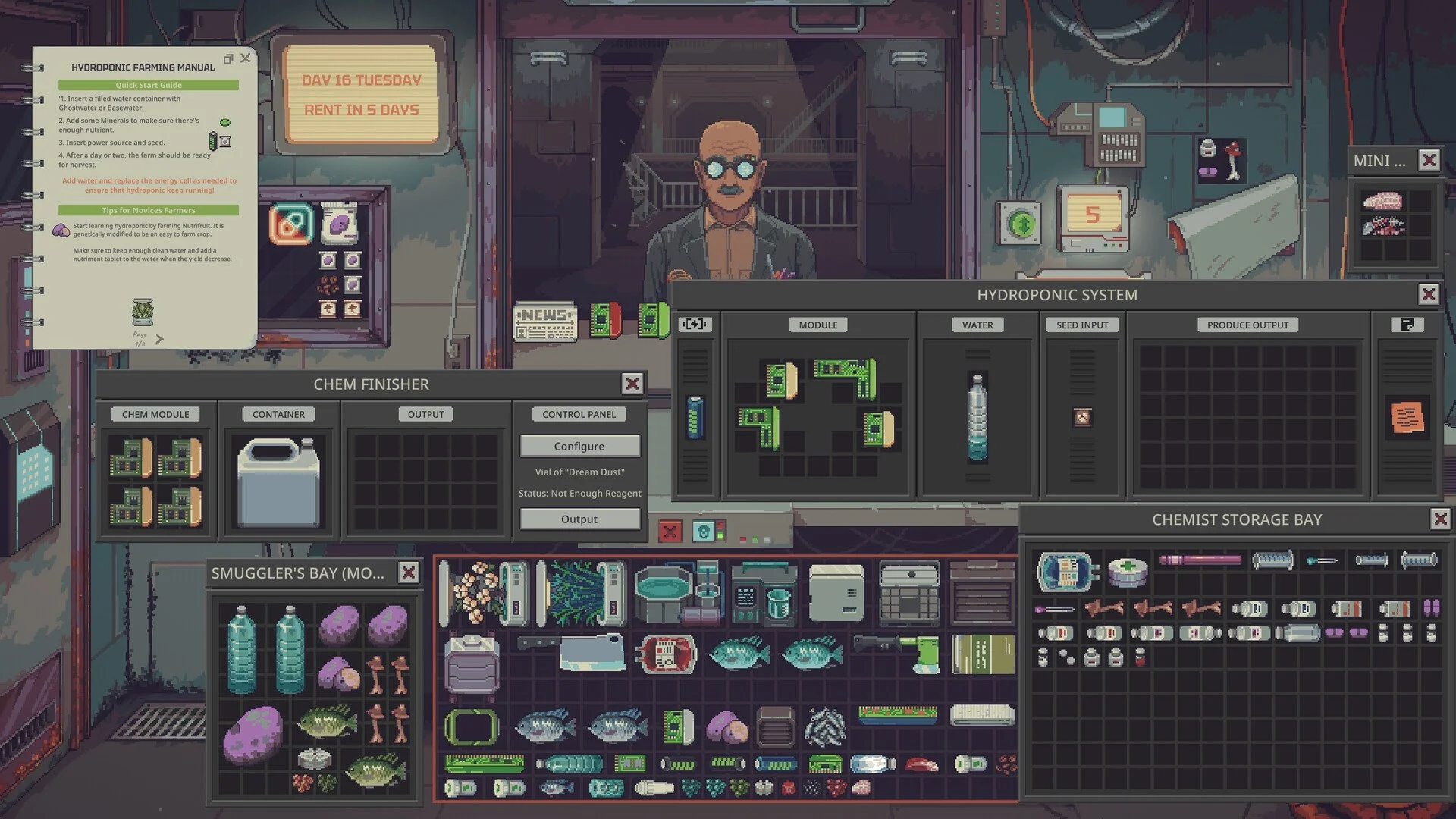
Probably Stolen gets considerably easier once you stop treating every customer, inventory window, and machine as a separate task. Small changes to how you organize your equipment, handle transactions, and prepare for the next day can eliminate a surprising amount of repetitive work. These Probably Stolen tips and tricks focus on practical shortcuts, overlooked mechanics, and smarter ways to manage your shop without making everything more complicated.
Jump To Section:
Quick Fixes for Common Problems
Tips for Running a Faster Shop
Storage and Equipment Tips
Advanced Tips Worth Knowing
Best Daily Routine
Quick Fixes for Common Problems in Probably Stolen
Before changing your entire shop setup, identify what's actually slowing you down. Most everyday frustrations have a relatively simple solution that doesn't require buying another machine.
| Problem | Better Approach |
|---|---|
| Constantly searching for tools | Keep frequently used equipment in the Toolbox and use its number shortcuts. |
| Items won't fit together | Try rotating or flipping them before rearranging everything else. |
| Too many identical containers | Give Storage Bays descriptive names and keep their contents consistent. |
| Inventory sorting takes too long | Use selection boxes and the right-click sorting menu. |
| Too much time spent inspecting customers | Evaluate whether a deal is worth pursuing before beginning detailed checks. |
| Equipment constantly needs attention | Review module placement, Power Block connections, and overnight charging. |
Tips for Running a Faster Shop
1. Keep Your Inspection Tools Together
Repeatedly searching for a Magnifying Glass, scanner, or other tool adds unnecessary work to every customer interaction.
Once you obtain the Toolbox, you can assign owned tools to its slots and access them using the number keys from 1 through 9. Dr. Jackson can sell the Toolbox after day 14.
I'd put the tools used during ordinary customer inspections in the easiest-to-remember slots. Equipment needed only occasionally can occupy the remaining positions.
This also makes complicated inspections less disruptive because you aren't constantly switching between inventories to find the same items.
2. Move Items in Groups and Learn the Window Controls
You don't need to transfer every item separately when reorganizing inventory. Drag a selection box around multiple objects to move them together, and hold Shift when dragging a selection into another inventory for more precise placement.
Right-clicking a grid inventory opens its contextual menu, where you can access sorting. Escape closes the most recently used item or paper window, while double-clicking can close container windows.
These shortcuts are especially helpful after a busy trading day, when you've accumulated several different goods and need to clear your workspace.
If you're struggling to fit something into an available space, see our Probably Stolen How to Rotate Items Guide.
3. Decide Whether a Customer Is Worth Inspecting
Not every transaction deserves the same amount of effort. Some items require more verification than others, particularly merchandise with authenticity checks, unusual conditions, or potentially misleading labels.
Before beginning a detailed inspection, consider whether you actually want the product and understand how to evaluate it.
If the deal doesn't fit your business, moving to the next customer can be more sensible than spending several minutes investigating unfamiliar merchandise.
That doesn't mean ignoring suspicious details when you do decide to trade. The point is to make the decision to pursue a transaction before committing time to every possible inspection.
4. Use Faction Colors as an Early Identification Clue
Customer dialogue provides another way to identify who you're dealing with. Text colors correspond to factions, including red for Security and gray for the Lower Levels.
This is useful when a character's appearance doesn't make their affiliation obvious. You can recognize which faction is involved before deciding how to handle the transaction.
Unusual dialogue can also provide an early warning during OGS encounters. Treat strange phrasing as a reason to investigate further, not automatic proof that a customer should be confronted or attacked.
The distinction matters because mistakes involving Security, faction relationships, or suspected enemies can have consequences beyond an ordinary failed sale.
Storage and Equipment Tips
5. Organize Storage by Workflow, Not Just Item Type
Giving every Storage Bay a different name helps, but you can make the system more useful by organizing containers around what happens to the goods inside them.
For example, I'd separate a larger operation into three practical groups:
- Incoming Stock: Goods that still need inspection, sorting, or processing.
- Production Materials: Ingredients and resources reserved for machines.
- Ready for Sale: Finished products that no longer need additional work.
This is an organizational approach rather than an automatic game feature, but it gives every item a clear destination. It also makes it easier to tell whether a container is holding unfinished work or goods you can immediately use.
The Blue Label can help you name these containers. Our Probably Stolen Blue Label Guide
6. Flip Modules Before Rebuilding a Machine
Machine modules can have irregular shapes, and some need to touch particular parts of a machine or other modules for their effects to apply.
When a module doesn't fit properly, try flipping it as well as rotating it. A different orientation can change where its contact points sit and make a previously awkward arrangement possible.
I'd check three things before replacing a module: whether its shape fits, whether the required connection is present, and whether its effect actually helps the machine's intended purpose.
Remember that a module can introduce disadvantages alongside its benefits. Filling every available space doesn't automatically create the best setup.
7. Let Power Blocks Serve Multiple Energy Cells
Power Blocks become more useful when you arrange equipment around their connection points instead of positioning each cell separately.
A Power Block can contribute to charging adjacent energy cells overnight. Multiple blocks can also provide combined effects when a cell connects to more than one.
Rather than placing batteries wherever there's an empty space, consider creating a dedicated charging arrangement where several cells benefit from shared Power Blocks.
This is particularly valuable for a workshop with multiple machines, since you can prepare energy cells for later use without constantly reorganizing the charging setup.
8. Expand the Right Kind of Storage
Extended Storage Bays and Expanded Machine Bays solve different space problems.
If you're struggling with merchandise, ingredients, and miscellaneous items, an Extended Storage Bay is the more appropriate option. If your problem is fitting machinery and modules together, an Expanded Machine Bay is worth considering instead.
Dr. Jackson can offer these larger storage options as your business progresses.
Before purchasing one, look at what's actually taking up your space. A bigger general-purpose inventory won't necessarily solve a complicated machine layout, and extra machine space won't help much if your main issue is piles of unsorted merchandise.
Advanced Tips Worth Knowing in Probably Stolen
9. Don't Overlook the Hidden Storage Behind the Poster
The poster conceals a small 2x2 storage area that functions as a Smuggler's Bay.
Although four inventory cells aren't much, the compartment is useful for keeping a small amount of contraband separate from ordinary merchandise. It can accommodate compact objects such as a key card or several small vials.
I'd reserve this compartment for items that benefit from having a dedicated concealed location rather than filling it with random supplies.
Once you're handling larger quantities of restricted merchandise, the limited space makes dedicated storage more practical.
10. Choose Between Fast and Low-Maintenance Rat Trapping
Rat traps can catch rats without cheese, although an unbaited trap takes longer to produce results.
This creates a useful choice depending on what you're trying to accomplish. If you're actively expanding a breeding operation, using cheese helps speed things up. If catching another rat isn't urgent, leaving a trap unbaited reduces the amount of bait you need to manage.
For larger breeding operations, naming individual rats can also help distinguish animals you're keeping for breeding from those intended for other purposes.
The important improvement is reducing repeated manual work as the number of animals increases.
11. Consider Passive Benefits When Choosing Modules
Not every machine upgrade needs to be focused on production output.
The Alarm Transmitter Module, for example, can provide Security reputation over time, although it introduces an efficiency penalty to the alarm system.
This makes it a different kind of investment from a module that simply improves ordinary machine performance.
If your goal is to build Security standing, the passive reputation benefit may justify the tradeoff. If preventing theft is your immediate priority, consider how the efficiency reduction affects the alarm's primary function.
I'd evaluate these modules based on what the entire setup accomplishes rather than looking only at the individual bonus.
12. Treat the Trash Bin as a Transaction Area
The trash bin isn't always just a place to discard unwanted items. Underground Exchange transactions also use it to submit materials and receive rewards.
This creates a potential problem when you're mixing ordinary trash with valuable items intended for an exchange.
Keep exchange materials in storage until you're ready to complete a specific trade. Before sleeping, confirm that the required quantities are correct and that janitorial service is active.
For the complete exchange process and redemption limits, use our Probably Stolen Underground Exchange Guide.
Best Daily Routine for a More Organized Shop
Probably Stolen rewards preparation, especially once you have several inventories, machines, and customer interactions to manage.
I recommend splitting your routine into a few simple stages rather than trying to handle everything as soon as it appears.
| Stage | Recommended Tasks |
|---|---|
| Before Opening | Keep inspection tools accessible, clear unnecessary windows, and prepare your working inventory. |
| During Trading | Prioritize relevant transactions, check faction clues, and move purchased goods into their designated storage areas. |
| After Closing | Sort incoming goods, prepare machines, arrange charging equipment, and clear inventory clutter. |
| Before Sleeping | Check the trash bin, confirm intended exchanges, and review anything requiring overnight processing. |
Plan Around the Save System
One final consideration is saving your progress. Probably Stolen saves when you sleep, making the overnight transition an important part of ending a play session.
If you need to stop playing soon, avoid starting another lengthy shop day without accounting for the time needed to reach the next save.
This becomes increasingly important when customer queues are long and individual inspections take more attention.
Which Tips Should You Prioritize First?
You don't need to apply every trick immediately. The most useful improvements depend on how developed your shop is.
- New shop: Learn the inventory shortcuts, organize essential tools, and get comfortable identifying customers.
- Growing shop: Establish consistent storage categories, reduce unnecessary inspections, and improve machine layouts.
- Production-focused shop: Optimize Power Block placement, module connections, and equipment organization.
- Advanced shop: Make better use of specialized storage, passive module benefits, and overnight systems.
The most effective approach is to improve the parts of your shop that create the most repetitive work. A well-organized counter makes inspections easier, a sensible storage system reduces item handling, and a properly arranged workshop cuts down on maintenance.
Once those systems are working together, running a larger business becomes more manageable without needing to micromanage every object individually.