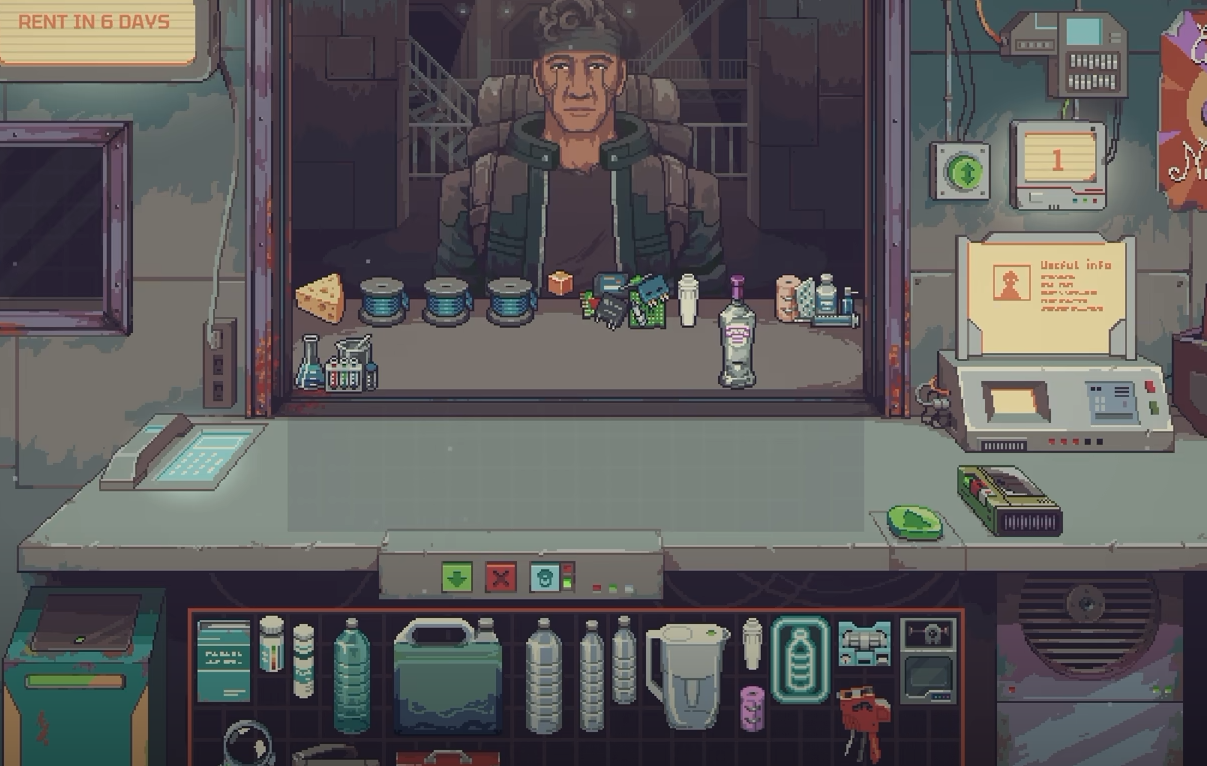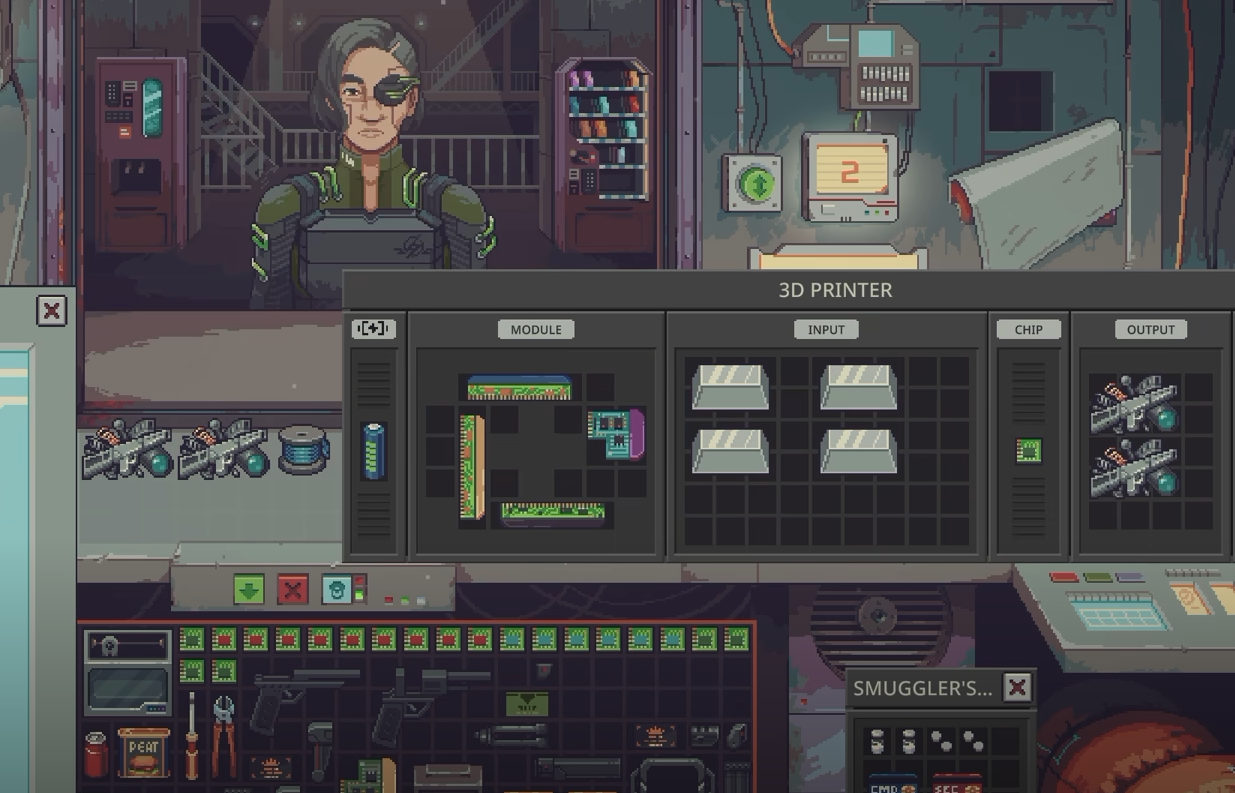
Winemaking in the game Probably Stolen lets you turn BloomBerries into a product that can increase in value after fermentation. It's an appealing way to expand your shop, but earning good money from wine requires more than following a recipe. Ingredient quality, production time, and knowing when to sell can all make a difference.
Jump To Section:
How to Make Wine
How to Unlock Winemaking
Best Ingredients for Wine
Fermentation Times and Equipment
How to Age Wine
Where to Sell Wine
How to Make More Profit
Common Wine Questions
How to Make Wine in Probably Stolen
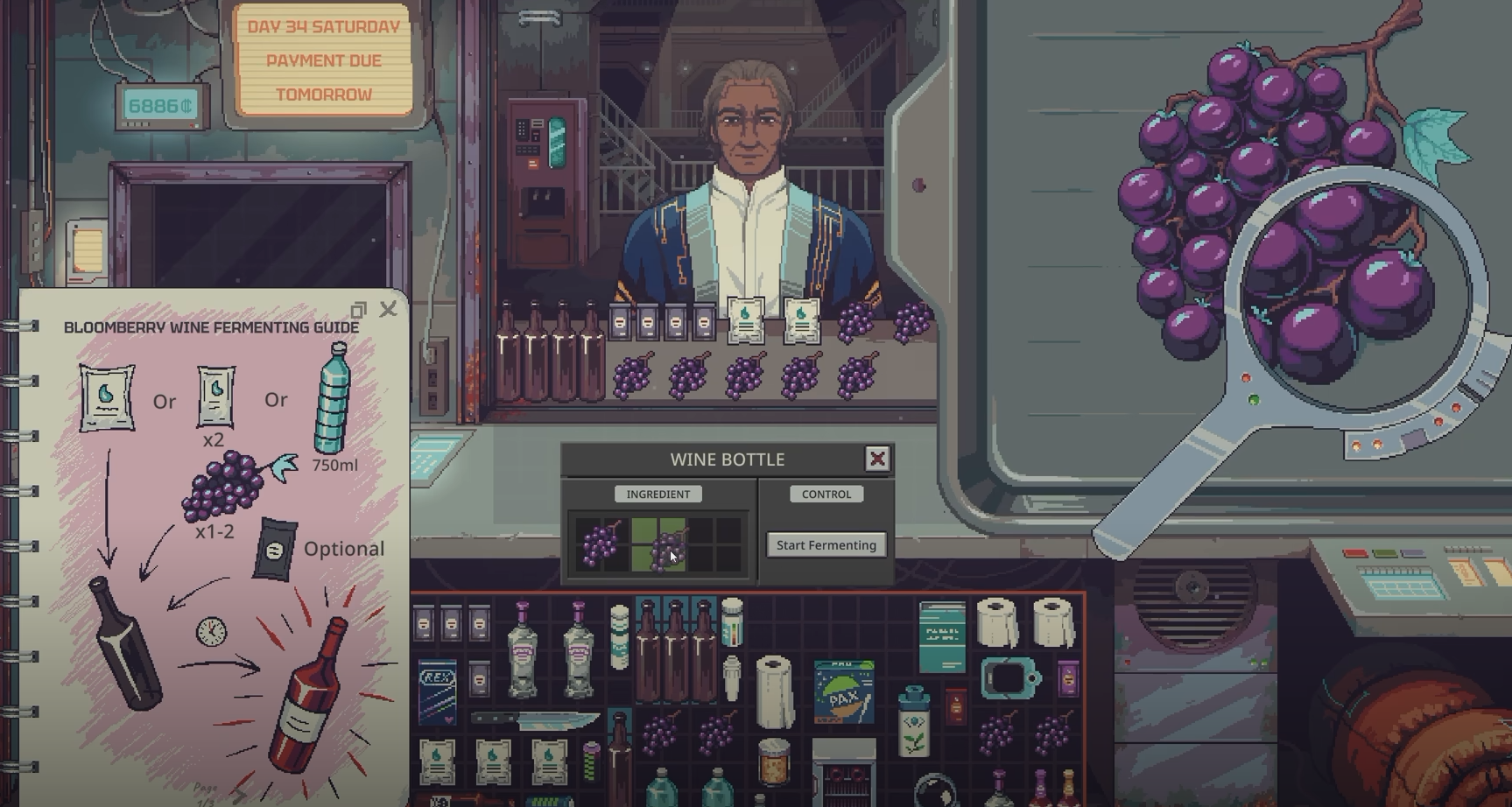
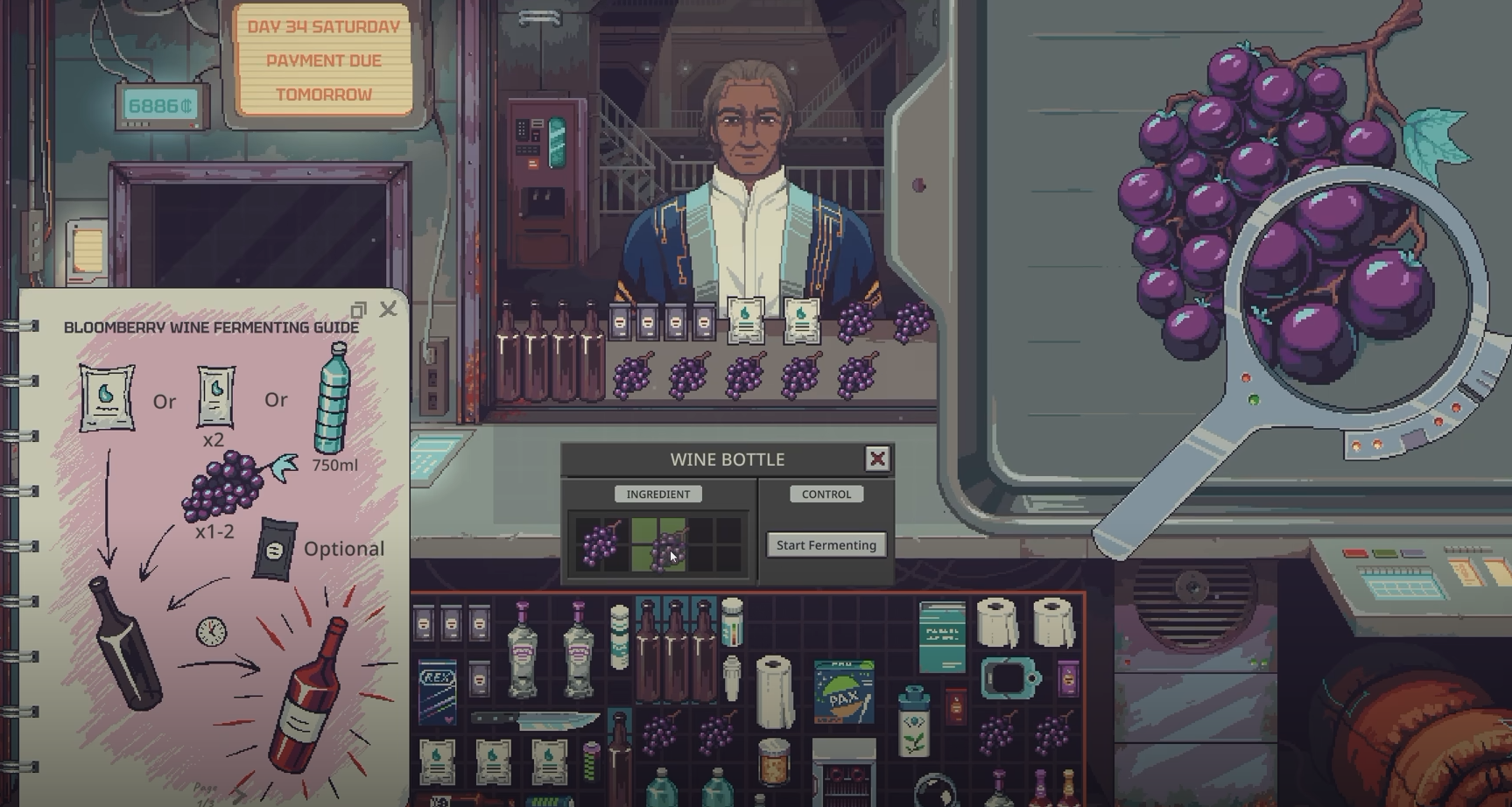
To make BloomBerry Wine, fill a Wine Bottle with 750 mL of suitable water, add one or two handfuls of BloomBerries, and start fermentation. Standard Yeast is recommended because it reduces the waiting time and helps produce a more consistent result.
- Place an empty Wine Bottle on your counter.
- Add 750 mL of Basewater or High-Quality Water. A standard Sealed Water Ration contains exactly 750 mL.
- Double-click the filled bottle to open its ingredient interface.
- Insert one or two handfuls of BloomBerries.
- Add standard Yeast if available.
- Select Start Fermenting.
- Wait for fermentation to finish, normally around two nights with standard Yeast.
- Check the completed wine's quality and estimated value.
Each BloomBerry bunch occupies a 2-by-2 space in the ingredient grid, so arrange the ingredients carefully when using two bunches.
Wine can also ferment without added Yeast, although that method takes longer. Once fermentation is complete, the bottle can be sold or kept for aging.
How to Unlock Winemaking in Probably Stolen
Winemaking is unlocked by purchasing the Retired Winemaker upgrade through Joe Wild's Network. It costs 200 on Mark Up difficulty, with the possibility of different prices under other settings.
Purchasing the upgrade provides a Winemaking Starter Kit and access to additional winemaking supplies through the Retired Winemaker.
What's Included in the Starter Kit?
- One BloomBerry Wine Fermenting Guide.
- Three Wine Bottles.
- Three portions of Yeast.
- Two handfuls of BloomBerries.
- Water and other starting supplies.
The included guide explains the basic fermentation process and how ingredient condition affects the result.
The Best Way to Use Your First Supplies
One detail worth noticing is that the starter kit gives you more Wine Bottles than BloomBerry bunches.
That means you have a choice between starting two smaller batches or using both bunches in one attempt at higher-quality wine.
I'd use your initial supplies to understand the difference before committing to large-scale production. Two bunches can improve the potential quality of a bottle, but using them separately gives you more finished products to sell.
Once you've learned the recipe, obtaining a steady berry supply becomes more important than simply collecting additional bottles.
Best Ingredients for High-Quality Wine
The same basic recipe can produce different wine grades depending on the ingredients. If you're trying to make valuable bottles, inspect what you're using before starting fermentation.
Which BloomBerries Are Best?
Small, ripe, healthy BloomBerries are particularly suitable for winemaking.
Use a Magnifying Glass to inspect the berries before adding them. Avoid underripe, overripe, or moldy bunches when attempting premium wine.
Using two suitable bunches gives you a better opportunity to produce higher-quality wine, including Reserve or Master Vintage results.
However, using two berries doesn't automatically guarantee a particular wine grade. Their condition and the other ingredients still matter.
For help maintaining a berry supply, see our Probably Stolen BloomBerry Guide.
What Water Should You Use for Wine?
Basewater works for ordinary wine production, while High-Quality Water is a good option when attempting better results.
Avoid using water below Basewater quality because contamination can negatively affect the finished wine.
It's also worth checking the requirements before using Pure Water. Available recipe information indicates that fermentation benefits from minerals, so the highest water purity isn't necessarily the best choice for this particular trade.
If you already operate a water purification system, keeping a separate supply of suitable fermentation water can prevent you from using more valuable purified water unnecessarily.
Our Probably Stolen Water Purification Guide explains how the different water grades work.
Wine Fermentation Times and Equipment
Adding Yeast changes how quickly the wine finishes fermenting. Different methods are useful depending on whether you want to conserve ingredients or prepare finished bottles sooner.
| Method | Fermentation Time |
|---|---|
| Without added Yeast | Approximately 4 nights |
| Standard Yeast | Approximately 2 nights |
| Super Yeast | Approximately 1 night |
Should You Use Super Yeast?
Super Yeast is useful when the fermentation timer is delaying production. A batch that finishes in one night makes the Wine Bottle available sooner and gives you completed inventory more quickly.
However, faster fermentation won't solve a shortage of BloomBerries. If you're already waiting for ingredients, paying more for faster Yeast may provide little advantage.
Standard Yeast is a reasonable default for regular production, while Super Yeast is more useful when time is your main limitation.
What Is the Yeast Bioreactor?
The Yeast Bioreactor is intended for repeated winemaking, reducing the need to consume a fresh Yeast portion for every batch.
Its listed base value is 250 Credits, but the actual purchase price may differ.
For occasional brewing, buying ordinary Yeast may be simpler. A reusable Yeast source becomes more attractive when you're consistently starting new batches.
What Happens With Synthetic Yeast?
Synthetic Yeast produces counterfeit GloomBerry Wine rather than ordinary BloomBerry Wine.
This product is associated with contraband and doesn't follow the normal aging behavior of legitimate wine.
If your plan depends on making wine that becomes more valuable over time, use regular fermentation ingredients instead.
How to Age Wine in Probably Stolen
Once fermentation finishes, ordinary wine gains 3 Credits of base value for each additional night of aging.
This makes wine different from merchandise that must be sold at its current value. You can keep a completed bottle and increase its potential return without consuming additional BloomBerries.
How Much Value Does Aging Add?
| Nights of Aging | Additional Base Value |
|---|---|
| 5 nights | 15 Credits |
| 10 nights | 30 Credits |
| 20 nights | 60 Credits |
These figures describe the standard increase in base value, not guaranteed sale prices. Customer offers and market modifiers can affect the amount you actually receive.
Does AgeWell Make Wine Age Faster?
Yes. AgeWell is a dedicated machine that accelerates the aging of finished wine.
Place completed wine inside and ensure the machine has sufficient power for its overnight operation.
The available equipment information describes AgeWell as adding an extra day of age per successful overnight cycle. The exact benefit and running costs should be checked against the version and machine configuration you're using.
A regular Fridge doesn't provide the same specialized wine-aging benefit.
Should You Keep Aging Wine or Sell It?
The answer depends on your shop's financial position.
If you have enough Credits for rent, supplies, and other expenses, holding wine can increase the value of existing inventory.
If you're short on money, accepting a good offer immediately may be more useful than waiting several nights for a relatively small increase.
There's no universal number of nights that makes every bottle worth selling. Consider its current value, how much space it occupies, and whether you have an interested buyer available.
Where to Sell Wine in Probably Stolen
When your wine finishes fermenting, look for customers whose interests include Alcohol or Substance.
Merchants can offer a straightforward way to sell completed wine, while Upper Level Visitors may be worth considering when you have more valuable bottles.
Different customers can offer different amounts for the same item, so compare offers when possible.
Why Won't a Customer Buy My Wine?
A customer may have no interest in alcoholic products, even if your bottle has a high estimated value.
Budget also matters. Someone can be interested in an item but still lack enough Credits to complete the purchase.
For expensive aged wine, finding a buyer who both wants the product and can afford it may be more important than simply waiting for the bottle to gain another few Credits in base value.
Should You Sell Wine as Soon as It Finishes?
Not necessarily.
Completed wine begins benefiting from aging, so storing it can be worthwhile when you don't need immediate cash.
However, if you receive an attractive offer or need to fund another production cycle, selling now may be the better business decision.
I'd keep a portion of finished inventory available for sale rather than automatically holding every bottle for maximum aging.
How to Make More Profit From Winemaking
The most useful way to evaluate your wine business is to look at what limits production and how much each finished bottle actually earns.
Higher sale prices are valuable, but they're only part of the calculation.
Check Your Real Production Costs
Each wine batch uses water, BloomBerries, and potentially Yeast. Depending on your setup, growing ingredients and operating additional equipment can create other expenses.
To estimate your return, subtract the cost of consumed ingredients and relevant operating expenses from the Credits received when the wine sells.
For example, consider two hypothetical batches:
- Batch A costs 40 Credits to produce and sells for 120, leaving 80 Credits before other expenses.
- Batch B costs 85 Credits to produce and sells for 150, leaving 65 Credits before other expenses.
Although Batch B sells for more, Batch A produces the larger margin in this example.
These are illustrative calculations rather than actual in-game prices. The purpose is to compare what each bottle earns after production costs.
Find Your Biggest Production Bottleneck
Before investing in more equipment, identify what is preventing you from making or selling additional wine.
| Problem | What to Focus On |
|---|---|
| Not enough BloomBerries | Improve berry supply or farming |
| Fermentation takes too long | Consider Super Yeast |
| Repeated Yeast purchases | Consider a Yeast Bioreactor |
| Wine aging too slowly | Consider AgeWell |
| Poor customer offers | Look for better-matched buyers |
A faster fermentation upgrade isn't particularly helpful if you've run out of BloomBerries. Likewise, aging equipment won't solve a shortage of completed wine.
Addressing the actual limitation can be more effective than buying every available upgrade.
Should You Make More Bottles or Better Bottles?
This is one of the most important decisions when your BloomBerry supply is limited.
Suppose you have four healthy BloomBerry bunches. You could use them in four single-berry recipes or two double-berry recipes.
The first approach favors quantity, while the second gives you more opportunities to produce higher-grade wine.
Neither automatically earns more Credits. The result depends on the grades produced, ingredient costs, and sale prices available during your run.
I'd compare the actual return from each approach before committing to one production strategy.
Balance Regular Sales With Aging
Once your operation is established, consider keeping some finished wine for aging while selling other bottles to maintain cash flow.
This allows your shop to benefit from longer-term appreciation without leaving all your money tied up in stored inventory.
The goal isn't necessarily to produce the most bottles or own the oldest wine. It's to keep production sustainable while earning worthwhile returns from the resources you use.
Common Wine Questions in Probably Stolen
Can You Make Wine Without Yeast?
Yes. Wine can ferment without added Yeast, but the process takes approximately four nights instead of around two with standard Yeast.
Why Can't I Start Fermentation?
Check that you're using a proper Wine Bottle, not an Empty Beer Bottle. The bottle also needs the required water and BloomBerries before fermentation can begin.
Why Is My Wine Low Quality?
Check the water grade and condition of your BloomBerries. Poor-quality ingredients can negatively affect the finished product.
Can You Age Wine Without AgeWell?
Yes. Ordinary completed wine gains value naturally as nights pass. AgeWell is optional equipment that accelerates the aging process.
Does Synthetic Wine Age?
Counterfeit GloomBerry Wine produced using Synthetic Yeast doesn't benefit from the normal aging process used by ordinary BloomBerry Wine.
What Is the Best Way to Make Money From Wine?
Use suitable ingredients, maintain a reliable BloomBerry supply, and compare actual selling offers before committing to expensive upgrades. Aging is useful when you can afford to hold bottles, while faster fermentation matters most when production time is limiting your business.
For most shops, I'd start with consistent basic wine production and improve the weakest part of the process first. Once that routine is reliable, premium batches and aging equipment become easier to justify.